

Bacon, NS as to type of meat, cooked
Common food
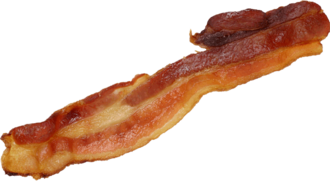
Photo: Wikipedia
This is cooked bacon, an intensely savory, smoky, and salty meat product prized for its crisp texture and rich, umami-laden flavor. Nutritionally, it's a powerhouse of protein and fat with minimal carbohydrates, making it a staple in high-protein and low-carb diets. Its high calorie density comes primarily from its fat content, which also contributes to its signature mouthfeel and cooking properties.
Calorie split: 31% protein · 2% carbs · 67% fat
↓ Full nutrition💚 Why it's loved
People love bacon for its unparalleled ability to add a smoky, salty, and savory depth to almost any dish, transforming simple ingredients. Its cultural significance as a comfort food and breakfast staple, along with its satisfying crunch, makes it a universally adored flavor enhancer.
⚠️ Watch-outs & how to enjoy it better
Bacon is high in sodium and saturated fat, which can be a concern for those managing blood pressure or heart health. To counteract this, practice strict portion control (e.g., 1-2 slices per serving) and pair it with fiber-rich vegetables or potassium-rich foods like spinach or avocado to help balance sodium intake.
Key benefits
- Excellent source of complete protein (37.41g per 100g).
- Very low in carbohydrates and sugar, suitable for ketogenic diets.
- Rich in B vitamins, particularly B1 (thiamine), B3 (niacin), and B6.
- Contains minerals like selenium, phosphorus, and zinc.
- High in monounsaturated fats, similar to olive oil.
🍽️ Popular dishes
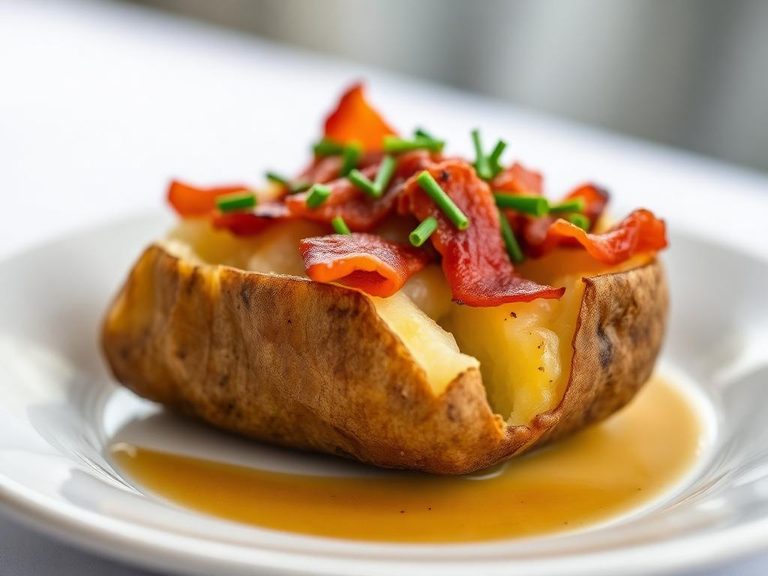
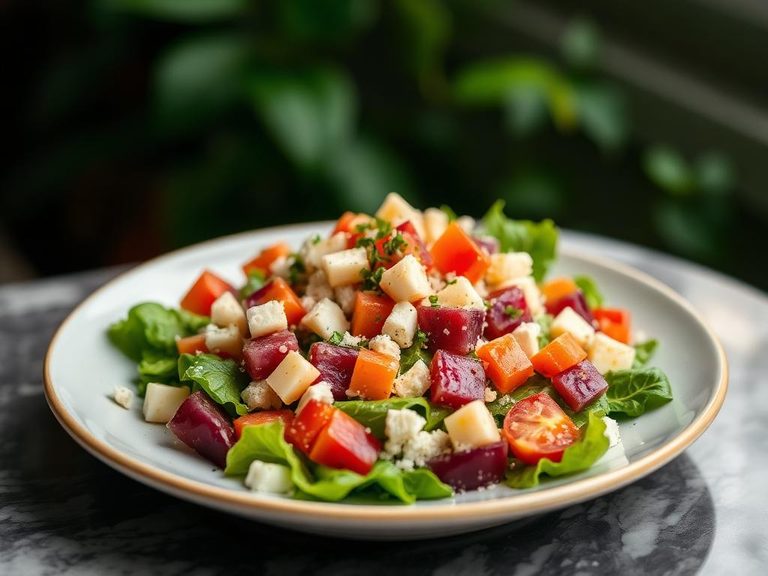

🌍 Where it's eaten
💡 Did you know?
The term 'bacon' originally referred to the back of a pig in Middle English, and the modern cured belly cut became popular in the 18th century after the invention of the first bacon curing machine by John Harris in 1770.
Full nutrition (USDA data · scales with serving)
| Water | 18.9 g |
| Energy | 484 kcal |
| Protein | 37.4 g |
| Total lipid (fat) | 35.8 g |
| Carbohydrate, by difference | 1.9 g |
| Fiber, total dietary | 0.00 g |
| Total Sugars | 1.6 g |
| Calcium, Ca | 12.0 mg |
| Iron, Fe | 1.1 mg |
| Magnesium, Mg | 34.0 mg |
| Phosphorus, P | 402 mg |
| Potassium, K | 528 mg |
| Sodium, Na | 1757 mg |
| Zinc, Zn | 3.3 mg |
| Copper, Cu | 0.12 mg |
| Selenium, Se | 50.7 ug |
| Vitamin C, total ascorbic acid | 0.00 mg |
| Thiamin | 0.56 mg |
| Riboflavin | 0.23 mg |
| Niacin | 10.5 mg |
| Vitamin B-6 | 0.54 mg |
| Folate, total | 0.00 ug |
| Folic acid | 0.00 ug |
| Folate, food | 0.00 ug |
| Folate, DFE | 0.00 ug |
| Choline, total | 89.5 mg |
| Vitamin B-12 | 1.1 ug |
| Vitamin B-12, added | 0.00 ug |
| Vitamin A, RAE | 11.0 ug |
| Retinol | 11.0 ug |
| Carotene, beta | 0.00 ug |
| Carotene, alpha | 0.00 ug |
| Cryptoxanthin, beta | 0.00 ug |
| Lycopene | 0.00 ug |
| Lutein + zeaxanthin | 0.00 ug |
| Vitamin E (alpha-tocopherol) | 0.42 mg |
| Vitamin E, added | 0.00 mg |
| Vitamin D (D2 + D3) | 0.40 ug |
| Vitamin K (phylloquinone) | 0.00 ug |
| Alcohol, ethyl | 0.00 g |
| Caffeine | 0.00 mg |
| Theobromine | 0.00 mg |
Fat & fatty acid profile (per 100g)
| Fatty acids, total saturated | 12.3 g |
| SFA 4:0 | 0.00 g |
| SFA 6:0 | 0.00 g |
| SFA 8:0 | 0.00 g |
| SFA 10:0 | 0.02 g |
| SFA 12:0 | 0.01 g |
| SFA 14:0 | 0.46 g |
| SFA 16:0 | 7.8 g |
| SFA 18:0 | 3.8 g |
| Fatty acids, total monounsaturated | 15.7 g |
| MUFA 16:1 | 0.81 g |
| MUFA 18:1 | 14.5 g |
| MUFA 20:1 | 0.29 g |
| MUFA 22:1 | 0.01 g |
| Fatty acids, total polyunsaturated | 6.1 g |
| PUFA 18:2 | 5.3 g |
| PUFA 18:3 | 0.23 g |
| PUFA 18:4 | 0.00 g |
| PUFA 20:4 | 0.16 g |
| PUFA 20:5 n-3 (EPA) | 0.00 g |
| PUFA 22:5 n-3 (DPA) | 0.03 g |
| PUFA 22:6 n-3 (DHA) | 0.01 g |
| Cholesterol | 99.0 mg |
Amino acid profile (per 100g)
Estimated from Bacon, turkey, low sodium — USDA does not publish this profile for Bacon.
| Tryptophan | 0.19 g |
| Threonine | 0.65 g |
| Isoleucine | 0.52 g |
| Leucine | 1.3 g |
| Lysine | 1.5 g |
| Methionine | 0.47 g |
| Cystine | 0.17 g |
| Phenylalanine | 0.59 g |
| Tyrosine | 0.53 g |
| Valine | 0.59 g |
| Arginine | 1.1 g |
| Histidine | 0.49 g |
| Alanine | 1.0 g |
| Aspartic acid | 1.5 g |
| Glutamic acid | 2.5 g |
| Glycine | 0.93 g |
| Proline | 1.1 g |
| Serine | 0.72 g |
FAQ
Is bacon a good source of protein?
Yes, cooked bacon is very high in protein, providing about 37.41g per 100g, which is comparable to many lean meats.
Why is bacon so high in fat?
Bacon is cut from the pork belly, which is a naturally fatty part of the animal. The curing and cooking process concentrates this fat, making it a high-fat, calorie-dense food.
Can bacon fit into a healthy diet?
Yes, in moderation. It can be part of a balanced diet when portion-controlled and paired with nutrient-dense, low-sodium foods like vegetables and whole grains.
Nutrient density (calculated · NRF9.3)
Nutrient Rich Foods index: beneficial nutrients (protein, fiber, vitamins, minerals) minus saturated fat, added sugar & sodium, per 100 kcal.
NRF9.3 index — Fulgoni, Keast & Drewnowski, 2009. Computed from USDA nutrients.
Weight-loss friendliness (composite index)
Energy density 4.84 kcal/g · 31% calories from protein · 0.0 g fiber · 1.6 g sugar per 100 g.
Composite of energy density (Rolls et al., 1999), protein & fiber satiety, minus sugar. A calculated heuristic — ranks satiety-per-calorie, not a clinical measure.
Dietary load (calculated from USDA values)
Potential renal acid load. Positive = acid-forming, negative = alkaline-forming.
Sodium-to-potassium ratio: 3.33 (lower is better — aim for ≤ 1)
Sodium:potassium per WHO potassium guidance. Computed from USDA nutrients.