

Babyfood, mixed fruit juice with low fat yogurt
Whole food · Baby Foods

Photo: Wikipedia
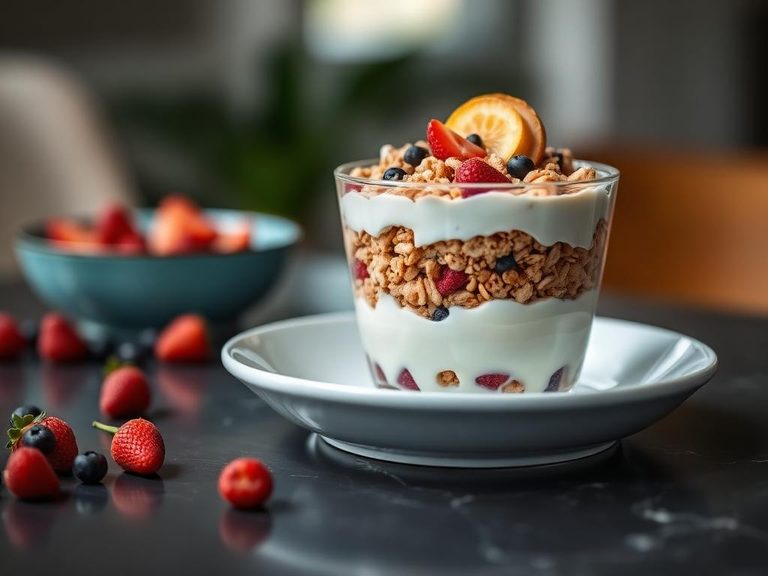
A smooth, spoonable blend of pureed mixed fruits and low-fat yogurt, designed as a gentle first food for babies. It offers a naturally sweet, creamy texture with a mild tang, providing a balanced source of quick energy from fruit sugars and a modest protein boost from dairy.
Calorie split: 13% protein · 78% carbs · 10% fat
↓ Full nutrition💚 Why it's loved
Parents appreciate it as a convenient, nutrient-dense option that introduces babies to complex flavors beyond single-ingredient purées. Its natural sweetness from fruit makes it a hit with little ones, while the yogurt adds a pleasant, subtle creaminess.
⚠️ Watch-outs & how to enjoy it better
The high sugar content (over 10g per 100g) can contribute to a rapid blood-sugar spike and may set a preference for very sweet foods. To counteract this, serve it alongside a source of healthy fat or protein (like a few mashed avocado pieces or a sprinkle of chia seeds) to slow sugar absorption, and always offer it as part of a varied meal, not as a standalone snack.
Key benefits
- Provides quick energy from natural fruit carbohydrates
- Contains calcium and vitamin D from yogurt for bone health
- Offers a gentle introduction to combined fruit and dairy flavors
- Low in fat, making it a lighter option for early feeding
- The smooth texture is ideal for developing chewing and swallowing skills
🍽️ Popular dishes
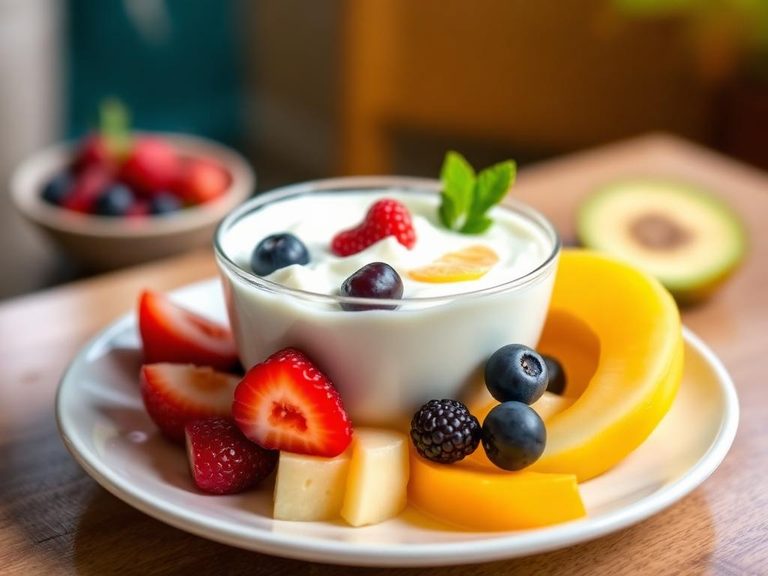
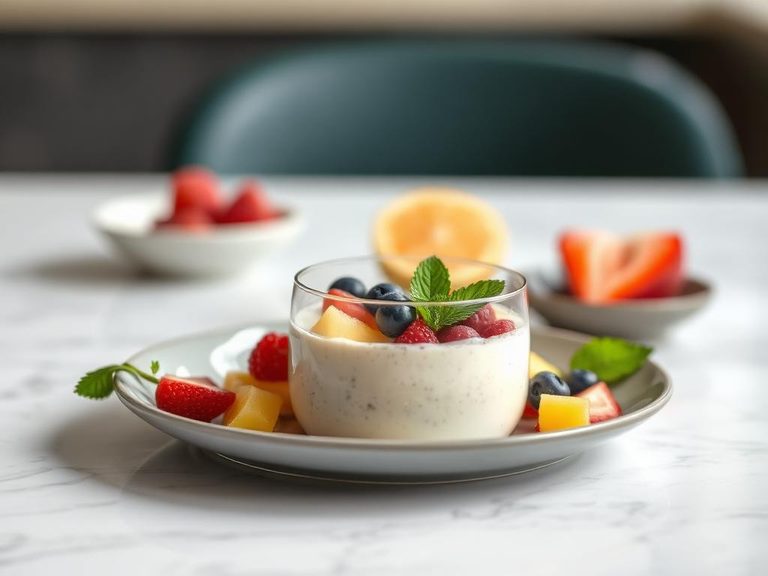
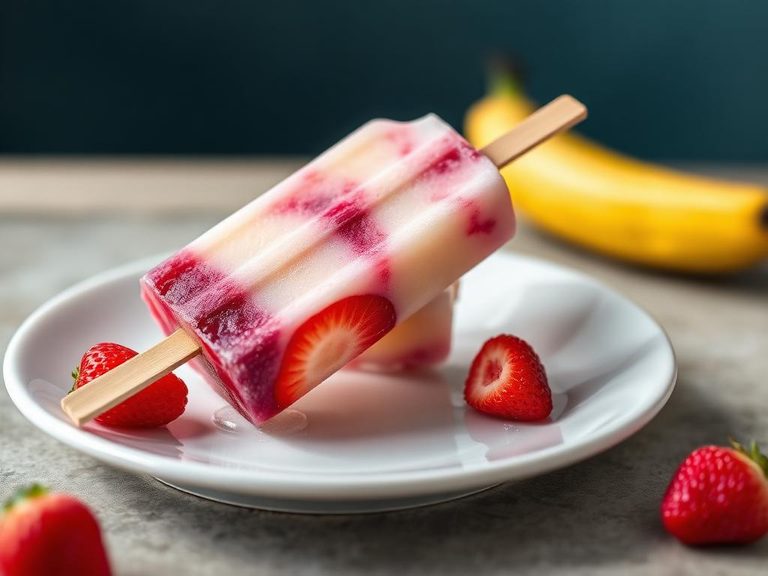
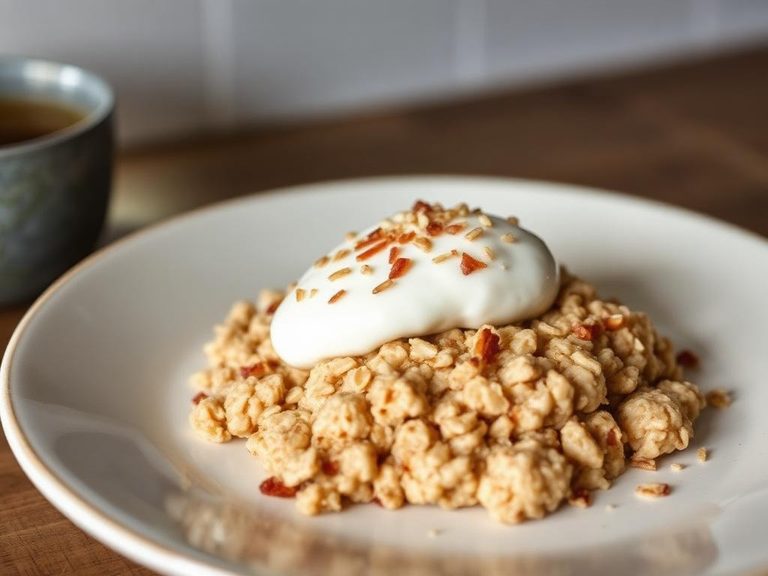
🌍 Where it's eaten
💡 Did you know?
The 'mixed fruit' in these products is often a precise, standardized blend (like apple, pear, and banana) chosen not just for taste, but for consistency in color, texture, and acidity to ensure the yogurt doesn't curdle during processing.
Full nutrition (USDA data · scales with serving)
| Water | 81.5 g |
| Energy | 74.0 kcal |
| Energy | 310 kj |
| Protein | 2.4 g |
| Total lipid (fat) | 0.80 g |
| Ash | 0.62 g |
| Carbohydrate, by difference | 14.7 g |
| Fiber, total dietary | 0.40 g |
| Total Sugars | 10.8 g |
| Calcium, Ca | 81.0 mg |
| Iron, Fe | 0.20 mg |
| Magnesium, Mg | 10.0 mg |
| Phosphorus, P | 60.0 mg |
| Potassium, K | 137 mg |
| Sodium, Na | 36.0 mg |
| Zinc, Zn | 0.14 mg |
| Copper, Cu | 0.03 mg |
| Selenium, Se | 1.3 ug |
| Vitamin C, total ascorbic acid | 33.9 mg |
| Thiamin | 0.04 mg |
| Riboflavin | 0.10 mg |
| Niacin | 0.16 mg |
| Vitamin B-6 | 0.05 mg |
| Folate, total | 6.0 ug |
| Folic acid | 0.00 ug |
| Folate, food | 6.0 ug |
| Folate, DFE | 6.0 ug |
| Choline, total | 8.2 mg |
| Vitamin B-12 | 0.43 ug |
| Vitamin B-12, added | 0.00 ug |
| Vitamin A, RAE | 5.0 ug |
| Retinol | 5.0 ug |
| Carotene, beta | 3.0 ug |
| Carotene, alpha | 0.00 ug |
| Cryptoxanthin, beta | 8.0 ug |
| Vitamin A, IU | 28.0 iu |
| Lycopene | 0.00 ug |
| Lutein + zeaxanthin | 18.0 ug |
| Vitamin E (alpha-tocopherol) | 0.03 mg |
| Vitamin E, added | 0.00 mg |
| Vitamin D (D2 + D3), International Units | 1.0 iu |
| Vitamin D (D2 + D3) | 0.00 ug |
| Vitamin D3 (cholecalciferol) | 0.00 ug |
| Vitamin K (phylloquinone) | 0.20 ug |
| Alcohol, ethyl | 0.00 g |
| Caffeine | 0.00 mg |
| Theobromine | 0.00 mg |
Fat & fatty acid profile (per 100g)
| Fatty acids, total saturated | 0.52 g |
| SFA 4:0 | 0.03 g |
| SFA 6:0 | 0.02 g |
| SFA 8:0 | 0.01 g |
| SFA 10:0 | 0.02 g |
| SFA 12:0 | 0.03 g |
| SFA 14:0 | 0.08 g |
| SFA 16:0 | 0.22 g |
| SFA 18:0 | 0.08 g |
| Fatty acids, total monounsaturated | 0.22 g |
| MUFA 16:1 | 0.02 g |
| MUFA 18:1 | 0.18 g |
| MUFA 20:1 | 0.00 g |
| MUFA 22:1 | 0.00 g |
| Fatty acids, total polyunsaturated | 0.02 g |
| PUFA 18:2 | 0.01 g |
| PUFA 18:3 | 0.01 g |
| PUFA 18:4 | 0.00 g |
| PUFA 20:4 | 0.00 g |
| PUFA 20:5 n-3 (EPA) | 0.00 g |
| PUFA 22:5 n-3 (DPA) | 0.00 g |
| PUFA 22:6 n-3 (DHA) | 0.00 g |
| Cholesterol | 3.0 mg |
Amino acid profile (per 100g)
Estimated from Babyfood, grape juice, no sugar, canned — USDA does not publish this profile for Babyfood.
| Threonine | 0.02 g |
| Isoleucine | 0.01 g |
| Leucine | 0.02 g |
| Lysine | 0.02 g |
| Methionine | 0.03 g |
| Cystine | 0.01 g |
| Phenylalanine | 0.02 g |
| Tyrosine | 0.02 g |
| Valine | 0.02 g |
| Arginine | 0.06 g |
| Histidine | 0.03 g |
| Alanine | 0.04 g |
| Aspartic acid | 0.10 g |
| Glutamic acid | 0.18 g |
| Glycine | 0.03 g |
| Proline | 0.03 g |
| Serine | 0.04 g |
FAQ
Is this a good source of protein for my baby?
It provides a modest amount of protein (about 2.4g per 100g) from the yogurt, which is beneficial, but it shouldn't be the primary protein source. Pair it with iron-rich foods like pureed meat or fortified cereal for a more complete meal.
Why is the sugar content so high?
The sugar is primarily naturally occurring from the fruit (fructose). While better than added sugars, the concentration in a blended product can be high. It's a reason to serve it in moderation and as part of a balanced diet.
Can I mix this with my baby's cereal?
Yes, it's a common and excellent way to add flavor and moisture to infant cereals like rice or oatmeal, making them more palatable and nutritious.
At what age can I introduce this?
Typically around 6 months, when a baby has started solid foods and shows readiness signs. Always introduce new foods one at a time to check for allergies.
Nutrient density (calculated · NRF9.3)
Nutrient Rich Foods index: beneficial nutrients (protein, fiber, vitamins, minerals) minus saturated fat, added sugar & sodium, per 100 kcal.
NRF9.3 index — Fulgoni, Keast & Drewnowski, 2009. Computed from USDA nutrients.
Weight-loss friendliness (composite index)
Energy density 0.74 kcal/g · 13% calories from protein · 0.4 g fiber · 10.8 g sugar per 100 g.
Composite of energy density (Rolls et al., 1999), protein & fiber satiety, minus sugar. A calculated heuristic — ranks satiety-per-calorie, not a clinical measure.
Dietary load (calculated from USDA values)
Potential renal acid load. Positive = acid-forming, negative = alkaline-forming.
Sodium-to-potassium ratio: 0.26 (lower is better — aim for ≤ 1)
Sodium:potassium per WHO potassium guidance. Computed from USDA nutrients.