

Babyfood, cereal, whole wheat, with apples, dry fortified
Whole food · Baby Foods

Photo: Wikipedia
This is a shelf-stable, dry cereal blend of whole wheat flour and apple powder, fortified with vitamins and minerals for infant nutrition. It has a fine, powdery texture that mixes into a smooth, slightly gritty porridge with a mild, sweet, and fruity apple flavor. Nutritionally, it is a concentrated source of carbohydrates and energy, with added iron and other micronutrients crucial for early development.
Calorie split: 7% protein · 83% carbs · 11% fat
↓ Full nutrition💚 Why it's loved
Parents love it for its simplicity, long shelf life, and the fact that it's a familiar, gentle first food that babies often accept readily. The subtle apple sweetness makes it more palatable than plain cereal, and its smooth texture when mixed is perfect for early feeders.
⚠️ Watch-outs & how to enjoy it better
The high carbohydrate content (83g/100g dry) can lead to rapid blood sugar spikes if not balanced, and the added sugars (26g/100g) are a concern for dental health and taste preference. To counteract this, mix it with breast milk, formula, or a full-fat plain yogurt to add protein and fat, which slows digestion. Always serve as part of a varied diet and practice good oral hygiene.
Key benefits
- Fortified with iron to support cognitive development.
- Provides a quick, digestible source of energy from complex carbs.
- Contains dietary fiber from whole wheat for digestive health.
- Convenient, shelf-stable first food for introducing solids.
- Often enriched with essential vitamins like zinc and B vitamins.
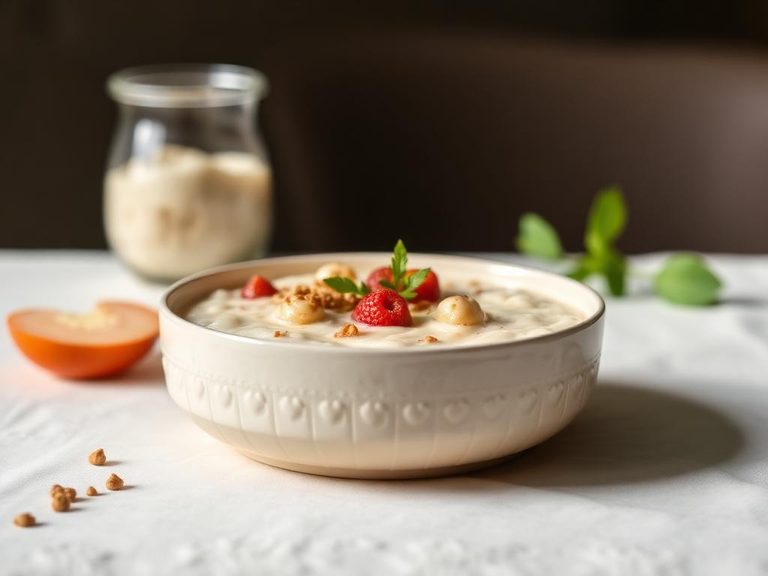
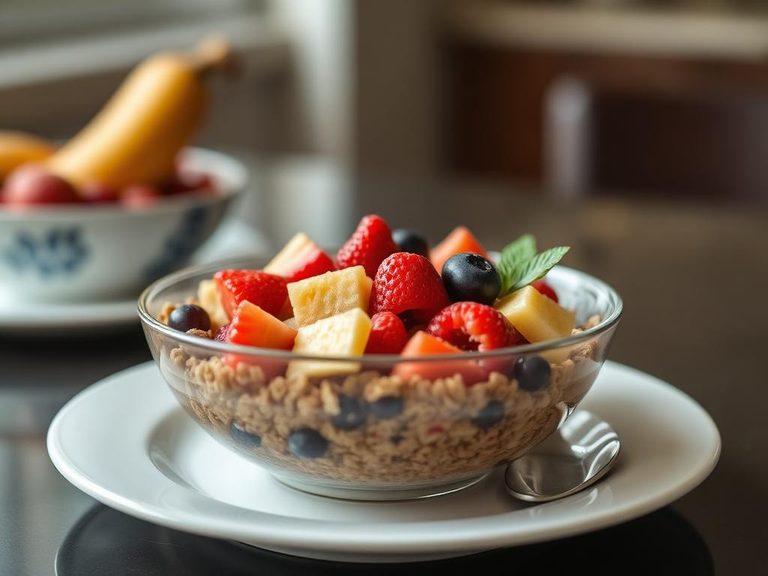
🍽️ Popular dishes


🌍 Where it's eaten
💡 Did you know?
The 'fortified' in its name refers to a standard practice since the 1940s of adding iron and other nutrients to infant cereals to prevent deficiencies like iron-deficiency anemia, a common issue in infancy.
Full nutrition (USDA data · scales with serving)
| Water | 1.7 g |
| Energy | 402 kcal |
| Energy | 1684 kj |
| Protein | 6.6 g |
| Total lipid (fat) | 4.8 g |
| Ash | 3.7 g |
| Carbohydrate, by difference | 83.2 g |
| Fiber, total dietary | 6.7 g |
| Total Sugars | 26.7 g |
| Calcium, Ca | 600 mg |
| Iron, Fe | 45.0 mg |
| Magnesium, Mg | 140 mg |
| Phosphorus, P | 200 mg |
| Potassium, K | 500 mg |
| Sodium, Na | 66.0 mg |
| Zinc, Zn | 2.6 mg |
| Copper, Cu | 0.62 mg |
| Manganese, Mn | 2.5 mg |
| Selenium, Se | 64.7 ug |
| Vitamin C, total ascorbic acid | 58.3 mg |
| Thiamin | 0.33 mg |
| Riboflavin | 1.0 mg |
| Niacin | 13.3 mg |
| Pantothenic acid | 0.95 mg |
| Vitamin B-6 | 0.66 mg |
| Folate, total | 166 ug |
| Folic acid | 142 ug |
| Folate, food | 24.0 ug |
| Folate, DFE | 265 ug |
| Choline, total | 42.1 mg |
| Vitamin B-12 | 3.3 ug |
| Vitamin B-12, added | 3.3 ug |
| Vitamin A, RAE | 0.00 ug |
| Retinol | 0.00 ug |
| Carotene, beta | 0.00 ug |
| Carotene, alpha | 0.00 ug |
| Cryptoxanthin, beta | 0.00 ug |
| Vitamin A, IU | 0.00 iu |
| Lycopene | 0.00 ug |
| Lutein + zeaxanthin | 203 ug |
| Vitamin E (alpha-tocopherol) | 50.0 mg |
| Vitamin E, added | 50.0 mg |
| Vitamin D (D2 + D3), International Units | 0.00 iu |
| Vitamin D (D2 + D3) | 0.00 ug |
| Vitamin K (phylloquinone) | 8.3 ug |
| Alcohol, ethyl | 0.00 g |
| Caffeine | 0.00 mg |
| Theobromine | 0.00 mg |
Fat & fatty acid profile (per 100g)
| Fatty acids, total saturated | 0.64 g |
| SFA 4:0 | 0.00 g |
| SFA 6:0 | 0.00 g |
| SFA 8:0 | 0.02 g |
| SFA 10:0 | 0.00 g |
| SFA 12:0 | 0.00 g |
| SFA 14:0 | 0.01 g |
| SFA 16:0 | 0.50 g |
| SFA 18:0 | 0.09 g |
| Fatty acids, total monounsaturated | 1.3 g |
| MUFA 16:1 | 0.02 g |
| MUFA 18:1 | 1.2 g |
| MUFA 20:1 | 0.03 g |
| MUFA 22:1 | 0.01 g |
| Fatty acids, total polyunsaturated | 1.9 g |
| PUFA 18:2 | 1.6 g |
| PUFA 18:3 | 0.26 g |
| PUFA 18:4 | 0.00 g |
| PUFA 20:4 | 0.00 g |
| PUFA 20:5 n-3 (EPA) | 0.00 g |
| PUFA 22:5 n-3 (DPA) | 0.00 g |
| PUFA 22:6 n-3 (DHA) | 0.00 g |
| Cholesterol | 0.00 mg |
Amino acid profile (per 100g)
Estimated from Babyfood, grape juice, no sugar, canned — USDA does not publish this profile for Babyfood.
| Threonine | 0.02 g |
| Isoleucine | 0.01 g |
| Leucine | 0.02 g |
| Lysine | 0.02 g |
| Methionine | 0.03 g |
| Cystine | 0.01 g |
| Phenylalanine | 0.02 g |
| Tyrosine | 0.02 g |
| Valine | 0.02 g |
| Arginine | 0.06 g |
| Histidine | 0.03 g |
| Alanine | 0.04 g |
| Aspartic acid | 0.10 g |
| Glutamic acid | 0.18 g |
| Glycine | 0.03 g |
| Proline | 0.03 g |
| Serine | 0.04 g |
FAQ
At what age can I start giving this to my baby?
Single-grain, fortified cereals like this are typically introduced around 4-6 months of age, when a baby shows signs of readiness for solids, such as good head control and interest in food.
How do I prepare it?
Mix the dry powder with breast milk, formula, or water to your desired consistency, starting with a thinner, soupy texture for beginners and thickening as your baby gets used to it.
Is the sugar content a concern?
Yes. The 26.66g of sugar per 100g dry is high. This includes naturally occurring fruit sugars and likely added sugars. It's best to use it sparingly and always mix it with unsweetened liquids or plain foods like yogurt to balance the sweetness.
Nutrient density (calculated · NRF9.3)
Nutrient Rich Foods index: beneficial nutrients (protein, fiber, vitamins, minerals) minus saturated fat, added sugar & sodium, per 100 kcal.
NRF9.3 index — Fulgoni, Keast & Drewnowski, 2009. Computed from USDA nutrients.
Weight-loss friendliness (composite index)
Energy density 4.02 kcal/g · 7% calories from protein · 6.7 g fiber · 26.7 g sugar per 100 g.
Composite of energy density (Rolls et al., 1999), protein & fiber satiety, minus sugar. A calculated heuristic — ranks satiety-per-calorie, not a clinical measure.
Dietary load (calculated from USDA values)
Potential renal acid load. Positive = acid-forming, negative = alkaline-forming.
Sodium-to-potassium ratio: 0.13 (lower is better — aim for ≤ 1)
Sodium:potassium per WHO potassium guidance. Computed from USDA nutrients.