

Babyfood, cereal, rice with pears and apple, dry, instant fortified
Whole food · Baby Foods

Photo: Wikipedia
This is a dry, instant fortified cereal blend designed for babies, featuring finely milled rice as the base, naturally sweetened with pear and apple. It has a smooth, powdery texture that transforms into a gentle, easily digestible porridge when mixed with milk or water. Nutritionally, it's a high-carbohydrate energy source, fortified with essential vitamins and minerals for infant development.
Calorie split: 7% protein · 91% carbs · 2% fat
↓ Full nutrition💚 Why it's loved
Parents love it for its simplicity and reliability as a first food, offering a familiar, mild sweetness that babies often accept readily. Its instant preparation is a lifesaver during busy mealtimes or travel.
⚠️ Watch-outs & how to enjoy it better
The high carbohydrate content and natural fruit sugars can cause rapid blood-sugar spikes if not balanced. It's also low in protein and fat, which are crucial for satiety and brain development. To counteract this, always mix it with breast milk, formula, or whole milk to add fat and protein, and pair it with a side of mashed avocado or full-fat yogurt for a more balanced meal.
Key benefits
- Fortified with iron and other essential vitamins for infant growth.
- Easy to digest, making it a gentle first food for weaning.
- Provides a quick and convenient source of energy (389 kcal/100g).
- Smooth texture helps babies transition to spoon-feeding.
🍽️ Popular dishes
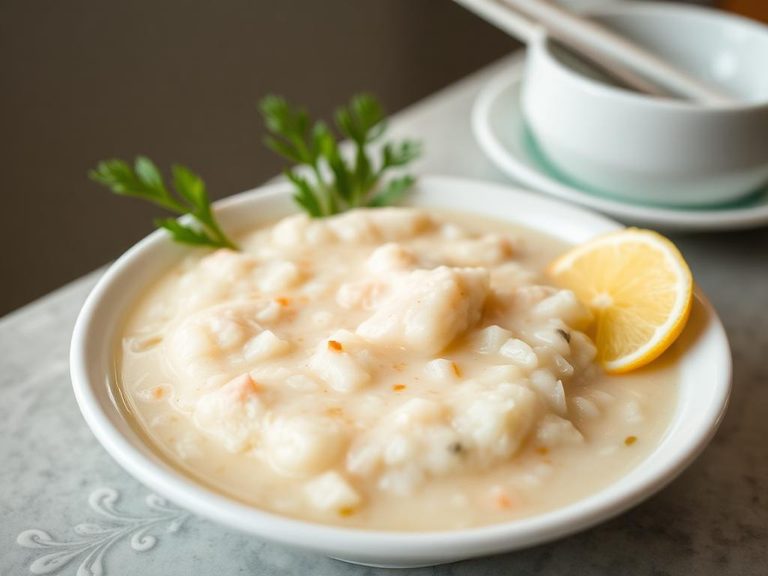
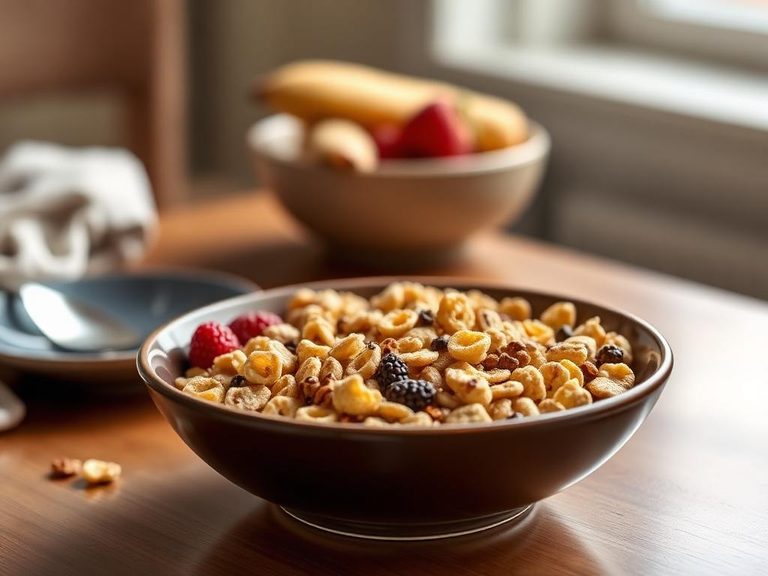
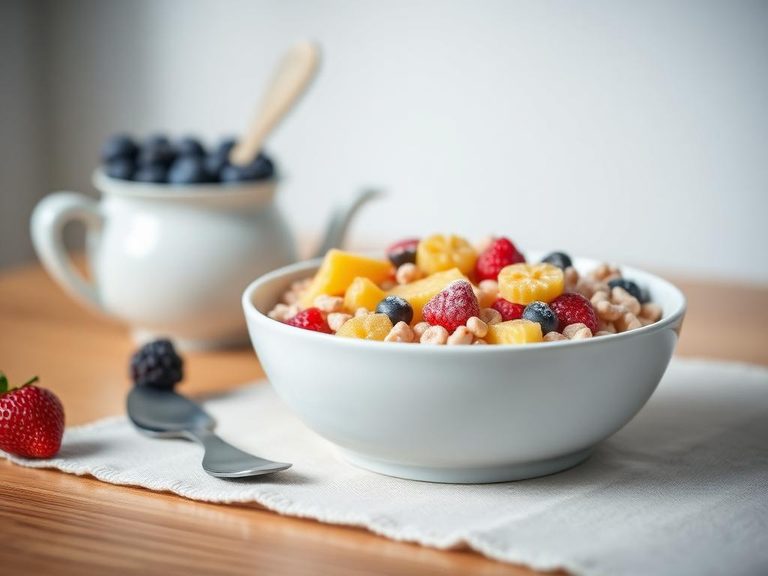

🌍 Where it's eaten
💡 Did you know?
Rice cereal was the traditional 'first food' recommendation in many Western countries for decades due to its hypoallergenic reputation, though pediatric guidelines now often suggest introducing a wider variety of foods, including allergens, earlier.
Full nutrition (USDA data · scales with serving)
| Water | 2.0 g |
| Energy | 389 kcal |
| Energy | 1627 kj |
| Protein | 6.6 g |
| Total lipid (fat) | 0.90 g |
| Ash | 2.0 g |
| Carbohydrate, by difference | 88.5 g |
| Fiber, total dietary | 2.6 g |
| Total Sugars | 1.4 g |
| Calcium, Ca | 38.0 mg |
| Iron, Fe | 9.0 mg |
| Magnesium, Mg | 37.0 mg |
| Phosphorus, P | 253 mg |
| Potassium, K | 414 mg |
| Sodium, Na | 2.0 mg |
| Zinc, Zn | 3.3 mg |
| Copper, Cu | 0.38 mg |
| Manganese, Mn | 1.3 mg |
| Selenium, Se | 16.3 ug |
| Vitamin C, total ascorbic acid | 250 mg |
| Thiamin | 1.6 mg |
| Riboflavin | 1.9 mg |
| Niacin | 25.2 mg |
| Vitamin B-6 | 0.09 mg |
| Folate, total | 5.0 ug |
| Folic acid | 0.00 ug |
| Folate, food | 5.0 ug |
| Folate, DFE | 5.0 ug |
| Choline, total | 6.6 mg |
| Vitamin B-12 | 0.00 ug |
| Vitamin B-12, added | 0.00 ug |
| Vitamin A, RAE | 0.00 ug |
| Retinol | 0.00 ug |
| Carotene, beta | 0.00 ug |
| Carotene, alpha | 0.00 ug |
| Cryptoxanthin, beta | 0.00 ug |
| Vitamin A, IU | 0.00 iu |
| Lycopene | 0.00 ug |
| Lutein + zeaxanthin | 1.0 ug |
| Vitamin E (alpha-tocopherol) | 0.13 mg |
| Vitamin E, added | 0.00 mg |
| Vitamin D (D2 + D3), International Units | 0.00 iu |
| Vitamin D (D2 + D3) | 0.00 ug |
| Vitamin K (phylloquinone) | 0.30 ug |
| Alcohol, ethyl | 0.00 g |
| Caffeine | 0.00 mg |
| Theobromine | 0.00 mg |
Fat & fatty acid profile (per 100g)
| Fatty acids, total saturated | 0.18 g |
| SFA 4:0 | 0.00 g |
| SFA 6:0 | 0.00 g |
| SFA 8:0 | 0.00 g |
| SFA 10:0 | 0.00 g |
| SFA 12:0 | 0.00 g |
| SFA 14:0 | 0.00 g |
| SFA 16:0 | 0.16 g |
| SFA 18:0 | 0.01 g |
| Fatty acids, total monounsaturated | 0.25 g |
| MUFA 16:1 | 0.00 g |
| MUFA 18:1 | 0.25 g |
| MUFA 20:1 | 0.00 g |
| MUFA 22:1 | 0.00 g |
| Fatty acids, total polyunsaturated | 0.23 g |
| PUFA 18:2 | 0.20 g |
| PUFA 18:3 | 0.03 g |
| PUFA 18:4 | 0.00 g |
| PUFA 20:4 | 0.00 g |
| PUFA 20:5 n-3 (EPA) | 0.00 g |
| PUFA 22:5 n-3 (DPA) | 0.00 g |
| PUFA 22:6 n-3 (DHA) | 0.00 g |
| Cholesterol | 0.00 mg |
Amino acid profile (per 100g)
Estimated from Babyfood, grape juice, no sugar, canned — USDA does not publish this profile for Babyfood.
| Threonine | 0.02 g |
| Isoleucine | 0.01 g |
| Leucine | 0.02 g |
| Lysine | 0.02 g |
| Methionine | 0.03 g |
| Cystine | 0.01 g |
| Phenylalanine | 0.02 g |
| Tyrosine | 0.02 g |
| Valine | 0.02 g |
| Arginine | 0.06 g |
| Histidine | 0.03 g |
| Alanine | 0.04 g |
| Aspartic acid | 0.10 g |
| Glutamic acid | 0.18 g |
| Glycine | 0.03 g |
| Proline | 0.03 g |
| Serine | 0.04 g |
FAQ
Is this cereal a complete meal for my baby?
No, it's primarily a carbohydrate source. For a balanced meal, mix it with breast milk, formula, or whole milk and serve alongside a protein or healthy fat source like mashed beans, avocado, or full-fat yogurt.
Why is it fortified?
Fortification adds essential nutrients like iron, zinc, and B vitamins that are critical for a baby's rapid growth and brain development, especially since breast milk alone may not provide sufficient iron after 6 months.
Can I use water to prepare it?
While you can use water, using breast milk, formula, or whole milk (for babies over 12 months) significantly boosts the nutritional profile by adding necessary fats, proteins, and calories.
Nutrient density (calculated · NRF9.3)
Nutrient Rich Foods index: beneficial nutrients (protein, fiber, vitamins, minerals) minus saturated fat, added sugar & sodium, per 100 kcal.
NRF9.3 index — Fulgoni, Keast & Drewnowski, 2009. Computed from USDA nutrients.
Weight-loss friendliness (composite index)
Energy density 3.89 kcal/g · 7% calories from protein · 2.6 g fiber · 1.4 g sugar per 100 g.
Composite of energy density (Rolls et al., 1999), protein & fiber satiety, minus sugar. A calculated heuristic — ranks satiety-per-calorie, not a clinical measure.
Dietary load (calculated from USDA values)
Potential renal acid load. Positive = acid-forming, negative = alkaline-forming.
Sodium-to-potassium ratio: 0.00 (lower is better — aim for ≤ 1)
Sodium:potassium per WHO potassium guidance. Computed from USDA nutrients.