

Babyfood, cereal, rice, with bananas, dry
Whole food · Baby Foods

Photo: Wikipedia
A finely milled, shelf-stable blend of rice cereal and dehydrated banana, designed for infants transitioning to solids. It has a mild, sweet, and comforting banana flavor with a smooth, easily digestible texture when mixed with liquid. Nutritionally, it's a dense energy source, primarily from carbohydrates, making it a quick fuel option for little ones.
Calorie split: 9% protein · 81% carbs · 10% fat
↓ Full nutrition💚 Why it's loved
Parents love it for its simplicity and reliability as a first food that babies often accept readily due to its gentle sweetness. It's a trusted staple in many cultures for introducing solids, valued for its ease of preparation and consistent texture.
⚠️ Watch-outs & how to enjoy it better
Its high carbohydrate and sugar content (16.7g per 100g) can contribute to blood sugar spikes if not balanced. To counteract this, always mix it with a source of protein or healthy fat, such as breast milk, formula, or a spoonful of full-fat yogurt, to slow digestion and create a more balanced meal.
Key benefits
- Excellent source of quick energy from carbohydrates
- Highly digestible and gentle on immature digestive systems
- Fortified with iron in many commercial versions to prevent deficiency
- Convenient, shelf-stable first food for travel or emergencies
- Provides a familiar, mild flavor to encourage acceptance of new foods
🍽️ Popular dishes
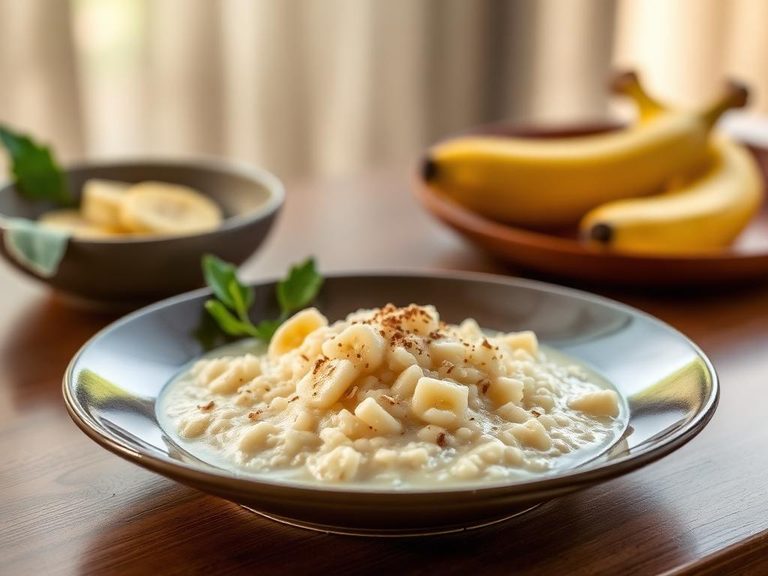
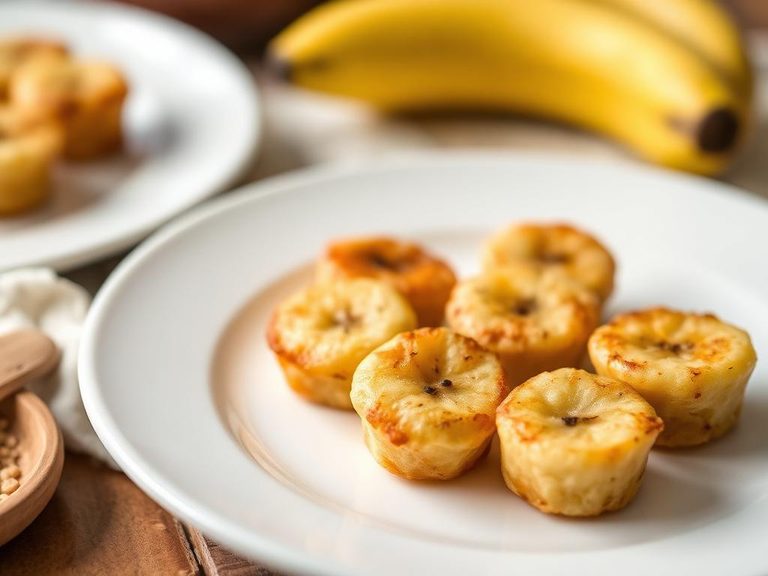
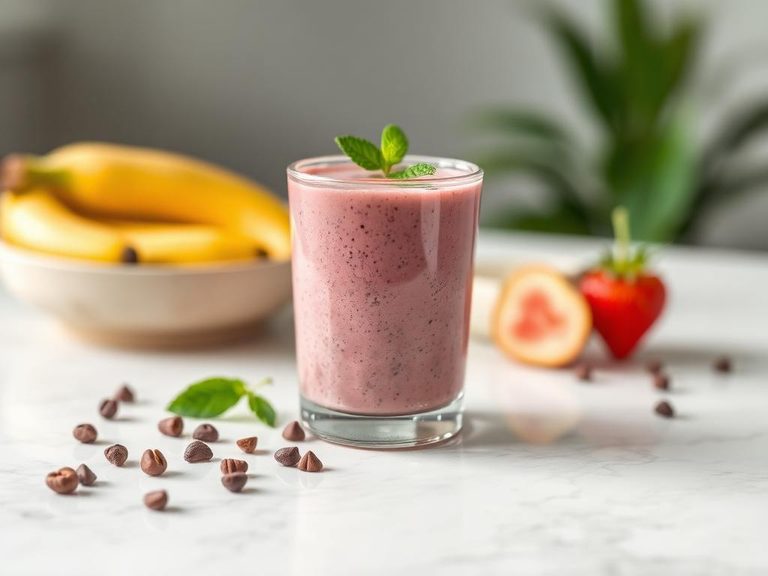
🌍 Where it's eaten
💡 Did you know?
The process of making this cereal involves cooking the rice into a gruel, blending in banana puree, and then spray-drying the mixture into a powder—a technique that locks in nutrients and creates its signature dissolvable texture.
Full nutrition (USDA data · scales with serving)
| Water | 4.7 g |
| Energy | 404 kcal |
| Energy | 1690 kj |
| Protein | 8.7 g |
| Total lipid (fat) | 4.2 g |
| Ash | 2.5 g |
| Carbohydrate, by difference | 79.9 g |
| Fiber, total dietary | 1.0 g |
| Total Sugars | 16.7 g |
| Calcium, Ca | 691 mg |
| Iron, Fe | 47.5 mg |
| Magnesium, Mg | 141 mg |
| Phosphorus, P | 410 mg |
| Potassium, K | 769 mg |
| Sodium, Na | 0.00 mg |
| Zinc, Zn | 1.5 mg |
| Copper, Cu | 0.25 mg |
| Selenium, Se | 11.6 ug |
| Vitamin C, total ascorbic acid | 2.0 mg |
| Thiamin | 4.0 mg |
| Riboflavin | 3.8 mg |
| Niacin | 23.3 mg |
| Vitamin B-6 | 0.69 mg |
| Folate, total | 12.0 ug |
| Folic acid | 0.00 ug |
| Folate, food | 12.0 ug |
| Folate, DFE | 12.0 ug |
| Choline, total | 25.8 mg |
| Vitamin B-12 | 0.00 ug |
| Vitamin B-12, added | 0.00 ug |
| Vitamin A, RAE | 1.0 ug |
| Retinol | 0.00 ug |
| Carotene, beta | 12.0 ug |
| Carotene, alpha | 11.0 ug |
| Cryptoxanthin, beta | 0.00 ug |
| Vitamin A, IU | 29.0 iu |
| Lycopene | 0.00 ug |
| Lutein + zeaxanthin | 39.0 ug |
| Vitamin E (alpha-tocopherol) | 0.37 mg |
| Vitamin E, added | 0.00 mg |
| Vitamin D (D2 + D3), International Units | 0.00 iu |
| Vitamin D (D2 + D3) | 0.00 ug |
| Vitamin K (phylloquinone) | 3.8 ug |
| Alcohol, ethyl | 0.00 g |
| Caffeine | 0.00 mg |
| Theobromine | 0.00 mg |
Fat & fatty acid profile (per 100g)
| Fatty acids, total saturated | 0.98 g |
| SFA 4:0 | 0.00 g |
| SFA 6:0 | 0.00 g |
| SFA 8:0 | 0.00 g |
| SFA 10:0 | 0.00 g |
| SFA 12:0 | 0.00 g |
| SFA 14:0 | 0.02 g |
| SFA 16:0 | 0.79 g |
| SFA 18:0 | 0.10 g |
| Fatty acids, total monounsaturated | 0.99 g |
| MUFA 16:1 | 0.03 g |
| MUFA 18:1 | 0.95 g |
| MUFA 20:1 | 0.00 g |
| MUFA 22:1 | 0.00 g |
| Fatty acids, total polyunsaturated | 1.5 g |
| PUFA 18:2 | 1.3 g |
| PUFA 18:3 | 0.21 g |
| PUFA 18:4 | 0.00 g |
| PUFA 20:4 | 0.00 g |
| PUFA 20:5 n-3 (EPA) | 0.00 g |
| PUFA 22:5 n-3 (DPA) | 0.00 g |
| PUFA 22:6 n-3 (DHA) | 0.00 g |
| Cholesterol | 0.00 mg |
Amino acid profile (per 100g)
| Tryptophan | 0.15 g |
| Threonine | 0.44 g |
| Isoleucine | 0.46 g |
| Leucine | 0.82 g |
| Lysine | 0.45 g |
| Methionine | 0.23 g |
| Cystine | 0.18 g |
| Phenylalanine | 0.40 g |
| Tyrosine | 0.37 g |
| Valine | 0.55 g |
| Arginine | 0.60 g |
| Histidine | 0.27 g |
| Alanine | 0.50 g |
| Aspartic acid | 0.86 g |
| Glutamic acid | 1.5 g |
| Glycine | 0.36 g |
| Proline | 0.42 g |
| Serine | 0.47 g |
FAQ
Is this the same as just mashing a banana into regular rice cereal?
Not exactly. Commercial versions are formulated to be nutritionally consistent, often fortified with iron and other vitamins, and have a specific, ultra-fine texture for early eaters. Homemade versions are great but may vary in nutrient content and texture.
Can I use this cereal for an older toddler or child?
Yes, it can be used as a quick energy snack or ingredient in baking for older children, but it's less nutritionally dense than whole-grain cereals or oatmeal. It's best viewed as a convenience food rather than a primary grain source.
Why is the sugar content listed as 16.7g? Is that added sugar?
The sugar is primarily naturally occurring from the banana and the breakdown of rice starches into simpler sugars. Reputable brands do not add table sugar to infant cereals, but the natural sugar content is high due to the fruit ingredient.
Nutrient density (calculated · NRF9.3)
Nutrient Rich Foods index: beneficial nutrients (protein, fiber, vitamins, minerals) minus saturated fat, added sugar & sodium, per 100 kcal.
NRF9.3 index — Fulgoni, Keast & Drewnowski, 2009. Computed from USDA nutrients.
Weight-loss friendliness (composite index)
Energy density 4.04 kcal/g · 9% calories from protein · 1.0 g fiber · 16.7 g sugar per 100 g.
Composite of energy density (Rolls et al., 1999), protein & fiber satiety, minus sugar. A calculated heuristic — ranks satiety-per-calorie, not a clinical measure.
Dietary load (calculated from USDA values)
Potential renal acid load. Positive = acid-forming, negative = alkaline-forming.
Sodium-to-potassium ratio: 0.00 (lower is better — aim for ≤ 1)
Sodium:potassium per WHO potassium guidance. Computed from USDA nutrients.