

Baby Toddler carrots, Stage 2
Common food

Photo: Wikipedia
Stage 2 baby toddler carrots are a soft, pureed or finely mashed form of cooked carrot, designed for infants transitioning to more complex textures. They offer a naturally sweet, mild flavor and a smooth, spoonable consistency that is easy for little ones to swallow. Nutritionally, they are a low-calorie, high-fiber source of beta-carotene, which the body converts to vitamin A for healthy vision and immune function.
Calorie split: 9% protein · 85% carbs · 5% fat
↓ Full nutrition💚 Why it's loved
Parents love it for its naturally sweet taste and smooth texture, which makes it a reliable, easy-to-accept first vegetable for babies. Its versatility allows it to be mixed with other purees, cereals, or proteins, and its familiar, comforting flavor is a staple in many cultures for introducing solids.
⚠️ Watch-outs & how to enjoy it better
The natural sugars in carrots can cause a mild blood-sugar spike if consumed in large quantities without protein or fat, so pairing with a small amount of yogurt or avocado can help balance it. For those with a history of kidney stones, the oxalates in carrots (though moderate) may be a consideration, so consulting a doctor is wise. To counteract, serve in moderate portions and combine with other vegetables to diversify nutrient intake.
Key benefits
- Excellent source of beta-carotene (vitamin A) for vision and immunity
- High in dietary fiber to support healthy digestion
- Naturally low in fat and calories, making it a nutrient-dense first food
- Provides a gentle introduction to vegetable flavors and textures
- Contains antioxidants that support overall cellular health
🍽️ Popular dishes
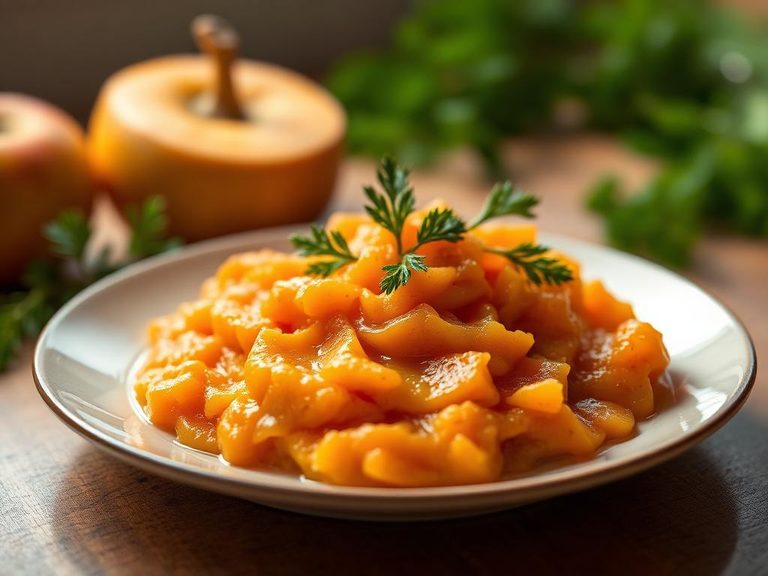
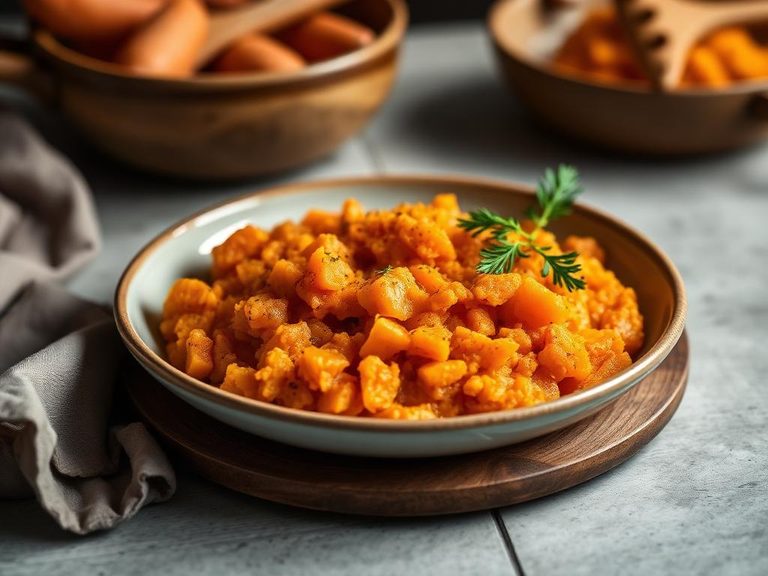
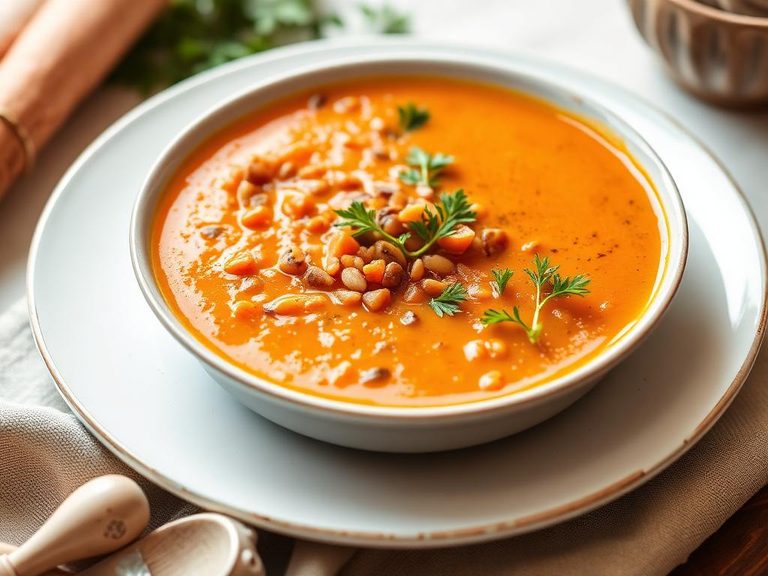

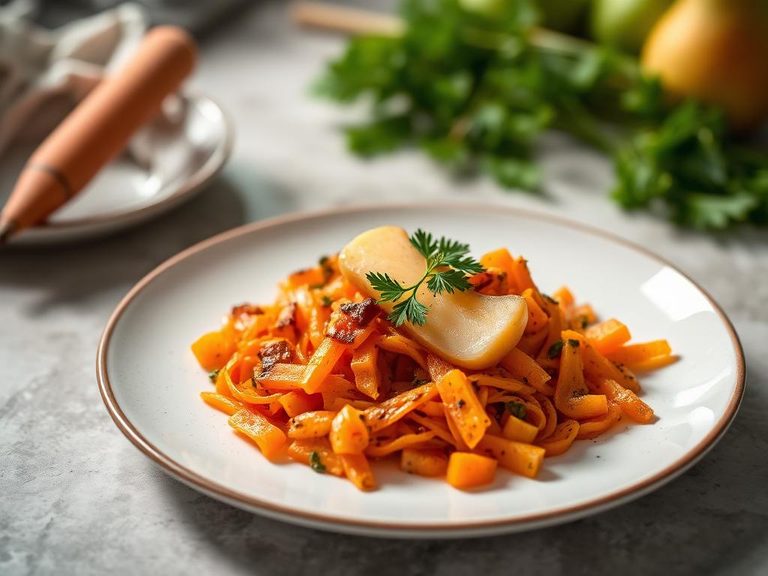
🌍 Where it's eaten
💡 Did you know?
Carrots were originally purple, not orange; the orange variety was developed in the Netherlands in the 17th century as a tribute to the House of Orange.
Full nutrition (USDA data · scales with serving)
| Water | 91.0 g |
| Energy | 32.0 kcal |
| Protein | 0.80 g |
| Total lipid (fat) | 0.20 g |
| Carbohydrate, by difference | 7.2 g |
| Fiber, total dietary | 1.7 g |
| Total Sugars | 3.2 g |
| Calcium, Ca | 23.0 mg |
| Iron, Fe | 0.39 mg |
| Magnesium, Mg | 11.0 mg |
| Phosphorus, P | 20.0 mg |
| Potassium, K | 202 mg |
| Sodium, Na | 49.0 mg |
| Zinc, Zn | 0.18 mg |
| Copper, Cu | 0.05 mg |
| Selenium, Se | 0.20 ug |
| Vitamin C, total ascorbic acid | 5.5 mg |
| Thiamin | 0.02 mg |
| Riboflavin | 0.04 mg |
| Niacin | 0.50 mg |
| Vitamin B-6 | 0.08 mg |
| Folate, total | 17.0 ug |
| Folic acid | 0.00 ug |
| Folate, food | 17.0 ug |
| Folate, DFE | 17.0 ug |
| Choline, total | 8.0 mg |
| Vitamin B-12 | 0.00 ug |
| Vitamin B-12, added | 0.00 ug |
| Vitamin A, RAE | 591 ug |
| Retinol | 0.00 ug |
| Carotene, beta | 5745 ug |
| Carotene, alpha | 2682 ug |
| Cryptoxanthin, beta | 0.00 ug |
| Lycopene | 0.00 ug |
| Lutein + zeaxanthin | 230 ug |
| Vitamin E (alpha-tocopherol) | 0.52 mg |
| Vitamin E, added | 0.00 mg |
| Vitamin D (D2 + D3) | 0.00 ug |
| Vitamin K (phylloquinone) | 12.5 ug |
| Alcohol, ethyl | 0.00 g |
| Caffeine | 0.00 mg |
| Theobromine | 0.00 mg |
Fat & fatty acid profile (per 100g)
| Fatty acids, total saturated | 0.04 g |
| SFA 4:0 | 0.00 g |
| SFA 6:0 | 0.00 g |
| SFA 8:0 | 0.00 g |
| SFA 10:0 | 0.00 g |
| SFA 12:0 | 0.00 g |
| SFA 14:0 | 0.00 g |
| SFA 16:0 | 0.03 g |
| SFA 18:0 | 0.00 g |
| Fatty acids, total monounsaturated | 0.01 g |
| MUFA 16:1 | 0.00 g |
| MUFA 18:1 | 0.01 g |
| MUFA 20:1 | 0.00 g |
| MUFA 22:1 | 0.00 g |
| Fatty acids, total polyunsaturated | 0.09 g |
| PUFA 18:2 | 0.08 g |
| PUFA 18:3 | 0.01 g |
| PUFA 18:4 | 0.00 g |
| PUFA 20:4 | 0.00 g |
| PUFA 20:5 n-3 (EPA) | 0.00 g |
| PUFA 22:5 n-3 (DPA) | 0.00 g |
| PUFA 22:6 n-3 (DHA) | 0.00 g |
| Cholesterol | 0.00 mg |
Amino acid profile (per 100g)
Estimated from Babyfood, dinner, chicken stew, toddler — USDA does not publish this profile for Baby Toddler carrots.
| Tryptophan | 0.06 g |
| Threonine | 0.22 g |
| Isoleucine | 0.26 g |
| Leucine | 0.41 g |
| Lysine | 0.41 g |
| Methionine | 0.11 g |
| Cystine | 0.05 g |
| Phenylalanine | 0.21 g |
| Tyrosine | 0.17 g |
| Valine | 0.29 g |
| Arginine | 0.33 g |
| Histidine | 0.13 g |
| Alanine | 0.30 g |
| Aspartic acid | 0.47 g |
| Glutamic acid | 0.90 g |
| Glycine | 0.29 g |
| Proline | 0.35 g |
| Serine | 0.21 g |
FAQ
At what age can babies start eating Stage 2 carrots?
Stage 2 carrots are typically introduced around 6-8 months, when babies are ready for slightly thicker textures beyond smooth purees.
Are Stage 2 carrots a choking hazard?
No, they are usually pureed or finely mashed, making them safe for babies who are learning to swallow, but always supervise feeding.
Can I mix Stage 2 carrots with other foods?
Yes, they blend well with fruits like apple or pear, or with proteins like chicken or lentils, to create balanced meals.
Do Stage 2 carrots contain added sugar or salt?
Most commercial Stage 2 carrot products are made from carrots alone, with no added sugar or salt, but always check the label.
Nutrient density (calculated · NRF9.3)
Nutrient Rich Foods index: beneficial nutrients (protein, fiber, vitamins, minerals) minus saturated fat, added sugar & sodium, per 100 kcal.
NRF9.3 index — Fulgoni, Keast & Drewnowski, 2009. Computed from USDA nutrients.
Weight-loss friendliness (composite index)
Energy density 0.32 kcal/g · 10% calories from protein · 1.7 g fiber · 3.2 g sugar per 100 g.
Composite of energy density (Rolls et al., 1999), protein & fiber satiety, minus sugar. A calculated heuristic — ranks satiety-per-calorie, not a clinical measure.
Dietary load (calculated from USDA values)
Potential renal acid load. Positive = acid-forming, negative = alkaline-forming.
Sodium-to-potassium ratio: 0.24 (lower is better — aim for ≤ 1)
Sodium:potassium per WHO potassium guidance. Computed from USDA nutrients.