

Asparagus, canned, regular pack, solids and liquids
Whole food · Vegetables and Vegetable Products
Canned asparagus offers the familiar, tender-crisp texture and mild, earthy-sweet flavor of its fresh counterpart, preserved in a convenient, ready-to-use format. Its nutrition profile is notably light, providing a good source of fiber and protein for very few calories. The canning process softens the spears slightly, making them ideal for quick additions to salads, casseroles, or as a simple side.
Calorie split: 38% protein · 53% carbs · 9% fat
↓ Full nutrition💚 Why it's loved
People love it for its unique, savory flavor that pairs beautifully with eggs, pasta, and cheese, and for its incredible versatility in both hot and cold dishes. It's a staple in classic comfort foods like quiche and creamed asparagus soup, offering a touch of green and sophistication with minimal effort.
⚠️ Watch-outs & how to enjoy it better
The primary concern is often the sodium content from the canning brine, which can be significant. To counteract this, rinse the spears thoroughly under cold water before use. Additionally, asparagus contains natural purines, so individuals managing conditions like gout may need to monitor portion sizes and consult dietary guidelines.
Key benefits
- Excellent source of dietary fiber (1g per 100g)
- Very low in calories (15 kcal per 100g)
- Provides plant-based protein (1.8g per 100g)
- Naturally virtually fat-free
- Convenient and shelf-stable for quick meal prep
🍽️ Popular dishes
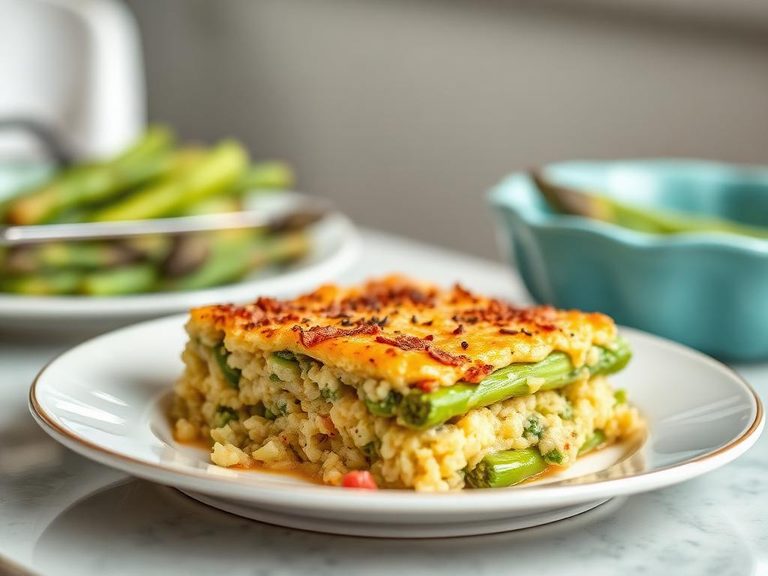
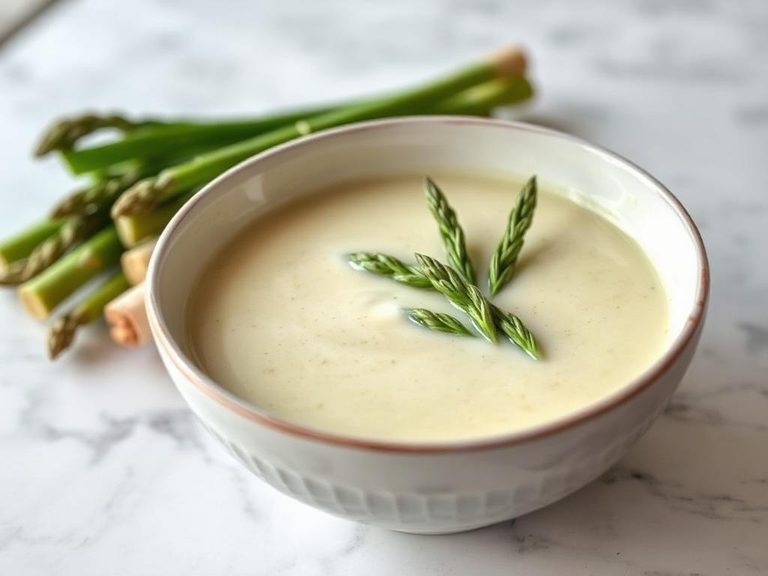

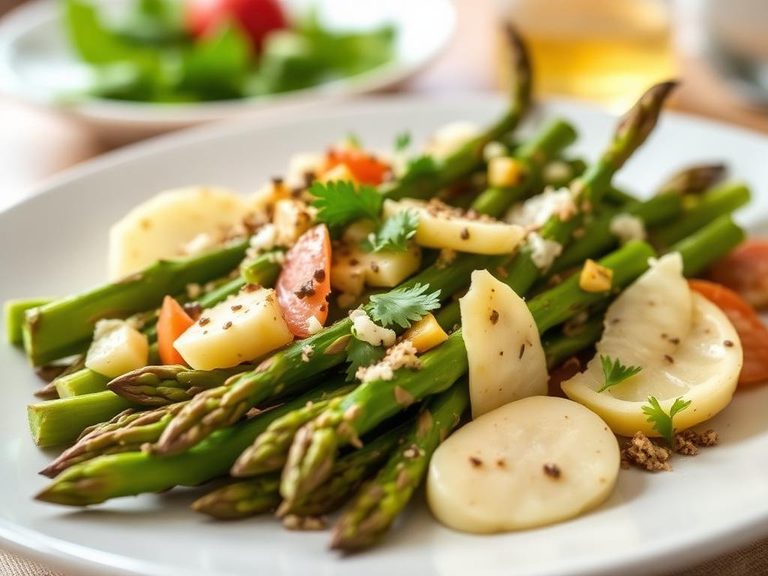
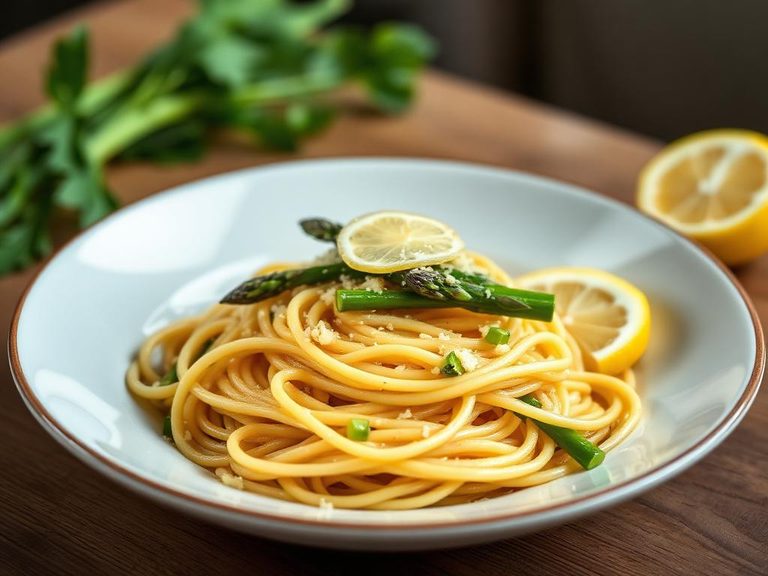
🌍 Where it's eaten
💡 Did you know?
The 'asparagus effect'—that distinctive smell in urine after eating it—is caused by the breakdown of asparagusic acid into sulfur-containing compounds, but a genetic variation means not everyone can smell it.
Full nutrition (USDA data · scales with serving)
| Water | 94.3 g |
| Energy | 15.0 kcal |
| Energy | 62.0 kj |
| Protein | 1.8 g |
| Total lipid (fat) | 0.18 g |
| Ash | 1.2 g |
| Carbohydrate, by difference | 2.5 g |
| Fiber, total dietary | 1.0 g |
| Calcium, Ca | 15.0 mg |
| Iron, Fe | 0.60 mg |
| Magnesium, Mg | 9.0 mg |
| Phosphorus, P | 38.0 mg |
| Potassium, K | 172 mg |
| Sodium, Na | 284 mg |
| Zinc, Zn | 0.47 mg |
| Copper, Cu | 0.11 mg |
| Manganese, Mn | 0.15 mg |
| Selenium, Se | 1.6 ug |
| Vitamin C, total ascorbic acid | 16.5 mg |
| Thiamin | 0.05 mg |
| Riboflavin | 0.09 mg |
| Niacin | 0.85 mg |
| Pantothenic acid | 0.12 mg |
| Vitamin B-6 | 0.10 mg |
| Folate, total | 85.0 ug |
| Folic acid | 0.00 ug |
| Folate, food | 85.0 ug |
| Folate, DFE | 85.0 ug |
| Vitamin B-12 | 0.00 ug |
| Vitamin B-12, added | 0.00 ug |
| Retinol | 0.00 ug |
| Vitamin A, IU | 526 iu |
| Vitamin E (alpha-tocopherol) | 1.2 mg |
| Vitamin E, added | 0.00 mg |
| Vitamin D (D2 + D3), International Units | 0.00 iu |
| Vitamin D (D2 + D3) | 0.00 ug |
| Alcohol, ethyl | 0.00 g |
| Caffeine | 0.00 mg |
| Theobromine | 0.00 mg |
Fat & fatty acid profile (per 100g)
| Fatty acids, total saturated | 0.04 g |
| SFA 4:0 | 0.00 g |
| SFA 6:0 | 0.00 g |
| SFA 8:0 | 0.00 g |
| SFA 10:0 | 0.00 g |
| SFA 12:0 | 0.00 g |
| SFA 14:0 | 0.00 g |
| SFA 16:0 | 0.04 g |
| SFA 18:0 | 0.00 g |
| Fatty acids, total monounsaturated | 0.01 g |
| MUFA 16:1 | 0.00 g |
| MUFA 18:1 | 0.01 g |
| MUFA 20:1 | 0.00 g |
| MUFA 22:1 | 0.00 g |
| Fatty acids, total polyunsaturated | 0.09 g |
| PUFA 18:2 | 0.08 g |
| PUFA 18:3 | 0.00 g |
| PUFA 18:4 | 0.00 g |
| PUFA 20:4 | 0.00 g |
| PUFA 20:5 n-3 (EPA) | 0.00 g |
| PUFA 22:5 n-3 (DPA) | 0.00 g |
| PUFA 22:6 n-3 (DHA) | 0.00 g |
| Fatty acids, total trans | 0.00 g |
| Cholesterol | 0.00 mg |
Amino acid profile (per 100g)
| Tryptophan | 0.02 g |
| Threonine | 0.05 g |
| Isoleucine | 0.07 g |
| Leucine | 0.08 g |
| Lysine | 0.09 g |
| Methionine | 0.02 g |
| Cystine | 0.02 g |
| Phenylalanine | 0.04 g |
| Tyrosine | 0.03 g |
| Valine | 0.07 g |
| Arginine | 0.08 g |
| Histidine | 0.03 g |
| Alanine | 0.09 g |
| Aspartic acid | 0.21 g |
| Glutamic acid | 0.29 g |
| Glycine | 0.06 g |
| Proline | 0.10 g |
| Serine | 0.07 g |
FAQ
Is canned asparagus as nutritious as fresh?
Canning can reduce some heat-sensitive vitamins like Vitamin C, but it retains most minerals, fiber, and protein. The primary nutritional difference is often the added sodium in the canning liquid, which can be reduced by rinsing.
How long does canned asparagus last after opening?
Once opened, transfer the asparagus and its liquid to a sealed container and refrigerate. It will keep for 3-4 days. For longer storage, you can freeze the drained spears for up to 2 months.
Why is my canned asparagus mushy?
The texture is softer than fresh due to the commercial canning process, which uses high heat to ensure safety. For a firmer texture, look for cans labeled 'extra fancy' or 'early season,' which often contain younger, more tender spears.
Nutrient density (calculated · NRF9.3)
Nutrient Rich Foods index: beneficial nutrients (protein, fiber, vitamins, minerals) minus saturated fat, added sugar & sodium, per 100 kcal.
NRF9.3 index — Fulgoni, Keast & Drewnowski, 2009. Computed from USDA nutrients.
Weight-loss friendliness (composite index)
Energy density 0.15 kcal/g · 48% calories from protein · 1.0 g fiber · 0.0 g sugar per 100 g.
Composite of energy density (Rolls et al., 1999), protein & fiber satiety, minus sugar. A calculated heuristic — ranks satiety-per-calorie, not a clinical measure.
Dietary load (calculated from USDA values)
Potential renal acid load. Positive = acid-forming, negative = alkaline-forming.
Sodium-to-potassium ratio: 1.65 (lower is better — aim for ≤ 1)
Sodium:potassium per WHO potassium guidance. Computed from USDA nutrients.