Milk, buttermilk, fluid, cultured, reduced fat
Whole food · Dairy and Egg Products

Photo: Wikipedia
Cultured reduced-fat buttermilk is a tangy, creamy, and slightly effervescent liquid, a byproduct of churning butter from cultured cream. Its distinctively tart flavor and smooth, pourable texture come from lactic acid bacteria that ferment the milk's natural sugars. Nutritionally, it's a light yet protein-rich option, offering a satisfying 4.1g of protein per 100g for only 56 calories.
💚 Why it's loved
People love it for its signature tangy kick that brightens both sweet and savory dishes, from fluffy pancakes to creamy dressings. It's a versatile staple that adds moisture and a subtle, complex flavor without heaviness.
⚠️ Watch-outs & how to enjoy it better
Its tartness can be off-putting to those unaccustomed to it, and the natural sugars (5.3g/100g) may cause a mild blood-sugar spike in sensitive individuals. To mitigate, pair it with fiber and protein (e.g., in a smoothie with oats and nuts) and stick to a moderate serving size. As a dairy product, it's a common allergen for those with lactose intolerance or milk protein sensitivity.
Key benefits
- Rich in probiotics from live active cultures for gut health.
- Excellent source of calcium and phosphorus for bone strength.
- Low in fat (2g/100g) while providing satisfying protein.
- Contains B vitamins like riboflavin (B2) for energy metabolism.
- The lactic acid can aid in tenderizing meat in marinades.
🍽️ Popular dishes
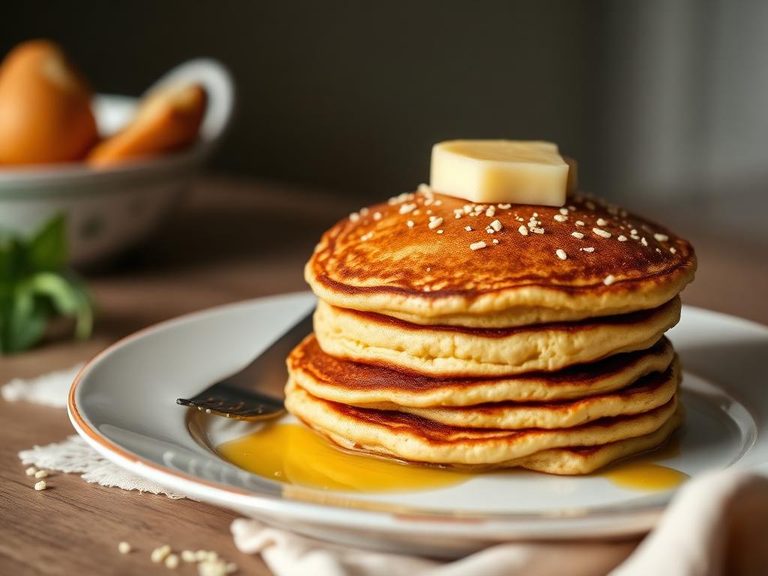
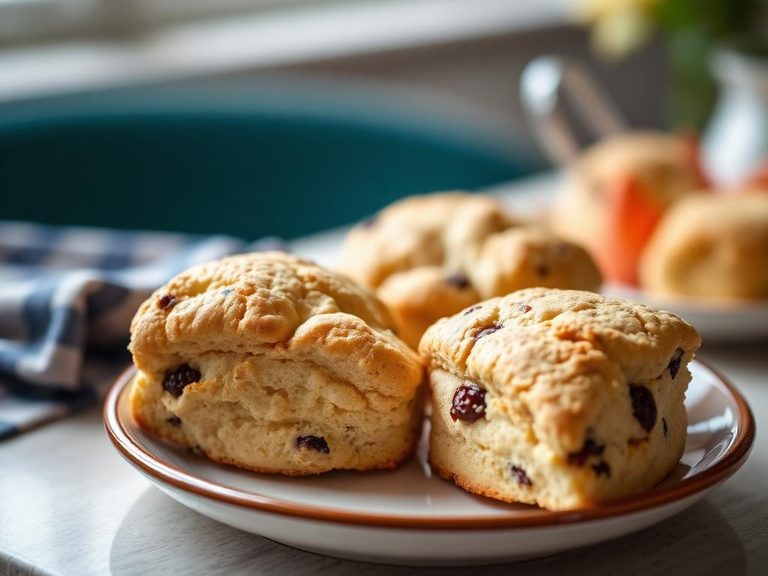
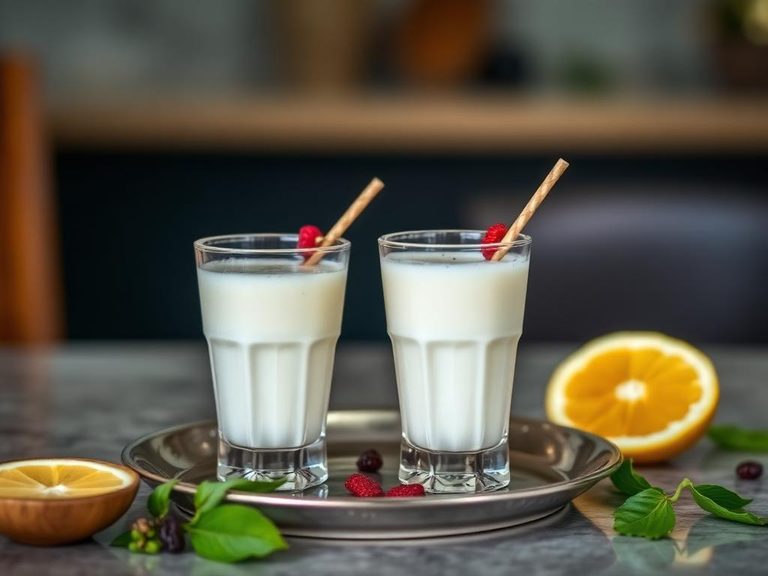
🌍 Where it's eaten
💡 Did you know?
The 'buttermilk' we drink today is actually a modern invention; traditional buttermilk was the thin, tangy liquid left over after churning butter from cream, not a cultured product.
Full nutrition (scales with serving)
| Water | 87.7 g |
| Energy | 56.0 kcal |
| Energy | 233 kj |
| Protein | 4.1 g |
| Total lipid (fat) | 2.0 g |
| Ash | 0.90 g |
| Carbohydrate, by difference | 5.3 g |
| Fiber, total dietary | 0.00 g |
| Total Sugars | 5.3 g |
| Calcium, Ca | 143 mg |
| Iron, Fe | 0.06 mg |
| Magnesium, Mg | 13.0 mg |
| Phosphorus, P | 82.0 mg |
| Potassium, K | 180 mg |
| Sodium, Na | 105 mg |
| Zinc, Zn | 0.24 mg |
| Copper, Cu | 0.01 mg |
| Selenium, Se | 2.3 ug |
| Vitamin C, total ascorbic acid | 1.5 mg |
| Thiamin | 0.05 mg |
| Riboflavin | 0.21 mg |
| Niacin | 0.10 mg |
| Vitamin B-6 | 0.03 mg |
| Folate, total | 6.0 ug |
| Folic acid | 0.00 ug |
| Folate, food | 6.0 ug |
| Folate, DFE | 6.0 ug |
| Choline, total | 16.0 mg |
| Vitamin B-12 | 0.37 ug |
| Vitamin B-12, added | 0.00 ug |
| Vitamin A, RAE | 16.0 ug |
| Retinol | 16.0 ug |
| Carotene, beta | 3.0 ug |
| Carotene, alpha | 0.00 ug |
| Cryptoxanthin, beta | 0.00 ug |
| Vitamin A, IU | 58.0 iu |
| Lycopene | 0.00 ug |
| Lutein + zeaxanthin | 0.00 ug |
| Vitamin E (alpha-tocopherol) | 0.11 mg |
| Vitamin E, added | 0.00 mg |
| Vitamin D (D2 + D3), International Units | 1.0 iu |
| Vitamin D (D2 + D3) | 0.00 ug |
| Vitamin D3 (cholecalciferol) | 0.00 ug |
| Vitamin K (phylloquinone) | 0.10 ug |
| Alcohol, ethyl | 0.00 g |
| Caffeine | 0.00 mg |
| Theobromine | 0.00 mg |
Fat & fatty acid profile (per 100g)
| Fatty acids, total saturated | 1.2 g |
| SFA 4:0 | 0.06 g |
| SFA 6:0 | 0.04 g |
| SFA 8:0 | 0.02 g |
| SFA 10:0 | 0.05 g |
| SFA 12:0 | 0.06 g |
| SFA 14:0 | 0.20 g |
| SFA 16:0 | 0.53 g |
| SFA 18:0 | 0.24 g |
| Fatty acids, total monounsaturated | 0.58 g |
| MUFA 16:1 | 0.04 g |
| MUFA 18:1 | 0.51 g |
| MUFA 20:1 | 0.00 g |
| MUFA 22:1 | 0.00 g |
| Fatty acids, total polyunsaturated | 0.07 g |
| PUFA 18:2 | 0.04 g |
| PUFA 18:3 | 0.03 g |
| PUFA 18:4 | 0.00 g |
| PUFA 20:4 | 0.00 g |
| PUFA 20:5 n-3 (EPA) | 0.00 g |
| PUFA 22:5 n-3 (DPA) | 0.00 g |
| PUFA 22:6 n-3 (DHA) | 0.00 g |
| Cholesterol | 8.0 mg |
Amino acid profile (per 100g)
| Tryptophan | 0.05 g |
| Threonine | 0.17 g |
| Isoleucine | 0.21 g |
| Leucine | 0.39 g |
| Lysine | 0.34 g |
| Methionine | 0.11 g |
| Cystine | 0.03 g |
| Phenylalanine | 0.21 g |
| Tyrosine | 0.21 g |
| Valine | 0.27 g |
| Arginine | 0.12 g |
| Histidine | 0.12 g |
| Alanine | 0.14 g |
| Aspartic acid | 0.35 g |
| Glutamic acid | 0.92 g |
| Glycine | 0.08 g |
| Proline | 0.40 g |
| Serine | 0.25 g |
FAQ
Is buttermilk the same as regular milk?
No. Buttermilk is milk that has been fermented by lactic acid bacteria, giving it a tangy flavor, thicker texture, and lower lactose content than regular milk.
Can I use buttermilk as a substitute for regular milk in recipes?
Yes, but it will add a tangy flavor and react with baking soda to create lift in baked goods. For a substitute, mix 1 cup of milk with 1 tablespoon of lemon juice or vinegar and let it sit for 5 minutes.
What does 'reduced fat' mean for buttermilk?
It means the milk fat has been partially removed, typically bringing the fat content down to about 2% (or less), making it lower in calories and saturated fat than full-fat buttermilk.