

Yogurt, NS as to type of milk, plain
Common food
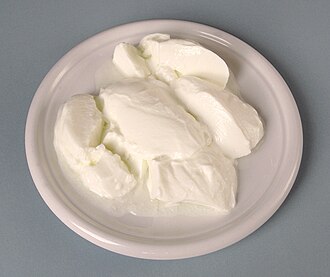
Photo: Wikipedia
Plain yogurt is a creamy, tangy fermented dairy product with a smooth, spoonable texture that can range from thick and velvety to slightly runny depending on the strain. Its clean, mildly acidic flavor profile makes it a neutral canvas for both sweet and savory applications. Nutritionally, it's a standout source of high-quality protein and provides a good dose of calcium and probiotics in a relatively low-calorie package.
Calorie split: 33% protein · 45% carbs · 22% fat
↓ Full nutrition💚 Why it's loved
People adore its cool, creamy texture and refreshing tang that cuts through richness. Its incredible versatility allows it to be a simple snack, a breakfast staple, a cooking ingredient, or a base for marinades and dressings across countless global cuisines.
⚠️ Watch-outs & how to enjoy it better
The natural tartness can be off-putting to those accustomed to heavily sweetened yogurts, and the dairy content makes it unsuitable for those with a milk allergy or strict vegan diet. For individuals managing blood sugar, flavored versions can cause spikes; counteract this by choosing plain and pairing it with high-fiber foods like berries or nuts, or using it as a creamy substitute for higher-fat ingredients in recipes.
Key benefits
- Excellent source of complete protein for muscle maintenance.
- Rich in calcium for bone and dental health.
- Contains live probiotic cultures that support gut microbiome balance.
- Naturally lower in lactose due to fermentation, often tolerated better than milk.
- Versatile base for both sweet and savory culinary preparations.
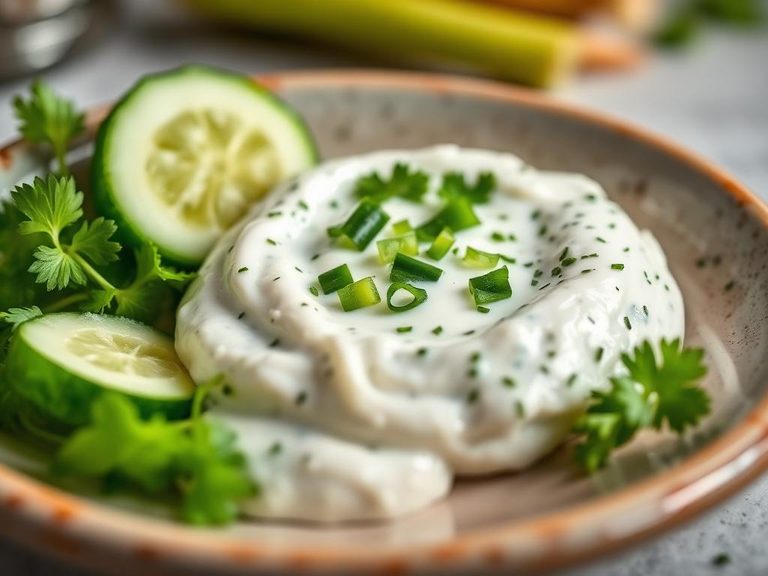
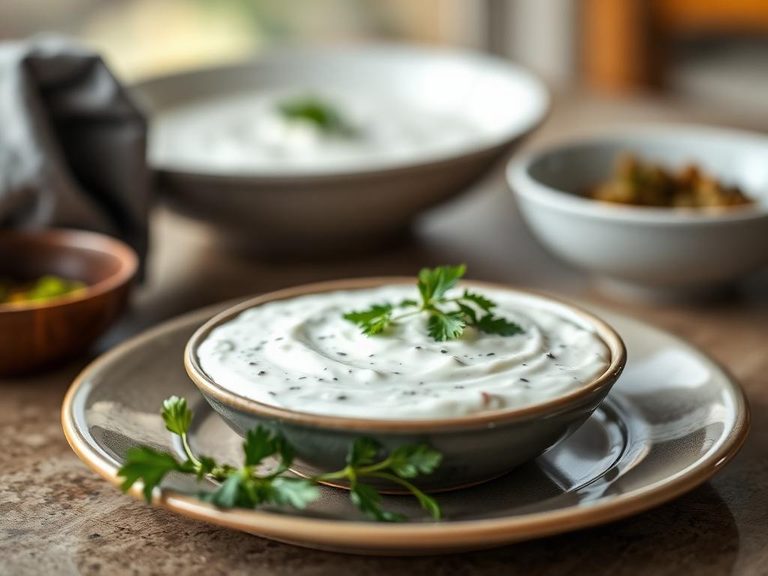
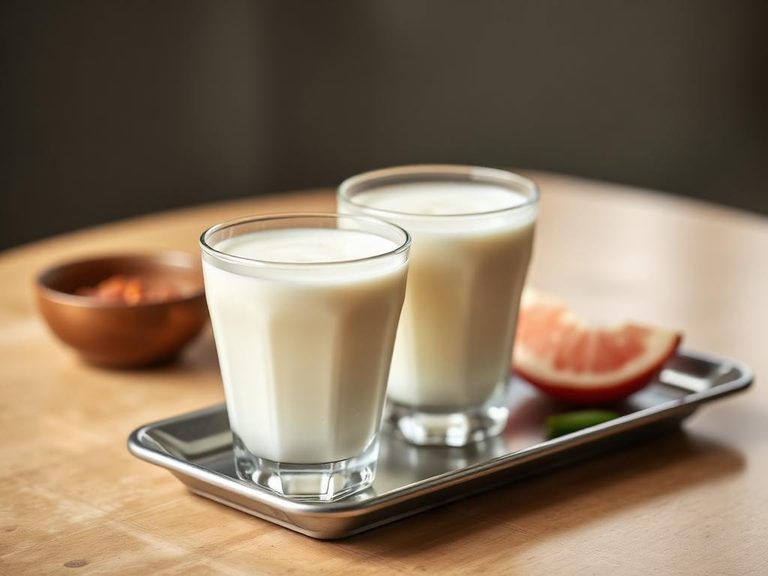
🍽️ Popular dishes


🌍 Where it's eaten
💡 Did you know?
The word 'yogurt' comes from the Turkish 'yoğurmak,' meaning to thicken, and its production by fermenting milk with specific bacteria is a process that is believed to have been discovered accidentally thousands of years ago in the Neolithic period.
Full nutrition (USDA data · scales with serving)
| Water | 85.1 g |
| Energy | 63.0 kcal |
| Protein | 5.3 g |
| Total lipid (fat) | 1.6 g |
| Carbohydrate, by difference | 7.0 g |
| Fiber, total dietary | 0.00 g |
| Total Sugars | 7.0 g |
| Calcium, Ca | 183 mg |
| Iron, Fe | 0.08 mg |
| Magnesium, Mg | 17.0 mg |
| Phosphorus, P | 144 mg |
| Potassium, K | 234 mg |
| Sodium, Na | 70.0 mg |
| Zinc, Zn | 0.89 mg |
| Copper, Cu | 0.01 mg |
| Selenium, Se | 3.3 ug |
| Vitamin C, total ascorbic acid | 0.80 mg |
| Thiamin | 0.04 mg |
| Riboflavin | 0.21 mg |
| Niacin | 0.11 mg |
| Vitamin B-6 | 0.05 mg |
| Folate, total | 11.0 ug |
| Folic acid | 0.00 ug |
| Folate, food | 11.0 ug |
| Folate, DFE | 11.0 ug |
| Choline, total | 15.2 mg |
| Vitamin B-12 | 0.56 ug |
| Vitamin B-12, added | 0.00 ug |
| Vitamin A, RAE | 14.0 ug |
| Retinol | 14.0 ug |
| Carotene, beta | 2.0 ug |
| Carotene, alpha | 0.00 ug |
| Cryptoxanthin, beta | 0.00 ug |
| Lycopene | 0.00 ug |
| Lutein + zeaxanthin | 0.00 ug |
| Vitamin E (alpha-tocopherol) | 0.03 mg |
| Vitamin E, added | 0.00 mg |
| Vitamin D (D2 + D3) | 1.2 ug |
| Vitamin K (phylloquinone) | 0.20 ug |
| Alcohol, ethyl | 0.00 g |
| Caffeine | 0.00 mg |
| Theobromine | 0.00 mg |
Fat & fatty acid profile (per 100g)
| Fatty acids, total saturated | 1.0 g |
| SFA 4:0 | 0.05 g |
| SFA 6:0 | 0.03 g |
| SFA 8:0 | 0.02 g |
| SFA 10:0 | 0.04 g |
| SFA 12:0 | 0.05 g |
| SFA 14:0 | 0.16 g |
| SFA 16:0 | 0.42 g |
| SFA 18:0 | 0.15 g |
| Fatty acids, total monounsaturated | 0.43 g |
| MUFA 16:1 | 0.03 g |
| MUFA 18:1 | 0.35 g |
| MUFA 20:1 | 0.00 g |
| MUFA 22:1 | 0.00 g |
| Fatty acids, total polyunsaturated | 0.04 g |
| PUFA 18:2 | 0.03 g |
| PUFA 18:3 | 0.01 g |
| PUFA 18:4 | 0.00 g |
| PUFA 20:4 | 0.00 g |
| PUFA 20:5 n-3 (EPA) | 0.00 g |
| PUFA 22:5 n-3 (DPA) | 0.00 g |
| PUFA 22:6 n-3 (DHA) | 0.00 g |
| Cholesterol | 6.0 mg |
Amino acid profile (per 100g)
Estimated from Frozen yogurts, vanilla, soft-serve — USDA does not publish this profile for Yogurt.
| Tryptophan | 0.05 g |
| Threonine | 0.17 g |
| Isoleucine | 0.23 g |
| Leucine | 0.37 g |
| Lysine | 0.30 g |
| Methionine | 0.09 g |
| Cystine | 0.04 g |
| Phenylalanine | 0.18 g |
| Tyrosine | 0.18 g |
| Valine | 0.25 g |
| Arginine | 0.14 g |
| Histidine | 0.10 g |
| Alanine | 0.13 g |
| Aspartic acid | 0.28 g |
| Glutamic acid | 0.79 g |
| Glycine | 0.08 g |
| Proline | 0.36 g |
| Serine | 0.20 g |
FAQ
What's the difference between plain yogurt and Greek yogurt?
Greek yogurt is strained to remove most of the whey (liquid), resulting in a thicker, creamier texture, a more concentrated protein content (often double that of regular yogurt), and a tangier flavor.
Can I use plain yogurt in baking?
Yes, it's an excellent substitute for buttermilk or sour cream in recipes like pancakes, muffins, and cakes, adding moisture and a slight tang while activating baking soda for lift.
How can I tell if yogurt has gone bad?
Discard it if you see any mold, notice a significantly stronger or unpleasant sour smell, or if the texture has become excessively watery or slimy beyond the normal separation of whey.
Nutrient density (calculated · NRF9.3)
Nutrient Rich Foods index: beneficial nutrients (protein, fiber, vitamins, minerals) minus saturated fat, added sugar & sodium, per 100 kcal.
NRF9.3 index — Fulgoni, Keast & Drewnowski, 2009. Computed from USDA nutrients.
Weight-loss friendliness (composite index)
Energy density 0.63 kcal/g · 33% calories from protein · 0.0 g fiber · 7.0 g sugar per 100 g.
Composite of energy density (Rolls et al., 1999), protein & fiber satiety, minus sugar. A calculated heuristic — ranks satiety-per-calorie, not a clinical measure.
Dietary load (calculated from USDA values)
Potential renal acid load. Positive = acid-forming, negative = alkaline-forming.
Sodium-to-potassium ratio: 0.30 (lower is better — aim for ≤ 1)
Sodium:potassium per WHO potassium guidance. Computed from USDA nutrients.