

Yogurt, Greek, whole milk, fruit
Common food
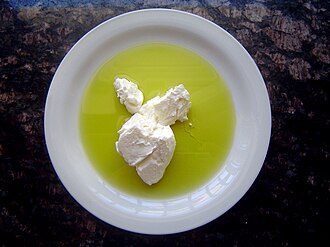
Photo: Wikipedia
Greek yogurt with fruit is a thick, creamy dairy product strained to remove whey, resulting in a dense, velvety texture. The fruit component—often a sweetened fruit puree or pieces—adds a burst of tart or sweet flavor and a slight textural contrast. It offers a strong protein punch relative to its calorie count, making it a nutritionally dense snack or breakfast component.
Calorie split: 28% protein · 41% carbs · 31% fat
↓ Full nutrition💚 Why it's loved
People love it for the satisfying contrast between the cool, tangy yogurt and the sweet fruit, creating a balanced flavor profile. It's celebrated for its versatility as a breakfast base, a post-workout snack, or a healthy dessert alternative.
⚠️ Watch-outs & how to enjoy it better
The added fruit puree or sweetened fruit can significantly increase sugar content, potentially causing blood-sugar spikes. Those with dairy allergies or severe lactose intolerance should avoid it. To counteract sugar spikes, pair it with a source of healthy fat or fiber (like nuts or chia seeds), or opt for plain Greek yogurt and add your own fresh fruit.
Key benefits
- High in protein (7.85g per 100g) for muscle repair and satiety.
- Good source of calcium for bone health.
- Contains probiotics that support gut microbiome balance.
- Provides a convenient, portable source of energy and nutrients.
- Lower in lactose than regular yogurt due to the straining process.
🍽️ Popular dishes

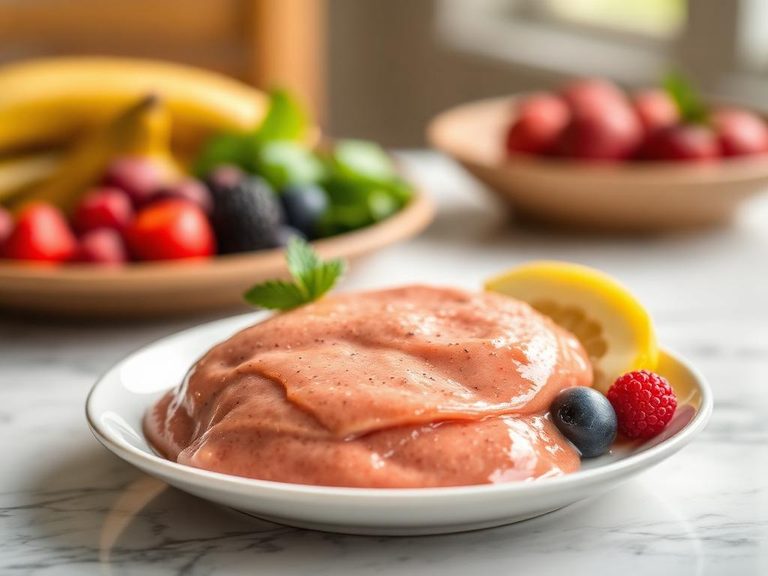
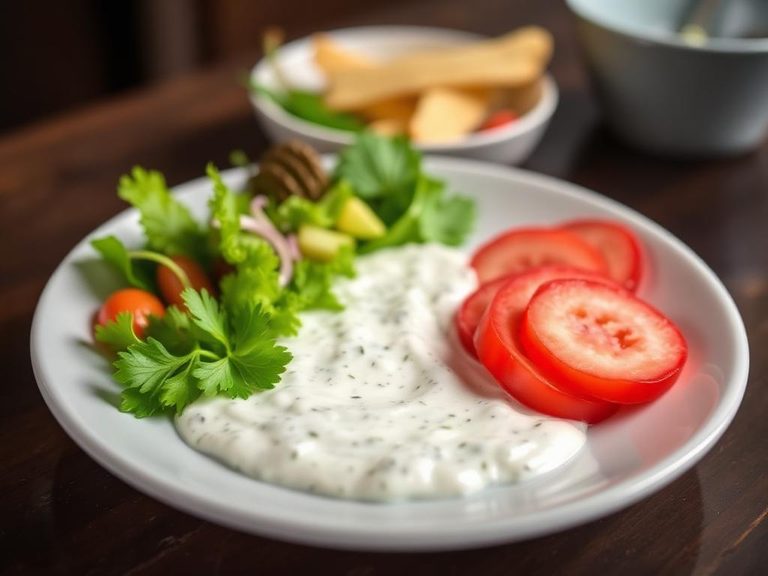

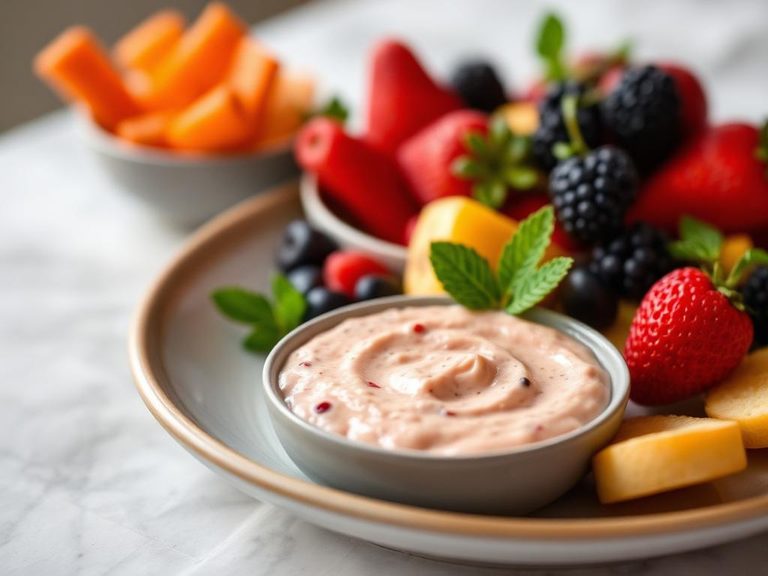

🌍 Where it's eaten
💡 Did you know?
The straining process that defines Greek yogurt can remove up to three times the whey of regular yogurt, concentrating the protein and creating its signature thick texture.
Full nutrition (USDA data · scales with serving)
| Water | 75.7 g |
| Energy | 114 kcal |
| Protein | 7.8 g |
| Total lipid (fat) | 3.9 g |
| Carbohydrate, by difference | 11.8 g |
| Fiber, total dietary | 0.10 g |
| Total Sugars | 8.2 g |
| Calcium, Ca | 101 mg |
| Iron, Fe | 0.05 mg |
| Magnesium, Mg | 10.0 mg |
| Phosphorus, P | 114 mg |
| Potassium, K | 139 mg |
| Sodium, Na | 34.0 mg |
| Zinc, Zn | 0.42 mg |
| Copper, Cu | 0.02 mg |
| Selenium, Se | 8.9 ug |
| Vitamin C, total ascorbic acid | 1.0 mg |
| Thiamin | 0.05 mg |
| Riboflavin | 0.23 mg |
| Niacin | 0.21 mg |
| Vitamin B-6 | 0.04 mg |
| Folate, total | 6.0 ug |
| Folic acid | 0.00 ug |
| Folate, food | 6.0 ug |
| Folate, DFE | 6.0 ug |
| Choline, total | 14.6 mg |
| Vitamin B-12 | 0.67 ug |
| Vitamin B-12, added | 0.00 ug |
| Vitamin A, RAE | 34.0 ug |
| Retinol | 34.0 ug |
| Carotene, beta | 0.00 ug |
| Carotene, alpha | 0.00 ug |
| Cryptoxanthin, beta | 0.00 ug |
| Lycopene | 0.00 ug |
| Lutein + zeaxanthin | 0.00 ug |
| Vitamin E (alpha-tocopherol) | 0.02 mg |
| Vitamin E, added | 0.00 mg |
| Vitamin D (D2 + D3) | 0.90 ug |
| Vitamin K (phylloquinone) | 0.00 ug |
| Alcohol, ethyl | 0.00 g |
| Caffeine | 0.00 mg |
| Theobromine | 0.00 mg |
Fat & fatty acid profile (per 100g)
| Fatty acids, total saturated | 2.1 g |
| SFA 4:0 | 0.00 g |
| SFA 6:0 | 0.04 g |
| SFA 8:0 | 0.08 g |
| SFA 10:0 | 0.23 g |
| SFA 12:0 | 0.12 g |
| SFA 14:0 | 0.37 g |
| SFA 16:0 | 0.96 g |
| SFA 18:0 | 0.30 g |
| Fatty acids, total monounsaturated | 0.86 g |
| MUFA 16:1 | 0.04 g |
| MUFA 18:1 | 0.74 g |
| MUFA 20:1 | 0.03 g |
| MUFA 22:1 | 0.00 g |
| Fatty acids, total polyunsaturated | 0.42 g |
| PUFA 18:2 | 0.09 g |
| PUFA 18:3 | 0.02 g |
| PUFA 18:4 | 0.00 g |
| PUFA 20:4 | 0.00 g |
| PUFA 20:5 n-3 (EPA) | 0.00 g |
| PUFA 22:5 n-3 (DPA) | 0.00 g |
| PUFA 22:6 n-3 (DHA) | 0.00 g |
| Cholesterol | 15.0 mg |
Amino acid profile (per 100g)
Estimated from Frozen yogurts, vanilla, soft-serve — USDA does not publish this profile for Yogurt.
| Tryptophan | 0.05 g |
| Threonine | 0.17 g |
| Isoleucine | 0.23 g |
| Leucine | 0.37 g |
| Lysine | 0.30 g |
| Methionine | 0.09 g |
| Cystine | 0.04 g |
| Phenylalanine | 0.18 g |
| Tyrosine | 0.18 g |
| Valine | 0.25 g |
| Arginine | 0.14 g |
| Histidine | 0.10 g |
| Alanine | 0.13 g |
| Aspartic acid | 0.28 g |
| Glutamic acid | 0.79 g |
| Glycine | 0.08 g |
| Proline | 0.36 g |
| Serine | 0.20 g |
FAQ
How is Greek yogurt with fruit different from regular yogurt with fruit?
Greek yogurt is strained to remove whey, making it thicker, creamier, and higher in protein per serving. Regular yogurt is thinner. The fruit component is often similar, but the base texture is the key difference.
Is the fruit in Greek yogurt usually real fruit?
It varies by brand. Some use fruit purees, some use pieces in syrup, and some use a combination. Check the ingredient list for terms like 'fruit puree,' 'sugar,' or 'cornstarch' to understand what's added.
Can I use Greek yogurt with fruit in cooking and baking?
Yes, but be mindful of the added sugar and fruit pieces, which can affect the final dish's sweetness and texture. It works well in smoothies, as a topping, or in some baked goods where moisture and a slight sweetness are desired.
Nutrient density (calculated · NRF9.3)
Nutrient Rich Foods index: beneficial nutrients (protein, fiber, vitamins, minerals) minus saturated fat, added sugar & sodium, per 100 kcal.
NRF9.3 index — Fulgoni, Keast & Drewnowski, 2009. Computed from USDA nutrients.
Weight-loss friendliness (composite index)
Energy density 1.14 kcal/g · 28% calories from protein · 0.1 g fiber · 8.2 g sugar per 100 g.
Composite of energy density (Rolls et al., 1999), protein & fiber satiety, minus sugar. A calculated heuristic — ranks satiety-per-calorie, not a clinical measure.
Dietary load (calculated from USDA values)
Potential renal acid load. Positive = acid-forming, negative = alkaline-forming.
Sodium-to-potassium ratio: 0.24 (lower is better — aim for ≤ 1)
Sodium:potassium per WHO potassium guidance. Computed from USDA nutrients.