

Whole wheat cereal, cooked
Common food

Photo: Wikipedia
Whole wheat cereal, when cooked, transforms from a dry, nutty grain into a soft, porridge-like comfort food with a mild, earthy flavor and a pleasantly chewy texture. Its standout nutritional feature is its impressive fiber content, providing over 5% of the daily value per 100g, which supports digestive health. This simple, low-fat staple is a foundational source of complex carbohydrates for sustained energy.
Calorie split: 12% protein · 83% carbs · 5% fat
↓ Full nutrition💚 Why it's loved
People love it for its comforting, warm simplicity and its blank-canvas nature, which readily absorbs the flavors of sweeteners, fruits, or savory spices. It's a nostalgic, hearty breakfast staple in many cultures, evoking a sense of wholesome, home-cooked nourishment.
⚠️ Watch-outs & how to enjoy it better
Its plain, sometimes mushy texture can be unappealing, and its high-fiber content may cause digestive discomfort for some if introduced too quickly. To counteract this, start with smaller portions and ensure adequate water intake. Pairing it with protein (like nuts or yogurt) or healthy fat (like seeds) can also enhance satiety and balance blood sugar response.
Key benefits
- High in dietary fiber for digestive health
- Excellent source of complex carbohydrates
- Very low in fat and naturally low in sugar
- Provides sustained energy release
- Good base for adding nutrient-dense toppings
🍽️ Popular dishes
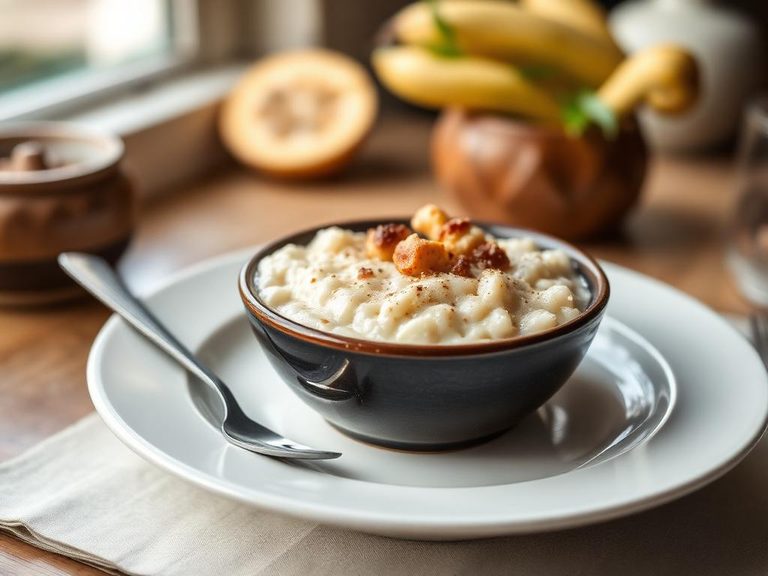
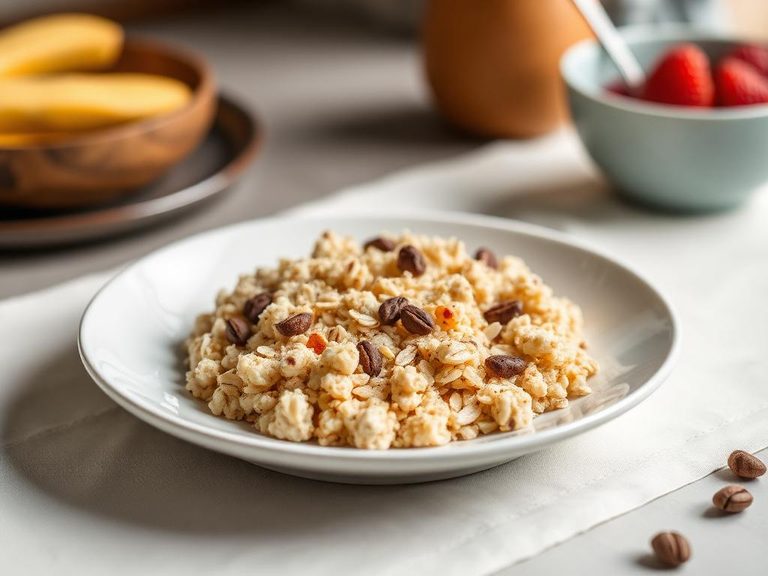

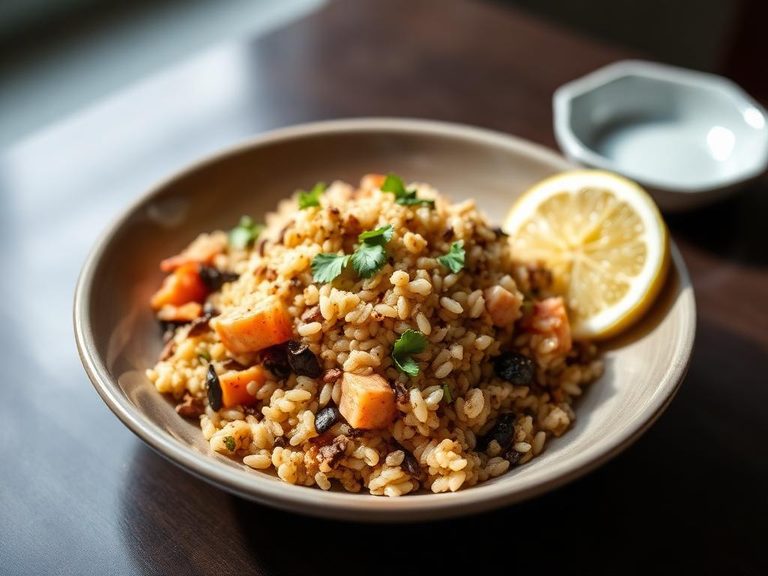
🌍 Where it's eaten
💡 Did you know?
Archaeological evidence suggests that the ancient Egyptians were among the first to cultivate and consume a form of whole wheat cereal, making it one of humanity's oldest prepared breakfast foods.
Full nutrition (USDA data · scales with serving)
| Water | 87.3 g |
| Energy | 47.0 kcal |
| Protein | 1.6 g |
| Total lipid (fat) | 0.28 g |
| Carbohydrate, by difference | 10.4 g |
| Fiber, total dietary | 1.3 g |
| Total Sugars | 0.06 g |
| Calcium, Ca | 9.0 mg |
| Iron, Fe | 0.44 mg |
| Magnesium, Mg | 18.0 mg |
| Phosphorus, P | 50.0 mg |
| Potassium, K | 51.0 mg |
| Sodium, Na | 71.0 mg |
| Zinc, Zn | 0.38 mg |
| Copper, Cu | 0.07 mg |
| Selenium, Se | 9.8 ug |
| Vitamin C, total ascorbic acid | 0.00 mg |
| Thiamin | 0.04 mg |
| Riboflavin | 0.04 mg |
| Niacin | 0.61 mg |
| Vitamin B-6 | 0.05 mg |
| Folate, total | 8.0 ug |
| Folic acid | 0.00 ug |
| Folate, food | 8.0 ug |
| Folate, DFE | 8.0 ug |
| Choline, total | 3.2 mg |
| Vitamin B-12 | 0.00 ug |
| Vitamin B-12, added | 0.00 ug |
| Vitamin A, RAE | 0.00 ug |
| Retinol | 0.00 ug |
| Carotene, beta | 0.00 ug |
| Carotene, alpha | 0.00 ug |
| Cryptoxanthin, beta | 0.00 ug |
| Lycopene | 0.00 ug |
| Lutein + zeaxanthin | 28.0 ug |
| Vitamin E (alpha-tocopherol) | 0.18 mg |
| Vitamin E, added | 0.00 mg |
| Vitamin D (D2 + D3) | 0.00 ug |
| Vitamin K (phylloquinone) | 0.30 ug |
| Alcohol, ethyl | 0.00 g |
| Caffeine | 0.00 mg |
| Theobromine | 0.00 mg |
Fat & fatty acid profile (per 100g)
| Fatty acids, total saturated | 0.04 g |
| SFA 4:0 | 0.00 g |
| SFA 6:0 | 0.00 g |
| SFA 8:0 | 0.00 g |
| SFA 10:0 | 0.00 g |
| SFA 12:0 | 0.00 g |
| SFA 14:0 | 0.00 g |
| SFA 16:0 | 0.04 g |
| SFA 18:0 | 0.00 g |
| Fatty acids, total monounsaturated | 0.04 g |
| MUFA 16:1 | 0.00 g |
| MUFA 18:1 | 0.04 g |
| MUFA 20:1 | 0.00 g |
| MUFA 22:1 | 0.00 g |
| Fatty acids, total polyunsaturated | 0.14 g |
| PUFA 18:2 | 0.13 g |
| PUFA 18:3 | 0.01 g |
| PUFA 18:4 | 0.00 g |
| PUFA 20:4 | 0.00 g |
| PUFA 20:5 n-3 (EPA) | 0.00 g |
| PUFA 22:5 n-3 (DPA) | 0.00 g |
| PUFA 22:6 n-3 (DHA) | 0.00 g |
| Cholesterol | 0.00 mg |
Amino acid profile (per 100g)
Estimated from Crackers, whole-wheat — USDA does not publish this profile for Whole wheat cereal.
| Tryptophan | 0.14 g |
| Threonine | 0.30 g |
| Isoleucine | 0.36 g |
| Leucine | 0.70 g |
| Lysine | 0.27 g |
| Methionine | 0.17 g |
| Cystine | 0.23 g |
| Phenylalanine | 0.48 g |
| Tyrosine | 0.19 g |
| Valine | 0.47 g |
| Arginine | 0.48 g |
| Histidine | 0.24 g |
| Alanine | 0.39 g |
| Aspartic acid | 0.54 g |
| Glutamic acid | 3.1 g |
| Glycine | 0.43 g |
| Proline | 1.0 g |
| Serine | 0.46 g |
FAQ
Is whole wheat cereal the same as oatmeal?
No. While both are hot cereals, whole wheat cereal is made from wheat grains, while oatmeal is made from oats. They have different textures, flavors, and slightly different nutritional profiles.
Can I eat it cold?
It's typically served hot, but you can cook it, let it cool, and eat it cold like a pudding. However, the texture will be thicker and denser than when served warm.
How can I make it taste better?
Enhance its mild flavor with toppings like fresh berries, sliced banana, a drizzle of honey or maple syrup, a sprinkle of cinnamon, nuts, seeds, or a dollop of yogurt for added protein and creaminess.
Nutrient density (calculated · NRF9.3)
Nutrient Rich Foods index: beneficial nutrients (protein, fiber, vitamins, minerals) minus saturated fat, added sugar & sodium, per 100 kcal.
NRF9.3 index — Fulgoni, Keast & Drewnowski, 2009. Computed from USDA nutrients.
Weight-loss friendliness (composite index)
Energy density 0.47 kcal/g · 13% calories from protein · 1.3 g fiber · 0.1 g sugar per 100 g.
Composite of energy density (Rolls et al., 1999), protein & fiber satiety, minus sugar. A calculated heuristic — ranks satiety-per-calorie, not a clinical measure.
Dietary load (calculated from USDA values)
Potential renal acid load. Positive = acid-forming, negative = alkaline-forming.
Sodium-to-potassium ratio: 1.39 (lower is better — aim for ≤ 1)
Sodium:potassium per WHO potassium guidance. Computed from USDA nutrients.