

Crackers, wheat, flavored (Wheat Thins)
Common food

Photo: Wikipedia
Wheat Thins are a crisp, savory, whole-wheat cracker with a distinctively toasted, slightly sweet flavor and a satisfying, snappy crunch. They are a staple snack, known for their thin, square shape and ability to hold up to dips and spreads. Nutritionally, they offer a decent amount of fiber (8.6g per 100g) but are calorie-dense, with a significant portion of calories coming from fat and carbohydrates.
Calorie split: 8% protein · 62% carbs · 30% fat
↓ Full nutrition💚 Why it's loved
People love Wheat Thins for their addictive, savory-sweet flavor and the perfect balance of crunch and texture that makes them ideal for pairing with cheese, hummus, or dips. Their cultural status as a classic American party snack and reliable pantry staple makes them a go-to for casual gatherings and quick snacking.
⚠️ Watch-outs & how to enjoy it better
They are high in sodium and can cause blood-sugar spikes due to refined carbohydrates, making them less suitable for those managing hypertension or diabetes. To counteract this, pair them with protein or healthy fats (like nut butter or cheese) to slow sugar absorption, practice strict portion control (e.g., 15-20 crackers), and choose low-sodium varieties if available.
Key benefits
- Good source of dietary fiber for digestive health
- Provides plant-based protein (8.94g per 100g)
- Convenient, shelf-stable, and portable snack
- Versatile base for dips, spreads, and appetizers
- Often fortified with B vitamins like thiamin and niacin
🍽️ Popular dishes
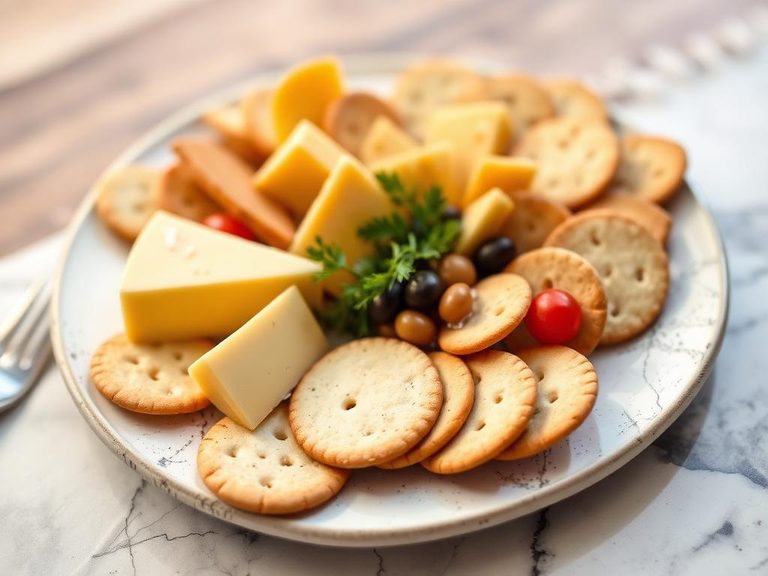
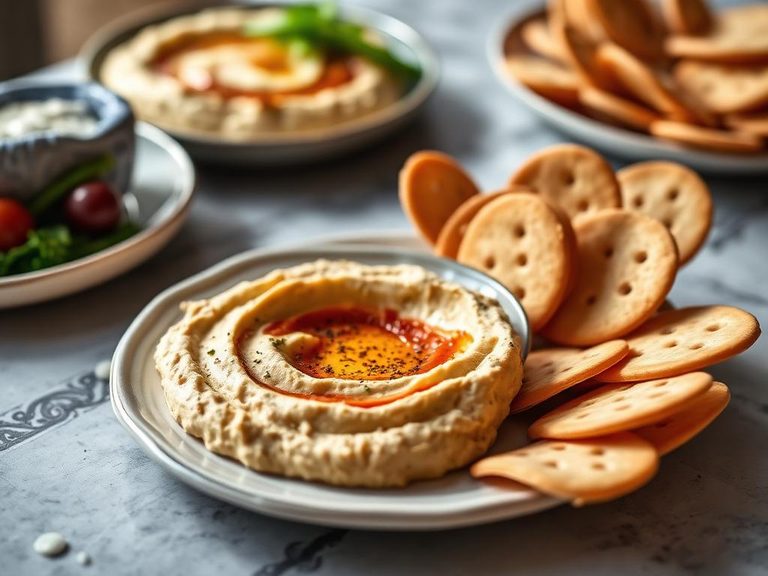


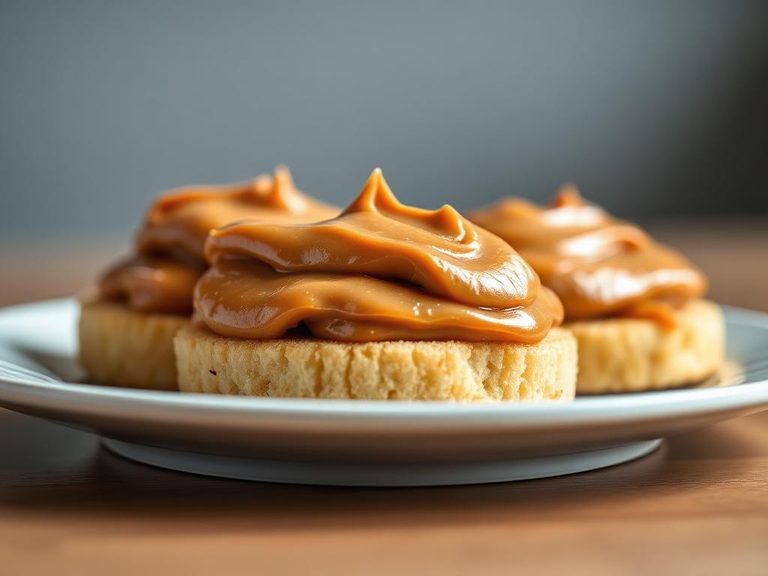
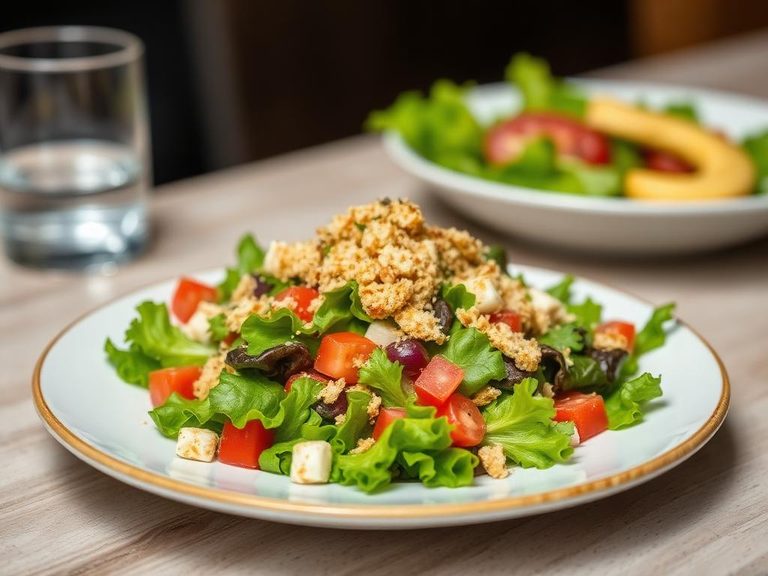
🌍 Where it's eaten
💡 Did you know?
The original Wheat Thins were created in 1947 by the Nabisco company, and their name was inspired by their thin, crisp texture, which was a novel feature at the time.
Full nutrition (USDA data · scales with serving)
| Water | 2.8 g |
| Energy | 441 kcal |
| Protein | 8.9 g |
| Total lipid (fat) | 15.3 g |
| Carbohydrate, by difference | 70.1 g |
| Fiber, total dietary | 8.6 g |
| Total Sugars | 8.3 g |
| Calcium, Ca | 64.0 mg |
| Iron, Fe | 3.0 mg |
| Magnesium, Mg | 91.0 mg |
| Phosphorus, P | 316 mg |
| Potassium, K | 314 mg |
| Sodium, Na | 750 mg |
| Zinc, Zn | 2.1 mg |
| Copper, Cu | 0.35 mg |
| Selenium, Se | 10.0 ug |
| Vitamin C, total ascorbic acid | 0.00 mg |
| Thiamin | 0.23 mg |
| Riboflavin | 0.08 mg |
| Niacin | 4.3 mg |
| Vitamin B-6 | 0.21 mg |
| Folate, total | 33.0 ug |
| Folic acid | 1.0 ug |
| Folate, food | 32.0 ug |
| Folate, DFE | 34.0 ug |
| Choline, total | 27.2 mg |
| Vitamin B-12 | 0.00 ug |
| Vitamin B-12, added | 0.00 ug |
| Vitamin A, RAE | 0.00 ug |
| Retinol | 0.00 ug |
| Carotene, beta | 2.0 ug |
| Carotene, alpha | 0.00 ug |
| Cryptoxanthin, beta | 0.00 ug |
| Lycopene | 0.00 ug |
| Lutein + zeaxanthin | 180 ug |
| Vitamin E (alpha-tocopherol) | 1.5 mg |
| Vitamin E, added | 0.00 mg |
| Vitamin D (D2 + D3) | 0.00 ug |
| Vitamin K (phylloquinone) | 20.7 ug |
| Alcohol, ethyl | 0.00 g |
| Caffeine | 0.00 mg |
| Theobromine | 0.00 mg |
Fat & fatty acid profile (per 100g)
| Fatty acids, total saturated | 2.6 g |
| SFA 4:0 | 0.00 g |
| SFA 6:0 | 0.00 g |
| SFA 8:0 | 0.03 g |
| SFA 10:0 | 0.02 g |
| SFA 12:0 | 0.17 g |
| SFA 14:0 | 0.08 g |
| SFA 16:0 | 1.6 g |
| SFA 18:0 | 0.62 g |
| Fatty acids, total monounsaturated | 3.4 g |
| MUFA 16:1 | 0.01 g |
| MUFA 18:1 | 3.3 g |
| MUFA 20:1 | 0.04 g |
| MUFA 22:1 | 0.00 g |
| Fatty acids, total polyunsaturated | 7.7 g |
| PUFA 18:2 | 6.8 g |
| PUFA 18:3 | 0.92 g |
| PUFA 18:4 | 0.00 g |
| PUFA 20:4 | 0.00 g |
| PUFA 20:5 n-3 (EPA) | 0.00 g |
| PUFA 22:5 n-3 (DPA) | 0.00 g |
| PUFA 22:6 n-3 (DHA) | 0.00 g |
| Cholesterol | 0.00 mg |
Amino acid profile (per 100g)
Estimated from Crackers, cheese, sandwich-type with cheese filling — USDA does not publish this profile for Crackers.
| Tryptophan | 0.11 g |
| Threonine | 0.33 g |
| Isoleucine | 0.36 g |
| Leucine | 0.64 g |
| Lysine | 0.39 g |
| Methionine | 0.15 g |
| Cystine | 0.15 g |
| Phenylalanine | 0.35 g |
| Tyrosine | 0.25 g |
| Valine | 0.38 g |
| Arginine | 0.29 g |
| Histidine | 0.17 g |
| Alanine | 0.30 g |
| Aspartic acid | 0.52 g |
| Glutamic acid | 2.2 g |
| Glycine | 0.24 g |
| Proline | 0.77 g |
| Serine | 0.40 g |
FAQ
Are Wheat Thins a healthy snack?
They can be part of a balanced diet due to their fiber and protein content, but they are calorie-dense and high in sodium and refined carbs, so moderation is key.
What are Wheat Thins best paired with?
They pair well with hummus, cheese, nut butters, or dips like salsa, which add protein and healthy fats to balance the snack.
Do Wheat Thins contain gluten?
Yes, they are made from wheat and contain gluten, so they are not suitable for those with celiac disease or gluten sensitivity.
Nutrient density (calculated · NRF9.3)
Nutrient Rich Foods index: beneficial nutrients (protein, fiber, vitamins, minerals) minus saturated fat, added sugar & sodium, per 100 kcal.
NRF9.3 index — Fulgoni, Keast & Drewnowski, 2009. Computed from USDA nutrients.
Weight-loss friendliness (composite index)
Energy density 4.41 kcal/g · 8% calories from protein · 8.6 g fiber · 8.3 g sugar per 100 g.
Composite of energy density (Rolls et al., 1999), protein & fiber satiety, minus sugar. A calculated heuristic — ranks satiety-per-calorie, not a clinical measure.
Dietary load (calculated from USDA values)
Potential renal acid load. Positive = acid-forming, negative = alkaline-forming.
Sodium-to-potassium ratio: 2.39 (lower is better — aim for ≤ 1)
Sodium:potassium per WHO potassium guidance. Computed from USDA nutrients.