

Whey, sweet, dry
Common food

Photo: Wikipedia
Whey, sweet, dry is a fine, pale-yellow powder with a subtly sweet, milky flavor and a light, free-flowing texture. It's the concentrated, dehydrated liquid left over from cheese production, packed with quick-digesting protein and a high carbohydrate content, primarily from naturally occurring lactose. This makes it a potent, energy-dense ingredient often used as a nutritional booster in both savory and sweet preparations.
Calorie split: 14% protein · 83% carbs · 3% fat
↓ Full nutrition💚 Why it's loved
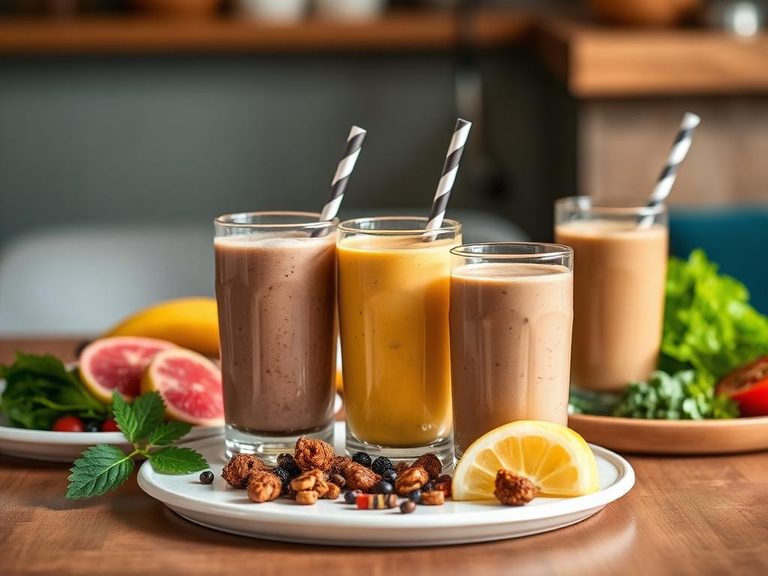
People love it for its incredible versatility and subtle sweetness, which allows it to seamlessly boost the protein content of everything from smoothies and baked goods to oatmeal and yogurt without overpowering flavors. It's a convenient, concentrated form of dairy nutrition that has become a staple in both sports nutrition and traditional food preservation.
⚠️ Watch-outs & how to enjoy it better
Its very high sugar (lactose) content makes it unsuitable for those with lactose intolerance or following a low-sugar diet, as it can cause digestive discomfort and blood-sugar spikes. To counteract this, pair it with a source of fat or fiber (like nuts or chia seeds) to slow absorption, or use it in small portions within a larger meal. It is also a dairy product and a common allergen for those with milk protein allergies.
Key benefits
- Excellent source of fast-absorbing whey protein for muscle repair.
- Provides a quick energy boost from its high carbohydrate content.
- Rich in essential amino acids and branched-chain amino acids (BCAAs).
- A versatile, shelf-stable ingredient for boosting nutrition in recipes.
- Naturally contains calcium and other minerals from milk.
🍽️ Popular dishes

🌍 Where it's eaten
💡 Did you know?
The production of sweet whey is a direct byproduct of making hard cheeses like Swiss or cheddar; for every pound of cheese made, about nine pounds of liquid whey are produced, which was once considered a waste product.
Full nutrition (USDA data · scales with serving)
| Water | 3.2 g |
| Energy | 353 kcal |
| Protein | 12.9 g |
| Total lipid (fat) | 1.1 g |
| Carbohydrate, by difference | 74.5 g |
| Fiber, total dietary | 0.00 g |
| Total Sugars | 74.5 g |
| Calcium, Ca | 796 mg |
| Iron, Fe | 0.88 mg |
| Magnesium, Mg | 176 mg |
| Phosphorus, P | 932 mg |
| Potassium, K | 2080 mg |
| Sodium, Na | 1079 mg |
| Zinc, Zn | 2.0 mg |
| Copper, Cu | 0.07 mg |
| Selenium, Se | 27.2 ug |
| Vitamin C, total ascorbic acid | 1.5 mg |
| Thiamin | 0.52 mg |
| Riboflavin | 2.2 mg |
| Niacin | 1.3 mg |
| Vitamin B-6 | 0.58 mg |
| Folate, total | 12.0 ug |
| Folic acid | 0.00 ug |
| Folate, food | 12.0 ug |
| Folate, DFE | 12.0 ug |
| Choline, total | 225 mg |
| Vitamin B-12 | 2.4 ug |
| Vitamin B-12, added | 0.00 ug |
| Vitamin A, RAE | 8.0 ug |
| Retinol | 8.0 ug |
| Carotene, beta | 2.0 ug |
| Carotene, alpha | 0.00 ug |
| Cryptoxanthin, beta | 0.00 ug |
| Lycopene | 0.00 ug |
| Lutein + zeaxanthin | 0.00 ug |
| Vitamin E (alpha-tocopherol) | 0.02 mg |
| Vitamin E, added | 0.00 mg |
| Vitamin D (D2 + D3) | 0.00 ug |
| Vitamin K (phylloquinone) | 0.10 ug |
| Alcohol, ethyl | 0.00 g |
| Caffeine | 0.00 mg |
| Theobromine | 0.00 mg |
Fat & fatty acid profile (per 100g)
| Fatty acids, total saturated | 0.68 g |
| SFA 4:0 | 0.06 g |
| SFA 6:0 | 0.01 g |
| SFA 8:0 | 0.01 g |
| SFA 10:0 | 0.02 g |
| SFA 12:0 | 0.01 g |
| SFA 14:0 | 0.10 g |
| SFA 16:0 | 0.33 g |
| SFA 18:0 | 0.10 g |
| Fatty acids, total monounsaturated | 0.30 g |
| MUFA 16:1 | 0.03 g |
| MUFA 18:1 | 0.25 g |
| MUFA 20:1 | 0.00 g |
| MUFA 22:1 | 0.00 g |
| Fatty acids, total polyunsaturated | 0.03 g |
| PUFA 18:2 | 0.03 g |
| PUFA 18:3 | 0.01 g |
| PUFA 18:4 | 0.00 g |
| PUFA 20:4 | 0.00 g |
| PUFA 20:5 n-3 (EPA) | 0.00 g |
| PUFA 22:5 n-3 (DPA) | 0.00 g |
| PUFA 22:6 n-3 (DHA) | 0.00 g |
| Cholesterol | 6.0 mg |
Amino acid profile (per 100g)
Estimated from Whey, acid, fluid — USDA does not publish this profile for Whey.
| Tryptophan | 0.02 g |
| Threonine | 0.04 g |
| Isoleucine | 0.04 g |
| Leucine | 0.07 g |
| Lysine | 0.07 g |
| Methionine | 0.01 g |
| Cystine | 0.01 g |
| Phenylalanine | 0.03 g |
| Tyrosine | 0.02 g |
| Valine | 0.04 g |
| Arginine | 0.02 g |
| Histidine | 0.01 g |
| Alanine | 0.03 g |
| Aspartic acid | 0.07 g |
| Glutamic acid | 0.14 g |
| Glycine | 0.01 g |
| Proline | 0.04 g |
| Serine | 0.04 g |
FAQ
What is the difference between sweet whey and acid whey?
Sweet whey is a byproduct of hard cheese production (like cheddar), where an enzyme is used. Acid whey comes from making acid-set products like Greek yogurt or cottage cheese, and is much more sour and acidic.
Can I use this for baking?
Yes, it's excellent for adding protein and moisture to baked goods. Substitute up to 1/4 of the flour in a recipe with dry whey powder for a protein boost without drastically changing the texture.
Is it the same as whey protein powder?
Not exactly. Sweet, dry whey is the whole, dehydrated whey with all its lactose and minerals. Whey protein powder is further processed to isolate and concentrate the protein, often removing most of the lactose and fat.
Nutrient density (calculated · NRF9.3)
Nutrient Rich Foods index: beneficial nutrients (protein, fiber, vitamins, minerals) minus saturated fat, added sugar & sodium, per 100 kcal.
NRF9.3 index — Fulgoni, Keast & Drewnowski, 2009. Computed from USDA nutrients.
Weight-loss friendliness (composite index)
Energy density 3.53 kcal/g · 15% calories from protein · 0.0 g fiber · 74.5 g sugar per 100 g.
Composite of energy density (Rolls et al., 1999), protein & fiber satiety, minus sugar. A calculated heuristic — ranks satiety-per-calorie, not a clinical measure.
Dietary load (calculated from USDA values)
Potential renal acid load. Positive = acid-forming, negative = alkaline-forming.
Sodium-to-potassium ratio: 0.52 (lower is better — aim for ≤ 1)
Sodium:potassium per WHO potassium guidance. Computed from USDA nutrients.