

Water beverage, fruit flavored
Common food

Photo: Wikipedia
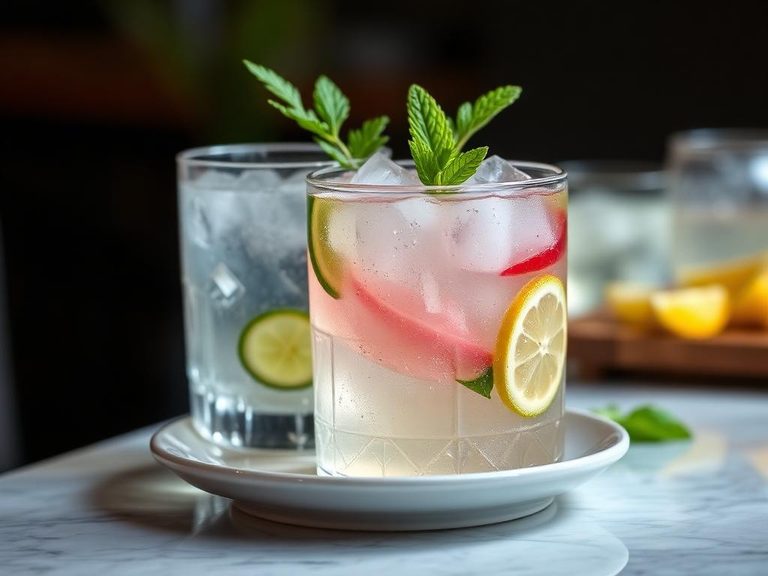
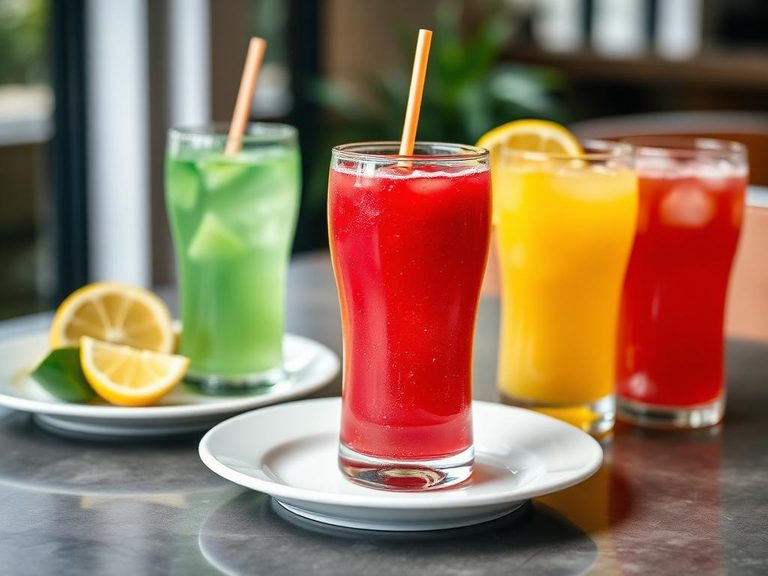
A light, fruit-flavored water beverage is a clear, refreshing drink infused with natural or artificial fruit essences, offering a subtle, sweet taste without the heaviness of juice. Its texture is thin and watery, similar to plain water, but with a hint of fruit aroma and flavor. Nutritionally, it's very low in calories, providing a small amount of carbohydrates primarily from sugar, with no protein or fat.
Calorie split: 0% protein · 100% carbs · 0% fat
↓ Full nutrition💚 Why it's loved
People love it for its ability to make hydration more enjoyable, offering a sweet, fruity taste without the calories or heaviness of juice or soda. It's a versatile, convenient choice for on-the-go refreshment, often associated with casual, active lifestyles.
⚠️ Watch-outs & how to enjoy it better
The primary downside is its sugar content, which can cause blood-sugar spikes, especially for individuals with diabetes or insulin resistance. Some versions may contain artificial sweeteners or additives that some prefer to avoid. To counteract sugar spikes, pair it with a source of protein or healthy fat (like a handful of nuts) to slow absorption, or opt for a zero-sugar variety.
Key benefits
- Hydration with a hint of flavor
- Low-calorie alternative to sugary sodas
- Provides a quick source of simple carbohydrates for energy
- Can encourage increased fluid intake for those who dislike plain water
- Often caffeine-free
🍽️ Popular dishes
🌍 Where it's eaten
💡 Did you know?
The concept of flavoring water with fruit is ancient; Romans often added honey and spices to their water for taste and preservation.
Full nutrition (USDA data · scales with serving)
| Water | 94.4 g |
| Energy | 18.0 kcal |
| Protein | 0.00 g |
| Total lipid (fat) | 0.00 g |
| Carbohydrate, by difference | 4.5 g |
| Fiber, total dietary | 0.00 g |
| Total Sugars | 4.5 g |
| Calcium, Ca | 17.0 mg |
| Iron, Fe | 0.00 mg |
| Magnesium, Mg | 3.0 mg |
| Phosphorus, P | 0.00 mg |
| Potassium, K | 0.00 mg |
| Sodium, Na | 8.0 mg |
| Zinc, Zn | 0.32 mg |
| Copper, Cu | 0.01 mg |
| Selenium, Se | 0.00 ug |
| Vitamin C, total ascorbic acid | 12.7 mg |
| Thiamin | 0.00 mg |
| Riboflavin | 0.00 mg |
| Niacin | 0.84 mg |
| Vitamin B-6 | 0.08 mg |
| Folate, total | 8.0 ug |
| Folic acid | 8.0 ug |
| Folate, food | 0.00 ug |
| Folate, DFE | 14.0 ug |
| Choline, total | 0.00 mg |
| Vitamin B-12 | 0.25 ug |
| Vitamin B-12, added | 0.25 ug |
| Vitamin A, RAE | 32.0 ug |
| Retinol | 32.0 ug |
| Carotene, beta | 0.00 ug |
| Carotene, alpha | 0.00 ug |
| Cryptoxanthin, beta | 0.00 ug |
| Lycopene | 0.00 ug |
| Lutein + zeaxanthin | 0.00 ug |
| Vitamin E (alpha-tocopherol) | 1.9 mg |
| Vitamin E, added | 1.9 mg |
| Vitamin D (D2 + D3) | 0.00 ug |
| Vitamin K (phylloquinone) | 0.00 ug |
| Alcohol, ethyl | 0.00 g |
| Caffeine | 0.00 mg |
| Theobromine | 0.00 mg |
Fat & fatty acid profile (per 100g)
| Fatty acids, total saturated | 0.00 g |
| SFA 4:0 | 0.00 g |
| SFA 6:0 | 0.00 g |
| SFA 8:0 | 0.00 g |
| SFA 10:0 | 0.00 g |
| SFA 12:0 | 0.00 g |
| SFA 14:0 | 0.00 g |
| SFA 16:0 | 0.00 g |
| SFA 18:0 | 0.00 g |
| Fatty acids, total monounsaturated | 0.00 g |
| MUFA 16:1 | 0.00 g |
| MUFA 18:1 | 0.00 g |
| MUFA 20:1 | 0.00 g |
| MUFA 22:1 | 0.00 g |
| Fatty acids, total polyunsaturated | 0.00 g |
| PUFA 18:2 | 0.00 g |
| PUFA 18:3 | 0.00 g |
| PUFA 18:4 | 0.00 g |
| PUFA 20:4 | 0.00 g |
| PUFA 20:5 n-3 (EPA) | 0.00 g |
| PUFA 22:5 n-3 (DPA) | 0.00 g |
| PUFA 22:6 n-3 (DHA) | 0.00 g |
| Cholesterol | 0.00 mg |
Amino acid profile (per 100g)
Estimated from Alcoholic beverage, beer, regular, all — USDA does not publish this profile for Water beverage.
| Tryptophan | 0.00 g |
| Threonine | 0.00 g |
| Isoleucine | 0.00 g |
| Leucine | 0.00 g |
| Lysine | 0.00 g |
| Methionine | 0.00 g |
| Cystine | 0.00 g |
| Phenylalanine | 0.00 g |
| Tyrosine | 0.00 g |
| Valine | 0.00 g |
| Arginine | 0.00 g |
| Histidine | 0.00 g |
| Alanine | 0.01 g |
| Aspartic acid | 0.02 g |
| Glutamic acid | 0.05 g |
| Glycine | 0.01 g |
| Proline | 0.04 g |
| Serine | 0.00 g |
FAQ
Is fruit-flavored water the same as fruit juice?
No. Fruit-flavored water is primarily water with added flavoring and a small amount of sugar, while fruit juice is made by extracting the liquid from fruit, containing more natural sugars, vitamins, and calories.
Can I make this at home?
Yes. Simply add slices of fresh fruit (like lemon, lime, berries, or cucumber) to a pitcher of water and let it infuse in the refrigerator for a few hours for a natural, low-sugar version.
Is it hydrating?
Yes, it contributes to daily fluid intake. However, plain water remains the most effective and efficient hydrator without any added sugars or additives.
Nutrient density (calculated · NRF9.3)
Nutrient Rich Foods index: beneficial nutrients (protein, fiber, vitamins, minerals) minus saturated fat, added sugar & sodium, per 100 kcal.
NRF9.3 index — Fulgoni, Keast & Drewnowski, 2009. Computed from USDA nutrients.
Weight-loss friendliness (composite index)
Energy density 0.18 kcal/g · 0% calories from protein · 0.0 g fiber · 4.5 g sugar per 100 g.
Composite of energy density (Rolls et al., 1999), protein & fiber satiety, minus sugar. A calculated heuristic — ranks satiety-per-calorie, not a clinical measure.
Dietary load (calculated from USDA values)
Potential renal acid load. Positive = acid-forming, negative = alkaline-forming.
Sodium:potassium per WHO potassium guidance. Computed from USDA nutrients.