

Veal, Australian, rib, rib roast, separable lean and fat, raw
Whole food · Lamb, Veal, and Game Products

Photo: Wikipedia
This is a premium cut of raw Australian veal from the rib section, featuring a beautiful balance of tender lean meat and a thin, flavorful fat cap. When cooked, it offers a delicate, mild flavor with a fine, velvety texture that is less gamey than beef. Nutritionally, it's a high-protein, low-carb option that provides a substantial source of energy primarily from protein and fat.
Calorie split: 39% protein · 2% carbs · 59% fat
↓ Full nutrition💚 Why it's loved
People love it for its refined, subtle flavor that acts as a perfect canvas for marinades and sauces, and for its impressive presentation as a celebratory roast. Its versatility allows it to be prepared simply to highlight its natural tenderness or used in elegant, slow-cooked dishes.
⚠️ Watch-outs & how to enjoy it better
The fat content, while flavorful, can be a concern for those monitoring saturated fat intake. As a red meat, it should be consumed in moderation as part of a balanced diet. To counteract this, practice portion control, trim excess external fat before cooking, and pair it with fiber-rich vegetables like roasted asparagus or a crisp salad to balance the meal.
Key benefits
- Excellent source of high-quality protein for muscle maintenance.
- Rich in essential nutrients like iron, zinc, and B vitamins.
- Naturally low in carbohydrates and contains no sugar.
- Provides conjugated linoleic acid (CLA) from the fat content.
- A leaner red meat option compared to many beef cuts.
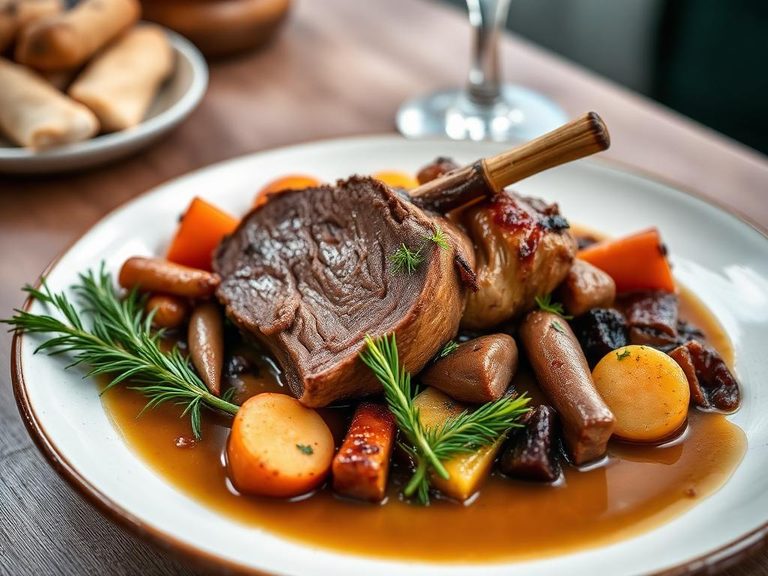
🍽️ Popular dishes
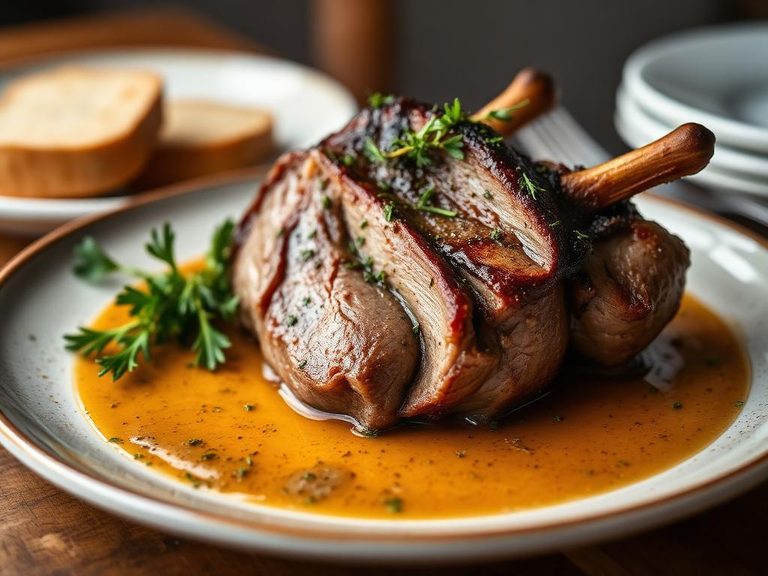
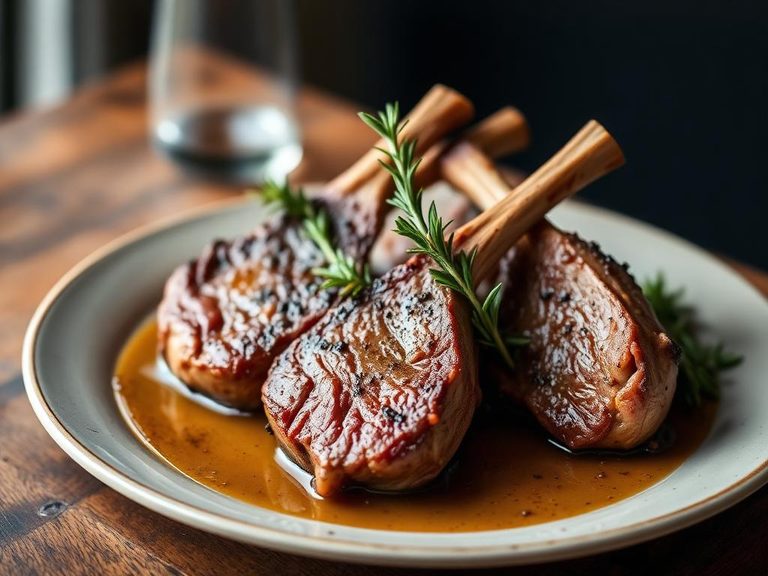
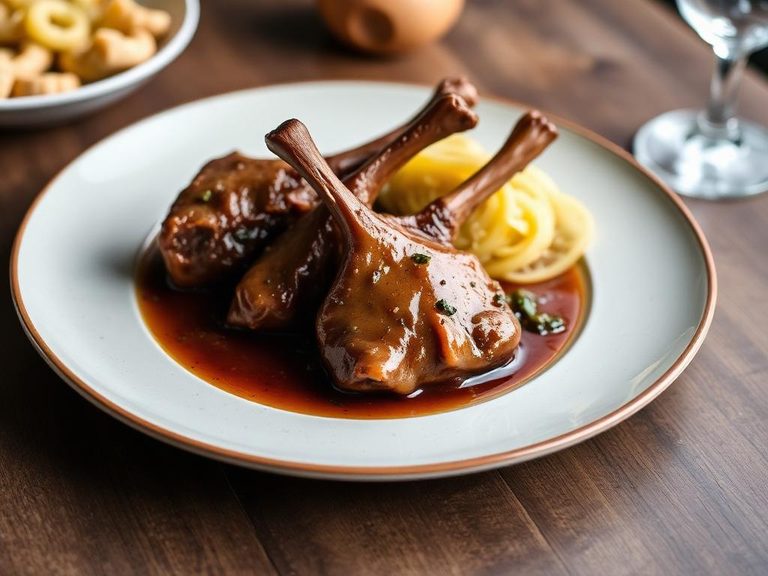
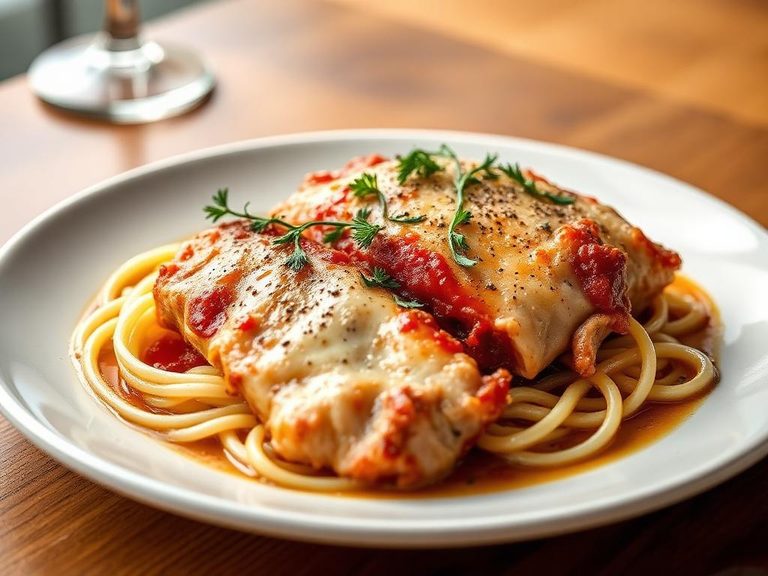
🌍 Where it's eaten
💡 Did you know?
Veal is often considered a 'transitional' meat in culinary history, prized in classical French and Italian cuisines for its delicate flavor that bridges the gap between poultry and the robust taste of mature beef.
Full nutrition (USDA data · scales with serving)
| Water | 65.3 g |
| Energy | 201 kcal |
| Energy | 841 kj |
| Protein | 19.6 g |
| Total lipid (fat) | 13.1 g |
| Ash | 0.92 g |
| Carbohydrate, by difference | 1.1 g |
| Fiber, total dietary | 0.00 g |
| Total Sugars | 0.00 g |
| Sucrose | 0.00 g |
| Glucose | 0.00 g |
| Fructose | 0.00 g |
| Lactose | 0.00 g |
| Maltose | 0.00 g |
| Galactose | 0.00 g |
| Calcium, Ca | 9.0 mg |
| Iron, Fe | 1.5 mg |
| Sodium, Na | 76.0 mg |
| Vitamin C, total ascorbic acid | 0.00 mg |
| Vitamin A, RAE | 8.0 ug |
| Retinol | 8.0 ug |
| Carotene, beta | 0.00 ug |
| Carotene, alpha | 0.00 ug |
| Cryptoxanthin, beta | 0.00 ug |
| Vitamin A, IU | 25.0 iu |
| Lycopene | 0.00 ug |
| Lutein + zeaxanthin | 0.00 ug |
| Alcohol, ethyl | 0.00 g |
| Caffeine | 0.00 mg |
| Theobromine | 0.00 mg |
Fat & fatty acid profile (per 100g)
| Fatty acids, total saturated | 5.9 g |
| SFA 4:0 | 0.00 g |
| SFA 6:0 | 0.00 g |
| SFA 10:0 | 0.01 g |
| SFA 12:0 | 0.02 g |
| SFA 14:0 | 0.52 g |
| SFA 15:0 | 0.09 g |
| SFA 16:0 | 3.1 g |
| SFA 17:0 | 0.15 g |
| SFA 18:0 | 2.0 g |
| SFA 20:0 | 0.02 g |
| SFA 22:0 | 0.01 g |
| SFA 24:0 | 0.00 g |
| Fatty acids, total monounsaturated | 5.2 g |
| MUFA 14:1 | 0.13 g |
| MUFA 16:1 | 0.37 g |
| MUFA 18:1 | 4.7 g |
| MUFA 18:1-11 t (18:1t n-7) | 0.35 g |
| MUFA 20:1 | 0.01 g |
| Fatty acids, total polyunsaturated | 0.59 g |
| PUFA 18:2 | 0.30 g |
| PUFA 18:3 | 0.09 g |
| PUFA 18:4 | 0.01 g |
| PUFA 20:2 n-6 c,c | 0.00 g |
| PUFA 20:3 | 0.00 g |
| PUFA 20:4 | 0.15 g |
| PUFA 20:5 n-3 (EPA) | 0.01 g |
| PUFA 22:5 n-3 (DPA) | 0.03 g |
| Fatty acids, total trans | 0.77 g |
| Cholesterol | 60.0 mg |
Amino acid profile (per 100g)
| Tryptophan | 0.18 g |
| Threonine | 0.78 g |
| Isoleucine | 0.88 g |
| Leucine | 1.4 g |
| Lysine | 1.5 g |
| Methionine | 0.42 g |
| Cystine | 0.20 g |
| Phenylalanine | 0.72 g |
| Tyrosine | 0.57 g |
| Valine | 0.99 g |
| Arginine | 1.0 g |
| Histidine | 0.65 g |
| Alanine | 1.1 g |
| Aspartic acid | 1.5 g |
| Glutamic acid | 2.8 g |
| Glycine | 0.92 g |
| Proline | 0.74 g |
| Serine | 0.67 g |
| Hydroxyproline | 0.10 g |
FAQ
How does veal taste different from beef?
Veal has a much milder, more delicate flavor and a finer, more tender texture than beef. It is less 'meaty' and gamey, with a subtle sweetness.
What's the best way to cook this cut to keep it tender?
For a rib roast, slow roasting at a moderate temperature is ideal. Searing it first creates a flavorful crust, then finishing it in the oven ensures even cooking. Always let it rest after cooking to retain juices.
Is veal a healthy choice?
Yes, it's a nutritious protein source, rich in iron and B vitamins. Its fat content is generally lower than many beef cuts. As with any red meat, enjoy it in moderation within a varied diet.
Nutrient density (calculated · NRF9.3)
Nutrient Rich Foods index: beneficial nutrients (protein, fiber, vitamins, minerals) minus saturated fat, added sugar & sodium, per 100 kcal.
NRF9.3 index — Fulgoni, Keast & Drewnowski, 2009. Computed from USDA nutrients.
Weight-loss friendliness (composite index)
Energy density 2.01 kcal/g · 39% calories from protein · 0.0 g fiber · 0.0 g sugar per 100 g.
Composite of energy density (Rolls et al., 1999), protein & fiber satiety, minus sugar. A calculated heuristic — ranks satiety-per-calorie, not a clinical measure.