

Tripe
Common food

Photo: Wikipedia
Tripe is the edible stomach lining of ruminant animals, most commonly beef, with a distinct honeycomb or smooth texture that becomes tender and gelatinous when slow-cooked. Its mild, slightly mineral flavor acts as a sponge for rich broths and seasonings, making it a prized textural component in global cuisines. Nutritionally, it is a lean, high-protein, zero-carb food that provides a notable source of vitamin B12 and selenium.
Calorie split: 59% protein · 0% carbs · 41% fat
↓ Full nutrition💚 Why it's loved
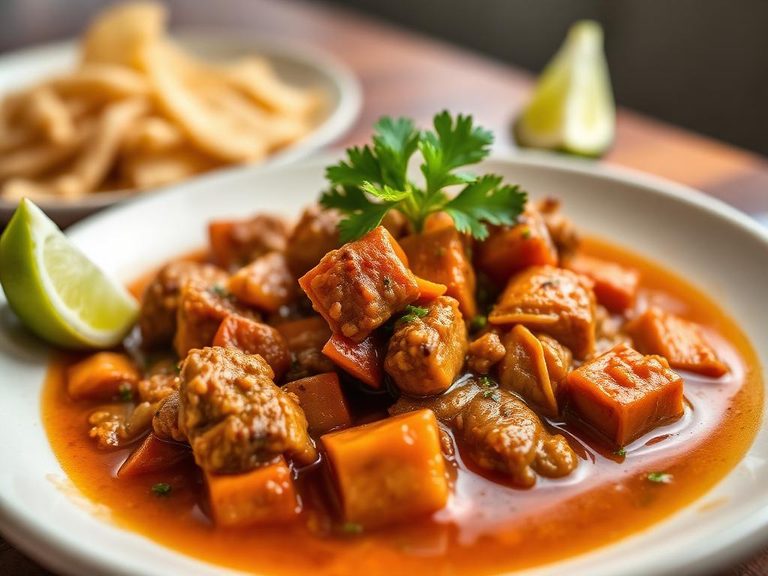
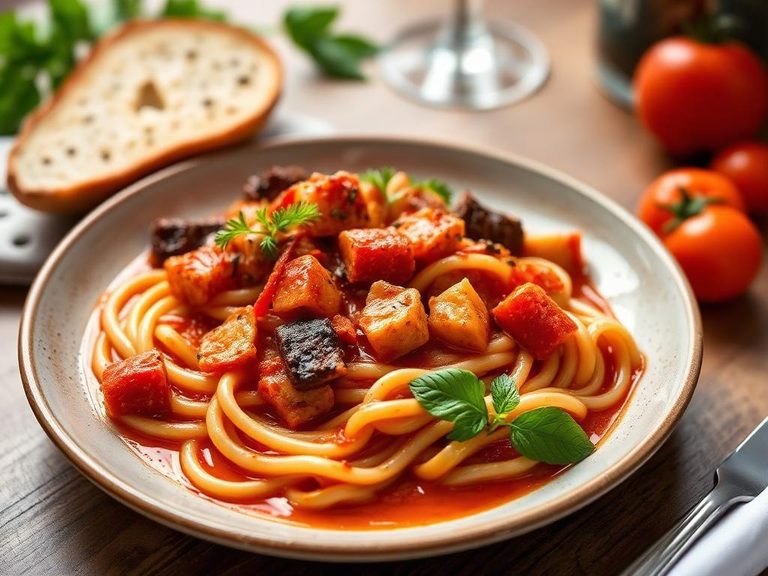
People love tripe for its unique, satisfying chew and its unparalleled ability to absorb the flavors of the broth or sauce it's cooked in. It's a cornerstone of comfort food traditions, from Mexican menudo to Italian trippa alla Romana, symbolizing resourceful, nose-to-tail eating.
⚠️ Watch-outs & how to enjoy it better
Its distinctive texture and aroma can be off-putting to the uninitiated, and it requires extensive, careful cleaning and long cooking to become palatable. Those with gout or kidney issues should moderate intake due to its purine content. To counteract this, ensure it is thoroughly cleaned and simmered for hours; pairing it with a low-purine vegetable like celery in the cooking broth can help balance the dish.
Key benefits
- Excellent source of complete protein with minimal fat.
- Rich in vitamin B12, essential for nerve function and red blood cell formation.
- Contains selenium, an important antioxidant mineral.
- Naturally low in carbohydrates and sugar.
- Provides collagen and gelatin when slow-cooked, beneficial for gut lining.
🍽️ Popular dishes
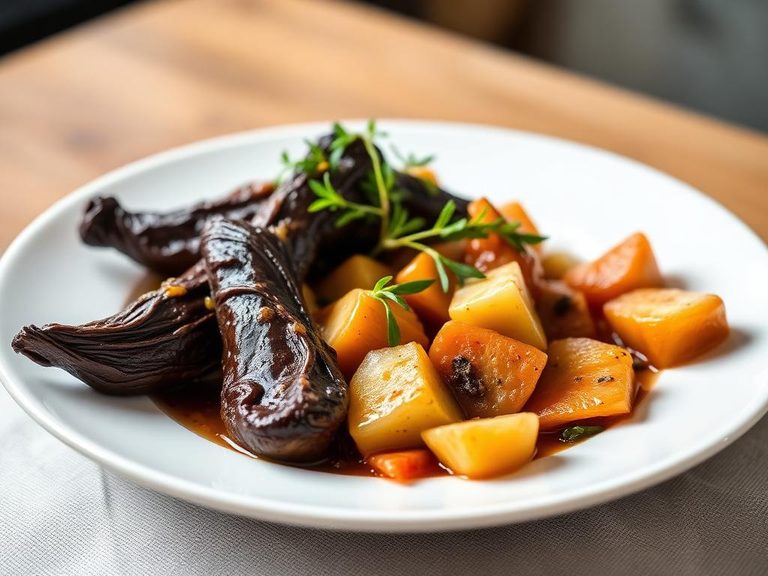
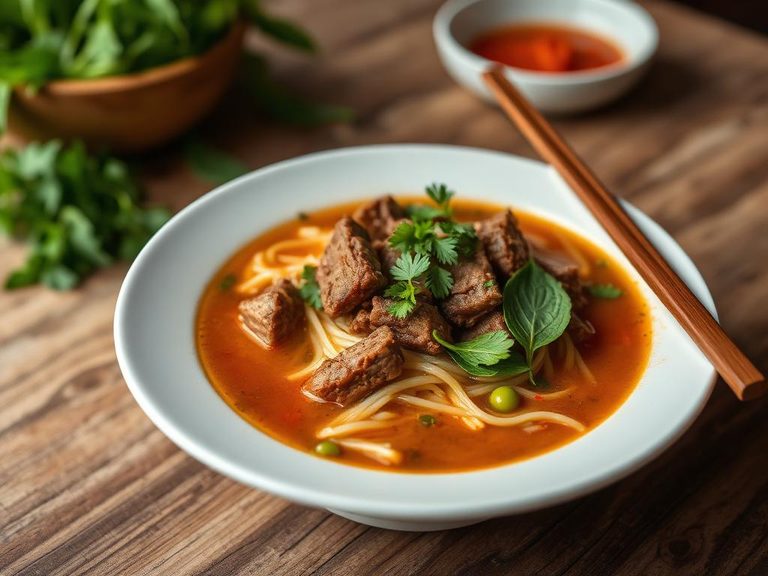
🌍 Where it's eaten
💡 Did you know?
The honeycomb pattern on beef tripe is not just for show; it dramatically increases surface area, allowing it to hold more flavorful braising liquid and seasonings in every bite.
Full nutrition (USDA data · scales with serving)
| Water | 82.6 g |
| Energy | 89.0 kcal |
| Protein | 12.6 g |
| Total lipid (fat) | 3.9 g |
| Carbohydrate, by difference | 0.00 g |
| Fiber, total dietary | 0.00 g |
| Total Sugars | 0.00 g |
| Calcium, Ca | 72.0 mg |
| Iron, Fe | 0.62 mg |
| Magnesium, Mg | 14.0 mg |
| Phosphorus, P | 67.0 mg |
| Potassium, K | 70.0 mg |
| Sodium, Na | 425 mg |
| Zinc, Zn | 1.5 mg |
| Copper, Cu | 0.07 mg |
| Selenium, Se | 13.1 ug |
| Vitamin C, total ascorbic acid | 0.00 mg |
| Thiamin | 0.00 mg |
| Riboflavin | 0.07 mg |
| Niacin | 0.83 mg |
| Vitamin B-6 | 0.01 mg |
| Folate, total | 4.0 ug |
| Folic acid | 0.00 ug |
| Folate, food | 4.0 ug |
| Folate, DFE | 4.0 ug |
| Choline, total | 203 mg |
| Vitamin B-12 | 1.1 ug |
| Vitamin B-12, added | 0.00 ug |
| Vitamin A, RAE | 0.00 ug |
| Retinol | 0.00 ug |
| Carotene, beta | 0.00 ug |
| Carotene, alpha | 0.00 ug |
| Cryptoxanthin, beta | 0.00 ug |
| Lycopene | 0.00 ug |
| Lutein + zeaxanthin | 0.00 ug |
| Vitamin E (alpha-tocopherol) | 0.09 mg |
| Vitamin E, added | 0.00 mg |
| Vitamin D (D2 + D3) | 0.00 ug |
| Vitamin K (phylloquinone) | 0.00 ug |
| Alcohol, ethyl | 0.00 g |
| Caffeine | 0.00 mg |
| Theobromine | 0.00 mg |
Fat & fatty acid profile (per 100g)
| Fatty acids, total saturated | 1.3 g |
| SFA 4:0 | 0.00 g |
| SFA 6:0 | 0.00 g |
| SFA 8:0 | 0.00 g |
| SFA 10:0 | 0.00 g |
| SFA 12:0 | 0.00 g |
| SFA 14:0 | 0.07 g |
| SFA 16:0 | 0.67 g |
| SFA 18:0 | 0.48 g |
| Fatty acids, total monounsaturated | 1.6 g |
| MUFA 16:1 | 0.09 g |
| MUFA 18:1 | 1.5 g |
| MUFA 20:1 | 0.02 g |
| MUFA 22:1 | 0.00 g |
| Fatty acids, total polyunsaturated | 0.19 g |
| PUFA 18:2 | 0.12 g |
| PUFA 18:3 | 0.01 g |
| PUFA 18:4 | 0.00 g |
| PUFA 20:4 | 0.05 g |
| PUFA 20:5 n-3 (EPA) | 0.00 g |
| PUFA 22:5 n-3 (DPA) | 0.00 g |
| PUFA 22:6 n-3 (DHA) | 0.00 g |
| Cholesterol | 127 mg |
Amino acid profile (per 100g)
Estimated from Restaurant, Latino, tripe soup — USDA does not publish this profile for Tripe.
| Tryptophan | 0.06 g |
| Threonine | 0.29 g |
| Isoleucine | 0.27 g |
| Leucine | 0.54 g |
| Lysine | 0.45 g |
| Methionine | 0.16 g |
| Cystine | 0.06 g |
| Phenylalanine | 0.27 g |
| Tyrosine | 0.22 g |
| Valine | 0.35 g |
| Arginine | 0.59 g |
| Histidine | 0.15 g |
| Alanine | 0.59 g |
| Aspartic acid | 0.65 g |
| Glutamic acid | 1.2 g |
| Glycine | 0.98 g |
| Proline | 0.61 g |
| Serine | 0.34 g |
FAQ
How do you clean tripe before cooking?
Fresh tripe requires thorough rinsing under cold water, often with a scrub brush. It's typically blanched in boiling water with vinegar or lemon juice, then rinsed again to remove any residual odor and impurities before the main cooking process.
Why is my tripe still tough after cooking?
Tripe requires a very long, gentle simmer—often 2 to 3 hours or more—to break down its tough connective tissue. It should be cooked until a fork can easily pierce through it. Rushing the process with high heat will not tenderize it properly.
Is tripe nutritious?
Yes, tripe is a low-calorie, high-protein food that is particularly rich in vitamin B12 and the mineral selenium. It is very low in carbohydrates and fat, making it a nutrient-dense choice within a balanced diet.
Nutrient density (calculated · NRF9.3)
Nutrient Rich Foods index: beneficial nutrients (protein, fiber, vitamins, minerals) minus saturated fat, added sugar & sodium, per 100 kcal.
NRF9.3 index — Fulgoni, Keast & Drewnowski, 2009. Computed from USDA nutrients.
Weight-loss friendliness (composite index)
Energy density 0.89 kcal/g · 57% calories from protein · 0.0 g fiber · 0.0 g sugar per 100 g.
Composite of energy density (Rolls et al., 1999), protein & fiber satiety, minus sugar. A calculated heuristic — ranks satiety-per-calorie, not a clinical measure.
Dietary load (calculated from USDA values)
Potential renal acid load. Positive = acid-forming, negative = alkaline-forming.
Sodium-to-potassium ratio: 6.07 (lower is better — aim for ≤ 1)
Sodium:potassium per WHO potassium guidance. Computed from USDA nutrients.