

Tea, hot, with milk
Common food
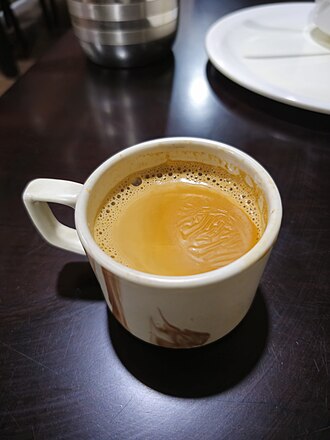
Photo: Wikipedia
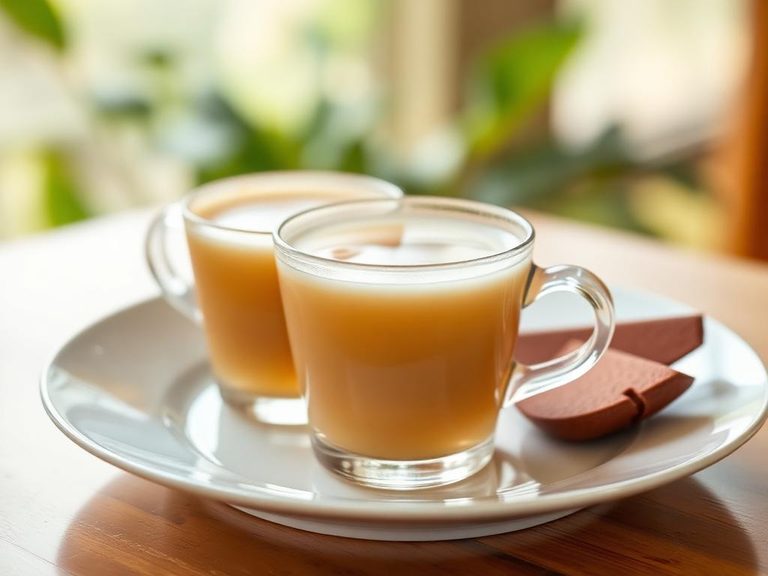
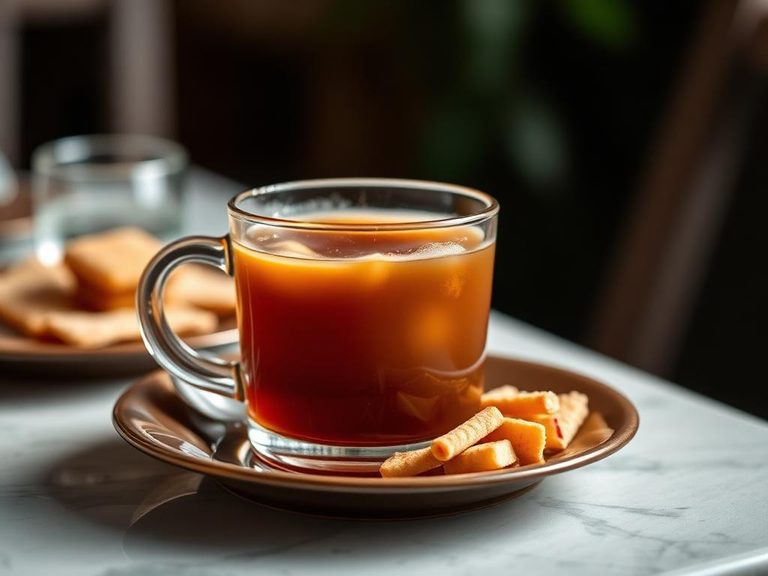
A comforting, creamy beverage of black tea steeped in hot water and enriched with milk, offering a smooth, slightly tannic base softened by dairy richness. Its nutrition is modest, providing a small protein and carbohydrate boost from the milk, with most calories coming from the natural lactose sugar. It's a staple of daily hydration and ritual across many cultures.
Calorie split: 12% protein · 69% carbs · 18% fat
↓ Full nutrition💚 Why it's loved
People adore it for its perfect balance of brisk tea and creamy milk, creating a smooth, comforting drink that's both energizing and soothing. Its versatility makes it a beloved canvas for personal preference, from a strong 'builder's tea' to a gentle, milky brew.
⚠️ Watch-outs & how to enjoy it better
The natural lactose sugar can cause a blood-spike for some, and the tannins in tea may inhibit iron absorption if consumed with meals. For those with lactose intolerance or a milk allergy, it can cause digestive discomfort. Tip: Pair with a source of fat or protein (like a biscuit or nuts) to slow sugar absorption, and consider drinking it between meals to minimize iron interference.
Key benefits
- Provides quick energy from milk's natural sugars
- Offers a small dose of protein and calcium from milk
- Contains antioxidants from black tea leaves
- Can be a comforting, hydrating ritual
- Easily customizable in strength and sweetness
🍽️ Popular dishes
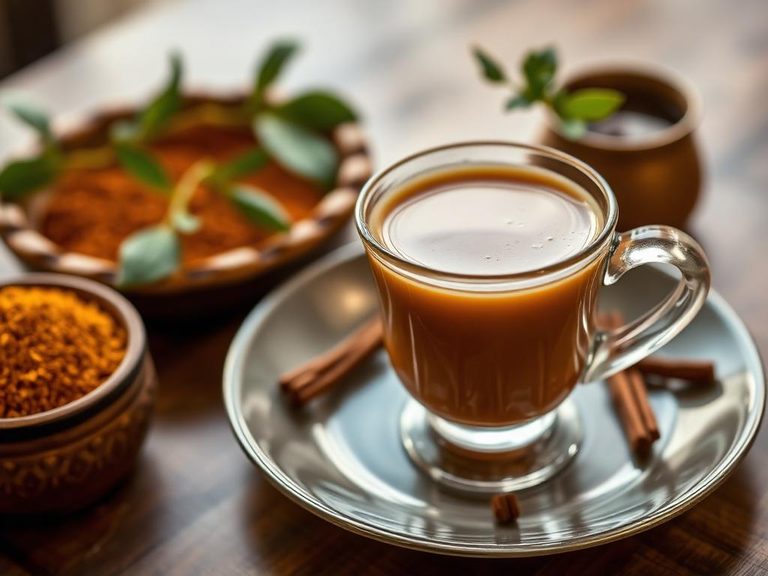
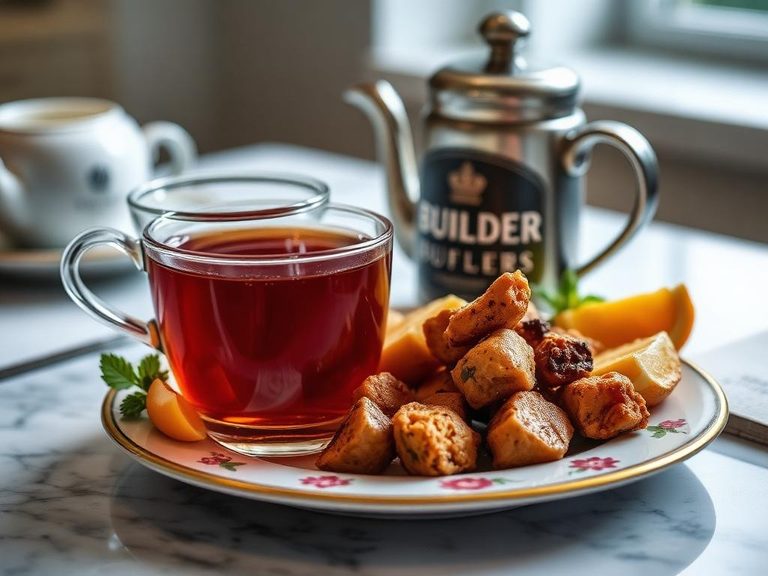
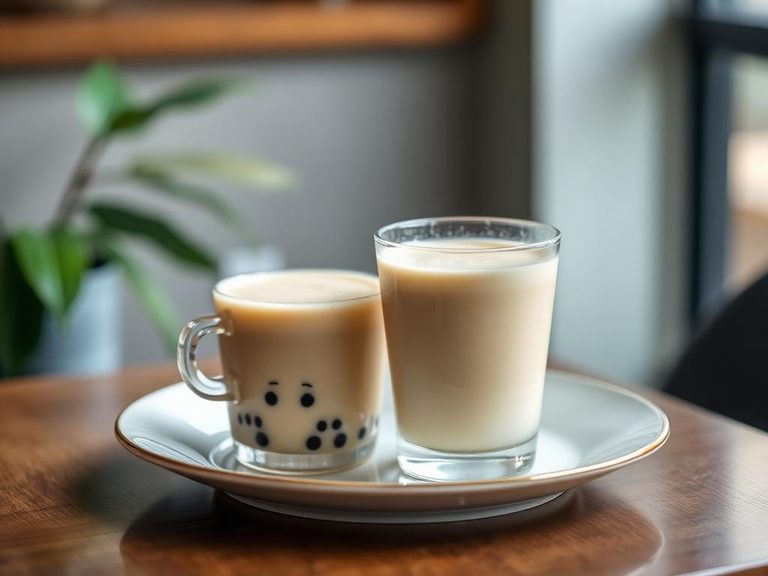

🌍 Where it's eaten
💡 Did you know?
The traditional method for making Hong Kong-style milk tea involves straining the brew through a sackcloth filter, earning it the nickname 'silk stocking milk tea'.
Full nutrition (USDA data · scales with serving)
| Water | 88.0 g |
| Energy | 51.0 kcal |
| Protein | 1.6 g |
| Total lipid (fat) | 1.1 g |
| Carbohydrate, by difference | 8.9 g |
| Fiber, total dietary | 0.10 g |
| Total Sugars | 8.7 g |
| Calcium, Ca | 60.0 mg |
| Iron, Fe | 0.02 mg |
| Magnesium, Mg | 7.0 mg |
| Phosphorus, P | 49.0 mg |
| Potassium, K | 91.0 mg |
| Sodium, Na | 20.0 mg |
| Zinc, Zn | 0.22 mg |
| Copper, Cu | 0.01 mg |
| Selenium, Se | 0.90 ug |
| Vitamin C, total ascorbic acid | 0.00 mg |
| Thiamin | 0.03 mg |
| Riboflavin | 0.07 mg |
| Niacin | 0.05 mg |
| Vitamin B-6 | 0.03 mg |
| Folate, total | 3.0 ug |
| Folic acid | 0.00 ug |
| Folate, food | 3.0 ug |
| Folate, DFE | 3.0 ug |
| Choline, total | 8.6 mg |
| Vitamin B-12 | 0.26 ug |
| Vitamin B-12, added | 0.00 ug |
| Vitamin A, RAE | 27.0 ug |
| Retinol | 27.0 ug |
| Carotene, beta | 2.0 ug |
| Carotene, alpha | 0.00 ug |
| Cryptoxanthin, beta | 0.00 ug |
| Lycopene | 0.00 ug |
| Lutein + zeaxanthin | 0.00 ug |
| Vitamin E (alpha-tocopherol) | 0.02 mg |
| Vitamin E, added | 0.00 mg |
| Vitamin D (D2 + D3) | 0.50 ug |
| Vitamin K (phylloquinone) | 0.10 ug |
| Alcohol, ethyl | 0.00 g |
| Caffeine | 9.0 mg |
| Theobromine | 1.0 mg |
Fat & fatty acid profile (per 100g)
| Fatty acids, total saturated | 0.60 g |
| SFA 4:0 | 0.02 g |
| SFA 6:0 | 0.02 g |
| SFA 8:0 | 0.01 g |
| SFA 10:0 | 0.03 g |
| SFA 12:0 | 0.03 g |
| SFA 14:0 | 0.11 g |
| SFA 16:0 | 0.27 g |
| SFA 18:0 | 0.10 g |
| Fatty acids, total monounsaturated | 0.22 g |
| MUFA 16:1 | 0.02 g |
| MUFA 18:1 | 0.22 g |
| MUFA 20:1 | 0.00 g |
| MUFA 22:1 | 0.00 g |
| Fatty acids, total polyunsaturated | 0.04 g |
| PUFA 18:2 | 0.04 g |
| PUFA 18:3 | 0.01 g |
| PUFA 18:4 | 0.00 g |
| PUFA 20:4 | 0.00 g |
| PUFA 20:5 n-3 (EPA) | 0.00 g |
| PUFA 22:5 n-3 (DPA) | 0.00 g |
| PUFA 22:6 n-3 (DHA) | 0.00 g |
| Cholesterol | 4.0 mg |
Amino acid profile (per 100g)
Estimated from Cookies, animal crackers (includes arrowroot, tea biscuits) — USDA does not publish this profile for Tea.
| Tryptophan | 0.10 g |
| Threonine | 0.19 g |
| Isoleucine | 0.26 g |
| Leucine | 0.47 g |
| Lysine | 0.24 g |
| Methionine | 0.12 g |
| Cystine | 0.15 g |
| Phenylalanine | 0.32 g |
| Tyrosine | 0.20 g |
| Valine | 0.30 g |
| Arginine | 0.26 g |
| Histidine | 0.14 g |
| Alanine | 0.21 g |
| Aspartic acid | 0.29 g |
| Glutamic acid | 2.3 g |
| Glycine | 0.23 g |
| Proline | 0.76 g |
| Serine | 0.36 g |
FAQ
Is tea with milk healthier than black tea?
It depends on your goals. Adding milk reduces the concentration of some antioxidants (like catechins) but adds protein, calcium, and calories. It can also make the drink more satiating.
Does adding milk to tea reduce its benefits?
Some studies suggest milk proteins can bind to tea's antioxidants, potentially reducing their availability. However, the overall health impact of a balanced diet is more important than single-food interactions.
What's the best milk to use?
Dairy milk offers the most protein and calcium. Plant-based milks like oat or soy can provide a creamy texture but vary in protein and added sugars. Choose unsweetened versions for a lower sugar option.
Nutrient density (calculated · NRF9.3)
Nutrient Rich Foods index: beneficial nutrients (protein, fiber, vitamins, minerals) minus saturated fat, added sugar & sodium, per 100 kcal.
NRF9.3 index — Fulgoni, Keast & Drewnowski, 2009. Computed from USDA nutrients.
Weight-loss friendliness (composite index)
Energy density 0.51 kcal/g · 12% calories from protein · 0.1 g fiber · 8.7 g sugar per 100 g.
Composite of energy density (Rolls et al., 1999), protein & fiber satiety, minus sugar. A calculated heuristic — ranks satiety-per-calorie, not a clinical measure.
Dietary load (calculated from USDA values)
Potential renal acid load. Positive = acid-forming, negative = alkaline-forming.
Sodium-to-potassium ratio: 0.22 (lower is better — aim for ≤ 1)
Sodium:potassium per WHO potassium guidance. Computed from USDA nutrients.