

Milk, reduced fat, fluid, 2% milkfat, with added nonfat milk solids, without added vitamin A
Whole food · Dairy and Egg Products
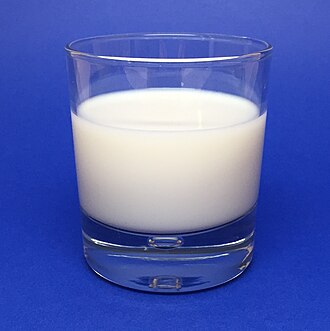
Photo: Wikipedia
This is 2% reduced-fat milk that has been fortified with extra nonfat milk solids to boost its protein and calcium content without adding fat. It has a clean, slightly creamy taste with a smooth, thin-to-medium body, and a bright white color. Nutritionally, it's a lean powerhouse, delivering a strong dose of protein for just 56 calories per 100 grams.
Calorie split: 28% protein · 40% carbs · 32% fat
↓ Full nutrition💚 Why it's loved
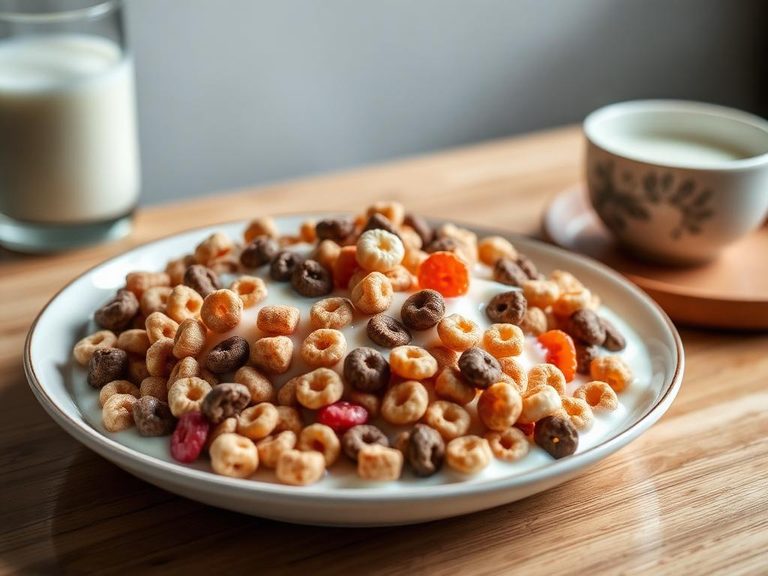
People love it as a reliable, everyday staple that balances nutrition and taste perfectly. It's the go-to for cereal, coffee, baking, and drinking straight, offering a mild, comforting flavor that pairs with almost anything.
⚠️ Watch-outs & how to enjoy it better
As a dairy product, it's a common allergen for those with lactose intolerance or milk protein allergies. The added milk solids can slightly increase the carbohydrate content compared to plain 2% milk, which may be a consideration for strict low-carb diets. To counteract, pair it with high-fiber foods like oatmeal or nuts to slow digestion, or choose lactose-free versions if sensitive.
Key benefits
- High-quality complete protein for muscle maintenance
- Excellent source of calcium for bone health
- Low in fat but fortified for a richer nutrient profile
- Naturally contains B vitamins like B12 and riboflavin
- A versatile, hydrating base for many recipes
🍽️ Popular dishes





🌍 Where it's eaten
💡 Did you know?
The 'nonfat milk solids' added are essentially powdered milk, a technique developed to standardize milk's protein content and improve its texture for products like yogurt and ice cream.
Full nutrition (USDA data · scales with serving)
| Water | 87.7 g |
| Energy | 56.0 kcal |
| Energy | 232 kj |
| Protein | 4.0 g |
| Total lipid (fat) | 2.0 g |
| Ash | 0.87 g |
| Carbohydrate, by difference | 5.5 g |
| Fiber, total dietary | 0.00 g |
| Calcium, Ca | 143 mg |
| Iron, Fe | 0.06 mg |
| Magnesium, Mg | 15.0 mg |
| Phosphorus, P | 112 mg |
| Potassium, K | 182 mg |
| Sodium, Na | 59.0 mg |
| Zinc, Zn | 0.41 mg |
| Copper, Cu | 0.01 mg |
| Manganese, Mn | 0.00 mg |
| Selenium, Se | 2.6 ug |
| Vitamin C, total ascorbic acid | 1.1 mg |
| Thiamin | 0.04 mg |
| Riboflavin | 0.19 mg |
| Niacin | 0.10 mg |
| Pantothenic acid | 0.34 mg |
| Vitamin B-6 | 0.05 mg |
| Folate, total | 5.0 ug |
| Folic acid | 0.00 ug |
| Folate, food | 5.0 ug |
| Folate, DFE | 5.0 ug |
| Vitamin B-12 | 0.39 ug |
| Vitamin A, RAE | 17.0 ug |
| Retinol | 16.0 ug |
| Vitamin A, IU | 75.0 iu |
Fat & fatty acid profile (per 100g)
| Fatty acids, total saturated | 1.2 g |
| SFA 4:0 | 0.01 g |
| SFA 6:0 | 0.00 g |
| SFA 8:0 | 0.00 g |
| SFA 10:0 | 0.01 g |
| SFA 12:0 | 0.00 g |
| SFA 14:0 | 0.02 g |
| SFA 16:0 | 0.07 g |
| SFA 18:0 | 0.03 g |
| Fatty acids, total monounsaturated | 0.07 g |
| MUFA 16:1 | 0.01 g |
| MUFA 18:1 | 0.50 g |
| Fatty acids, total polyunsaturated | 0.01 g |
| PUFA 18:2 | 0.04 g |
| PUFA 18:3 | 0.00 g |
| PUFA 20:4 | 0.00 g |
| Cholesterol | 8.0 mg |
Amino acid profile (per 100g)
| Tryptophan | 0.05 g |
| Threonine | 0.16 g |
| Isoleucine | 0.22 g |
| Leucine | 0.35 g |
| Lysine | 0.28 g |
| Methionine | 0.09 g |
| Cystine | 0.03 g |
| Phenylalanine | 0.17 g |
| Tyrosine | 0.17 g |
| Valine | 0.24 g |
| Arginine | 0.13 g |
| Histidine | 0.10 g |
| Alanine | 0.12 g |
| Aspartic acid | 0.27 g |
| Glutamic acid | 0.75 g |
| Glycine | 0.08 g |
| Proline | 0.35 g |
| Serine | 0.19 g |
FAQ
How does this differ from regular 2% milk?
Regular 2% milk has its fat content standardized to 2%. This version has extra nonfat milk solids added, which increases the protein and calcium per serving without adding more fat.
Is it good for baking?
Yes, it's excellent. The added milk solids can enhance browning and add a subtle richness to baked goods like cakes and muffins.
Can I use it in my coffee?
Absolutely. It adds a creamy texture and boosts the protein content of your morning coffee, though it may slightly dilute the flavor compared to heavy cream.
Nutrient density (calculated · NRF9.3)
Nutrient Rich Foods index: beneficial nutrients (protein, fiber, vitamins, minerals) minus saturated fat, added sugar & sodium, per 100 kcal.
NRF9.3 index — Fulgoni, Keast & Drewnowski, 2009. Computed from USDA nutrients.
Weight-loss friendliness (composite index)
Energy density 0.56 kcal/g · 28% calories from protein · 0.0 g fiber · 0.0 g sugar per 100 g.
Composite of energy density (Rolls et al., 1999), protein & fiber satiety, minus sugar. A calculated heuristic — ranks satiety-per-calorie, not a clinical measure.
Dietary load (calculated from USDA values)
Potential renal acid load. Positive = acid-forming, negative = alkaline-forming.
Sodium-to-potassium ratio: 0.32 (lower is better — aim for ≤ 1)
Sodium:potassium per WHO potassium guidance. Computed from USDA nutrients.