

Sweet potato, canned, NS as to fat
Common food

Photo: Wikipedia
Canned sweet potatoes are tender, pre-cooked chunks or slices of the root vegetable preserved in syrup or water, offering a soft, almost melt-in-the-mouth texture. Their flavor is distinctly sweet and earthy, with a caramel-like depth enhanced by the canning process. Nutritionally, they are a convenient source of complex carbohydrates and beta-carotene, though often packed in a sugary syrup.
Calorie split: 5% protein · 64% carbs · 31% fat
↓ Full nutrition💚 Why it's loved
People love canned sweet potatoes for their instant, no-prep convenience and their deeply comforting, sweet flavor that evokes holiday meals and home cooking. They are a versatile pantry staple that can be used in both sweet and savory dishes.
⚠️ Watch-outs & how to enjoy it better
The primary downside is the often-high added sugar and sodium content from the canning syrup and salt, which can contribute to blood sugar spikes. To counteract this, look for varieties packed in water or 'lite syrup,' rinse the pieces well before use, and pair them with protein (like nuts or meat) and healthy fats to slow sugar absorption.
Key benefits
- Rich in beta-carotene, a precursor to vitamin A
- Provides a quick source of energy from complex carbohydrates
- Contains dietary fiber for digestive health
- Convenient and shelf-stable with a long shelf life
- Naturally fat-free when packed in water
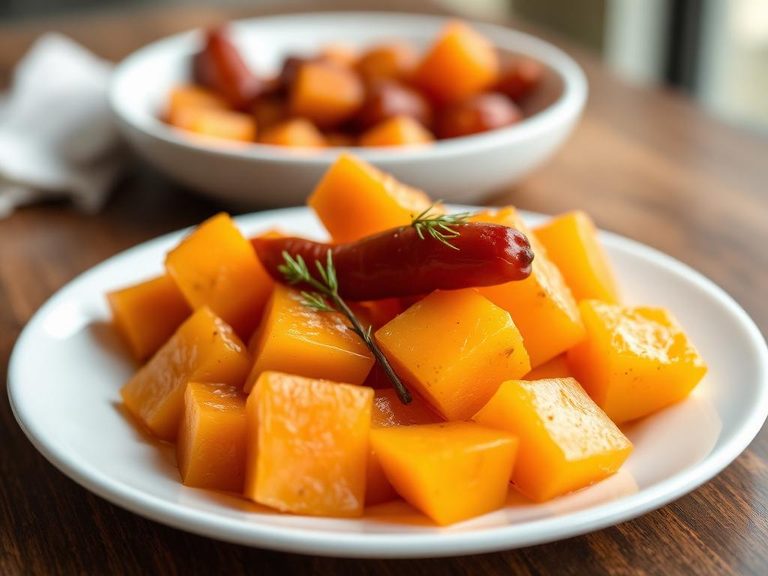
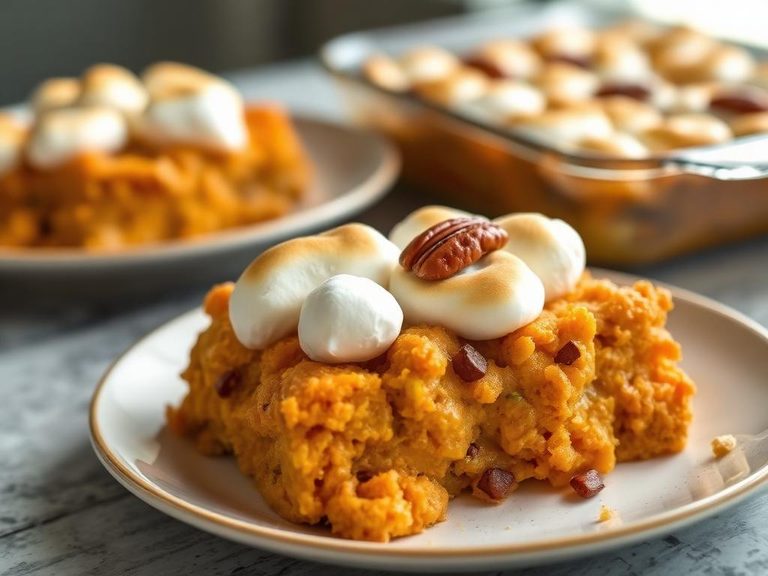
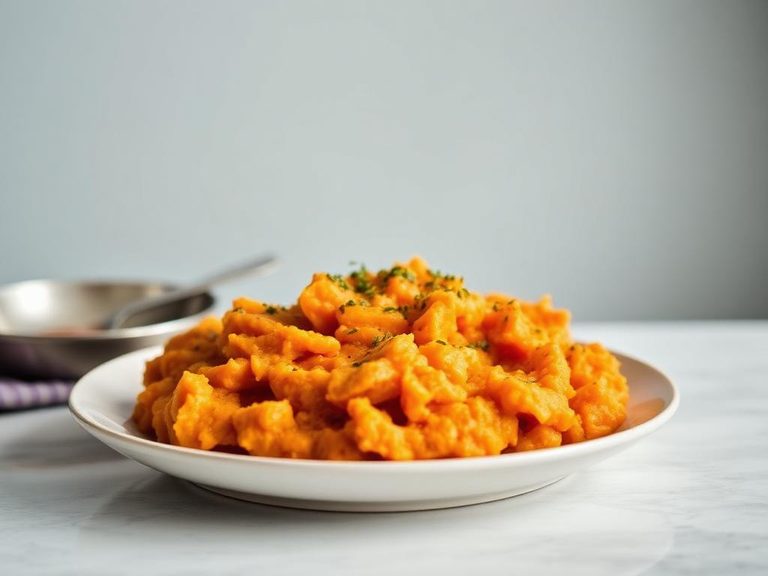
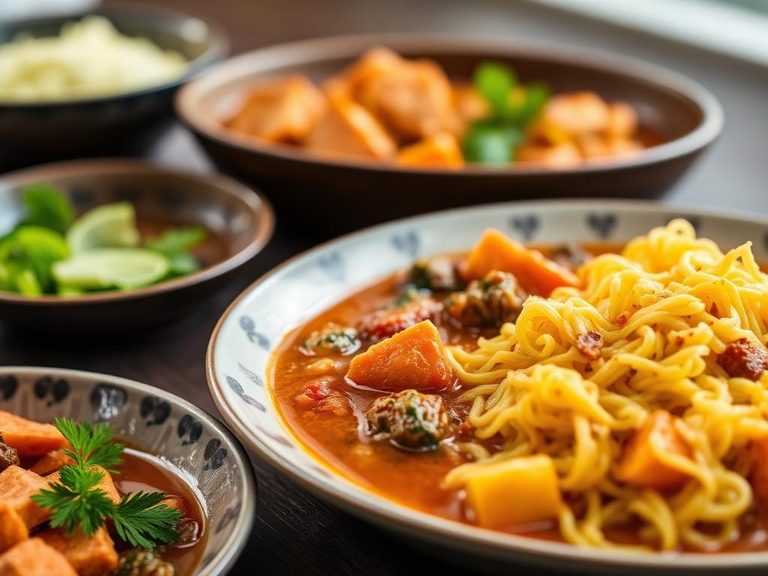
🍽️ Popular dishes
🌍 Where it's eaten
💡 Did you know?
The 'candied yams' served at many American Thanksgiving tables are almost always made from canned sweet potatoes, not true yams, which are a different, starchier tuber.
Full nutrition (USDA data · scales with serving)
| Water | 72.7 g |
| Energy | 124 kcal |
| Protein | 1.6 g |
| Total lipid (fat) | 4.3 g |
| Carbohydrate, by difference | 20.1 g |
| Fiber, total dietary | 1.7 g |
| Total Sugars | 4.8 g |
| Calcium, Ca | 22.0 mg |
| Iron, Fe | 0.85 mg |
| Magnesium, Mg | 21.0 mg |
| Phosphorus, P | 47.0 mg |
| Potassium, K | 297 mg |
| Sodium, Na | 211 mg |
| Zinc, Zn | 0.17 mg |
| Copper, Cu | 0.13 mg |
| Selenium, Se | 0.70 ug |
| Vitamin C, total ascorbic acid | 25.0 mg |
| Thiamin | 0.04 mg |
| Riboflavin | 0.05 mg |
| Niacin | 0.70 mg |
| Vitamin B-6 | 0.21 mg |
| Folate, total | 16.0 ug |
| Folic acid | 0.00 ug |
| Folate, food | 16.0 ug |
| Folate, DFE | 16.0 ug |
| Choline, total | 12.7 mg |
| Vitamin B-12 | 0.00 ug |
| Vitamin B-12, added | 0.00 ug |
| Vitamin A, RAE | 397 ug |
| Retinol | 18.0 ug |
| Carotene, beta | 4553 ug |
| Carotene, alpha | 0.00 ug |
| Cryptoxanthin, beta | 0.00 ug |
| Lycopene | 0.00 ug |
| Lutein + zeaxanthin | 0.00 ug |
| Vitamin E (alpha-tocopherol) | 1.6 mg |
| Vitamin E, added | 0.00 mg |
| Vitamin D (D2 + D3) | 0.00 ug |
| Vitamin K (phylloquinone) | 5.5 ug |
| Alcohol, ethyl | 0.00 g |
| Caffeine | 0.00 mg |
| Theobromine | 0.00 mg |
Fat & fatty acid profile (per 100g)
| Fatty acids, total saturated | 1.1 g |
| SFA 4:0 | 0.03 g |
| SFA 6:0 | 0.02 g |
| SFA 8:0 | 0.01 g |
| SFA 10:0 | 0.03 g |
| SFA 12:0 | 0.03 g |
| SFA 14:0 | 0.10 g |
| SFA 16:0 | 0.63 g |
| SFA 18:0 | 0.23 g |
| Fatty acids, total monounsaturated | 1.5 g |
| MUFA 16:1 | 0.02 g |
| MUFA 18:1 | 1.4 g |
| MUFA 20:1 | 0.02 g |
| MUFA 22:1 | 0.00 g |
| Fatty acids, total polyunsaturated | 1.3 g |
| PUFA 18:2 | 1.1 g |
| PUFA 18:3 | 0.14 g |
| PUFA 18:4 | 0.00 g |
| PUFA 20:4 | 0.00 g |
| PUFA 20:5 n-3 (EPA) | 0.00 g |
| PUFA 22:5 n-3 (DPA) | 0.00 g |
| PUFA 22:6 n-3 (DHA) | 0.00 g |
| Cholesterol | 3.0 mg |
Amino acid profile (per 100g)
Estimated from Snacks, sweet potato chips, unsalted — USDA does not publish this profile for Sweet potato.
| Tryptophan | 0.10 g |
| Threonine | 0.26 g |
| Isoleucine | 0.17 g |
| Leucine | 0.29 g |
| Lysine | 0.20 g |
| Methionine | 0.09 g |
| Cystine | 0.07 g |
| Phenylalanine | 0.28 g |
| Tyrosine | 0.11 g |
| Valine | 0.27 g |
| Arginine | 0.17 g |
| Histidine | 0.10 g |
| Alanine | 0.24 g |
| Aspartic acid | 1.2 g |
| Glutamic acid | 0.48 g |
| Glycine | 0.20 g |
| Proline | 0.16 g |
| Serine | 0.28 g |
FAQ
Are canned sweet potatoes as nutritious as fresh?
They retain most of their vitamins and minerals, but canning can reduce some heat-sensitive nutrients like vitamin C. The bigger difference is often the added syrup, which increases sugar and calories compared to plain fresh sweet potatoes.
Why are they sometimes called 'yams' in the US?
It's a historical marketing mix-up. In the US, the orange-fleshed sweet potato is commonly labeled as a 'yam,' while true yams are a different, starchier tuber primarily found in African and Asian markets.
How can I reduce the sweetness or sugar content?
Rinse the canned pieces thoroughly under cold water to remove surface syrup. You can also look for cans packed in water or 'no sugar added' varieties, and balance the sweetness in recipes by adding spices like cinnamon or nutmeg, or a pinch of salt.
Nutrient density (calculated · NRF9.3)
Nutrient Rich Foods index: beneficial nutrients (protein, fiber, vitamins, minerals) minus saturated fat, added sugar & sodium, per 100 kcal.
NRF9.3 index — Fulgoni, Keast & Drewnowski, 2009. Computed from USDA nutrients.
Weight-loss friendliness (composite index)
Energy density 1.24 kcal/g · 5% calories from protein · 1.7 g fiber · 4.8 g sugar per 100 g.
Composite of energy density (Rolls et al., 1999), protein & fiber satiety, minus sugar. A calculated heuristic — ranks satiety-per-calorie, not a clinical measure.
Dietary load (calculated from USDA values)
Potential renal acid load. Positive = acid-forming, negative = alkaline-forming.
Sodium-to-potassium ratio: 0.71 (lower is better — aim for ≤ 1)
Sodium:potassium per WHO potassium guidance. Computed from USDA nutrients.