

Sweet potato, baked, no added fat
Common food

Photo: Wikipedia
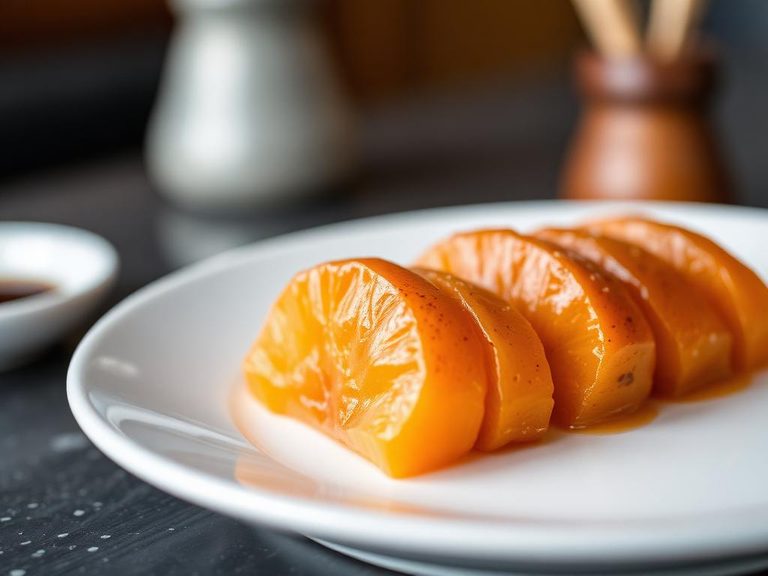
A whole, skin-on sweet potato baked until its natural sugars caramelize, creating a soft, creamy interior with a subtly sweet, earthy flavor. Its vibrant orange flesh is a standout source of beta-carotene, which the body converts to vitamin A. With minimal fat and a good dose of fiber, it's a nutrient-dense, naturally sweet staple.
Calorie split: 8% protein · 88% carbs · 4% fat
↓ Full nutrition💚 Why it's loved
People adore its comforting, naturally sweet flavor that requires no added sugar, and its incredibly versatile texture—fluffy when baked, creamy when mashed. It's a beloved cultural staple in cuisines from the American South to Japan, often associated with harvest celebrations and home cooking.
⚠️ Watch-outs & how to enjoy it better
Its high carbohydrate and sugar content can cause blood sugar spikes if eaten alone in large portions, especially for those managing diabetes. To counteract this, pair it with a source of protein (like black beans or Greek yogurt) or healthy fat (like a sprinkle of nuts or a drizzle of olive oil) to slow digestion. Also, be mindful of portion size.
Key benefits
- Excellent source of beta-carotene (vitamin A precursor)
- Good source of dietary fiber for digestive health
- Naturally low in fat and calories
- Provides complex carbohydrates for sustained energy
- Contains manganese, a key mineral for metabolism
🍽️ Popular dishes
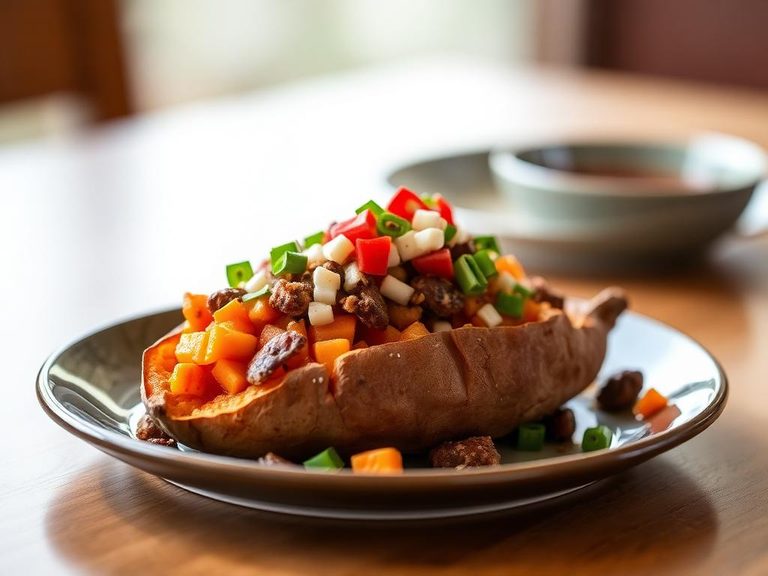
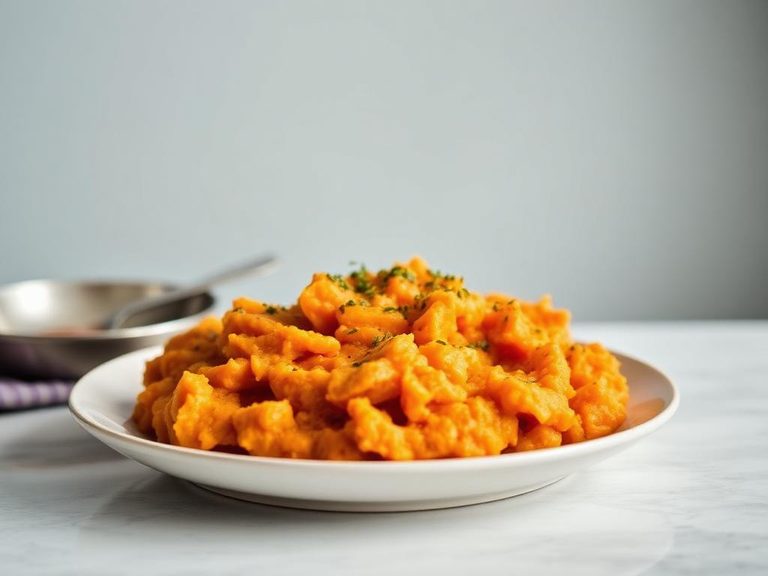
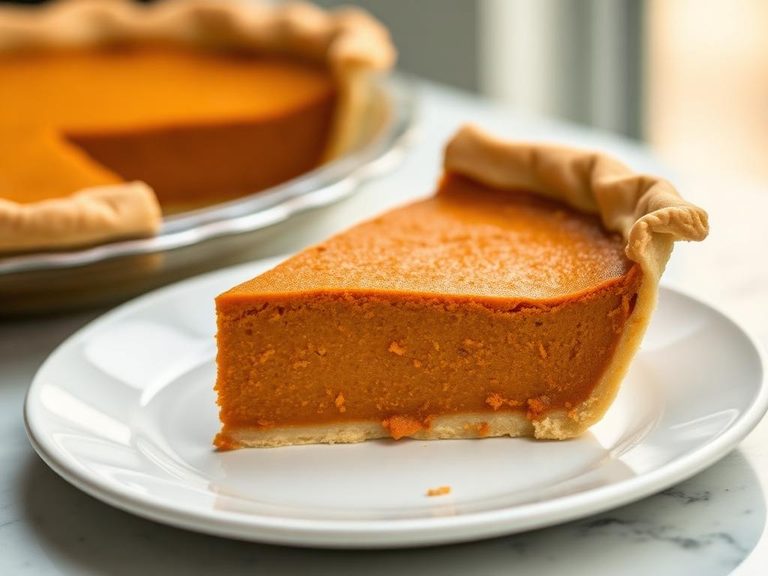
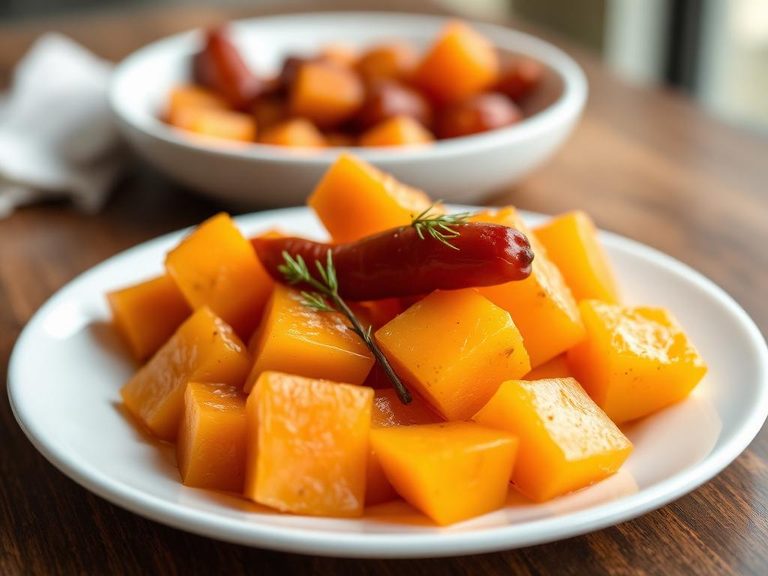

🌍 Where it's eaten
💡 Did you know?
The record for the heaviest sweet potato is over 81 pounds (37 kg), grown in Spain in 2022.
Full nutrition (USDA data · scales with serving)
| Water | 78.4 g |
| Energy | 82.0 kcal |
| Protein | 1.6 g |
| Total lipid (fat) | 0.39 g |
| Carbohydrate, by difference | 18.0 g |
| Fiber, total dietary | 3.1 g |
| Total Sugars | 6.3 g |
| Calcium, Ca | 23.0 mg |
| Iron, Fe | 0.42 mg |
| Magnesium, Mg | 20.0 mg |
| Phosphorus, P | 38.0 mg |
| Potassium, K | 504 mg |
| Sodium, Na | 154 mg |
| Zinc, Zn | 0.35 mg |
| Copper, Cu | 0.19 mg |
| Selenium, Se | 0.00 ug |
| Vitamin C, total ascorbic acid | 13.1 mg |
| Thiamin | 0.04 mg |
| Riboflavin | 0.06 mg |
| Niacin | 0.43 mg |
| Vitamin B-6 | 0.12 mg |
| Folate, total | 10.0 ug |
| Folic acid | 0.00 ug |
| Folate, food | 10.0 ug |
| Folate, DFE | 10.0 ug |
| Choline, total | 12.8 mg |
| Vitamin B-12 | 0.00 ug |
| Vitamin B-12, added | 0.00 ug |
| Vitamin A, RAE | 699 ug |
| Retinol | 0.00 ug |
| Carotene, beta | 8387 ug |
| Carotene, alpha | 7.0 ug |
| Cryptoxanthin, beta | 0.00 ug |
| Lycopene | 0.00 ug |
| Lutein + zeaxanthin | 0.00 ug |
| Vitamin E (alpha-tocopherol) | 0.27 mg |
| Vitamin E, added | 0.00 mg |
| Vitamin D (D2 + D3) | 0.00 ug |
| Vitamin K (phylloquinone) | 0.20 ug |
| Alcohol, ethyl | 0.00 g |
| Caffeine | 0.00 mg |
| Theobromine | 0.00 mg |
Fat & fatty acid profile (per 100g)
| Fatty acids, total saturated | 0.02 g |
| SFA 4:0 | 0.00 g |
| SFA 6:0 | 0.00 g |
| SFA 8:0 | 0.00 g |
| SFA 10:0 | 0.00 g |
| SFA 12:0 | 0.00 g |
| SFA 14:0 | 0.00 g |
| SFA 16:0 | 0.02 g |
| SFA 18:0 | 0.00 g |
| Fatty acids, total monounsaturated | 0.00 g |
| MUFA 16:1 | 0.00 g |
| MUFA 18:1 | 0.00 g |
| MUFA 20:1 | 0.00 g |
| MUFA 22:1 | 0.00 g |
| Fatty acids, total polyunsaturated | 0.01 g |
| PUFA 18:2 | 0.01 g |
| PUFA 18:3 | 0.00 g |
| PUFA 18:4 | 0.00 g |
| PUFA 20:4 | 0.00 g |
| PUFA 20:5 n-3 (EPA) | 0.00 g |
| PUFA 22:5 n-3 (DPA) | 0.00 g |
| PUFA 22:6 n-3 (DHA) | 0.00 g |
| Cholesterol | 0.00 mg |
Amino acid profile (per 100g)
Estimated from Snacks, sweet potato chips, unsalted — USDA does not publish this profile for Sweet potato.
| Tryptophan | 0.10 g |
| Threonine | 0.26 g |
| Isoleucine | 0.17 g |
| Leucine | 0.29 g |
| Lysine | 0.20 g |
| Methionine | 0.09 g |
| Cystine | 0.07 g |
| Phenylalanine | 0.28 g |
| Tyrosine | 0.11 g |
| Valine | 0.27 g |
| Arginine | 0.17 g |
| Histidine | 0.10 g |
| Alanine | 0.24 g |
| Aspartic acid | 1.2 g |
| Glutamic acid | 0.48 g |
| Glycine | 0.20 g |
| Proline | 0.16 g |
| Serine | 0.28 g |
FAQ
Is the skin edible?
Yes, the skin is edible and nutritious, containing fiber and potassium. Simply scrub it well before baking. Many people enjoy eating the soft, caramelized skin along with the flesh.
How do I store a baked sweet potato?
Let it cool completely, then store in an airtight container in the refrigerator for up to 4 days. Reheat in the oven or microwave until warmed through.
What's the difference between a sweet potato and a yam?
In North America, the orange-fleshed sweet potato is often mistakenly called a 'yam.' True yams are a different tuber, typically with starchy white or purple flesh and rough, bark-like skin. The nutrition data here is for the common orange sweet potato.
Nutrient density (calculated · NRF9.3)
Nutrient Rich Foods index: beneficial nutrients (protein, fiber, vitamins, minerals) minus saturated fat, added sugar & sodium, per 100 kcal.
NRF9.3 index — Fulgoni, Keast & Drewnowski, 2009. Computed from USDA nutrients.
Weight-loss friendliness (composite index)
Energy density 0.82 kcal/g · 8% calories from protein · 3.1 g fiber · 6.3 g sugar per 100 g.
Composite of energy density (Rolls et al., 1999), protein & fiber satiety, minus sugar. A calculated heuristic — ranks satiety-per-calorie, not a clinical measure.
Dietary load (calculated from USDA values)
Potential renal acid load. Positive = acid-forming, negative = alkaline-forming.
Sodium-to-potassium ratio: 0.31 (lower is better — aim for ≤ 1)
Sodium:potassium per WHO potassium guidance. Computed from USDA nutrients.