

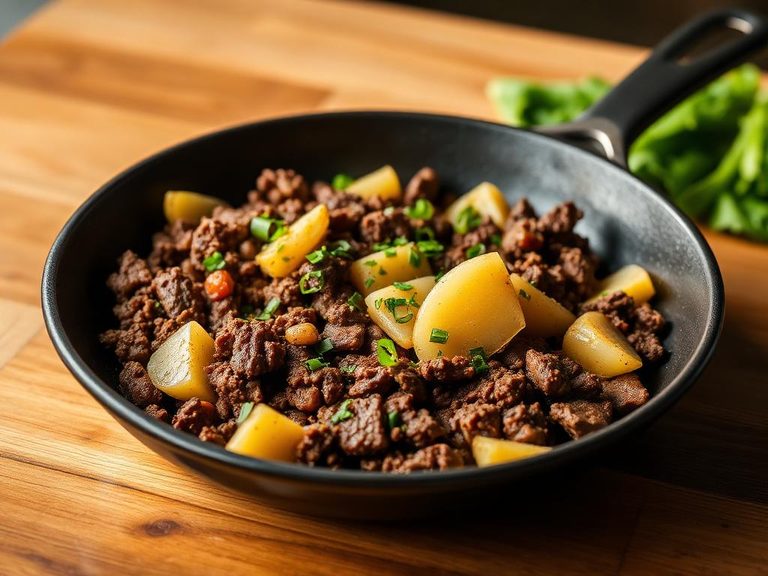
Stewed, seasoned, ground beef with potatoes, Mexican style
Common food

Photo: Wikipedia
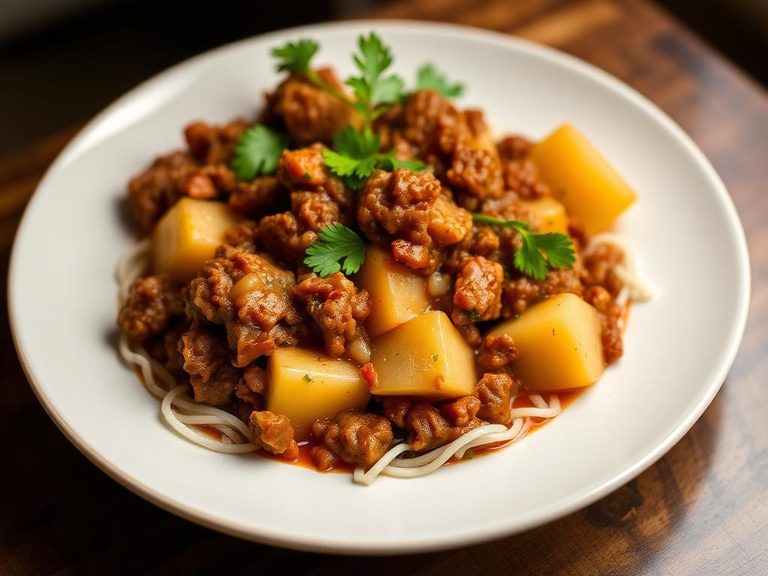
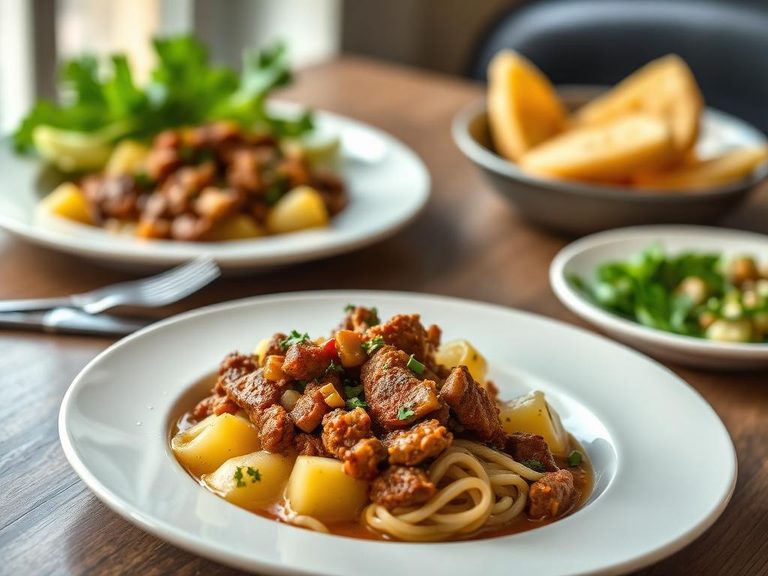
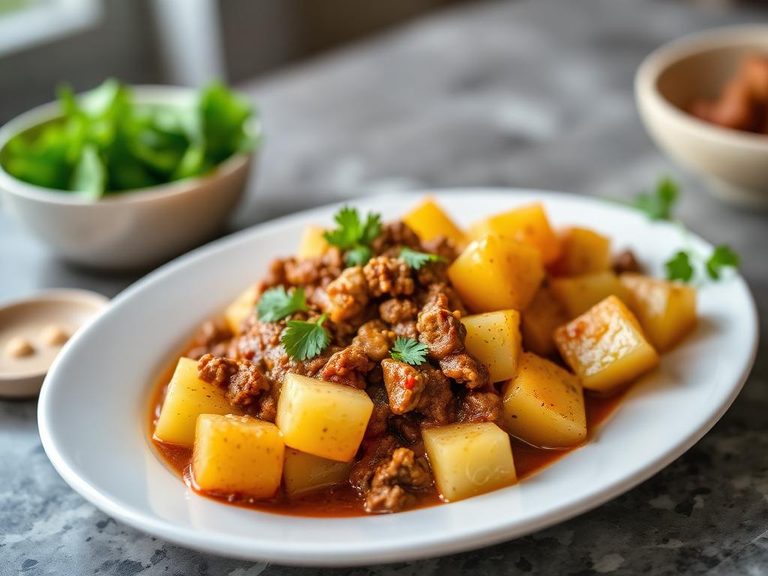
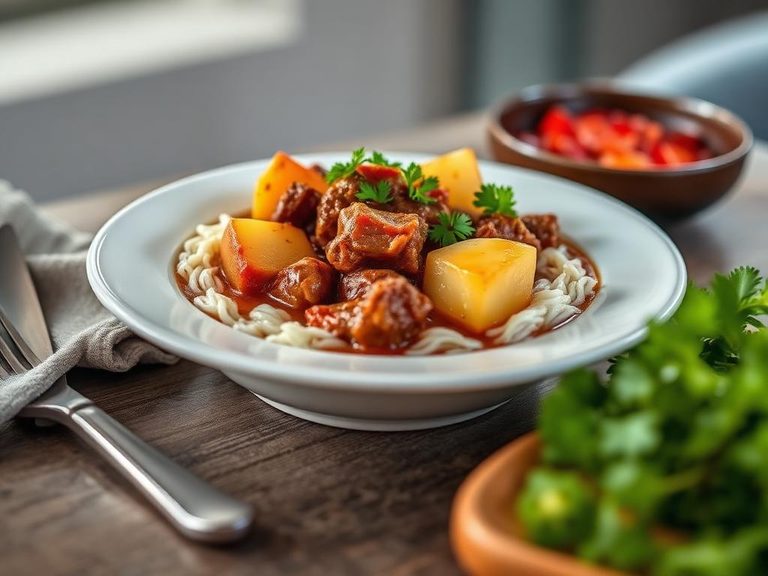
This is a hearty, savory Mexican-style stew of ground beef and potatoes, simmered in a rich, seasoned sauce. The texture is tender and chunky, with the potatoes absorbing the beefy, spiced flavors. Nutritionally, it's a protein-rich, moderate-fat dish that provides sustained energy from its complex carbohydrates.
Calorie split: 31% protein · 17% carbs · 53% fat
↓ Full nutrition💚 Why it's loved
People love it for its comforting, deeply savory flavor profile that's both familiar and exciting. Its versatility makes it a beloved staple, easily adapted to different spice levels and served with various sides.
⚠️ Watch-outs & how to enjoy it better
The dish can be high in sodium if heavily seasoned, and the fat content from beef may be a concern for some. To counteract this, use lean ground beef, rinse canned ingredients if used, and balance the meal with a large side of non-starchy vegetables like a simple salad or steamed greens.
Key benefits
- High-quality protein for muscle maintenance and satiety.
- Provides complex carbohydrates for steady energy release.
- Contains iron and B-vitamins from the beef.
- Potatoes offer potassium and vitamin C.
- A complete, satisfying meal in one pot.
🍽️ Popular dishes
🌍 Where it's eaten
💡 Did you know?
The dish is a common example of 'comida casera' (home cooking) in Mexico, often served as a quick, affordable weeknight meal that stretches a small amount of meat with potatoes.
Full nutrition (USDA data · scales with serving)
| Water | 74.6 g |
| Energy | 137 kcal |
| Protein | 10.4 g |
| Total lipid (fat) | 7.9 g |
| Carbohydrate, by difference | 5.6 g |
| Fiber, total dietary | 0.80 g |
| Total Sugars | 0.71 g |
| Calcium, Ca | 15.0 mg |
| Iron, Fe | 1.4 mg |
| Magnesium, Mg | 18.0 mg |
| Phosphorus, P | 108 mg |
| Potassium, K | 298 mg |
| Sodium, Na | 333 mg |
| Zinc, Zn | 2.5 mg |
| Copper, Cu | 0.08 mg |
| Selenium, Se | 8.4 ug |
| Vitamin C, total ascorbic acid | 13.7 mg |
| Thiamin | 0.04 mg |
| Riboflavin | 0.10 mg |
| Niacin | 2.6 mg |
| Vitamin B-6 | 0.20 mg |
| Folate, total | 9.0 ug |
| Folic acid | 0.00 ug |
| Folate, food | 8.0 ug |
| Folate, DFE | 9.0 ug |
| Choline, total | 32.9 mg |
| Vitamin B-12 | 0.85 ug |
| Vitamin B-12, added | 0.00 ug |
| Vitamin A, RAE | 6.0 ug |
| Retinol | 2.0 ug |
| Carotene, beta | 52.0 ug |
| Carotene, alpha | 9.0 ug |
| Cryptoxanthin, beta | 1.0 ug |
| Lycopene | 174 ug |
| Lutein + zeaxanthin | 45.0 ug |
| Vitamin E (alpha-tocopherol) | 0.17 mg |
| Vitamin E, added | 0.00 mg |
| Vitamin D (D2 + D3) | 0.10 ug |
| Vitamin K (phylloquinone) | 2.6 ug |
| Alcohol, ethyl | 0.00 g |
| Caffeine | 0.00 mg |
| Theobromine | 0.00 mg |
Fat & fatty acid profile (per 100g)
| Fatty acids, total saturated | 3.0 g |
| SFA 4:0 | 0.00 g |
| SFA 6:0 | 0.00 g |
| SFA 8:0 | 0.00 g |
| SFA 10:0 | 0.00 g |
| SFA 12:0 | 0.01 g |
| SFA 14:0 | 0.23 g |
| SFA 16:0 | 1.7 g |
| SFA 18:0 | 0.95 g |
| Fatty acids, total monounsaturated | 3.4 g |
| MUFA 16:1 | 0.28 g |
| MUFA 18:1 | 3.0 g |
| MUFA 20:1 | 0.03 g |
| MUFA 22:1 | 0.00 g |
| Fatty acids, total polyunsaturated | 0.25 g |
| PUFA 18:2 | 0.20 g |
| PUFA 18:3 | 0.03 g |
| PUFA 18:4 | 0.00 g |
| PUFA 20:4 | 0.02 g |
| PUFA 20:5 n-3 (EPA) | 0.00 g |
| PUFA 22:5 n-3 (DPA) | 0.01 g |
| PUFA 22:6 n-3 (DHA) | 0.00 g |
| Cholesterol | 35.0 mg |
Amino acid profile (per 100g)
Estimated from Chicken, broilers or fryers, drumstick, meat and skin, cooked, stewed — USDA does not publish this profile for Stewed.
| Tryptophan | 0.29 g |
| Threonine | 1.1 g |
| Isoleucine | 1.3 g |
| Leucine | 1.9 g |
| Lysine | 2.1 g |
| Methionine | 0.68 g |
| Cystine | 0.34 g |
| Phenylalanine | 0.99 g |
| Tyrosine | 0.82 g |
| Valine | 1.2 g |
| Arginine | 1.6 g |
| Histidine | 0.75 g |
| Alanine | 1.5 g |
| Aspartic acid | 2.3 g |
| Glutamic acid | 3.7 g |
| Glycine | 1.5 g |
| Proline | 1.2 g |
| Serine | 0.89 g |
FAQ
Is this dish spicy?
The spice level is adjustable. Traditional versions use mild chili powders and cumin, but it can be made mild or very spicy depending on the cook's preference.
Can I make this with turkey or chicken?
Yes, ground turkey or chicken can be used for a leaner version, though the flavor will be milder. Adjust seasonings accordingly.
What's the best way to store leftovers?
Store in an airtight container in the refrigerator for up to 3-4 days. It can also be frozen for up to 3 months; reheat thoroughly.
Nutrient density (calculated · NRF9.3)
Nutrient Rich Foods index: beneficial nutrients (protein, fiber, vitamins, minerals) minus saturated fat, added sugar & sodium, per 100 kcal.
NRF9.3 index — Fulgoni, Keast & Drewnowski, 2009. Computed from USDA nutrients.
Weight-loss friendliness (composite index)
Energy density 1.37 kcal/g · 30% calories from protein · 0.8 g fiber · 0.7 g sugar per 100 g.
Composite of energy density (Rolls et al., 1999), protein & fiber satiety, minus sugar. A calculated heuristic — ranks satiety-per-calorie, not a clinical measure.
Dietary load (calculated from USDA values)
Potential renal acid load. Positive = acid-forming, negative = alkaline-forming.
Sodium-to-potassium ratio: 1.12 (lower is better — aim for ≤ 1)
Sodium:potassium per WHO potassium guidance. Computed from USDA nutrients.