

Soup, wonton
Common food

Photo: Wikipedia
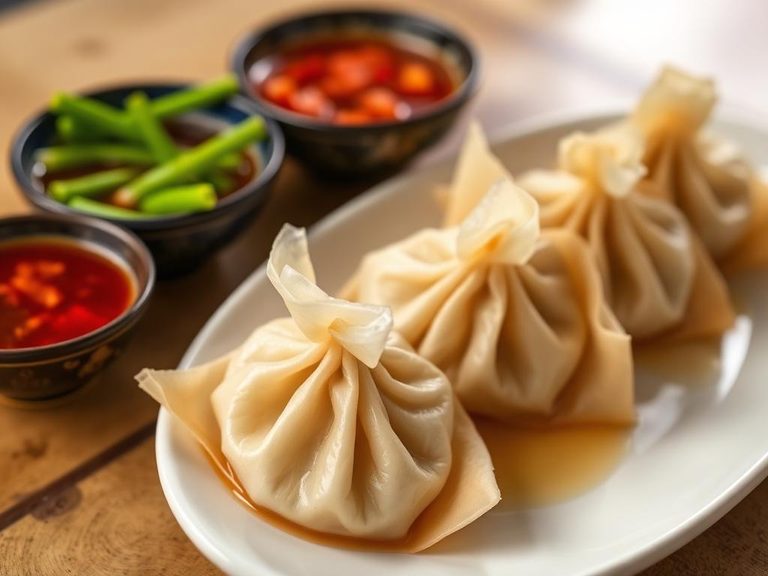
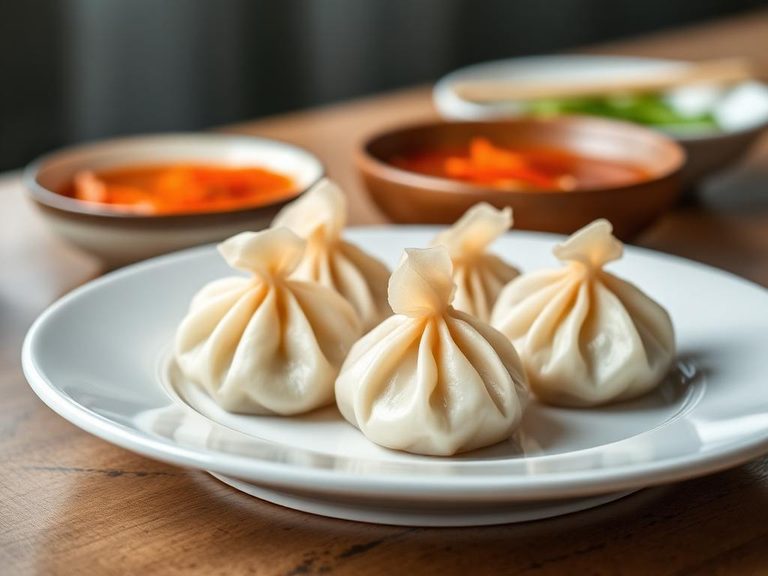
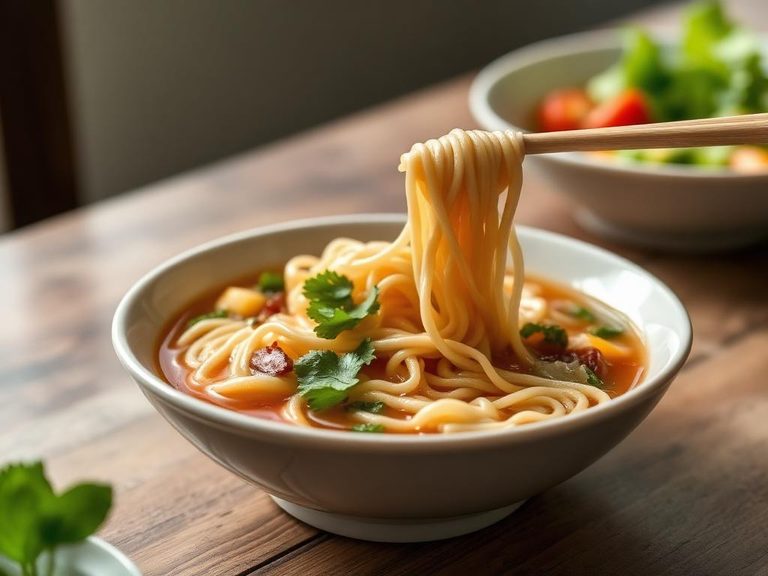
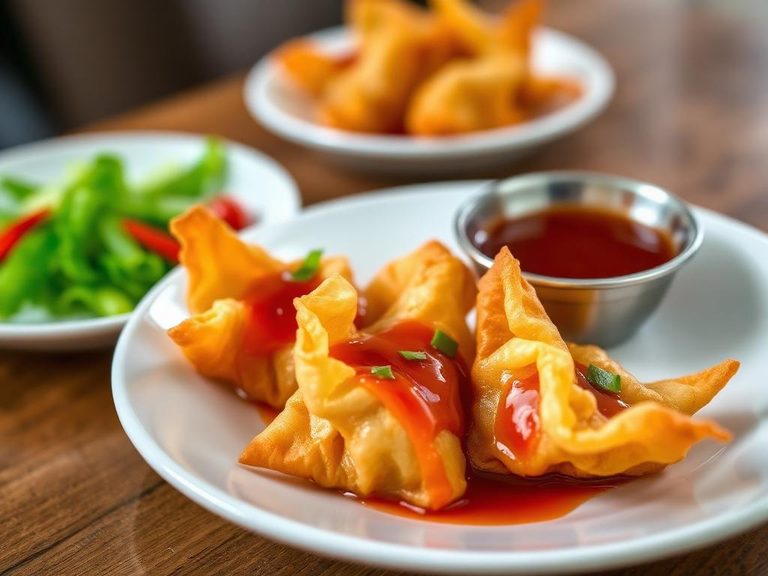
A delicate, savory broth filled with tender, often pork- or shrimp-filled dumplings, wonton soup is a comforting staple of Chinese cuisine. The silky, thin dough wrappers contrast with the juicy filling, all swimming in a clear, umami-rich broth. At just 33 kcal per 100g, it's a remarkably light yet satisfying option, providing a good source of protein with minimal fat.
Calorie split: 29% protein · 36% carbs · 36% fat
↓ Full nutrition💚 Why it's loved
People adore it for the comforting, savory harmony of the delicate dumplings and the clear, flavorful broth. It's a versatile dish enjoyed as a light lunch, a starter, or a late-night snack, deeply embedded in Chinese culinary culture.
⚠️ Watch-outs & how to enjoy it better
The broth can be very high in sodium, which is a concern for those monitoring salt intake. The refined wheat wrapper offers little fiber, and some pre-made versions may contain common allergens like shellfish or wheat. To counteract, opt for low-sodium broth, add extra vegetables like bok choy for fiber, and always check ingredient lists for allergens.
Key benefits
- High in protein relative to calories for satiety
- Low in fat and overall calories
- Provides a hydrating, warm broth base
- Can be a light, balanced meal when paired with vegetables
🍽️ Popular dishes

🌍 Where it's eaten
💡 Did you know?
The name 'wonton' (馄饨) is believed to be a phonetic approximation of the Cantonese pronunciation, which itself may have originated from a phrase meaning '混沌' (hùndùn), meaning '混沌' or 'primordial chaos,' referring to the mixed filling wrapped in the dough.
Full nutrition (USDA data · scales with serving)
| Water | 92.2 g |
| Energy | 33.0 kcal |
| Protein | 2.4 g |
| Total lipid (fat) | 1.3 g |
| Carbohydrate, by difference | 3.0 g |
| Fiber, total dietary | 0.30 g |
| Total Sugars | 0.74 g |
| Calcium, Ca | 10.0 mg |
| Iron, Fe | 0.24 mg |
| Magnesium, Mg | 6.0 mg |
| Phosphorus, P | 33.0 mg |
| Potassium, K | 86.0 mg |
| Sodium, Na | 370 mg |
| Zinc, Zn | 0.37 mg |
| Copper, Cu | 0.01 mg |
| Selenium, Se | 4.1 ug |
| Vitamin C, total ascorbic acid | 1.7 mg |
| Thiamin | 0.09 mg |
| Riboflavin | 0.06 mg |
| Niacin | 0.84 mg |
| Vitamin B-6 | 0.06 mg |
| Folate, total | 4.0 ug |
| Folic acid | 0.00 ug |
| Folate, food | 4.0 ug |
| Folate, DFE | 4.0 ug |
| Choline, total | 12.4 mg |
| Vitamin B-12 | 0.09 ug |
| Vitamin B-12, added | 0.00 ug |
| Vitamin A, RAE | 1.0 ug |
| Retinol | 0.00 ug |
| Carotene, beta | 10.0 ug |
| Carotene, alpha | 0.00 ug |
| Cryptoxanthin, beta | 0.00 ug |
| Lycopene | 0.00 ug |
| Lutein + zeaxanthin | 4.0 ug |
| Vitamin E (alpha-tocopherol) | 0.07 mg |
| Vitamin E, added | 0.00 mg |
| Vitamin D (D2 + D3) | 0.00 ug |
| Vitamin K (phylloquinone) | 11.5 ug |
| Alcohol, ethyl | 0.00 g |
| Caffeine | 0.00 mg |
| Theobromine | 0.00 mg |
Fat & fatty acid profile (per 100g)
| Fatty acids, total saturated | 0.41 g |
| SFA 4:0 | 0.00 g |
| SFA 6:0 | 0.00 g |
| SFA 8:0 | 0.00 g |
| SFA 10:0 | 0.00 g |
| SFA 12:0 | 0.00 g |
| SFA 14:0 | 0.02 g |
| SFA 16:0 | 0.24 g |
| SFA 18:0 | 0.13 g |
| Fatty acids, total monounsaturated | 0.56 g |
| MUFA 16:1 | 0.04 g |
| MUFA 18:1 | 0.51 g |
| MUFA 20:1 | 0.01 g |
| MUFA 22:1 | 0.00 g |
| Fatty acids, total polyunsaturated | 0.17 g |
| PUFA 18:2 | 0.15 g |
| PUFA 18:3 | 0.01 g |
| PUFA 18:4 | 0.00 g |
| PUFA 20:4 | 0.00 g |
| PUFA 20:5 n-3 (EPA) | 0.00 g |
| PUFA 22:5 n-3 (DPA) | 0.00 g |
| PUFA 22:6 n-3 (DHA) | 0.00 g |
| Cholesterol | 4.0 mg |
Amino acid profile (per 100g)
Estimated from Restaurant, Latino, black bean soup — USDA does not publish this profile for Soup.
| Tryptophan | 0.04 g |
| Threonine | 0.17 g |
| Isoleucine | 0.16 g |
| Leucine | 0.32 g |
| Lysine | 0.27 g |
| Methionine | 0.10 g |
| Cystine | 0.04 g |
| Phenylalanine | 0.16 g |
| Tyrosine | 0.13 g |
| Valine | 0.20 g |
| Arginine | 0.35 g |
| Histidine | 0.09 g |
| Alanine | 0.35 g |
| Aspartic acid | 0.38 g |
| Glutamic acid | 0.72 g |
| Glycine | 0.58 g |
| Proline | 0.36 g |
| Serine | 0.20 g |
FAQ
Is wonton soup healthy?
It can be a healthy, low-calorie option, especially when homemade with lean protein and plenty of vegetables. The main nutritional drawback is often the high sodium content in the broth.
What is the difference between a wonton and a dumpling?
Wontons are a type of Chinese dumpling characterized by their thin, delicate wrappers and are typically boiled in a broth. Dumplings often have thicker, chewier dough and can be boiled, steamed, or pan-fried.
What are wontons usually filled with?
The most common filling is ground pork and shrimp, seasoned with ginger, soy sauce, and sesame oil. Variations can include chicken, vegetables, or purely shrimp.
Nutrient density (calculated · NRF9.3)
Nutrient Rich Foods index: beneficial nutrients (protein, fiber, vitamins, minerals) minus saturated fat, added sugar & sodium, per 100 kcal.
NRF9.3 index — Fulgoni, Keast & Drewnowski, 2009. Computed from USDA nutrients.
Weight-loss friendliness (composite index)
Energy density 0.33 kcal/g · 29% calories from protein · 0.3 g fiber · 0.7 g sugar per 100 g.
Composite of energy density (Rolls et al., 1999), protein & fiber satiety, minus sugar. A calculated heuristic — ranks satiety-per-calorie, not a clinical measure.
Dietary load (calculated from USDA values)
Potential renal acid load. Positive = acid-forming, negative = alkaline-forming.
Sodium-to-potassium ratio: 4.30 (lower is better — aim for ≤ 1)
Sodium:potassium per WHO potassium guidance. Computed from USDA nutrients.