

Soup, mulligatawany
Common food

Photo: Wikipedia
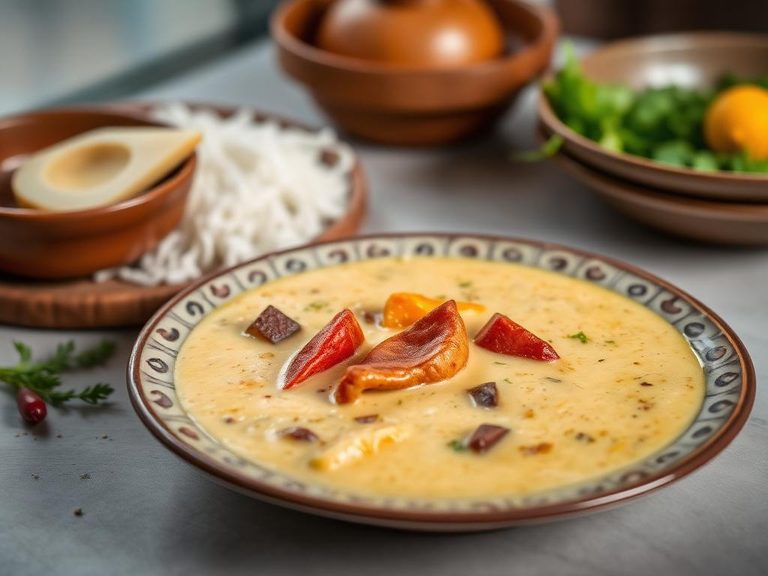
Mulligatawny is a rich, Anglo-Indian soup with a velvety, slightly thick texture and a complex flavor profile that balances warm spices like curry, cumin, and turmeric with a subtle tang from tamarind or vinegar. It's a light yet deeply satisfying starter, often featuring a base of chicken or vegetables, and is nutritionally notable for its low calorie count and decent fiber content per serving.
Calorie split: 14% protein · 56% carbs · 30% fat
↓ Full nutrition💚 Why it's loved
People love it for its unique, warming spice blend that's both comforting and exotic, making it a beloved staple in British-Indian cuisine. Its versatility allows it to be adapted for various diets, from a hearty meal to a light, elegant first course.
⚠️ Watch-outs & how to enjoy it better
The soup can be high in sodium, especially from store-bought versions or added stock, which may concern those monitoring salt intake. Some recipes use a roux or cream, increasing fat content, and the lentils can cause digestive discomfort for some. To counteract, opt for low-sodium broth, use a light hand with cream or substitute with coconut milk, and ensure lentils are well-cooked or rinsed if using canned.
Key benefits
- Low-calorie option for a flavorful starter
- Contains anti-inflammatory spices like turmeric and ginger
- Provides dietary fiber from lentils and vegetables
- Can be a good source of lean protein if made with chicken
- Offers a complex mix of vitamins and minerals from its vegetable base
🍽️ Popular dishes
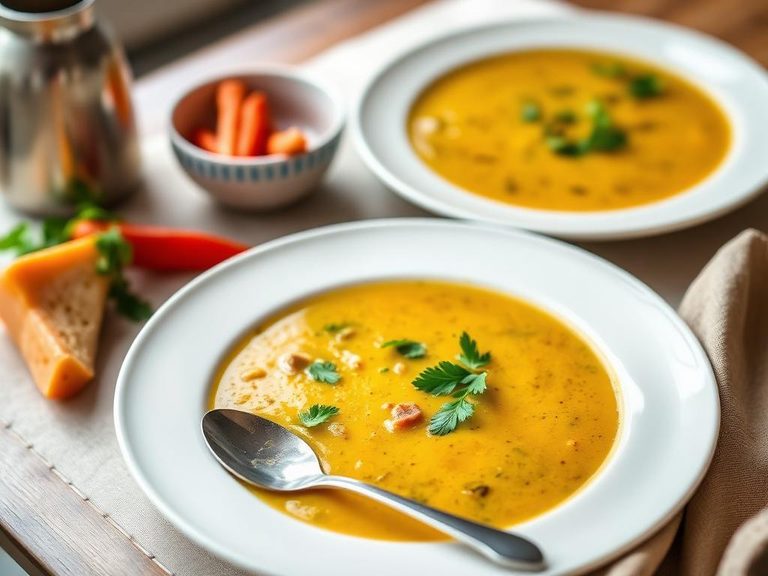
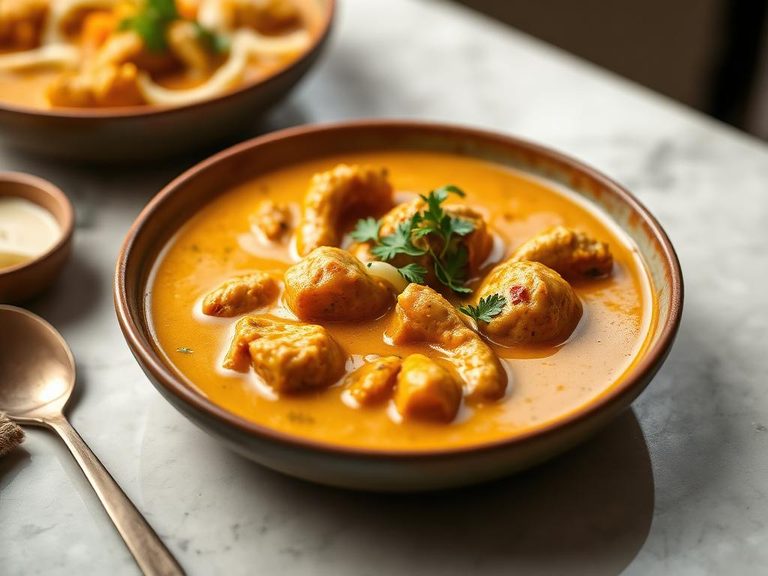
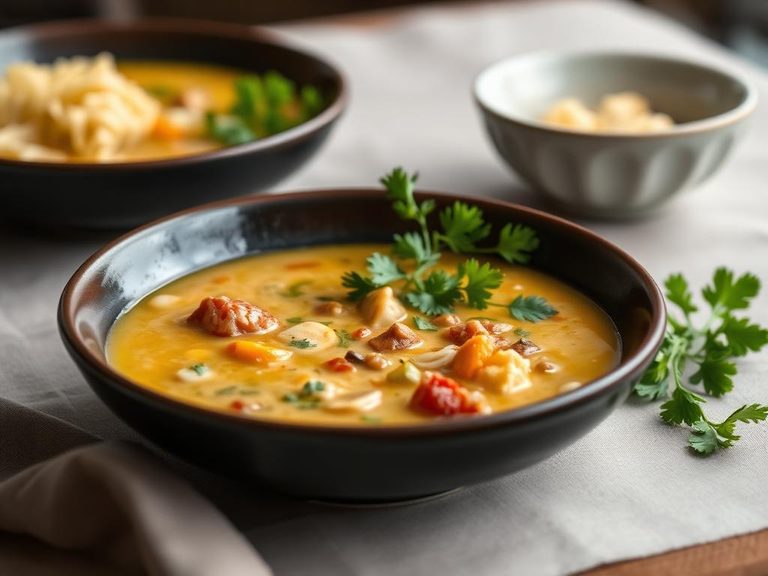
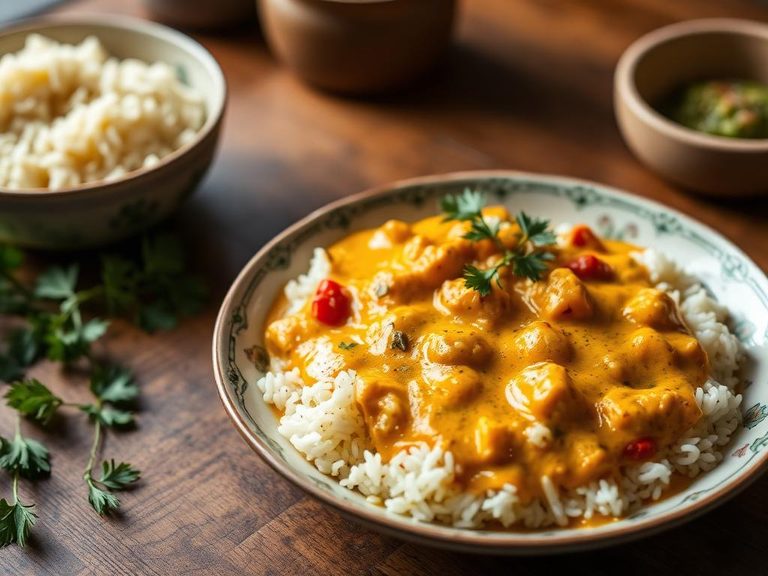
🌍 Where it's eaten
💡 Did you know?
The name 'mulligatawny' comes from the Tamil words 'milagu tannir,' meaning 'pepper water,' which was the original thin, spicy broth that British colonists in India adapted into a thicker, heartier soup.
Full nutrition (USDA data · scales with serving)
| Water | 88.5 g |
| Energy | 48.0 kcal |
| Protein | 1.7 g |
| Total lipid (fat) | 1.7 g |
| Carbohydrate, by difference | 7.0 g |
| Fiber, total dietary | 1.8 g |
| Total Sugars | 2.3 g |
| Calcium, Ca | 14.0 mg |
| Iron, Fe | 0.59 mg |
| Magnesium, Mg | 14.0 mg |
| Phosphorus, P | 39.0 mg |
| Potassium, K | 187 mg |
| Sodium, Na | 259 mg |
| Zinc, Zn | 0.28 mg |
| Copper, Cu | 0.07 mg |
| Selenium, Se | 0.50 ug |
| Vitamin C, total ascorbic acid | 7.0 mg |
| Thiamin | 0.04 mg |
| Riboflavin | 0.04 mg |
| Niacin | 0.53 mg |
| Vitamin B-6 | 0.07 mg |
| Folate, total | 28.0 ug |
| Folic acid | 0.00 ug |
| Folate, food | 28.0 ug |
| Folate, DFE | 28.0 ug |
| Choline, total | 8.8 mg |
| Vitamin B-12 | 0.00 ug |
| Vitamin B-12, added | 0.00 ug |
| Vitamin A, RAE | 34.0 ug |
| Retinol | 0.00 ug |
| Carotene, beta | 350 ug |
| Carotene, alpha | 95.0 ug |
| Cryptoxanthin, beta | 4.0 ug |
| Lycopene | 1844 ug |
| Lutein + zeaxanthin | 223 ug |
| Vitamin E (alpha-tocopherol) | 0.53 mg |
| Vitamin E, added | 0.00 mg |
| Vitamin D (D2 + D3) | 0.00 ug |
| Vitamin K (phylloquinone) | 12.7 ug |
| Alcohol, ethyl | 0.00 g |
| Caffeine | 0.00 mg |
| Theobromine | 0.00 mg |
Fat & fatty acid profile (per 100g)
| Fatty acids, total saturated | 0.43 g |
| SFA 4:0 | 0.00 g |
| SFA 6:0 | 0.00 g |
| SFA 8:0 | 0.02 g |
| SFA 10:0 | 0.01 g |
| SFA 12:0 | 0.11 g |
| SFA 14:0 | 0.05 g |
| SFA 16:0 | 0.17 g |
| SFA 18:0 | 0.06 g |
| Fatty acids, total monounsaturated | 0.55 g |
| MUFA 16:1 | 0.01 g |
| MUFA 18:1 | 0.53 g |
| MUFA 20:1 | 0.01 g |
| MUFA 22:1 | 0.00 g |
| Fatty acids, total polyunsaturated | 0.53 g |
| PUFA 18:2 | 0.46 g |
| PUFA 18:3 | 0.06 g |
| PUFA 18:4 | 0.00 g |
| PUFA 20:4 | 0.00 g |
| PUFA 20:5 n-3 (EPA) | 0.00 g |
| PUFA 22:5 n-3 (DPA) | 0.00 g |
| PUFA 22:6 n-3 (DHA) | 0.00 g |
| Cholesterol | 0.00 mg |
Amino acid profile (per 100g)
Estimated from Restaurant, Latino, black bean soup — USDA does not publish this profile for Soup.
| Tryptophan | 0.04 g |
| Threonine | 0.17 g |
| Isoleucine | 0.16 g |
| Leucine | 0.32 g |
| Lysine | 0.27 g |
| Methionine | 0.10 g |
| Cystine | 0.04 g |
| Phenylalanine | 0.16 g |
| Tyrosine | 0.13 g |
| Valine | 0.20 g |
| Arginine | 0.35 g |
| Histidine | 0.09 g |
| Alanine | 0.35 g |
| Aspartic acid | 0.38 g |
| Glutamic acid | 0.72 g |
| Glycine | 0.58 g |
| Proline | 0.36 g |
| Serine | 0.20 g |
FAQ
Is mulligatawny soup spicy?
It typically has a mild to moderate warmth from spices like curry powder and ginger, but it's not usually intensely hot. The heat level can be adjusted to taste.
What is the main protein in mulligatawny?
The most common protein is chicken, often shredded or diced. However, many vegetarian versions use lentils, chickpeas, or simply a rich vegetable base.
Can I make mulligatawny soup ahead of time?
Yes, it often tastes even better the next day as the flavors meld. Store it in the refrigerator for up to 3 days or freeze it for up to 3 months.
Nutrient density (calculated · NRF9.3)
Nutrient Rich Foods index: beneficial nutrients (protein, fiber, vitamins, minerals) minus saturated fat, added sugar & sodium, per 100 kcal.
NRF9.3 index — Fulgoni, Keast & Drewnowski, 2009. Computed from USDA nutrients.
Weight-loss friendliness (composite index)
Energy density 0.48 kcal/g · 14% calories from protein · 1.8 g fiber · 2.3 g sugar per 100 g.
Composite of energy density (Rolls et al., 1999), protein & fiber satiety, minus sugar. A calculated heuristic — ranks satiety-per-calorie, not a clinical measure.
Dietary load (calculated from USDA values)
Potential renal acid load. Positive = acid-forming, negative = alkaline-forming.
Sodium-to-potassium ratio: 1.39 (lower is better — aim for ≤ 1)
Sodium:potassium per WHO potassium guidance. Computed from USDA nutrients.