

Soup, Italian wedding
Common food

Photo: Wikipedia
Italian wedding soup is a hearty, clear-broth soup featuring small meatballs, tender greens (like escarole or spinach), and tiny pasta (acini di pepe). Its flavor is savory and comforting, with a delicate balance of meat, vegetable, and broth. Nutritionally, it's a light yet protein-rich starter, offering a good protein-to-calorie ratio.
Calorie split: 22% protein · 45% carbs · 33% fat
↓ Full nutrition💚 Why it's loved
People love it for its comforting, savory depth and the satisfying texture contrast between the tender meatballs, soft greens, and small pasta. It's a beloved staple at Italian-American gatherings and a go-to for a nourishing, light meal.
⚠️ Watch-outs & how to enjoy it better
The soup can be high in sodium from the broth and meatballs, which may concern those monitoring salt intake. The small pasta can cause blood-sugar spikes if consumed in large portions without added protein or fat. To mitigate, pair with a side salad or whole-grain bread, and opt for a homemade, low-sodium broth when possible.
Key benefits
- High protein density for a soup (3.57g per 100g)
- Low calorie (66 kcal per 100g)
- Contains fiber from greens and pasta
- Hydrating broth base
- Provides iron and vitamins from leafy greens
🍽️ Popular dishes
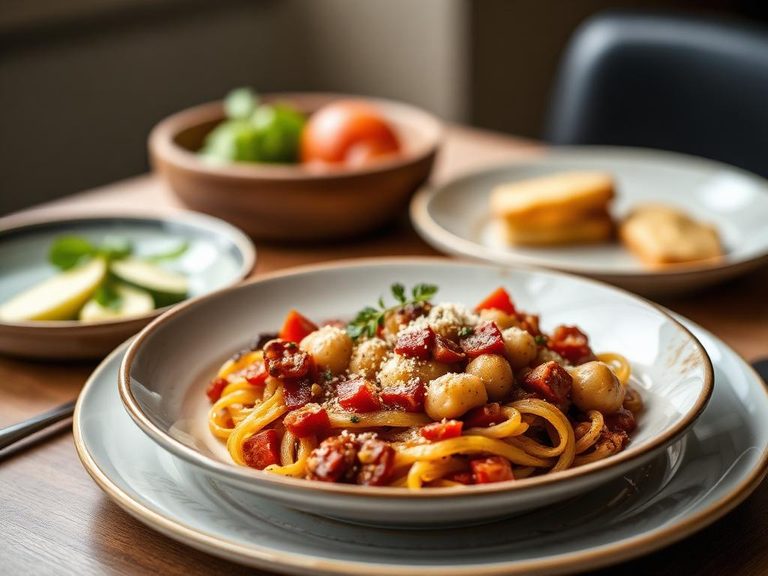
🌍 Where it's eaten
💡 Did you know?
The name 'wedding soup' is a mistranslation of 'minestra maritata,' which means 'married soup,' referring to the harmonious marriage of meat and greens in the broth.
Full nutrition (USDA data · scales with serving)
| Water | 85.6 g |
| Energy | 66.0 kcal |
| Protein | 3.6 g |
| Total lipid (fat) | 2.4 g |
| Carbohydrate, by difference | 7.4 g |
| Fiber, total dietary | 0.90 g |
| Total Sugars | 0.69 g |
| Calcium, Ca | 22.0 mg |
| Iron, Fe | 0.68 mg |
| Magnesium, Mg | 23.0 mg |
| Phosphorus, P | 36.0 mg |
| Potassium, K | 138 mg |
| Sodium, Na | 239 mg |
| Zinc, Zn | 0.59 mg |
| Copper, Cu | 0.05 mg |
| Selenium, Se | 6.2 ug |
| Vitamin C, total ascorbic acid | 4.3 mg |
| Thiamin | 0.08 mg |
| Riboflavin | 0.08 mg |
| Niacin | 0.94 mg |
| Vitamin B-6 | 0.09 mg |
| Folate, total | 32.0 ug |
| Folic acid | 11.0 ug |
| Folate, food | 21.0 ug |
| Folate, DFE | 40.0 ug |
| Choline, total | 11.3 mg |
| Vitamin B-12 | 0.22 ug |
| Vitamin B-12, added | 0.00 ug |
| Vitamin A, RAE | 72.0 ug |
| Retinol | 0.00 ug |
| Carotene, beta | 820 ug |
| Carotene, alpha | 85.0 ug |
| Cryptoxanthin, beta | 2.0 ug |
| Lycopene | 0.00 ug |
| Lutein + zeaxanthin | 1332 ug |
| Vitamin E (alpha-tocopherol) | 0.45 mg |
| Vitamin E, added | 0.00 mg |
| Vitamin D (D2 + D3) | 0.00 ug |
| Vitamin K (phylloquinone) | 86.3 ug |
| Alcohol, ethyl | 0.00 g |
| Caffeine | 0.00 mg |
| Theobromine | 0.00 mg |
Fat & fatty acid profile (per 100g)
| Fatty acids, total saturated | 0.80 g |
| SFA 4:0 | 0.00 g |
| SFA 6:0 | 0.00 g |
| SFA 8:0 | 0.00 g |
| SFA 10:0 | 0.00 g |
| SFA 12:0 | 0.00 g |
| SFA 14:0 | 0.06 g |
| SFA 16:0 | 0.47 g |
| SFA 18:0 | 0.24 g |
| Fatty acids, total monounsaturated | 0.91 g |
| MUFA 16:1 | 0.06 g |
| MUFA 18:1 | 0.84 g |
| MUFA 20:1 | 0.01 g |
| MUFA 22:1 | 0.00 g |
| Fatty acids, total polyunsaturated | 0.29 g |
| PUFA 18:2 | 0.24 g |
| PUFA 18:3 | 0.05 g |
| PUFA 18:4 | 0.00 g |
| PUFA 20:4 | 0.00 g |
| PUFA 20:5 n-3 (EPA) | 0.00 g |
| PUFA 22:5 n-3 (DPA) | 0.00 g |
| PUFA 22:6 n-3 (DHA) | 0.00 g |
| Cholesterol | 7.0 mg |
Amino acid profile (per 100g)
Estimated from Restaurant, Latino, black bean soup — USDA does not publish this profile for Soup.
| Tryptophan | 0.04 g |
| Threonine | 0.17 g |
| Isoleucine | 0.16 g |
| Leucine | 0.32 g |
| Lysine | 0.27 g |
| Methionine | 0.10 g |
| Cystine | 0.04 g |
| Phenylalanine | 0.16 g |
| Tyrosine | 0.13 g |
| Valine | 0.20 g |
| Arginine | 0.35 g |
| Histidine | 0.09 g |
| Alanine | 0.35 g |
| Aspartic acid | 0.38 g |
| Glutamic acid | 0.72 g |
| Glycine | 0.58 g |
| Proline | 0.36 g |
| Serine | 0.20 g |
FAQ
What greens are traditionally used in Italian wedding soup?
Escarole is the classic choice, but spinach, kale, or endive are also common, depending on regional or family recipes.
Can I make Italian wedding soup ahead of time?
Yes, but it's best to store the cooked pasta and meatballs separately from the broth to prevent them from becoming mushy. Combine just before serving.
Is Italian wedding soup gluten-free?
The traditional version contains wheat-based pasta and breadcrumbs in the meatballs, so it's not gluten-free. Gluten-free pasta and breadcrumb substitutes can be used for adaptation.
Nutrient density (calculated · NRF9.3)
Nutrient Rich Foods index: beneficial nutrients (protein, fiber, vitamins, minerals) minus saturated fat, added sugar & sodium, per 100 kcal.
NRF9.3 index — Fulgoni, Keast & Drewnowski, 2009. Computed from USDA nutrients.
Weight-loss friendliness (composite index)
Energy density 0.66 kcal/g · 22% calories from protein · 0.9 g fiber · 0.7 g sugar per 100 g.
Composite of energy density (Rolls et al., 1999), protein & fiber satiety, minus sugar. A calculated heuristic — ranks satiety-per-calorie, not a clinical measure.
Dietary load (calculated from USDA values)
Potential renal acid load. Positive = acid-forming, negative = alkaline-forming.
Sodium-to-potassium ratio: 1.73 (lower is better — aim for ≤ 1)
Sodium:potassium per WHO potassium guidance. Computed from USDA nutrients.