

Soup, cream of vegetable, dry, powder
Whole food · Soups, Sauces, and Gravies
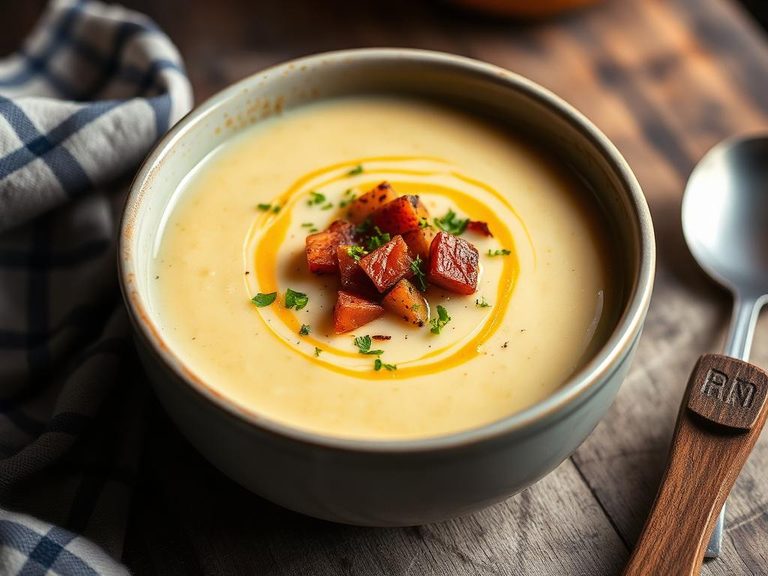
This is a shelf-stable, powdered mix that transforms into a rich, velvety cream of vegetable soup when rehydrated with water or milk. Its texture is typically smooth and slightly thick, offering a comforting, savory flavor profile often dominated by notes of carrot, potato, and celery. Nutritionally, it is a calorie-dense, high-carbohydrate base, with a significant portion of its energy coming from added fats and sugars.
Calorie split: 7% protein · 46% carbs · 47% fat
↓ Full nutrition💚 Why it's loved
People love it for its unparalleled convenience and nostalgic, comforting flavor that can be ready in minutes. It's a beloved pantry staple for quick lunches, camping trips, or as a base for creamy sauces and casseroles.
⚠️ Watch-outs & how to enjoy it better
The high carbohydrate and sugar content can lead to blood-sugar spikes, and it is often very high in sodium. To counteract this, pair it with a protein source like chicken or beans, use a smaller portion as a sauce base, and choose low-sodium versions when available.
Key benefits
- Long shelf life and pantry stability
- Convenient and quick to prepare
- Provides a source of carbohydrates for quick energy
- Fortified versions can offer added vitamins and minerals
- Serves as a versatile base for other recipes
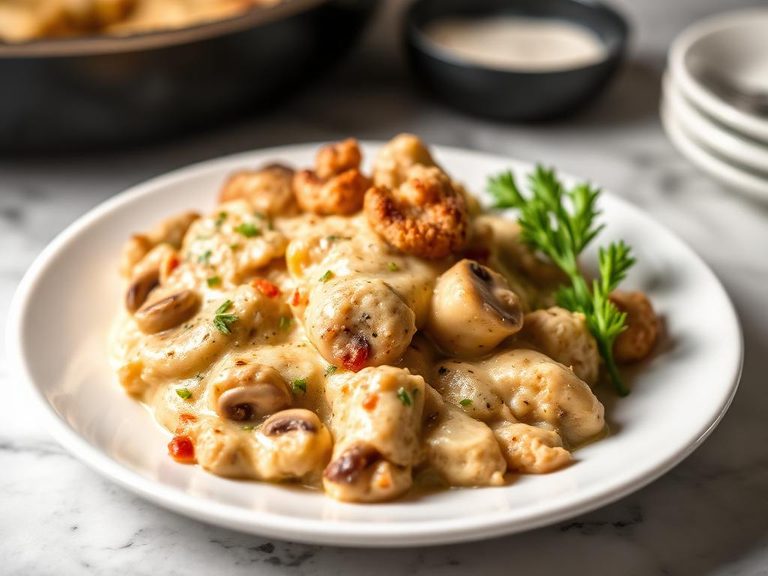
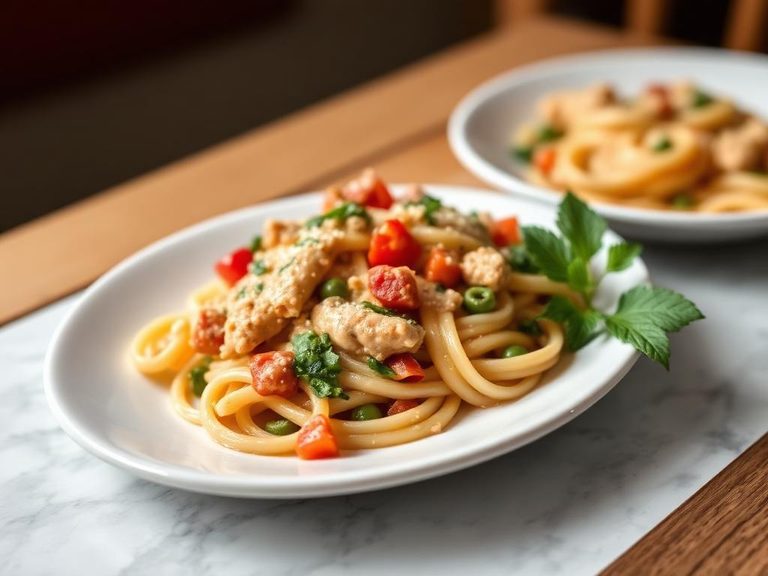
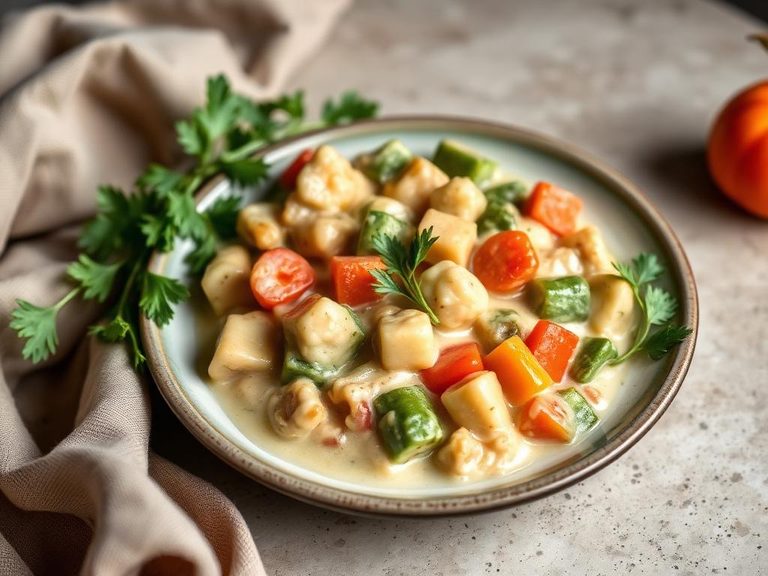
🍽️ Popular dishes
🌍 Where it's eaten
💡 Did you know?
The process of making instant powdered soup was significantly advanced during World War II to create lightweight, non-perishable rations for soldiers, with many post-war commercial products descending from this military technology.
Full nutrition (USDA data · scales with serving)
| Water | 2.9 g |
| Energy | 446 kcal |
| Energy | 1866 kj |
| Protein | 8.0 g |
| Total lipid (fat) | 24.1 g |
| Ash | 12.9 g |
| Carbohydrate, by difference | 52.1 g |
| Fiber, total dietary | 3.0 g |
| Total Sugars | 17.5 g |
| Calcium, Ca | 134 mg |
| Iron, Fe | 2.6 mg |
| Magnesium, Mg | 48.0 mg |
| Phosphorus, P | 228 mg |
| Potassium, K | 408 mg |
| Sodium, Na | 3857 mg |
| Zinc, Zn | 1.6 mg |
| Copper, Cu | 0.40 mg |
| Manganese, Mn | 0.80 mg |
| Selenium, Se | 20.7 ug |
| Vitamin C, total ascorbic acid | 16.6 mg |
| Thiamin | 5.2 mg |
| Riboflavin | 0.45 mg |
| Niacin | 2.2 mg |
| Pantothenic acid | 0.70 mg |
| Vitamin B-6 | 0.10 mg |
| Folate, total | 30.0 ug |
| Folic acid | 0.00 ug |
| Folate, food | 30.0 ug |
| Folate, DFE | 30.0 ug |
| Choline, total | 58.0 mg |
| Vitamin B-12 | 0.50 ug |
| Vitamin B-12, added | 0.00 ug |
| Vitamin A, RAE | 600 ug |
| Retinol | 0.00 ug |
| Carotene, beta | 5620 ug |
| Carotene, alpha | 2820 ug |
| Cryptoxanthin, beta | 334 ug |
| Vitamin A, IU | 11996 iu |
| Lycopene | 2.0 ug |
| Lutein + zeaxanthin | 920 ug |
| Vitamin E (alpha-tocopherol) | 2.4 mg |
| Vitamin E, added | 0.00 mg |
| Vitamin D (D2 + D3), International Units | 0.00 iu |
| Vitamin D (D2 + D3) | 0.00 ug |
| Vitamin K (phylloquinone) | 32.9 ug |
| Alcohol, ethyl | 0.00 g |
| Caffeine | 0.00 mg |
| Theobromine | 0.00 mg |
Fat & fatty acid profile (per 100g)
| Fatty acids, total saturated | 6.0 g |
| SFA 4:0 | 0.00 g |
| SFA 6:0 | 0.00 g |
| SFA 8:0 | 0.00 g |
| SFA 10:0 | 0.00 g |
| SFA 12:0 | 0.00 g |
| SFA 14:0 | 0.10 g |
| SFA 16:0 | 3.4 g |
| SFA 18:0 | 2.6 g |
| Fatty acids, total monounsaturated | 10.7 g |
| MUFA 16:1 | 0.00 g |
| MUFA 18:1 | 10.7 g |
| MUFA 20:1 | 0.00 g |
| MUFA 22:1 | 0.00 g |
| Fatty acids, total polyunsaturated | 6.3 g |
| PUFA 18:2 | 5.9 g |
| PUFA 18:3 | 0.39 g |
| PUFA 18:4 | 0.00 g |
| PUFA 20:4 | 0.00 g |
| PUFA 20:5 n-3 (EPA) | 0.00 g |
| PUFA 22:5 n-3 (DPA) | 0.00 g |
| PUFA 22:6 n-3 (DHA) | 0.00 g |
| Cholesterol | 2.0 mg |
Amino acid profile (per 100g)
Estimated from Soup, bean with pork, canned, condensed — USDA does not publish this profile for Soup.
| Tryptophan | 0.06 g |
| Threonine | 0.24 g |
| Isoleucine | 0.29 g |
| Leucine | 0.48 g |
| Lysine | 0.40 g |
| Methionine | 0.07 g |
| Cystine | 0.07 g |
| Phenylalanine | 0.33 g |
| Tyrosine | 0.18 g |
| Valine | 0.32 g |
| Arginine | 0.31 g |
| Histidine | 0.15 g |
| Alanine | 0.29 g |
| Aspartic acid | 0.66 g |
| Glutamic acid | 1.1 g |
| Glycine | 0.28 g |
| Proline | 0.27 g |
| Serine | 0.29 g |
FAQ
Can I use this powder to make a creamy sauce instead of soup?
Yes, it's a classic kitchen hack. Use less liquid (like milk or broth) to create a thick, flavorful sauce for casseroles, pasta, or baked dishes.
Is this product gluten-free?
Not always. Many formulations use wheat flour as a thickener. Always check the ingredient list for wheat or maltodextrin derived from wheat if you have a gluten sensitivity.
How can I reduce the sodium content?
Look for 'low sodium' or 'no salt added' versions. You can also prepare it with unsalted broth or water and season lightly yourself.
Nutrient density (calculated · NRF9.3)
Nutrient Rich Foods index: beneficial nutrients (protein, fiber, vitamins, minerals) minus saturated fat, added sugar & sodium, per 100 kcal.
NRF9.3 index — Fulgoni, Keast & Drewnowski, 2009. Computed from USDA nutrients.
Weight-loss friendliness (composite index)
Energy density 4.46 kcal/g · 7% calories from protein · 3.0 g fiber · 17.5 g sugar per 100 g.
Composite of energy density (Rolls et al., 1999), protein & fiber satiety, minus sugar. A calculated heuristic — ranks satiety-per-calorie, not a clinical measure.
Dietary load (calculated from USDA values)
Potential renal acid load. Positive = acid-forming, negative = alkaline-forming.
Sodium-to-potassium ratio: 9.45 (lower is better — aim for ≤ 1)
Sodium:potassium per WHO potassium guidance. Computed from USDA nutrients.