

Snacks, FARLEY CANDY, FARLEY Fruit Snacks, with vitamins A, C, and E
Whole food · Snacks

Photo: Wikipedia
Farley Fruit Snacks are vibrant, chewy, bite-sized morsels made from fruit juice concentrate, offering a sweet and tangy burst of flavor in a convenient, portable form. They are fortified with vitamins A, C, and E, providing a quick, energy-dense snack that is virtually fat-free. The texture is soft and slightly gummy, designed to dissolve pleasantly in the mouth.
Calorie split: 5% protein · 95% carbs · 0% fat
↓ Full nutrition💚 Why it's loved
People love these snacks for their intense, nostalgic fruit flavors and satisfying chewy texture that makes them a fun, easy treat. They are a staple in lunchboxes and on-the-go bags for their portability and ability to satisfy a sweet craving quickly.
⚠️ Watch-outs & how to enjoy it better
The high carbohydrate content (80.9g per 100g) can lead to rapid blood sugar spikes, making them a poor choice for those managing diabetes or seeking sustained energy. To mitigate this, pair a small portion with a source of protein or healthy fat (like a handful of nuts or cheese) to slow absorption. They also lack fiber, so they aren't filling and should be consumed mindfully as a treat, not a meal replacement.
Key benefits
- Provides a quick source of energy from carbohydrates
- Fortified with essential vitamins A, C, and E
- Fat-free and contains no added sugars per the provided data
- Convenient, portable, and shelf-stable snack format
- Offers a fruit-flavored alternative to candy
🍽️ Popular dishes
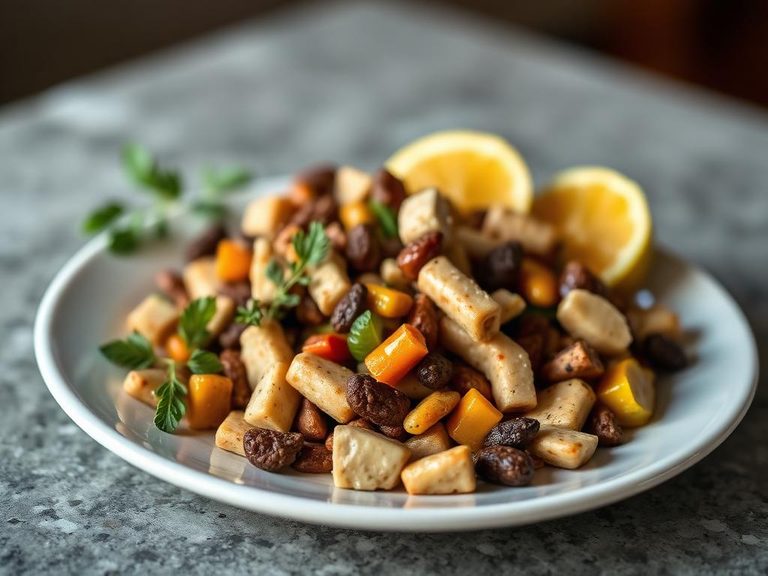
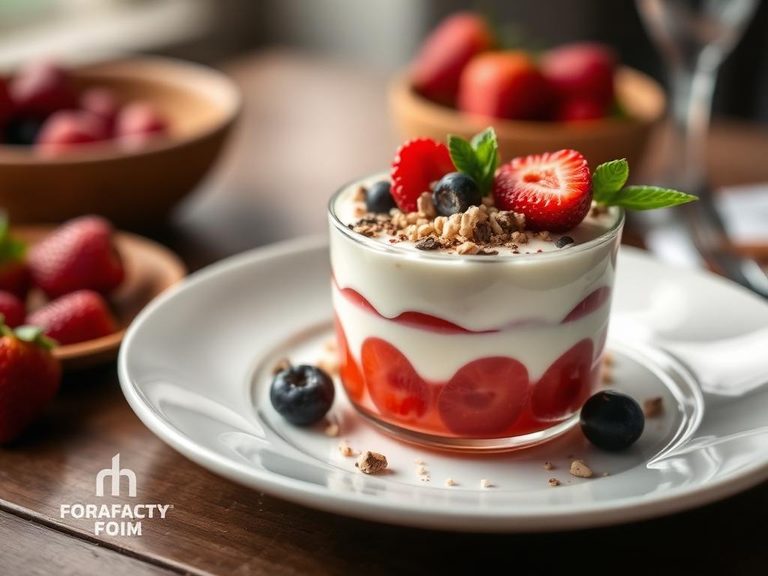
🌍 Where it's eaten
💡 Did you know?
Despite their fruity taste and name, many fruit snacks like Farley's contain no actual fruit pieces; their flavor and color primarily come from fruit juice concentrates, added sugars, and natural or artificial flavorings.
Full nutrition (USDA data · scales with serving)
| Water | 14.7 g |
| Energy | 341 kcal |
| Energy | 1428 kj |
| Protein | 4.4 g |
| Total lipid (fat) | 0.00 g |
| Ash | 0.00 g |
| Carbohydrate, by difference | 80.9 g |
| Sodium, Na | 36.0 mg |
| Vitamin C, total ascorbic acid | 90.3 mg |
| Vitamin A, IU | 5436 iu |
Fat & fatty acid profile (per 100g)
Estimated from Snacks, corn-based, extruded, chips, plain — USDA does not publish this profile for Snacks.
| Fatty acids, total saturated | 4.3 g |
| SFA 4:0 | 0.00 g |
| SFA 6:0 | 0.00 g |
| SFA 8:0 | 0.01 g |
| SFA 10:0 | 0.00 g |
| SFA 12:0 | 0.00 g |
| SFA 14:0 | 0.01 g |
| SFA 15:0 | 0.00 g |
| SFA 16:0 | 3.5 g |
| SFA 17:0 | 0.02 g |
| SFA 18:0 | 0.55 g |
| SFA 20:0 | 0.12 g |
| SFA 22:0 | 0.04 g |
| SFA 24:0 | 0.06 g |
| Fatty acids, total monounsaturated | 9.1 g |
| MUFA 14:1 | 0.00 g |
| MUFA 15:1 | 0.00 g |
| MUFA 16:1 | 0.03 g |
| MUFA 16:1 c | 0.03 g |
| MUFA 17:1 | 0.01 g |
| MUFA 18:1 | 9.0 g |
| MUFA 18:1 c | 9.0 g |
| MUFA 20:1 | 0.10 g |
| MUFA 22:1 | 0.00 g |
| MUFA 22:1 c | 0.00 g |
| MUFA 24:1 c | 0.00 g |
| Fatty acids, total polyunsaturated | 16.4 g |
| PUFA 18:2 | 16.1 g |
| PUFA 18:2 n-6 c,c | 16.0 g |
| PUFA 18:2 CLAs | 0.03 g |
| PUFA 18:3 | 0.28 g |
| PUFA 18:3 n-3 c,c,c (ALA) | 0.26 g |
| PUFA 18:3 n-6 c,c,c | 0.01 g |
| PUFA 18:3i | 0.00 g |
| PUFA 18:4 | 0.00 g |
| PUFA 20:2 n-6 c,c | 0.01 g |
| PUFA 20:3 | 0.01 g |
| PUFA 20:3 n-3 | 0.01 g |
| PUFA 20:3 n-6 | 0.00 g |
| PUFA 20:4 | 0.01 g |
| PUFA 20:5 n-3 (EPA) | 0.01 g |
| PUFA 22:4 | 0.00 g |
| PUFA 22:5 n-3 (DPA) | 0.00 g |
| PUFA 22:6 n-3 (DHA) | 0.00 g |
| Fatty acids, total trans | 0.09 g |
| Fatty acids, total trans-monoenoic | 0.02 g |
| TFA 16:1 t | 0.00 g |
| TFA 18:1 t | 0.02 g |
| TFA 22:1 t | 0.00 g |
| TFA 18:2 t not further defined | 0.07 g |
| Fatty acids, total trans-polyenoic | 0.07 g |
| Cholesterol | 0.00 mg |
| Stigmasterol | 21.0 mg |
| Campesterol | 51.0 mg |
| Beta-sitosterol | 148 mg |
Amino acid profile (per 100g)
Estimated from Snacks, corn-based, extruded, chips, plain — USDA does not publish this profile for Snacks.
| Tryptophan | 0.05 g |
| Threonine | 0.25 g |
| Isoleucine | 0.23 g |
| Leucine | 0.80 g |
| Lysine | 0.18 g |
| Methionine | 0.14 g |
| Cystine | 0.12 g |
| Phenylalanine | 0.32 g |
| Tyrosine | 0.27 g |
| Valine | 0.33 g |
| Arginine | 0.33 g |
| Histidine | 0.20 g |
| Alanine | 0.49 g |
| Aspartic acid | 0.46 g |
| Glutamic acid | 1.2 g |
| Glycine | 0.27 g |
| Proline | 0.57 g |
| Serine | 0.31 g |
FAQ
Do Farley Fruit Snacks contain real fruit?
They are typically made from fruit juice concentrates (like pear, grape, and apple) rather than whole fruit pieces. The concentrates provide the base flavor and some vitamins, but the texture is achieved through added thickeners like pectin or modified food starch.
Are these a healthy snack for kids?
While they are fat-free and fortified with vitamins, they are essentially a candy-like treat due to their high carbohydrate and low nutrient density. They can be part of a balanced diet in moderation, but should not replace whole fruits or other nutrient-rich snacks.
Why do they have 0g of sugar if they taste sweet?
The provided nutritional data shows 0g sugar, which likely means the sweetness comes from other carbohydrate sources like fruit juice concentrates or added syrups (e.g., corn syrup) that are classified differently on nutrition labels. The total carbohydrate count (80.9g) includes all these sweeteners.
Weight-loss friendliness (composite index)
Energy density 3.41 kcal/g · 5% calories from protein · 0.0 g fiber · 0.0 g sugar per 100 g.
Composite of energy density (Rolls et al., 1999), protein & fiber satiety, minus sugar. A calculated heuristic — ranks satiety-per-calorie, not a clinical measure.