

Sausage biscuit sandwich
Common food
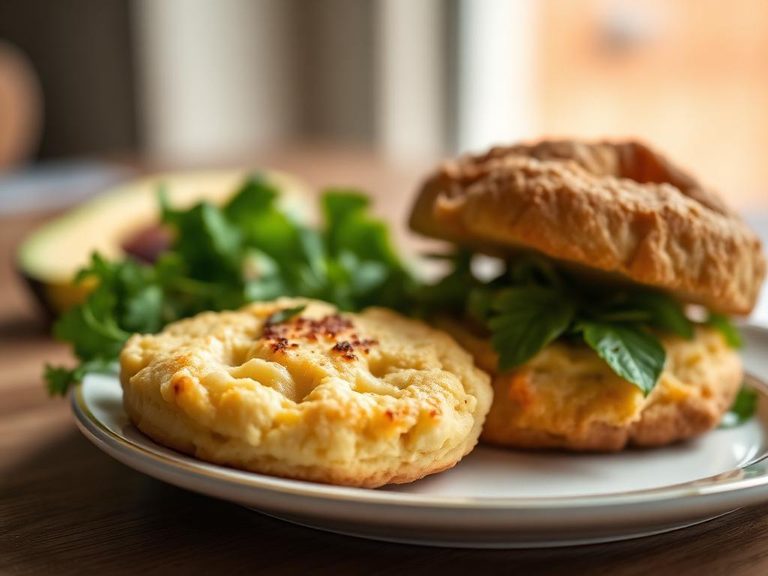
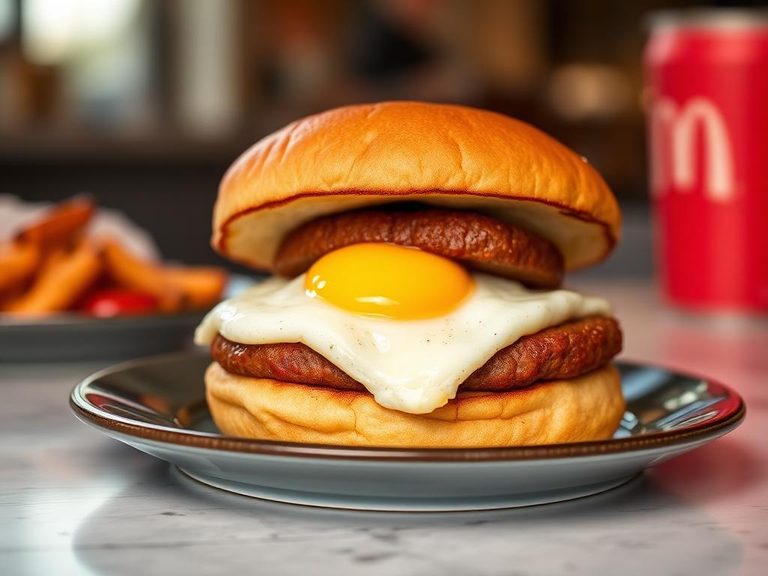
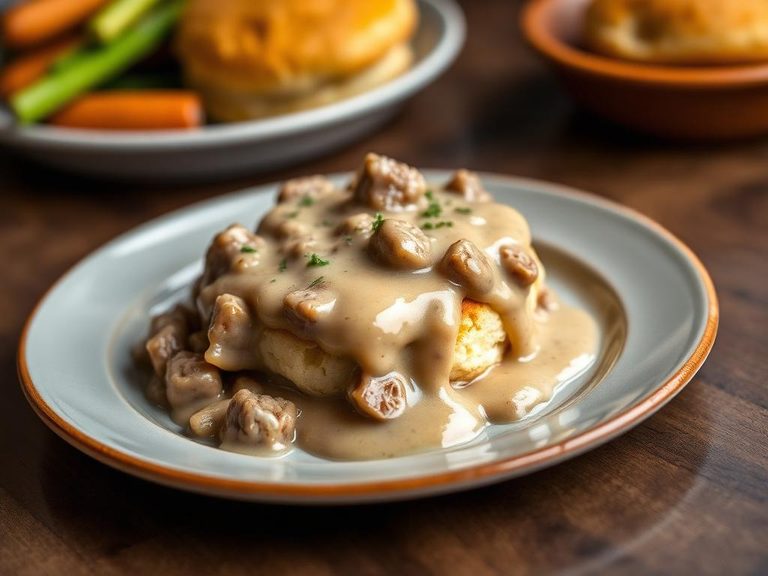
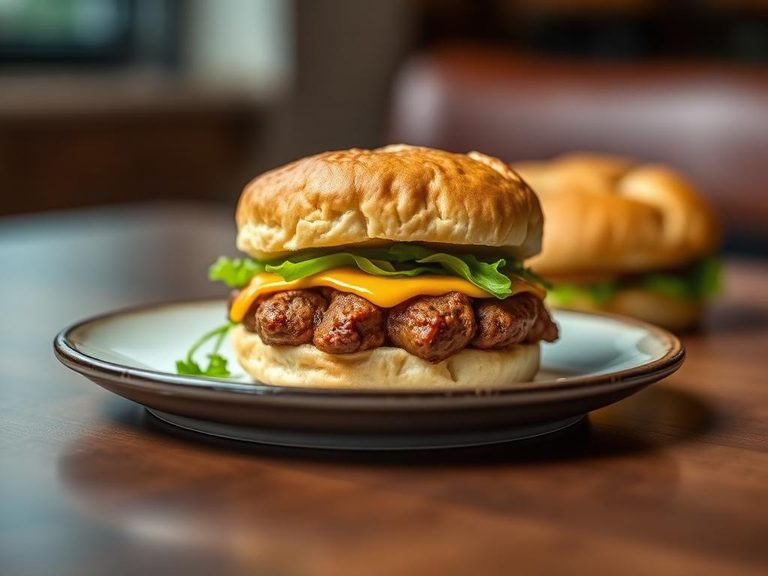
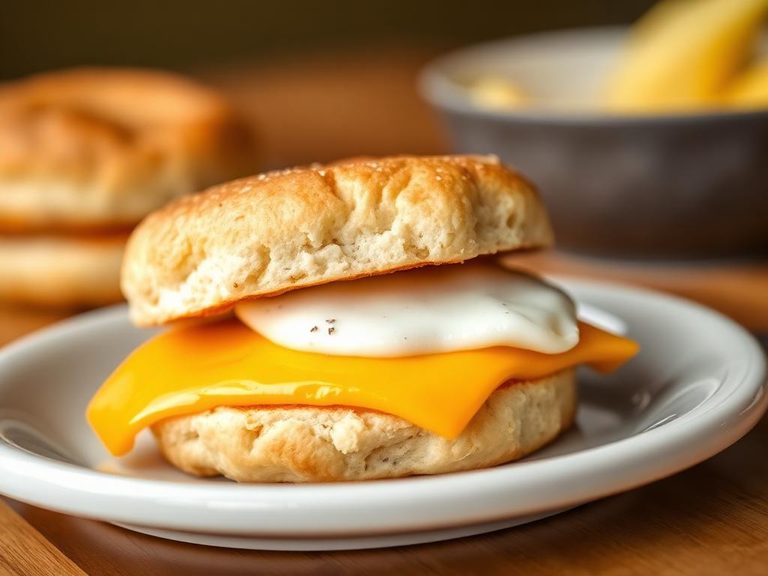
A savory handheld sandwich featuring a flaky, buttery biscuit split and filled with a seasoned pork sausage patty. The biscuit offers a tender, crumbly texture that contrasts with the juicy, spiced sausage, creating a rich, salty, and satisfying bite. Nutritionally, it's a calorie-dense item where fat provides the majority of the energy.
Calorie split: 11% protein · 29% carbs · 59% fat
↓ Full nutrition💚 Why it's loved
People love it for its comforting, savory flavor profile and the satisfying contrast between the soft biscuit and the juicy, spiced sausage. It's a beloved staple of American Southern cuisine, often enjoyed as a hearty breakfast or a quick, filling meal any time of day.
⚠️ Watch-outs & how to enjoy it better
The sandwich is high in saturated fat and sodium, which can be a concern for heart health and blood pressure. The refined carbohydrates in the biscuit can cause a rapid blood-sugar spike. To counteract this, pair it with a fiber-rich side like fruit or a green salad, and consider eating only half while increasing water intake to help manage sodium.
Key benefits
- High in protein for satiety and muscle support.
- Provides quick energy from carbohydrates.
- Contains dietary iron from the pork sausage.
- A convenient, portable, and filling meal or snack.
- Can be a good source of B vitamins like thiamine and niacin.
🍽️ Popular dishes
🌍 Where it's eaten
💡 Did you know?
The word 'biscuit' comes from the Latin 'bis coctus,' meaning 'twice-baked,' though modern American biscuits are leavened with baking powder and baked only once.
Full nutrition (USDA data · scales with serving)
| Water | 34.7 g |
| Energy | 372 kcal |
| Protein | 10.7 g |
| Total lipid (fat) | 24.5 g |
| Carbohydrate, by difference | 27.2 g |
| Fiber, total dietary | 1.6 g |
| Total Sugars | 2.8 g |
| Calcium, Ca | 48.0 mg |
| Iron, Fe | 2.1 mg |
| Magnesium, Mg | 15.0 mg |
| Phosphorus, P | 350 mg |
| Potassium, K | 197 mg |
| Sodium, Na | 870 mg |
| Zinc, Zn | 1.1 mg |
| Copper, Cu | 0.08 mg |
| Selenium, Se | 14.8 ug |
| Vitamin C, total ascorbic acid | 0.00 mg |
| Thiamin | 0.37 mg |
| Riboflavin | 0.26 mg |
| Niacin | 4.4 mg |
| Vitamin B-6 | 0.11 mg |
| Folate, total | 53.0 ug |
| Folic acid | 33.0 ug |
| Folate, food | 20.0 ug |
| Folate, DFE | 76.0 ug |
| Choline, total | 22.0 mg |
| Vitamin B-12 | 0.34 ug |
| Vitamin B-12, added | 0.00 ug |
| Vitamin A, RAE | 22.0 ug |
| Retinol | 22.0 ug |
| Carotene, beta | 0.00 ug |
| Carotene, alpha | 0.00 ug |
| Cryptoxanthin, beta | 0.00 ug |
| Lycopene | 0.00 ug |
| Lutein + zeaxanthin | 0.00 ug |
| Vitamin E (alpha-tocopherol) | 0.57 mg |
| Vitamin E, added | 0.00 mg |
| Vitamin D (D2 + D3) | 0.60 ug |
| Vitamin K (phylloquinone) | 2.8 ug |
| Alcohol, ethyl | 0.00 g |
| Caffeine | 0.00 mg |
| Theobromine | 0.00 mg |
Fat & fatty acid profile (per 100g)
| Fatty acids, total saturated | 11.6 g |
| SFA 4:0 | 0.00 g |
| SFA 6:0 | 0.02 g |
| SFA 8:0 | 0.23 g |
| SFA 10:0 | 0.20 g |
| SFA 12:0 | 2.0 g |
| SFA 14:0 | 0.81 g |
| SFA 16:0 | 5.0 g |
| SFA 18:0 | 3.2 g |
| Fatty acids, total monounsaturated | 7.0 g |
| MUFA 16:1 | 0.27 g |
| MUFA 18:1 | 6.5 g |
| MUFA 20:1 | 0.15 g |
| MUFA 22:1 | 0.00 g |
| Fatty acids, total polyunsaturated | 3.7 g |
| PUFA 18:2 | 3.3 g |
| PUFA 18:3 | 0.20 g |
| PUFA 18:4 | 0.00 g |
| PUFA 20:4 | 0.05 g |
| PUFA 20:5 n-3 (EPA) | 0.00 g |
| PUFA 22:5 n-3 (DPA) | 0.01 g |
| PUFA 22:6 n-3 (DHA) | 0.00 g |
| Cholesterol | 33.0 mg |
Amino acid profile (per 100g)
Estimated from Fast Foods, biscuit, with egg and sausage — USDA does not publish this profile for Sausage biscuit sandwich.
| Tryptophan | 0.14 g |
| Threonine | 0.45 g |
| Isoleucine | 0.43 g |
| Leucine | 0.78 g |
| Lysine | 0.61 g |
| Methionine | 0.22 g |
| Cystine | 0.19 g |
| Phenylalanine | 0.46 g |
| Tyrosine | 0.32 g |
| Valine | 0.53 g |
| Arginine | 0.56 g |
| Histidine | 0.27 g |
| Alanine | 0.51 g |
| Aspartic acid | 0.93 g |
| Glutamic acid | 1.9 g |
| Glycine | 0.46 g |
| Proline | 0.63 g |
| Serine | 0.59 g |
FAQ
What makes the biscuit flaky?
Flakiness comes from cutting cold fat (like butter or shortening) into the flour, creating layers that separate as steam puffs them up during baking.
Is this a breakfast food only?
While primarily a breakfast item in the U.S., it's also popular as a quick lunch, dinner, or snack, especially in the South.
How can I make it healthier at home?
Use lean turkey sausage, whole-wheat flour for the biscuit, reduce salt in the recipe, and add fresh spinach or tomato slices for fiber and nutrients.
Nutrient density (calculated · NRF9.3)
Nutrient Rich Foods index: beneficial nutrients (protein, fiber, vitamins, minerals) minus saturated fat, added sugar & sodium, per 100 kcal.
NRF9.3 index — Fulgoni, Keast & Drewnowski, 2009. Computed from USDA nutrients.
Weight-loss friendliness (composite index)
Energy density 3.72 kcal/g · 11% calories from protein · 1.6 g fiber · 2.8 g sugar per 100 g.
Composite of energy density (Rolls et al., 1999), protein & fiber satiety, minus sugar. A calculated heuristic — ranks satiety-per-calorie, not a clinical measure.
Dietary load (calculated from USDA values)
Potential renal acid load. Positive = acid-forming, negative = alkaline-forming.
Sodium-to-potassium ratio: 4.42 (lower is better — aim for ≤ 1)
Sodium:potassium per WHO potassium guidance. Computed from USDA nutrients.