

Sauce, peppers, hot, chili, mature red, canned
Whole food · Soups, Sauces, and Gravies

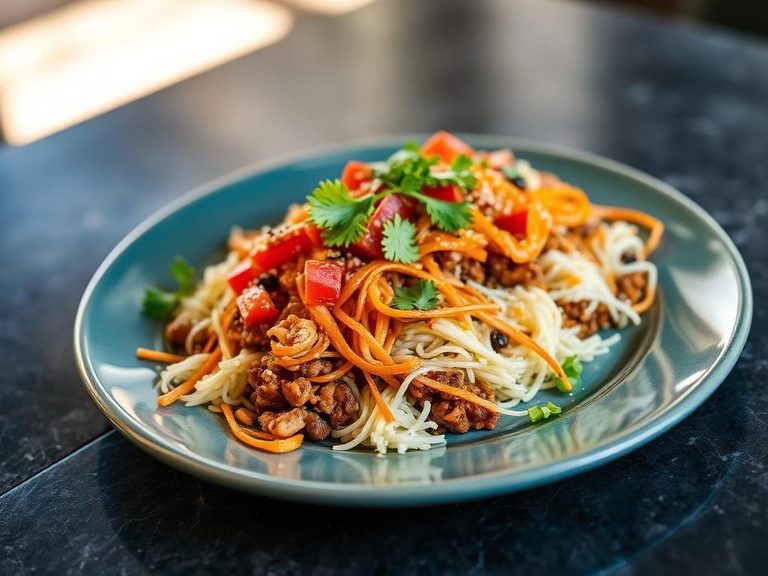
Photo: Wikipedia
This is a vibrant, thick sauce made from pureed mature red chili peppers, offering a smooth yet slightly pulpy texture. Its flavor is a bold, smoky, and moderately spicy kick, balanced by a subtle, natural sweetness from the ripe peppers. Nutritionally, it's a low-calorie way to add intense flavor, with a notable fiber content for a condiment.
Calorie split: 15% protein · 63% carbs · 22% fat
↓ Full nutrition💚 Why it's loved
People adore it for its ability to instantly elevate a dish with a complex, smoky heat that isn't just one-note. It's a cultural staple in many cuisines, representing comfort, tradition, and a bold culinary spirit.
⚠️ Watch-outs & how to enjoy it better
The primary downside is its capsaicin content, which can cause digestive discomfort or heartburn for sensitive individuals. To mitigate this, pair it with cooling elements like yogurt, sour cream, or avocado, and start with a small portion. Those monitoring sodium intake should also check labels, as canned versions can be high in salt.
Key benefits
- Adds significant flavor with minimal calories
- Contains capsaicin, a compound from chili peppers
- Good source of dietary fiber per serving
- Provides a dose of vitamin C from red peppers
- Enhances the palatability of healthy, low-fat dishes
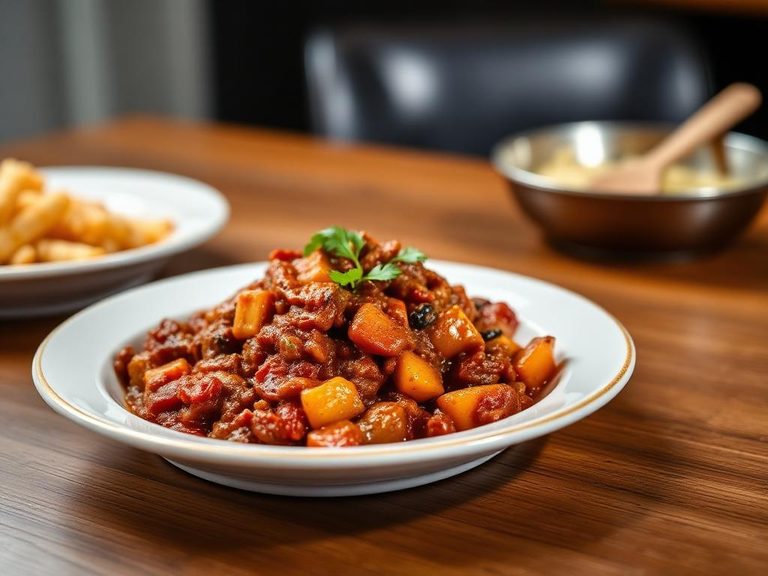
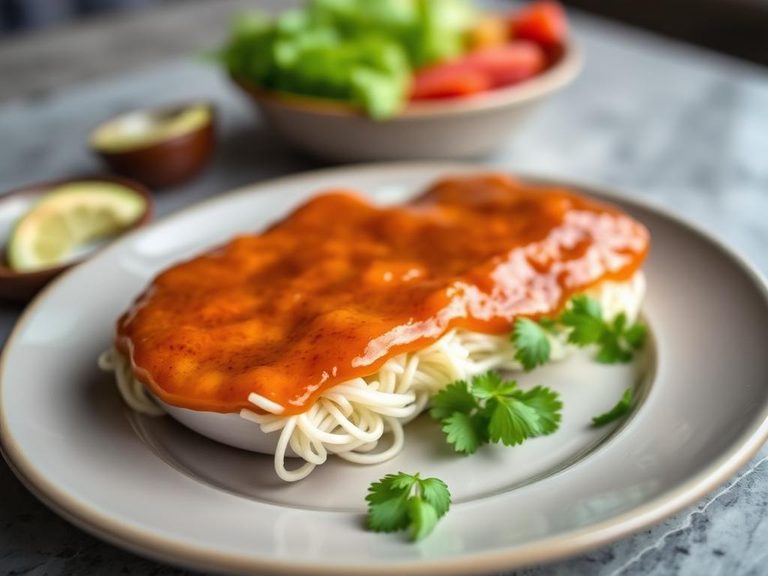
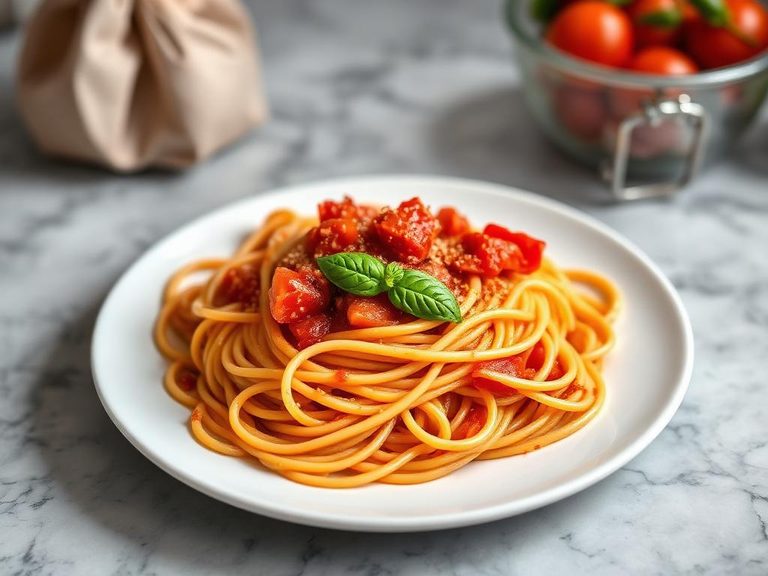
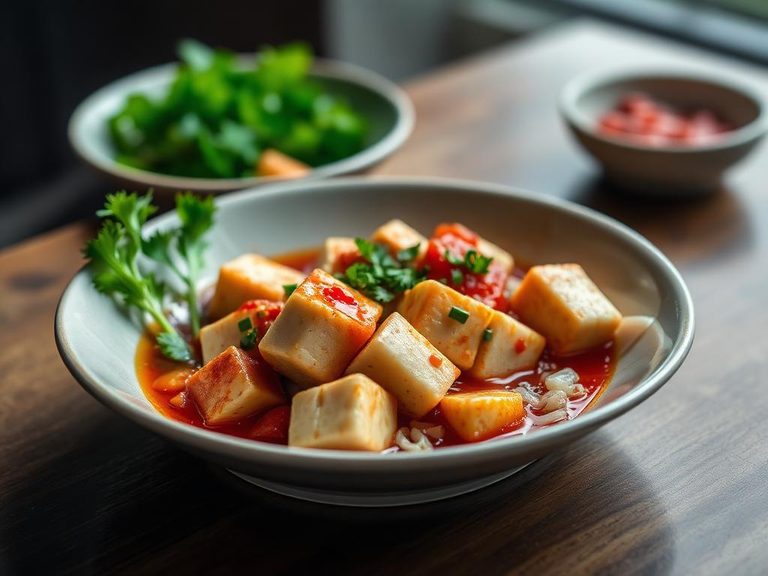
🍽️ Popular dishes
🌍 Where it's eaten
💡 Did you know?
The heat in chili peppers comes from capsaicin, which binds to pain receptors, not taste buds, creating a sensation of burning.
Full nutrition (USDA data · scales with serving)
| Water | 94.1 g |
| Energy | 21.0 kcal |
| Energy | 88.0 kj |
| Protein | 0.90 g |
| Total lipid (fat) | 0.60 g |
| Ash | 0.54 g |
| Carbohydrate, by difference | 3.9 g |
| Fiber, total dietary | 0.70 g |
| Total Sugars | 2.5 g |
| Calcium, Ca | 9.0 mg |
| Iron, Fe | 0.50 mg |
| Magnesium, Mg | 12.0 mg |
| Phosphorus, P | 16.0 mg |
| Potassium, K | 564 mg |
| Sodium, Na | 25.0 mg |
| Zinc, Zn | 0.15 mg |
| Copper, Cu | 0.09 mg |
| Selenium, Se | 0.20 ug |
| Vitamin C, total ascorbic acid | 30.0 mg |
| Thiamin | 0.01 mg |
| Riboflavin | 0.09 mg |
| Niacin | 0.60 mg |
| Vitamin B-6 | 0.14 mg |
| Folate, total | 11.0 ug |
| Folic acid | 0.00 ug |
| Folate, food | 11.0 ug |
| Folate, DFE | 11.0 ug |
| Choline, total | 6.1 mg |
| Vitamin B-12 | 0.00 ug |
| Vitamin B-12, added | 0.00 ug |
| Vitamin A, RAE | 23.0 ug |
| Retinol | 0.00 ug |
| Carotene, beta | 257 ug |
| Carotene, alpha | 17.0 ug |
| Cryptoxanthin, beta | 19.0 ug |
| Vitamin A, IU | 458 iu |
| Lycopene | 0.00 ug |
| Lutein + zeaxanthin | 341 ug |
| Vitamin E (alpha-tocopherol) | 0.36 mg |
| Vitamin E, added | 0.00 mg |
| Vitamin D (D2 + D3), International Units | 0.00 iu |
| Vitamin D (D2 + D3) | 0.00 ug |
| Vitamin K (phylloquinone) | 6.7 ug |
| Alcohol, ethyl | 0.00 g |
| Caffeine | 0.00 mg |
| Theobromine | 0.00 mg |
Fat & fatty acid profile (per 100g)
| Fatty acids, total saturated | 0.08 g |
| SFA 4:0 | 0.00 g |
| SFA 6:0 | 0.00 g |
| SFA 8:0 | 0.00 g |
| SFA 10:0 | 0.00 g |
| SFA 12:0 | 0.00 g |
| SFA 14:0 | 0.00 g |
| SFA 16:0 | 0.07 g |
| SFA 18:0 | 0.01 g |
| Fatty acids, total monounsaturated | 0.41 g |
| MUFA 16:1 | 0.01 g |
| MUFA 18:1 | 0.40 g |
| MUFA 20:1 | 0.00 g |
| MUFA 22:1 | 0.00 g |
| Fatty acids, total polyunsaturated | 0.07 g |
| PUFA 18:2 | 0.07 g |
| PUFA 18:3 | 0.00 g |
| PUFA 18:4 | 0.00 g |
| PUFA 20:4 | 0.00 g |
| PUFA 20:5 n-3 (EPA) | 0.00 g |
| PUFA 22:5 n-3 (DPA) | 0.00 g |
| PUFA 22:6 n-3 (DHA) | 0.00 g |
| Cholesterol | 0.00 mg |
Amino acid profile (per 100g)
Estimated from Sauce, homemade, white, medium — USDA does not publish this profile for Sauce.
| Tryptophan | 0.04 g |
| Threonine | 0.14 g |
| Isoleucine | 0.19 g |
| Leucine | 0.30 g |
| Lysine | 0.24 g |
| Methionine | 0.08 g |
| Cystine | 0.03 g |
| Phenylalanine | 0.15 g |
| Tyrosine | 0.15 g |
| Valine | 0.20 g |
| Arginine | 0.11 g |
| Histidine | 0.08 g |
| Alanine | 0.10 g |
| Aspartic acid | 0.23 g |
| Glutamic acid | 0.64 g |
| Glycine | 0.07 g |
| Proline | 0.30 g |
| Serine | 0.17 g |
FAQ
Is this the same as hot sauce or chili paste?
No. This is a thicker, cooked sauce made primarily from pureed mature red chilies. Hot sauces are typically thinner, vinegar-based liquids, while chili pastes are often more concentrated and may include other ingredients like garlic or oil.
How spicy is it?
The heat level varies by brand and pepper type used, but it's generally considered moderately hot. The Scoville rating can range widely, so it's best to start with a small amount if you're unsure.
Can I use it in non-spicy dishes?
Yes, but use it very sparingly. Even a small amount adds a deep, savory, and slightly smoky flavor background without overwhelming heat, which can enhance stews, rubs, or marinades.
Nutrient density (calculated · NRF9.3)
Nutrient Rich Foods index: beneficial nutrients (protein, fiber, vitamins, minerals) minus saturated fat, added sugar & sodium, per 100 kcal.
NRF9.3 index — Fulgoni, Keast & Drewnowski, 2009. Computed from USDA nutrients.
Weight-loss friendliness (composite index)
Energy density 0.21 kcal/g · 17% calories from protein · 0.7 g fiber · 2.5 g sugar per 100 g.
Composite of energy density (Rolls et al., 1999), protein & fiber satiety, minus sugar. A calculated heuristic — ranks satiety-per-calorie, not a clinical measure.
Dietary load (calculated from USDA values)
Potential renal acid load. Positive = acid-forming, negative = alkaline-forming.
Sodium-to-potassium ratio: 0.04 (lower is better — aim for ≤ 1)
Sodium:potassium per WHO potassium guidance. Computed from USDA nutrients.