

Roll, hard, NS as to major flour
Common food
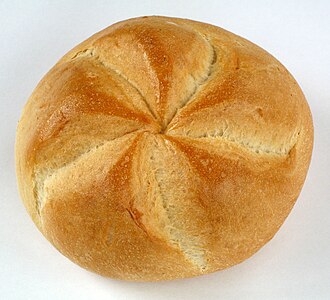
Photo: Wikipedia
A hard roll is a small, dense bread with a crisp, crackly crust and a chewy, tight interior, offering a satisfying contrast in every bite. Nutritionally, it's a solid source of carbohydrates for energy, providing about 53 grams per 100 grams, with a modest amount of protein to support daily needs.
Calorie split: 14% protein · 73% carbs · 13% fat
↓ Full nutrition💚 Why it's loved
People love the hard roll for its satisfying crunch and sturdy structure, which holds up exceptionally well to hearty fillings like deli meats and cheeses. It's a beloved staple in many European and American deli cultures, symbolizing a classic, no-fuss sandwich foundation.
⚠️ Watch-outs & how to enjoy it better
The refined flour and low fiber content can lead to rapid blood-sugar spikes, making it less ideal for those managing diabetes or seeking sustained energy. To counteract this, pair it with protein (like turkey or egg) and healthy fats (like avocado or olive oil) to slow digestion, or opt for a smaller portion alongside a large salad.
Key benefits
- Provides quick, accessible energy from complex carbohydrates
- Contains about 10g of protein per 100g for muscle maintenance
- Low in fat, making it a leaner bread option
- Dense texture promotes prolonged chewing and satiety
🍽️ Popular dishes
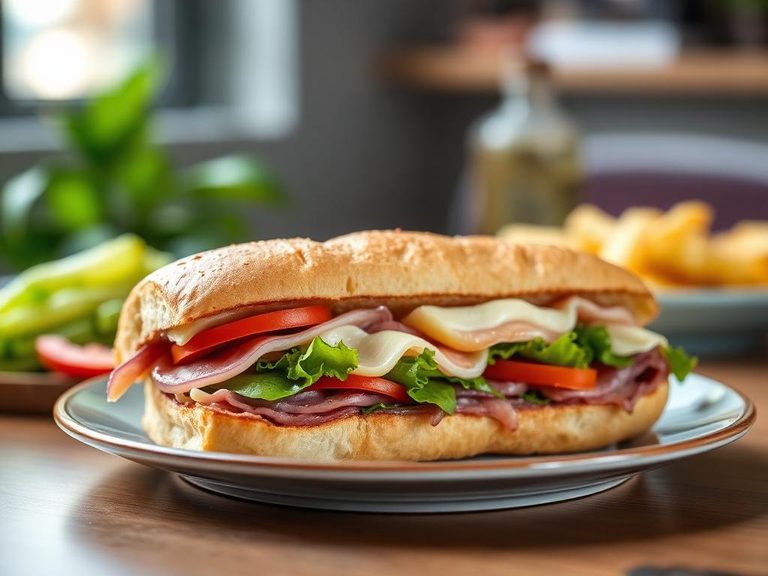
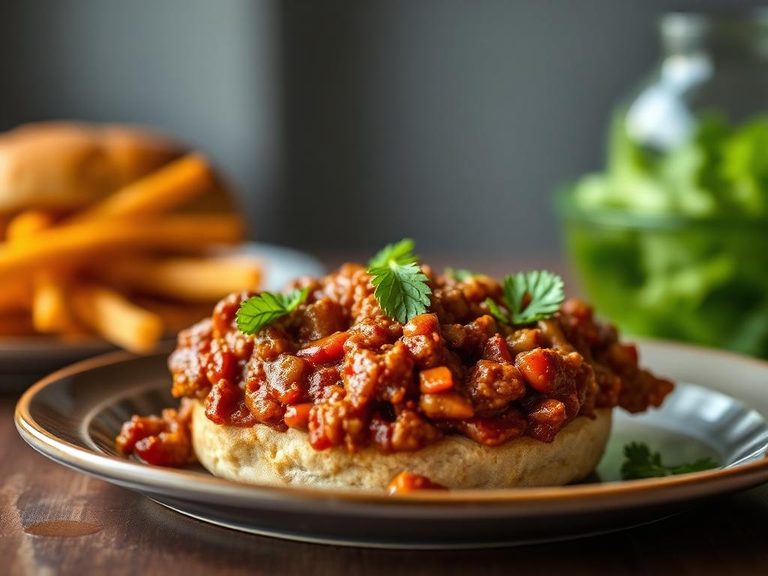
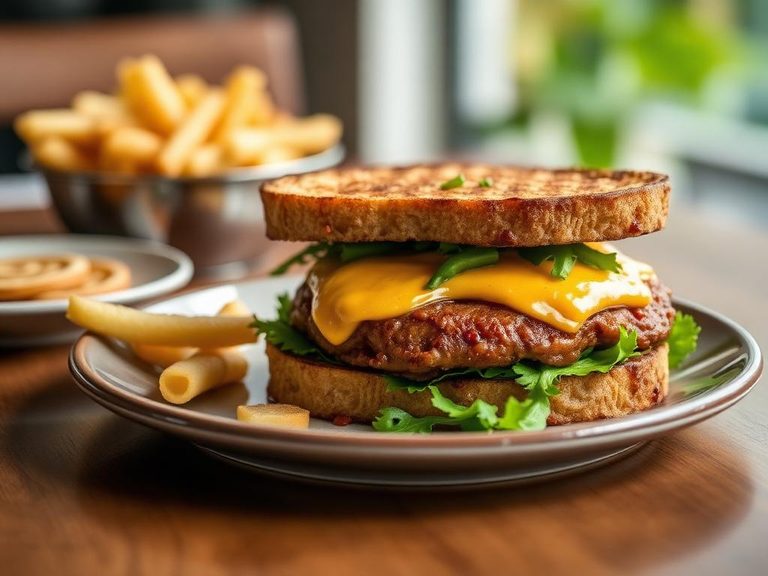

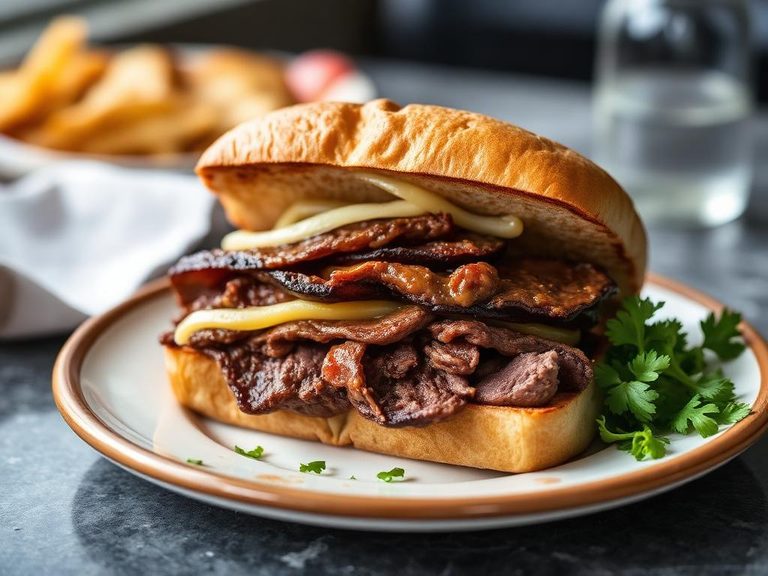
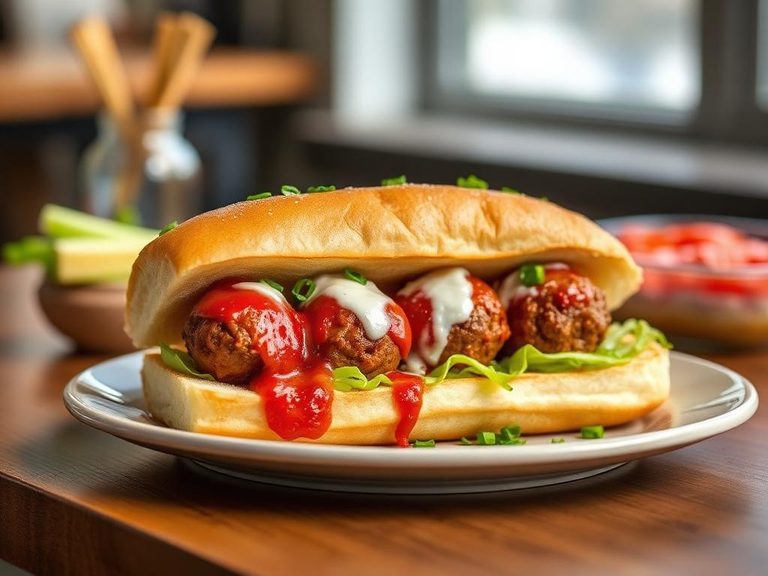
🌍 Where it's eaten
💡 Did you know?
The 'hard' in a hard roll doesn't just refer to the crust; the dough is often made with a lower hydration (less water) than softer breads, which contributes to its dense, chewy crumb and helps it stay firm longer.
Full nutrition (USDA data · scales with serving)
| Water | 31.0 g |
| Energy | 293 kcal |
| Protein | 9.9 g |
| Total lipid (fat) | 4.3 g |
| Carbohydrate, by difference | 52.7 g |
| Fiber, total dietary | 2.3 g |
| Total Sugars | 1.8 g |
| Calcium, Ca | 95.0 mg |
| Iron, Fe | 3.3 mg |
| Magnesium, Mg | 27.0 mg |
| Phosphorus, P | 100 mg |
| Potassium, K | 108 mg |
| Sodium, Na | 544 mg |
| Zinc, Zn | 0.94 mg |
| Copper, Cu | 0.16 mg |
| Selenium, Se | 39.1 ug |
| Vitamin C, total ascorbic acid | 0.00 mg |
| Thiamin | 0.48 mg |
| Riboflavin | 0.34 mg |
| Niacin | 4.2 mg |
| Vitamin B-6 | 0.04 mg |
| Folate, total | 95.0 ug |
| Folic acid | 80.0 ug |
| Folate, food | 15.0 ug |
| Folate, DFE | 151 ug |
| Choline, total | 14.6 mg |
| Vitamin B-12 | 0.00 ug |
| Vitamin B-12, added | 0.00 ug |
| Vitamin A, RAE | 0.00 ug |
| Retinol | 0.00 ug |
| Carotene, beta | 0.00 ug |
| Carotene, alpha | 0.00 ug |
| Cryptoxanthin, beta | 0.00 ug |
| Lycopene | 0.00 ug |
| Lutein + zeaxanthin | 58.0 ug |
| Vitamin E (alpha-tocopherol) | 0.42 mg |
| Vitamin E, added | 0.00 mg |
| Vitamin D (D2 + D3) | 0.00 ug |
| Vitamin K (phylloquinone) | 0.60 ug |
| Alcohol, ethyl | 0.00 g |
| Caffeine | 0.00 mg |
| Theobromine | 0.00 mg |
Fat & fatty acid profile (per 100g)
| Fatty acids, total saturated | 0.61 g |
| SFA 4:0 | 0.00 g |
| SFA 6:0 | 0.00 g |
| SFA 8:0 | 0.00 g |
| SFA 10:0 | 0.00 g |
| SFA 12:0 | 0.00 g |
| SFA 14:0 | 0.00 g |
| SFA 16:0 | 0.48 g |
| SFA 18:0 | 0.13 g |
| Fatty acids, total monounsaturated | 1.1 g |
| MUFA 16:1 | 0.03 g |
| MUFA 18:1 | 1.1 g |
| MUFA 20:1 | 0.00 g |
| MUFA 22:1 | 0.00 g |
| Fatty acids, total polyunsaturated | 1.7 g |
| PUFA 18:2 | 1.6 g |
| PUFA 18:3 | 0.10 g |
| PUFA 18:4 | 0.00 g |
| PUFA 20:4 | 0.00 g |
| PUFA 20:5 n-3 (EPA) | 0.00 g |
| PUFA 22:5 n-3 (DPA) | 0.00 g |
| PUFA 22:6 n-3 (DHA) | 0.00 g |
| Cholesterol | 0.00 mg |
Amino acid profile (per 100g)
Estimated from Candies, TOOTSIE ROLL, chocolate-flavor roll — USDA does not publish this profile for Roll.
| Tryptophan | 0.19 g |
| Threonine | 0.04 g |
| Isoleucine | 0.06 g |
| Leucine | 0.11 g |
| Lysine | 0.09 g |
| Methionine | 0.01 g |
| Cystine | 0.00 g |
| Phenylalanine | 0.05 g |
| Tyrosine | 0.02 g |
| Valine | 0.08 g |
| Arginine | 0.06 g |
| Histidine | 0.03 g |
| Alanine | 0.06 g |
| Aspartic acid | 0.20 g |
| Glutamic acid | 0.28 g |
| Glycine | 0.05 g |
| Proline | 0.03 g |
| Serine | 0.08 g |
| Hydroxyproline | 0.00 g |
FAQ
What's the difference between a hard roll and a Kaiser roll?
A hard roll is defined by its dense texture and crisp crust, while a Kaiser roll is identified by its distinctive five-pointed star stamp on top. Kaiser rolls are often slightly softer and have a more enriched dough.
Why is my hard roll so tough to chew?
The chewiness comes from developed gluten in the dough and a lower moisture content. If it's overly tough, it may be stale; try lightly toasting it or warming it in the oven to soften the crumb and re-crisp the crust.
Can I use a hard roll for a burger?
Absolutely! Its sturdy structure is excellent for holding juicy burger patties and toppings without falling apart, a key advantage over softer buns.
Nutrient density (calculated · NRF9.3)
Nutrient Rich Foods index: beneficial nutrients (protein, fiber, vitamins, minerals) minus saturated fat, added sugar & sodium, per 100 kcal.
NRF9.3 index — Fulgoni, Keast & Drewnowski, 2009. Computed from USDA nutrients.
Weight-loss friendliness (composite index)
Energy density 2.93 kcal/g · 14% calories from protein · 2.3 g fiber · 1.8 g sugar per 100 g.
Composite of energy density (Rolls et al., 1999), protein & fiber satiety, minus sugar. A calculated heuristic — ranks satiety-per-calorie, not a clinical measure.
Dietary load (calculated from USDA values)
Potential renal acid load. Positive = acid-forming, negative = alkaline-forming.
Sodium-to-potassium ratio: 5.04 (lower is better — aim for ≤ 1)
Sodium:potassium per WHO potassium guidance. Computed from USDA nutrients.