

Rice, white, with soy-based sauce, no added fat
Common food
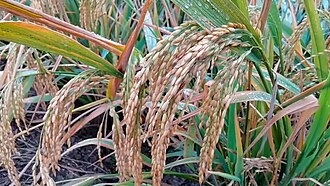
Photo: Wikipedia
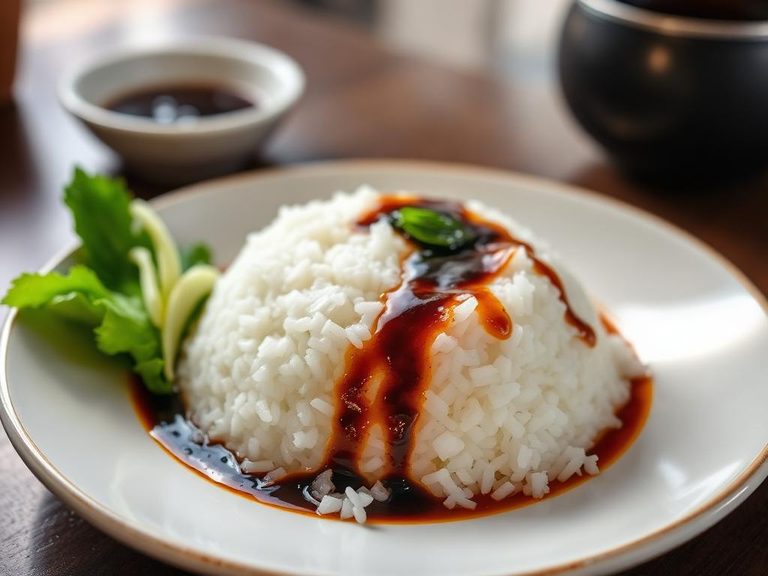
A simple, comforting staple of steamed white rice tossed in a savory, umami-rich soy-based sauce, delivering a mild, slightly salty flavor with a soft, fluffy texture. At just 101 kcal per 100g, it is an extremely low-fat carbohydrate source, providing quick energy with minimal fat and fiber.
Calorie split: 8% protein · 89% carbs · 3% fat
↓ Full nutrition💚 Why it's loved
People love it for its comforting, savory umami flavor and its incredible versatility as a neutral base that complements a wide range of dishes. It is a cultural staple in many Asian cuisines, often serving as the foundational element of a meal.
⚠️ Watch-outs & how to enjoy it better
The high glycemic index of white rice can cause rapid blood sugar spikes, and soy sauce is typically high in sodium. To counteract this, pair it with protein (like chicken, tofu, or fish) and non-starchy vegetables to slow digestion, and use low-sodium soy sauce or limit portion size.
Key benefits
- Extremely low in fat (0.28g per 100g)
- Provides quick, accessible energy from carbohydrates
- Simple to prepare and digest
- Versatile base for many meals
🍽️ Popular dishes
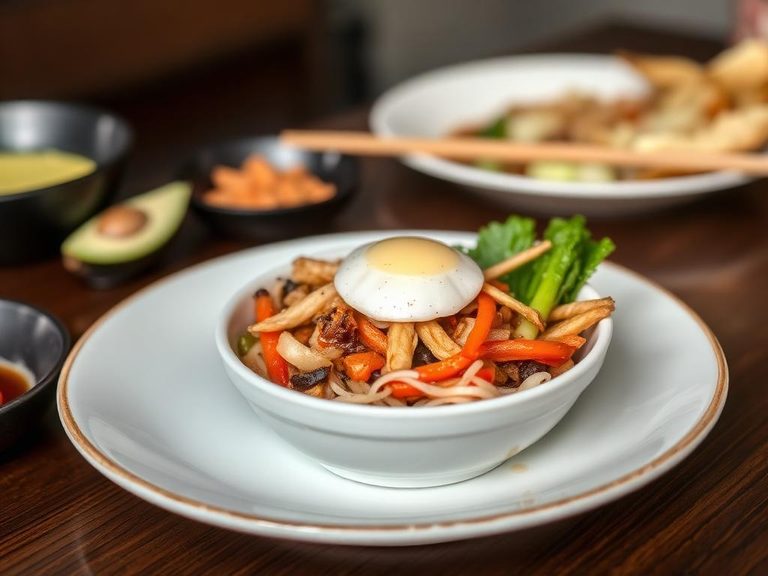
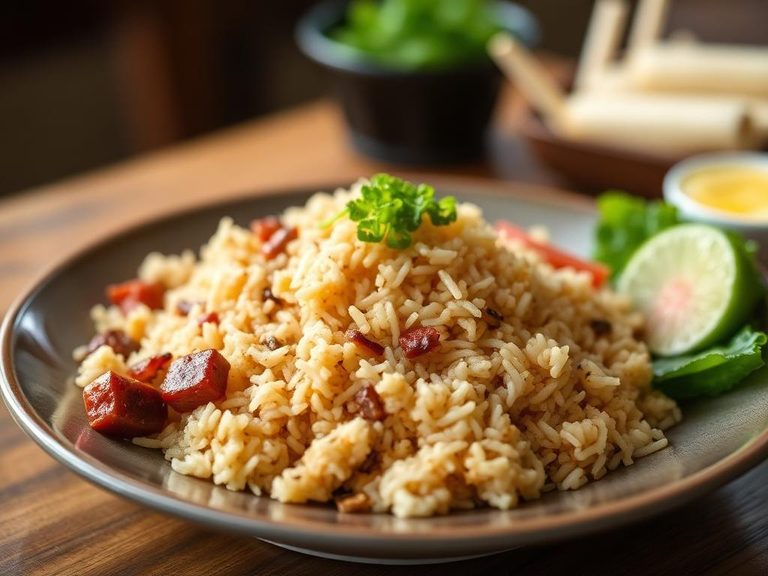
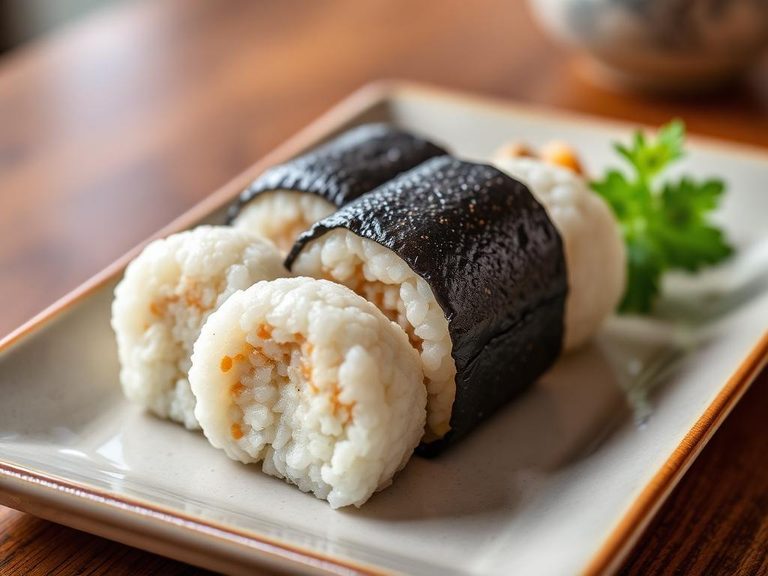
🌍 Where it's eaten
💡 Did you know?
The specific combination of rice and soy sauce is so fundamental in Japan that the word for 'meal' (gohan) literally means 'cooked rice,' and soy sauce (shoyu) is often the only seasoning used.
Full nutrition (USDA data · scales with serving)
| Water | 74.3 g |
| Energy | 101 kcal |
| Protein | 2.0 g |
| Total lipid (fat) | 0.28 g |
| Carbohydrate, by difference | 21.9 g |
| Fiber, total dietary | 0.30 g |
| Total Sugars | 1.3 g |
| Calcium, Ca | 9.0 mg |
| Iron, Fe | 0.83 mg |
| Magnesium, Mg | 10.0 mg |
| Phosphorus, P | 34.0 mg |
| Potassium, K | 34.0 mg |
| Sodium, Na | 491 mg |
| Zinc, Zn | 0.34 mg |
| Copper, Cu | 0.05 mg |
| Selenium, Se | 5.3 ug |
| Vitamin C, total ascorbic acid | 0.00 mg |
| Thiamin | 0.11 mg |
| Riboflavin | 0.01 mg |
| Niacin | 1.1 mg |
| Vitamin B-6 | 0.07 mg |
| Folate, total | 39.0 ug |
| Folic acid | 36.0 ug |
| Folate, food | 2.0 ug |
| Folate, DFE | 65.0 ug |
| Choline, total | 2.7 mg |
| Vitamin B-12 | 0.01 ug |
| Vitamin B-12, added | 0.00 ug |
| Vitamin A, RAE | 0.00 ug |
| Retinol | 0.00 ug |
| Carotene, beta | 0.00 ug |
| Carotene, alpha | 0.00 ug |
| Cryptoxanthin, beta | 0.00 ug |
| Lycopene | 0.00 ug |
| Lutein + zeaxanthin | 0.00 ug |
| Vitamin E (alpha-tocopherol) | 0.05 mg |
| Vitamin E, added | 0.00 mg |
| Vitamin D (D2 + D3) | 0.00 ug |
| Vitamin K (phylloquinone) | 0.00 ug |
| Alcohol, ethyl | 0.00 g |
| Caffeine | 0.00 mg |
| Theobromine | 0.00 mg |
Fat & fatty acid profile (per 100g)
| Fatty acids, total saturated | 0.09 g |
| SFA 4:0 | 0.00 g |
| SFA 6:0 | 0.00 g |
| SFA 8:0 | 0.00 g |
| SFA 10:0 | 0.00 g |
| SFA 12:0 | 0.00 g |
| SFA 14:0 | 0.01 g |
| SFA 16:0 | 0.07 g |
| SFA 18:0 | 0.02 g |
| Fatty acids, total monounsaturated | 0.09 g |
| MUFA 16:1 | 0.00 g |
| MUFA 18:1 | 0.09 g |
| MUFA 20:1 | 0.00 g |
| MUFA 22:1 | 0.00 g |
| Fatty acids, total polyunsaturated | 0.06 g |
| PUFA 18:2 | 0.05 g |
| PUFA 18:3 | 0.01 g |
| PUFA 18:4 | 0.00 g |
| PUFA 20:4 | 0.00 g |
| PUFA 20:5 n-3 (EPA) | 0.00 g |
| PUFA 22:5 n-3 (DPA) | 0.00 g |
| PUFA 22:6 n-3 (DHA) | 0.00 g |
| Cholesterol | 0.00 mg |
Amino acid profile (per 100g)
Estimated from Snacks, rice cakes, brown rice, sesame seed — USDA does not publish this profile for Rice.
| Tryptophan | 0.10 g |
| Threonine | 0.28 g |
| Isoleucine | 0.32 g |
| Leucine | 0.63 g |
| Lysine | 0.29 g |
| Methionine | 0.17 g |
| Cystine | 0.09 g |
| Phenylalanine | 0.39 g |
| Tyrosine | 0.29 g |
| Valine | 0.44 g |
| Arginine | 0.59 g |
| Histidine | 0.19 g |
| Alanine | 0.44 g |
| Aspartic acid | 0.71 g |
| Glutamic acid | 1.6 g |
| Glycine | 0.38 g |
| Proline | 0.35 g |
| Serine | 0.39 g |
FAQ
Is this dish gluten-free?
Not typically. Traditional soy sauce is brewed with wheat, so it contains gluten. For a gluten-free version, use tamari or a certified gluten-free soy sauce.
How does this differ from fried rice?
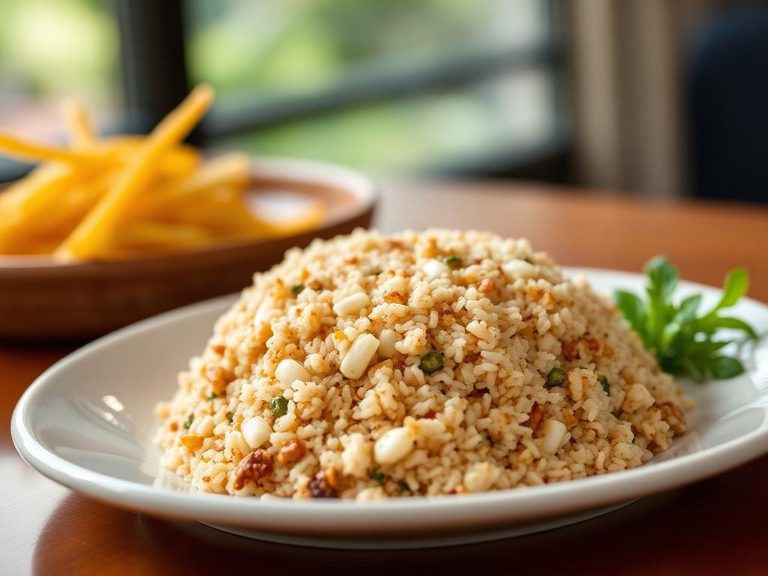
This is simply steamed rice mixed with soy sauce, with no added fat. Fried rice involves cooking the rice in oil with other ingredients, which significantly increases the fat and calorie content.
Can I use brown rice instead?
Yes, but the nutritional profile will change. Brown rice has more fiber and a lower glycemic index, which can help with blood sugar management, but it has a chewier texture and nuttier flavor.
Nutrient density (calculated · NRF9.3)
Nutrient Rich Foods index: beneficial nutrients (protein, fiber, vitamins, minerals) minus saturated fat, added sugar & sodium, per 100 kcal.
NRF9.3 index — Fulgoni, Keast & Drewnowski, 2009. Computed from USDA nutrients.
Weight-loss friendliness (composite index)
Energy density 1.01 kcal/g · 8% calories from protein · 0.3 g fiber · 1.3 g sugar per 100 g.
Composite of energy density (Rolls et al., 1999), protein & fiber satiety, minus sugar. A calculated heuristic — ranks satiety-per-calorie, not a clinical measure.
Dietary load (calculated from USDA values)
Potential renal acid load. Positive = acid-forming, negative = alkaline-forming.
Sodium-to-potassium ratio: 14.44 (lower is better — aim for ≤ 1)
Sodium:potassium per WHO potassium guidance. Computed from USDA nutrients.