

Rice, white, cooked with fat, Puerto Rican style
Common food

Photo: Wikipedia
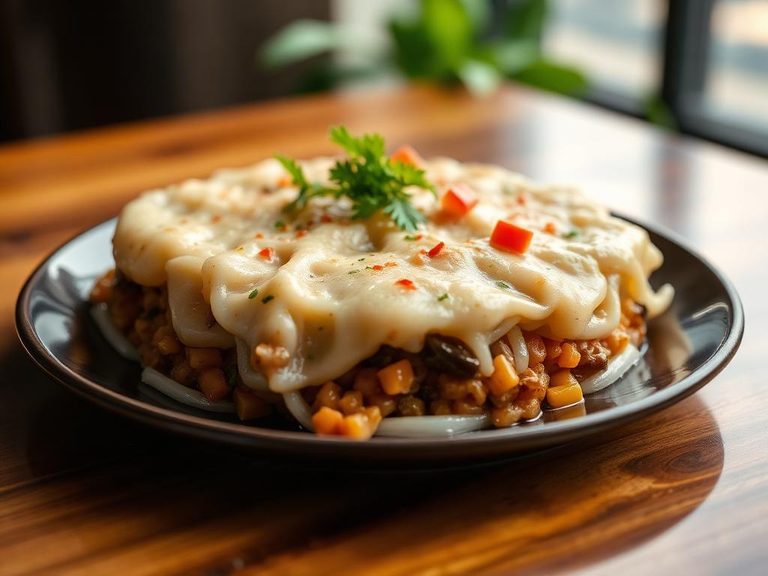
This is the beloved Puerto Rican staple, Arroz con Gandules, where fluffy white rice is cooked with sofrito, olives, capers, and often savory pigeon peas. The rice absorbs the rich, savory fat and seasonings, resulting in a tender, flavorful grain with a distinct orange-red hue. It's a calorie-dense, carbohydrate-rich side that delivers significant energy alongside its complex, savory taste.
Calorie split: 6% protein · 65% carbs · 29% fat
↓ Full nutrition💚 Why it's loved
People love it for its deep, savory, and slightly tangy flavor profile—a perfect balance of salty, briny, and herbal notes from the sofrito and olives. It's the quintessential, aromatic centerpiece of a Puerto Rican meal, evoking a strong sense of home and celebration.
⚠️ Watch-outs & how to enjoy it better
The added fat and refined carbohydrates can contribute to significant calorie density and may cause blood sugar spikes for some. To mitigate this, pair it with a large portion of protein (like pernil or beans) and non-starchy vegetables to slow digestion and add fiber. Be mindful of portion size, as a standard serving is often quite generous.
Key benefits
- Provides quick, sustained energy from complex carbohydrates.
- Contains essential minerals like iron and magnesium from the rice and seasonings.
- The added fat enhances the absorption of fat-soluble vitamins from accompanying dishes.
- A culturally significant comfort food that fosters community and tradition.
🍽️ Popular dishes
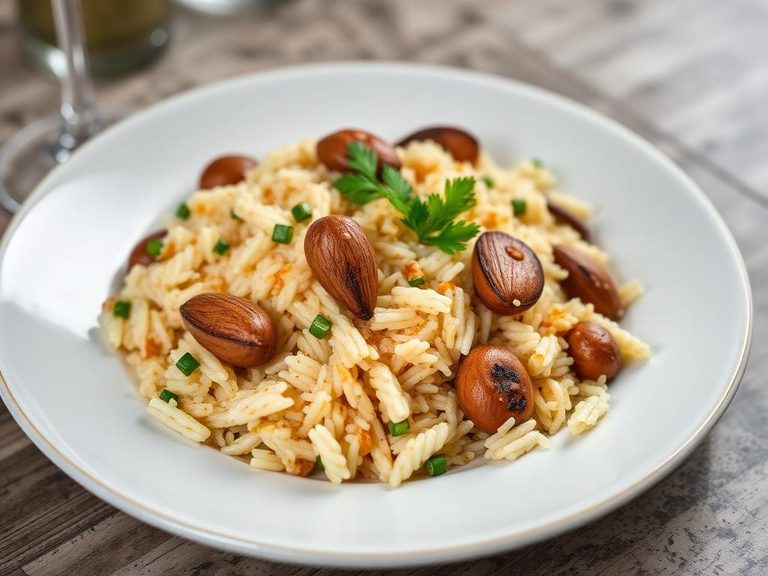
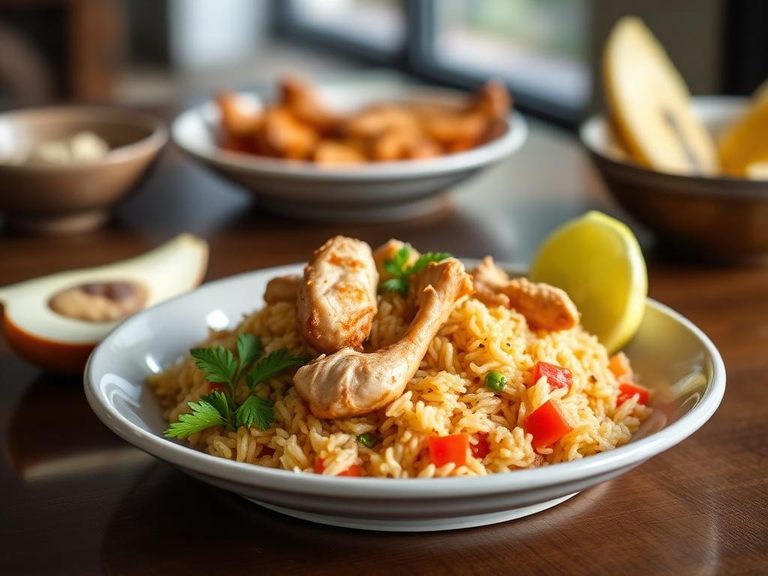
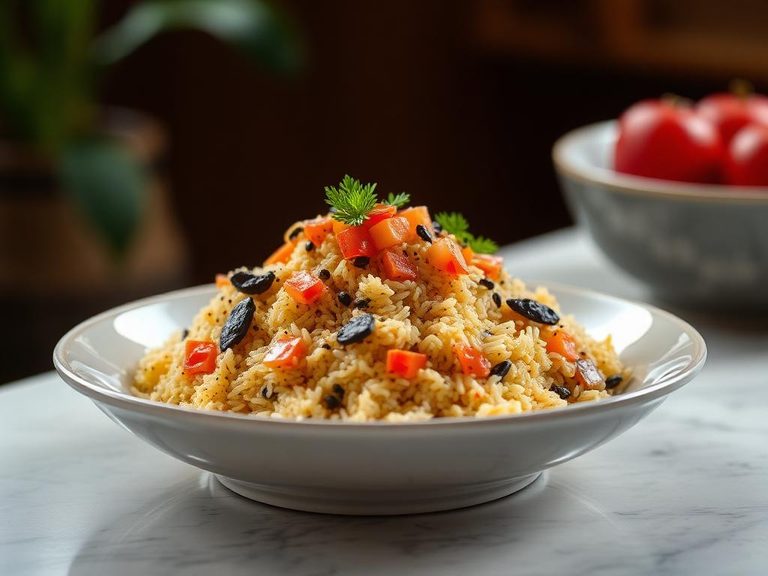
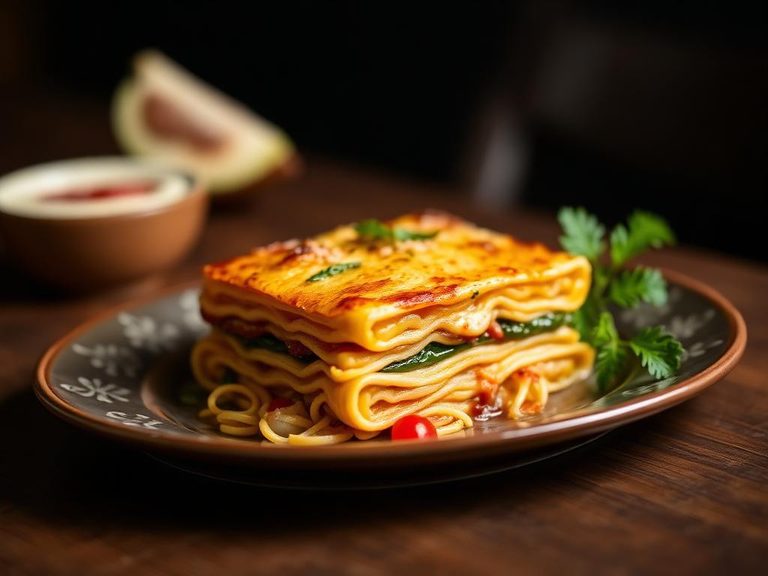
🌍 Where it's eaten
💡 Did you know?
The iconic orange-red color of many Puerto Rican rice dishes often comes from achiote (annatto) seeds, which are steeped in oil or lard to create a flavorful, coloring oil called 'aceite de achiote'.
Full nutrition (USDA data · scales with serving)
| Water | 57.3 g |
| Energy | 200 kcal |
| Protein | 2.8 g |
| Total lipid (fat) | 6.3 g |
| Carbohydrate, by difference | 31.9 g |
| Fiber, total dietary | 0.50 g |
| Total Sugars | 0.05 g |
| Calcium, Ca | 14.0 mg |
| Iron, Fe | 1.6 mg |
| Magnesium, Mg | 11.0 mg |
| Phosphorus, P | 44.0 mg |
| Potassium, K | 44.0 mg |
| Sodium, Na | 506 mg |
| Zinc, Zn | 0.44 mg |
| Copper, Cu | 0.09 mg |
| Selenium, Se | 6.0 ug |
| Vitamin C, total ascorbic acid | 0.00 mg |
| Thiamin | 0.18 mg |
| Riboflavin | 0.02 mg |
| Niacin | 1.7 mg |
| Vitamin B-6 | 0.06 mg |
| Folate, total | 65.0 ug |
| Folic acid | 62.0 ug |
| Folate, food | 2.0 ug |
| Folate, DFE | 108 ug |
| Choline, total | 2.3 mg |
| Vitamin B-12 | 0.00 ug |
| Vitamin B-12, added | 0.00 ug |
| Vitamin A, RAE | 0.00 ug |
| Retinol | 0.00 ug |
| Carotene, beta | 0.00 ug |
| Carotene, alpha | 0.00 ug |
| Cryptoxanthin, beta | 0.00 ug |
| Lycopene | 0.00 ug |
| Lutein + zeaxanthin | 0.00 ug |
| Vitamin E (alpha-tocopherol) | 1.2 mg |
| Vitamin E, added | 0.00 mg |
| Vitamin D (D2 + D3) | 0.00 ug |
| Vitamin K (phylloquinone) | 6.1 ug |
| Alcohol, ethyl | 0.00 g |
| Caffeine | 0.00 mg |
| Theobromine | 0.00 mg |
Fat & fatty acid profile (per 100g)
| Fatty acids, total saturated | 0.88 g |
| SFA 4:0 | 0.00 g |
| SFA 6:0 | 0.00 g |
| SFA 8:0 | 0.00 g |
| SFA 10:0 | 0.00 g |
| SFA 12:0 | 0.00 g |
| SFA 14:0 | 0.01 g |
| SFA 16:0 | 0.64 g |
| SFA 18:0 | 0.18 g |
| Fatty acids, total monounsaturated | 2.6 g |
| MUFA 16:1 | 0.02 g |
| MUFA 18:1 | 2.6 g |
| MUFA 20:1 | 0.04 g |
| MUFA 22:1 | 0.00 g |
| Fatty acids, total polyunsaturated | 2.4 g |
| PUFA 18:2 | 2.1 g |
| PUFA 18:3 | 0.28 g |
| PUFA 18:4 | 0.00 g |
| PUFA 20:4 | 0.00 g |
| PUFA 20:5 n-3 (EPA) | 0.00 g |
| PUFA 22:5 n-3 (DPA) | 0.00 g |
| PUFA 22:6 n-3 (DHA) | 0.00 g |
| Cholesterol | 0.00 mg |
Amino acid profile (per 100g)
Estimated from Snacks, rice cakes, brown rice, sesame seed — USDA does not publish this profile for Rice.
| Tryptophan | 0.10 g |
| Threonine | 0.28 g |
| Isoleucine | 0.32 g |
| Leucine | 0.63 g |
| Lysine | 0.29 g |
| Methionine | 0.17 g |
| Cystine | 0.09 g |
| Phenylalanine | 0.39 g |
| Tyrosine | 0.29 g |
| Valine | 0.44 g |
| Arginine | 0.59 g |
| Histidine | 0.19 g |
| Alanine | 0.44 g |
| Aspartic acid | 0.71 g |
| Glutamic acid | 1.6 g |
| Glycine | 0.38 g |
| Proline | 0.35 g |
| Serine | 0.39 g |
FAQ
What makes Puerto Rican rice different from other Latin rice dishes?
It's defined by the 'sofrito' base (a blend of peppers, onions, garlic, and herbs), the frequent use of annatto (achiote) for color, and the inclusion of specific ingredients like olives, capers, and alcaparrado (a mix of olives and capers).
Is this the same as 'Arroz con Gandules'?
Very closely related. 'Arroz con Gandules' specifically includes pigeon peas (gandules). This description is for the seasoned rice base itself, which is used in many dishes, some with meat, some with beans, and some on its own.
Can I make it without the added fat?
The fat (often lard, olive oil, or vegetable oil) is crucial for texture and flavor, preventing the rice from being sticky and helping to carry the sofrito's taste. You can reduce the amount, but eliminating it will significantly change the dish's traditional character and mouthfeel.
Nutrient density (calculated · NRF9.3)
Nutrient Rich Foods index: beneficial nutrients (protein, fiber, vitamins, minerals) minus saturated fat, added sugar & sodium, per 100 kcal.
NRF9.3 index — Fulgoni, Keast & Drewnowski, 2009. Computed from USDA nutrients.
Weight-loss friendliness (composite index)
Energy density 2.00 kcal/g · 6% calories from protein · 0.5 g fiber · 0.1 g sugar per 100 g.
Composite of energy density (Rolls et al., 1999), protein & fiber satiety, minus sugar. A calculated heuristic — ranks satiety-per-calorie, not a clinical measure.
Dietary load (calculated from USDA values)
Potential renal acid load. Positive = acid-forming, negative = alkaline-forming.
Sodium-to-potassium ratio: 11.50 (lower is better — aim for ≤ 1)
Sodium:potassium per WHO potassium guidance. Computed from USDA nutrients.