

Rice, white, cooked, no added fat
Common food
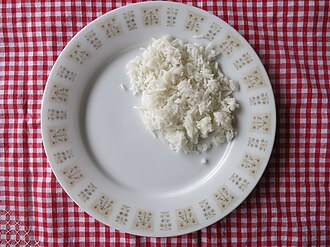
Photo: Wikipedia
The quintessential plain white rice, steamed or boiled to a soft, fluffy, and slightly sticky consistency. It has a mild, neutral flavor that acts as a blank canvas for countless global cuisines. Nutritionally, it's a dense source of quick energy from carbohydrates, with minimal fat and a small amount of protein.
Calorie split: 9% protein · 89% carbs · 2% fat
↓ Full nutrition💚 Why it's loved
People love it for its incredible versatility and comforting, neutral base that absorbs flavors and sauces beautifully. It's a foundational, comforting staple that forms the heart of family meals across countless cultures.
⚠️ Watch-outs & how to enjoy it better
As a high-glycemic food, it can cause rapid blood sugar spikes, which is a concern for individuals managing diabetes or insulin resistance. To counteract this, pair it with protein (like beans, chicken, or eggs), healthy fats (like avocado or nuts), and fiber-rich vegetables to slow digestion and stabilize blood sugar.
Key benefits
- Excellent source of quick, easily digestible energy
- Naturally gluten-free and low in fat
- A hypoallergenic staple food for sensitive digestive systems
- Provides a small amount of essential minerals like manganese and selenium
🍽️ Popular dishes
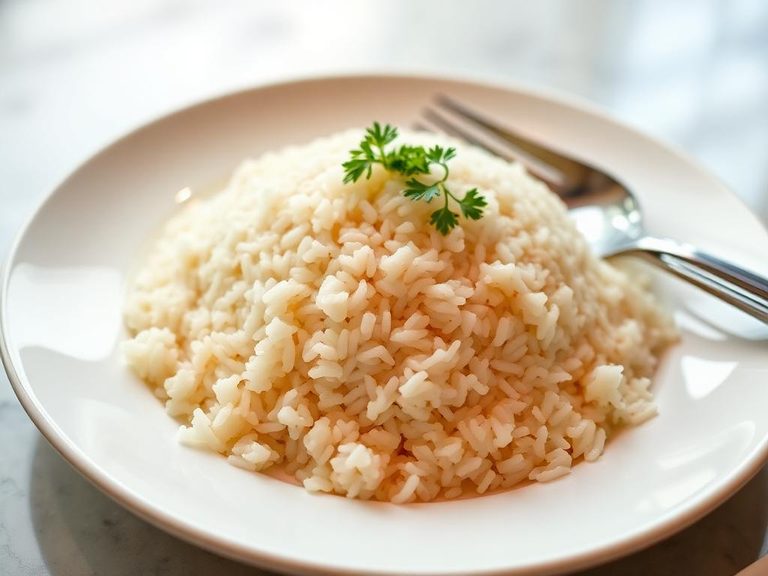
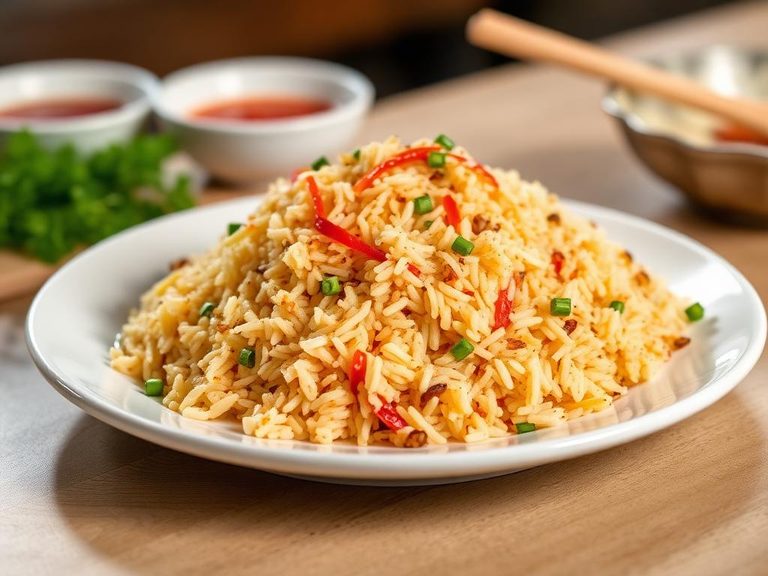
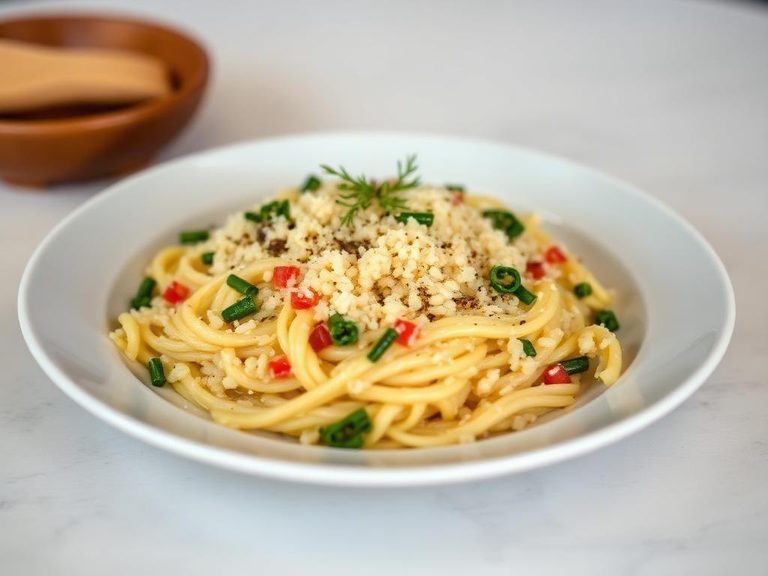
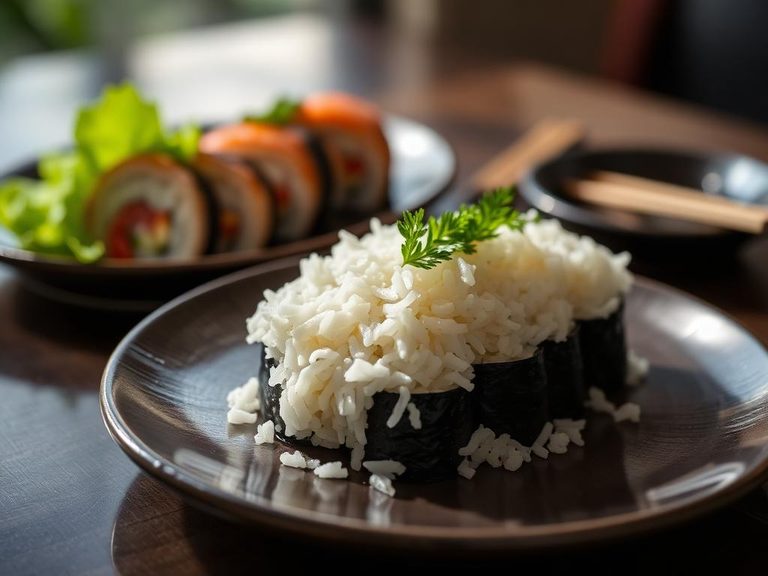
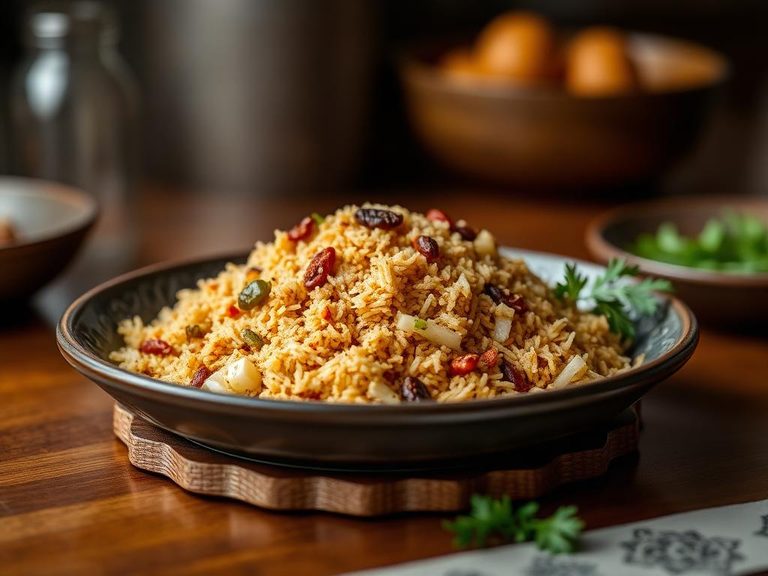
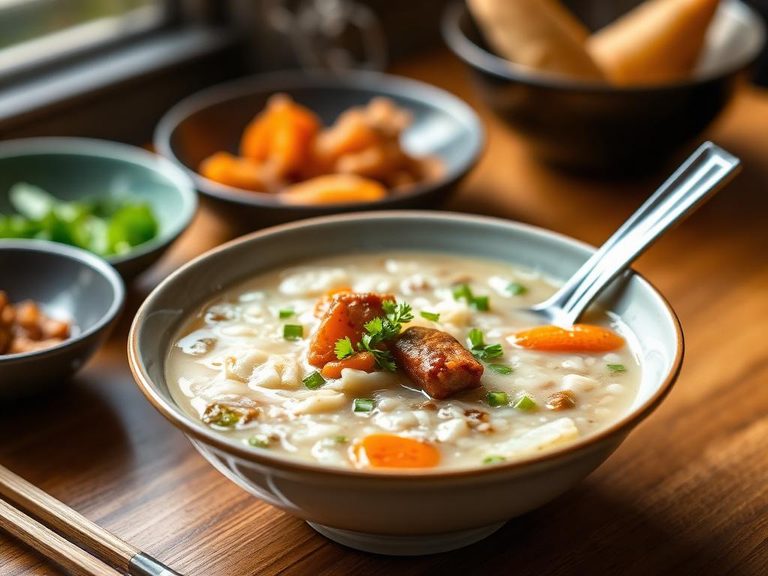
🌍 Where it's eaten
💡 Did you know?
The world's most popular variety, long-grain Indica rice (like Basmati), contains less amylopectin starch than short-grain Japonica rice, which is why it cooks up fluffy and separate rather than sticky and clumpy.
Full nutrition (USDA data · scales with serving)
| Water | 68.0 g |
| Energy | 129 kcal |
| Protein | 2.7 g |
| Total lipid (fat) | 0.28 g |
| Carbohydrate, by difference | 28.0 g |
| Fiber, total dietary | 0.40 g |
| Total Sugars | 0.05 g |
| Calcium, Ca | 10.0 mg |
| Iron, Fe | 1.2 mg |
| Magnesium, Mg | 12.0 mg |
| Phosphorus, P | 43.0 mg |
| Potassium, K | 35.0 mg |
| Sodium, Na | 245 mg |
| Zinc, Zn | 0.49 mg |
| Copper, Cu | 0.07 mg |
| Selenium, Se | 7.5 ug |
| Vitamin C, total ascorbic acid | 0.00 mg |
| Thiamin | 0.16 mg |
| Riboflavin | 0.01 mg |
| Niacin | 1.5 mg |
| Vitamin B-6 | 0.09 mg |
| Folate, total | 58.0 ug |
| Folic acid | 55.0 ug |
| Folate, food | 3.0 ug |
| Folate, DFE | 96.0 ug |
| Choline, total | 2.1 mg |
| Vitamin B-12 | 0.00 ug |
| Vitamin B-12, added | 0.00 ug |
| Vitamin A, RAE | 0.00 ug |
| Retinol | 0.00 ug |
| Carotene, beta | 0.00 ug |
| Carotene, alpha | 0.00 ug |
| Cryptoxanthin, beta | 0.00 ug |
| Lycopene | 0.00 ug |
| Lutein + zeaxanthin | 0.00 ug |
| Vitamin E (alpha-tocopherol) | 0.04 mg |
| Vitamin E, added | 0.00 mg |
| Vitamin D (D2 + D3) | 0.00 ug |
| Vitamin K (phylloquinone) | 0.00 ug |
| Alcohol, ethyl | 0.00 g |
| Caffeine | 0.00 mg |
| Theobromine | 0.00 mg |
Fat & fatty acid profile (per 100g)
| Fatty acids, total saturated | 0.08 g |
| SFA 4:0 | 0.00 g |
| SFA 6:0 | 0.00 g |
| SFA 8:0 | 0.00 g |
| SFA 10:0 | 0.00 g |
| SFA 12:0 | 0.00 g |
| SFA 14:0 | 0.00 g |
| SFA 16:0 | 0.07 g |
| SFA 18:0 | 0.01 g |
| Fatty acids, total monounsaturated | 0.09 g |
| MUFA 16:1 | 0.00 g |
| MUFA 18:1 | 0.09 g |
| MUFA 20:1 | 0.00 g |
| MUFA 22:1 | 0.00 g |
| Fatty acids, total polyunsaturated | 0.08 g |
| PUFA 18:2 | 0.06 g |
| PUFA 18:3 | 0.01 g |
| PUFA 18:4 | 0.00 g |
| PUFA 20:4 | 0.00 g |
| PUFA 20:5 n-3 (EPA) | 0.00 g |
| PUFA 22:5 n-3 (DPA) | 0.00 g |
| PUFA 22:6 n-3 (DHA) | 0.00 g |
| Cholesterol | 0.00 mg |
Amino acid profile (per 100g)
Estimated from Snacks, rice cakes, brown rice, sesame seed — USDA does not publish this profile for Rice.
| Tryptophan | 0.10 g |
| Threonine | 0.28 g |
| Isoleucine | 0.32 g |
| Leucine | 0.63 g |
| Lysine | 0.29 g |
| Methionine | 0.17 g |
| Cystine | 0.09 g |
| Phenylalanine | 0.39 g |
| Tyrosine | 0.29 g |
| Valine | 0.44 g |
| Arginine | 0.59 g |
| Histidine | 0.19 g |
| Alanine | 0.44 g |
| Aspartic acid | 0.71 g |
| Glutamic acid | 1.6 g |
| Glycine | 0.38 g |
| Proline | 0.35 g |
| Serine | 0.39 g |
FAQ
What's the difference between white and brown rice nutritionally?
White rice has the bran and germ removed, which reduces its fiber, vitamin, and mineral content compared to whole-grain brown rice. However, it's also easier to digest and has a longer shelf life.
Is white rice bad for you?
Not inherently. It's a valuable energy source. Concerns arise mainly with overconsumption, especially for those with sedentary lifestyles or blood sugar management needs. Balance is key.
Why is my cooked rice sticky or mushy?
This is usually due to using too much water, stirring it while cooking, or using a high-starch short-grain variety. For fluffy rice, use a 1:1.5 rice-to-water ratio, rinse the rice, and avoid stirring once it's simmering.
Nutrient density (calculated · NRF9.3)
Nutrient Rich Foods index: beneficial nutrients (protein, fiber, vitamins, minerals) minus saturated fat, added sugar & sodium, per 100 kcal.
NRF9.3 index — Fulgoni, Keast & Drewnowski, 2009. Computed from USDA nutrients.
Weight-loss friendliness (composite index)
Energy density 1.29 kcal/g · 8% calories from protein · 0.4 g fiber · 0.1 g sugar per 100 g.
Composite of energy density (Rolls et al., 1999), protein & fiber satiety, minus sugar. A calculated heuristic — ranks satiety-per-calorie, not a clinical measure.
Dietary load (calculated from USDA values)
Potential renal acid load. Positive = acid-forming, negative = alkaline-forming.
Sodium-to-potassium ratio: 7.00 (lower is better — aim for ≤ 1)
Sodium:potassium per WHO potassium guidance. Computed from USDA nutrients.