

Rice, brown, with peas and carrots, NS as to fat
Common food

Photo: Wikipedia
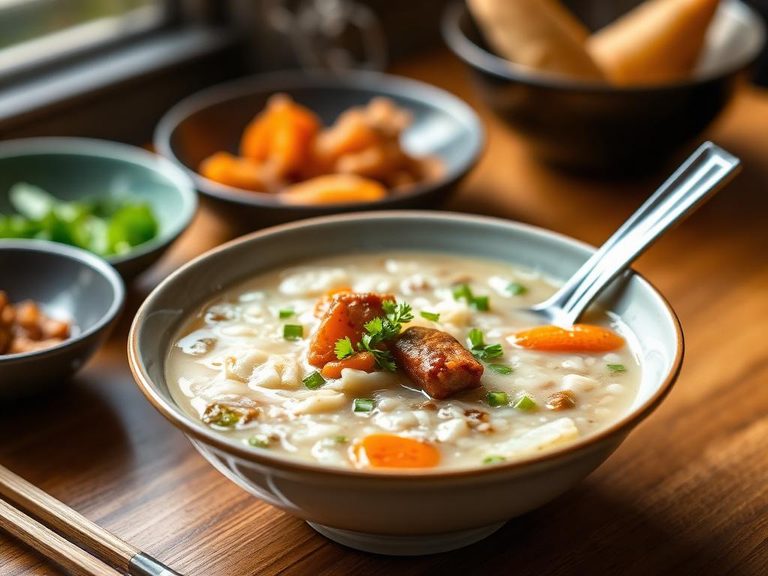
This is a comforting, wholesome side dish where fluffy brown rice is studded with sweet green peas and tender orange carrot cubes. The texture is pleasantly chewy with pops of vegetable sweetness, and it's a nutritionally balanced, low-fat staple. It provides a solid source of complex carbohydrates and fiber for sustained energy.
Calorie split: 9% protein · 72% carbs · 20% fat
↓ Full nutrition💚 Why it's loved
People love it for its simple, comforting flavor and incredible versatility—it's a perfect blank canvas for sauces, spices, or added proteins. It's a beloved, quick-to-prepare staple in home kitchens worldwide, often evoking a sense of wholesome, everyday nourishment.
⚠️ Watch-outs & how to enjoy it better
The chewy texture of brown rice can be less appealing to some, and the dish's carbohydrate density may be a consideration for those monitoring blood sugar. To mitigate, pair it with a source of protein (like chicken, tofu, or beans) and a healthy fat (like avocado or olive oil) to slow digestion and improve satiety.
Key benefits
- Good source of dietary fiber from whole grain brown rice
- Low in fat and contains no added sugars
- Provides plant-based protein from rice and peas
- Rich in complex carbohydrates for steady energy
- Contains vitamins and minerals from the peas and carrots
🍽️ Popular dishes
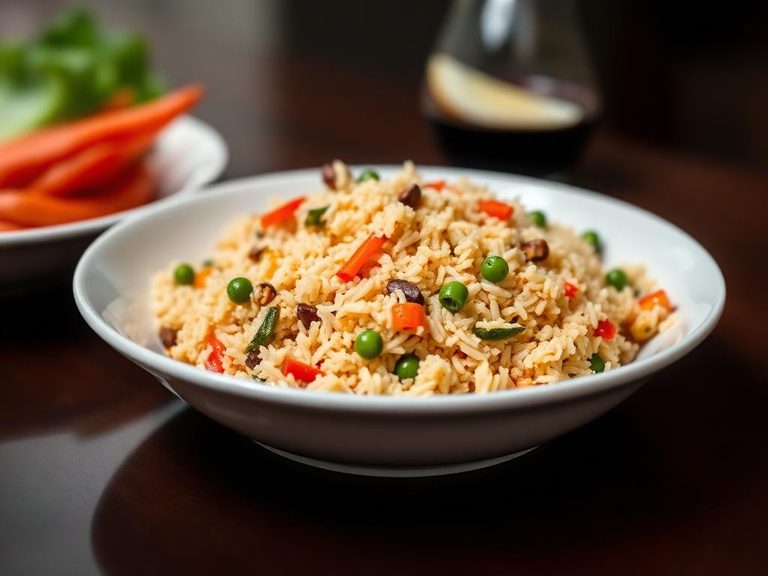
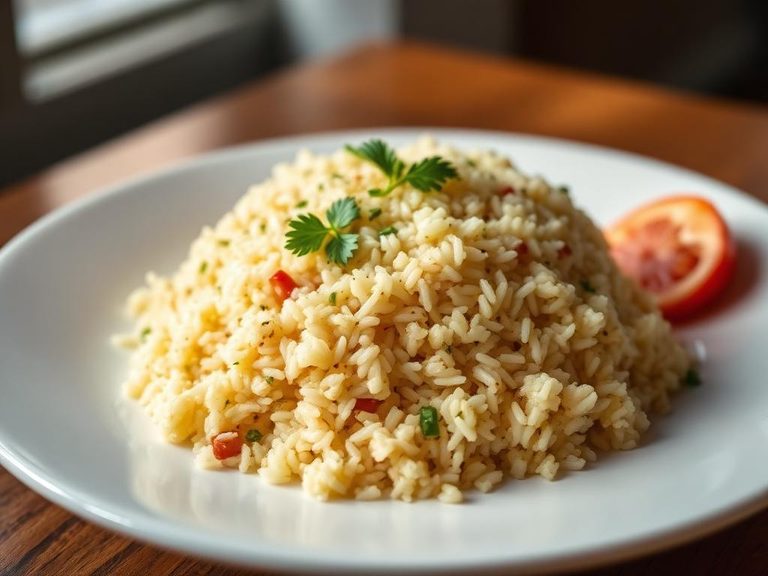
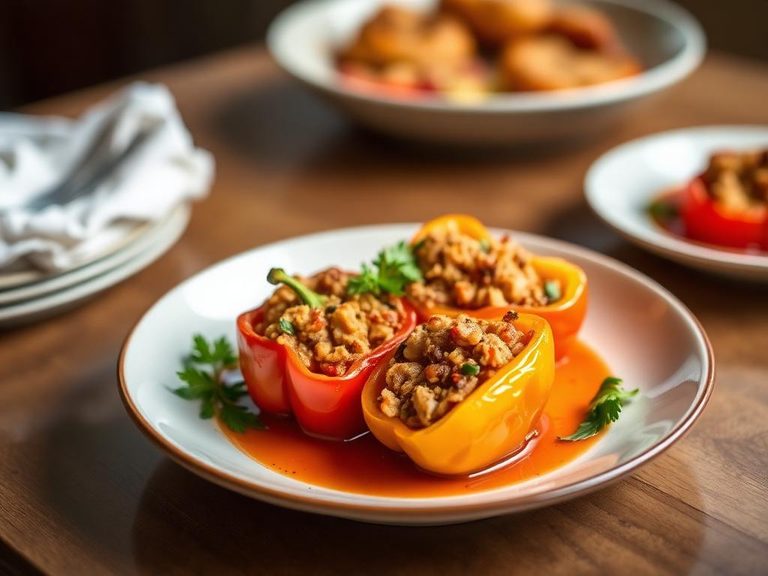
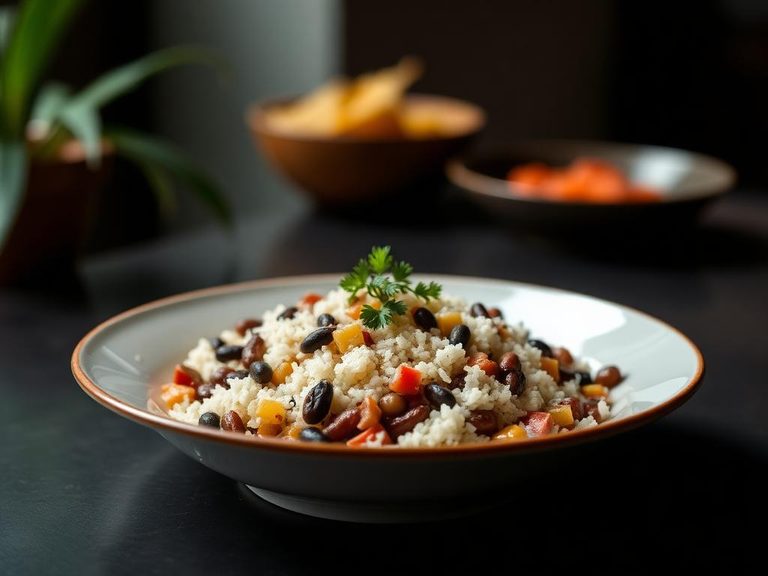
🌍 Where it's eaten
💡 Did you know?
The specific nutritional data for this dish (123 kcal per 100g) suggests it is prepared with minimal or no added fat, as the calories come almost entirely from the rice and vegetables themselves.
Full nutrition (USDA data · scales with serving)
| Water | 71.7 g |
| Energy | 123 kcal |
| Protein | 2.7 g |
| Total lipid (fat) | 2.7 g |
| Carbohydrate, by difference | 22.0 g |
| Fiber, total dietary | 2.0 g |
| Total Sugars | 1.1 g |
| Calcium, Ca | 8.0 mg |
| Iron, Fe | 0.64 mg |
| Magnesium, Mg | 33.0 mg |
| Phosphorus, P | 90.0 mg |
| Potassium, K | 99.0 mg |
| Sodium, Na | 195 mg |
| Zinc, Zn | 0.64 mg |
| Copper, Cu | 0.10 mg |
| Selenium, Se | 4.6 ug |
| Vitamin C, total ascorbic acid | 1.3 mg |
| Thiamin | 0.17 mg |
| Riboflavin | 0.07 mg |
| Niacin | 2.2 mg |
| Vitamin B-6 | 0.12 mg |
| Folate, total | 14.0 ug |
| Folic acid | 0.00 ug |
| Folate, food | 14.0 ug |
| Folate, DFE | 14.0 ug |
| Choline, total | 10.8 mg |
| Vitamin B-12 | 0.00 ug |
| Vitamin B-12, added | 0.00 ug |
| Vitamin A, RAE | 99.0 ug |
| Retinol | 0.00 ug |
| Carotene, beta | 984 ug |
| Carotene, alpha | 389 ug |
| Cryptoxanthin, beta | 0.00 ug |
| Lycopene | 0.00 ug |
| Lutein + zeaxanthin | 320 ug |
| Vitamin E (alpha-tocopherol) | 0.56 mg |
| Vitamin E, added | 0.00 mg |
| Vitamin D (D2 + D3) | 0.00 ug |
| Vitamin K (phylloquinone) | 6.1 ug |
| Alcohol, ethyl | 0.00 g |
| Caffeine | 0.00 mg |
| Theobromine | 0.00 mg |
Fat & fatty acid profile (per 100g)
| Fatty acids, total saturated | 0.45 g |
| SFA 4:0 | 0.00 g |
| SFA 6:0 | 0.00 g |
| SFA 8:0 | 0.00 g |
| SFA 10:0 | 0.01 g |
| SFA 12:0 | 0.00 g |
| SFA 14:0 | 0.01 g |
| SFA 16:0 | 0.33 g |
| SFA 18:0 | 0.07 g |
| Fatty acids, total monounsaturated | 1.1 g |
| MUFA 16:1 | 0.01 g |
| MUFA 18:1 | 1.0 g |
| MUFA 20:1 | 0.01 g |
| MUFA 22:1 | 0.00 g |
| Fatty acids, total polyunsaturated | 1.0 g |
| PUFA 18:2 | 0.93 g |
| PUFA 18:3 | 0.09 g |
| PUFA 18:4 | 0.00 g |
| PUFA 20:4 | 0.00 g |
| PUFA 20:5 n-3 (EPA) | 0.00 g |
| PUFA 22:5 n-3 (DPA) | 0.00 g |
| PUFA 22:6 n-3 (DHA) | 0.00 g |
| Cholesterol | 0.00 mg |
Amino acid profile (per 100g)
Estimated from Snacks, rice cakes, brown rice, sesame seed — USDA does not publish this profile for Rice.
| Tryptophan | 0.10 g |
| Threonine | 0.28 g |
| Isoleucine | 0.32 g |
| Leucine | 0.63 g |
| Lysine | 0.29 g |
| Methionine | 0.17 g |
| Cystine | 0.09 g |
| Phenylalanine | 0.39 g |
| Tyrosine | 0.29 g |
| Valine | 0.44 g |
| Arginine | 0.59 g |
| Histidine | 0.19 g |
| Alanine | 0.44 g |
| Aspartic acid | 0.71 g |
| Glutamic acid | 1.6 g |
| Glycine | 0.38 g |
| Proline | 0.35 g |
| Serine | 0.39 g |
FAQ
Is this dish gluten-free?
Yes, the core ingredients—brown rice, peas, and carrots—are naturally gluten-free. However, always check for cross-contamination if you have celiac disease, especially with pre-mixed rice blends.
How can I add more protein to this dish?
Stir in cooked lentils, chickpeas, or edamame. You can also top it with grilled chicken, shrimp, or a fried egg, or mix in crumbled tofu or tempeh while cooking.
Why is my brown rice still hard after cooking?
Brown rice requires more water and a longer simmer time than white rice. Ensure you're using a 1:2.5 rice-to-water ratio, bringing it to a boil, then simmering covered for 40-50 minutes. Letting it steam off the heat for 10 minutes is also crucial.
Nutrient density (calculated · NRF9.3)
Nutrient Rich Foods index: beneficial nutrients (protein, fiber, vitamins, minerals) minus saturated fat, added sugar & sodium, per 100 kcal.
NRF9.3 index — Fulgoni, Keast & Drewnowski, 2009. Computed from USDA nutrients.
Weight-loss friendliness (composite index)
Energy density 1.23 kcal/g · 9% calories from protein · 2.0 g fiber · 1.1 g sugar per 100 g.
Composite of energy density (Rolls et al., 1999), protein & fiber satiety, minus sugar. A calculated heuristic — ranks satiety-per-calorie, not a clinical measure.
Dietary load (calculated from USDA values)
Potential renal acid load. Positive = acid-forming, negative = alkaline-forming.
Sodium-to-potassium ratio: 1.97 (lower is better — aim for ≤ 1)
Sodium:potassium per WHO potassium guidance. Computed from USDA nutrients.