

Rice, brown, with peas and carrots, fat added
Common food

Photo: Wikipedia
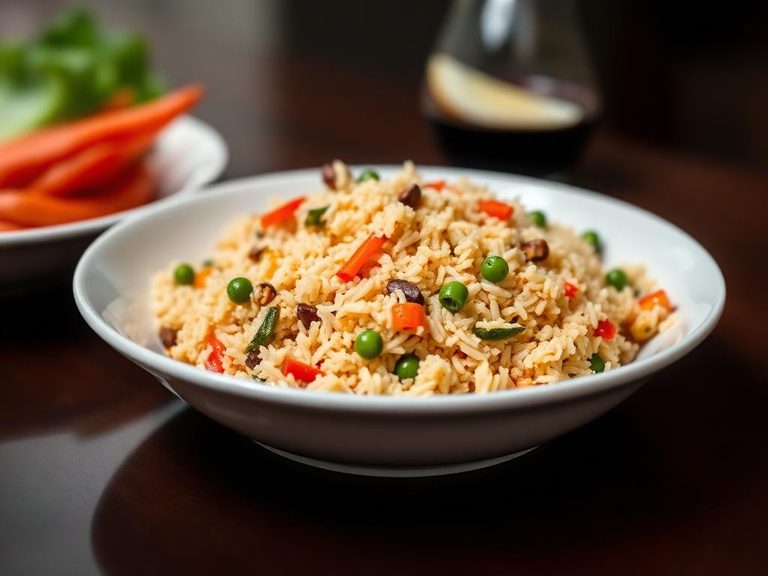
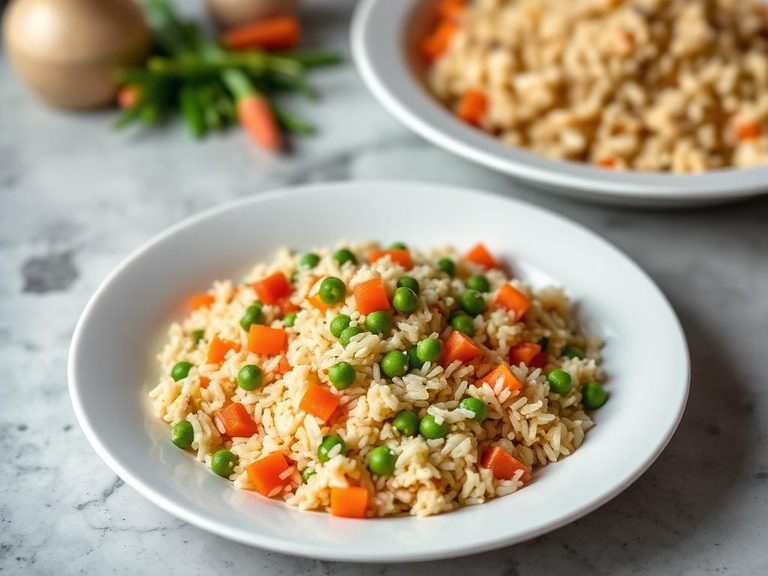
This is a classic side dish of nutty, chewy brown rice studded with sweet peas and tender carrots, lightly coated in oil for a satisfying mouthfeel. It delivers a comforting, earthy flavor profile with pops of sweetness and a balanced, hearty texture. A notable feature is its low-calorie density (123 kcal per 100g) and good fiber content, making it a filling yet light accompaniment.
Calorie split: 9% protein · 72% carbs · 20% fat
↓ Full nutrition💚 Why it's loved
People love this dish for its comforting, familiar taste and the satisfying contrast between the chewy rice and the sweet, soft vegetables. It's a beloved, versatile staple that pairs perfectly with a wide range of proteins and cuisines.
⚠️ Watch-outs & how to enjoy it better
The added fat can increase calorie density, and the carbohydrates may cause blood-sugar spikes if consumed in large portions without protein or fat. To counteract this, pair it with a lean protein like grilled chicken or tofu, and use portion control (about 1 cup) to manage intake.
Key benefits
- Provides sustained energy from complex carbohydrates and fiber.
- Low in calories while offering a satisfying, filling texture.
- Contains beta-carotene from carrots and plant-based protein from peas.
- A good source of dietary fiber to support digestive health.
- A versatile, whole-grain base for a balanced meal.
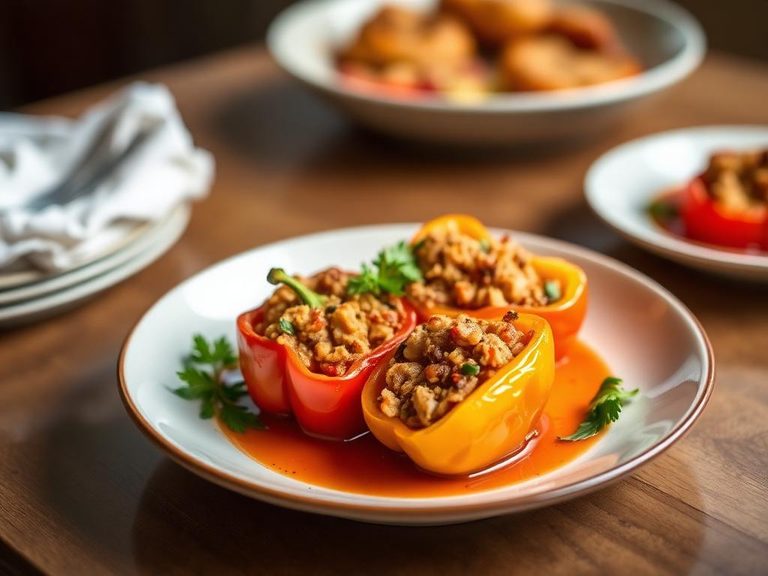
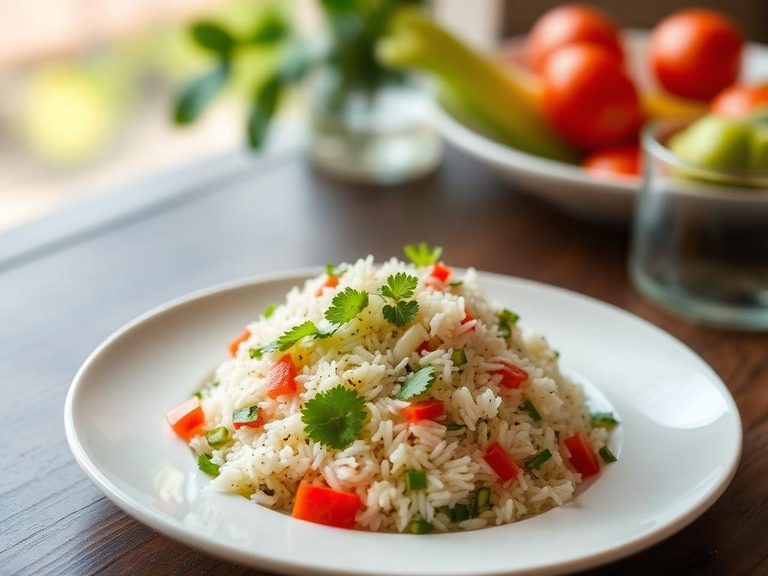
🍽️ Popular dishes
🌍 Where it's eaten
💡 Did you know?
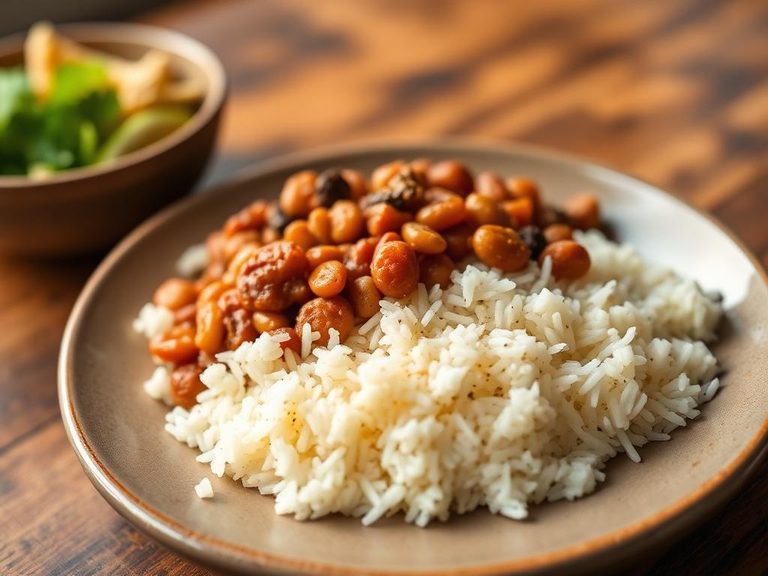
Brown rice with peas and carrots is a common 'comfort food' side in many cultures, but the specific combination is often associated with the simple, nutritious 'rice and peas' found in Caribbean cuisine, where it's traditionally cooked with coconut milk and spices.
Full nutrition (USDA data · scales with serving)
| Water | 71.7 g |
| Energy | 123 kcal |
| Protein | 2.7 g |
| Total lipid (fat) | 2.7 g |
| Carbohydrate, by difference | 22.0 g |
| Fiber, total dietary | 2.0 g |
| Total Sugars | 1.1 g |
| Calcium, Ca | 8.0 mg |
| Iron, Fe | 0.64 mg |
| Magnesium, Mg | 33.0 mg |
| Phosphorus, P | 90.0 mg |
| Potassium, K | 99.0 mg |
| Sodium, Na | 195 mg |
| Zinc, Zn | 0.64 mg |
| Copper, Cu | 0.10 mg |
| Selenium, Se | 4.6 ug |
| Vitamin C, total ascorbic acid | 1.3 mg |
| Thiamin | 0.17 mg |
| Riboflavin | 0.07 mg |
| Niacin | 2.2 mg |
| Vitamin B-6 | 0.12 mg |
| Folate, total | 14.0 ug |
| Folic acid | 0.00 ug |
| Folate, food | 14.0 ug |
| Folate, DFE | 14.0 ug |
| Choline, total | 10.8 mg |
| Vitamin B-12 | 0.00 ug |
| Vitamin B-12, added | 0.00 ug |
| Vitamin A, RAE | 99.0 ug |
| Retinol | 0.00 ug |
| Carotene, beta | 984 ug |
| Carotene, alpha | 389 ug |
| Cryptoxanthin, beta | 0.00 ug |
| Lycopene | 0.00 ug |
| Lutein + zeaxanthin | 320 ug |
| Vitamin E (alpha-tocopherol) | 0.56 mg |
| Vitamin E, added | 0.00 mg |
| Vitamin D (D2 + D3) | 0.00 ug |
| Vitamin K (phylloquinone) | 6.1 ug |
| Alcohol, ethyl | 0.00 g |
| Caffeine | 0.00 mg |
| Theobromine | 0.00 mg |
Fat & fatty acid profile (per 100g)
| Fatty acids, total saturated | 0.45 g |
| SFA 4:0 | 0.00 g |
| SFA 6:0 | 0.00 g |
| SFA 8:0 | 0.00 g |
| SFA 10:0 | 0.01 g |
| SFA 12:0 | 0.00 g |
| SFA 14:0 | 0.01 g |
| SFA 16:0 | 0.33 g |
| SFA 18:0 | 0.07 g |
| Fatty acids, total monounsaturated | 1.1 g |
| MUFA 16:1 | 0.01 g |
| MUFA 18:1 | 1.0 g |
| MUFA 20:1 | 0.01 g |
| MUFA 22:1 | 0.00 g |
| Fatty acids, total polyunsaturated | 1.0 g |
| PUFA 18:2 | 0.93 g |
| PUFA 18:3 | 0.09 g |
| PUFA 18:4 | 0.00 g |
| PUFA 20:4 | 0.00 g |
| PUFA 20:5 n-3 (EPA) | 0.00 g |
| PUFA 22:5 n-3 (DPA) | 0.00 g |
| PUFA 22:6 n-3 (DHA) | 0.00 g |
| Cholesterol | 0.00 mg |
Amino acid profile (per 100g)
Estimated from Snacks, rice cakes, brown rice, sesame seed — USDA does not publish this profile for Rice.
| Tryptophan | 0.10 g |
| Threonine | 0.28 g |
| Isoleucine | 0.32 g |
| Leucine | 0.63 g |
| Lysine | 0.29 g |
| Methionine | 0.17 g |
| Cystine | 0.09 g |
| Phenylalanine | 0.39 g |
| Tyrosine | 0.29 g |
| Valine | 0.44 g |
| Arginine | 0.59 g |
| Histidine | 0.19 g |
| Alanine | 0.44 g |
| Aspartic acid | 0.71 g |
| Glutamic acid | 1.6 g |
| Glycine | 0.38 g |
| Proline | 0.35 g |
| Serine | 0.39 g |
FAQ
Is this dish suitable for a low-carb diet?
No, it is not. With about 22g of carbs per 100g, it is a carbohydrate-rich food. It is better suited for balanced or moderate-carb diets.
Can I make this dish without adding fat?
Yes, you can cook the rice and vegetables without added oil or butter. However, the fat adds flavor and helps with the absorption of fat-soluble vitamins from the carrots.
What is the best way to store leftovers?
Store in an airtight container in the refrigerator for up to 3-4 days. Reheat thoroughly before eating to ensure food safety.
Nutrient density (calculated · NRF9.3)
Nutrient Rich Foods index: beneficial nutrients (protein, fiber, vitamins, minerals) minus saturated fat, added sugar & sodium, per 100 kcal.
NRF9.3 index — Fulgoni, Keast & Drewnowski, 2009. Computed from USDA nutrients.
Weight-loss friendliness (composite index)
Energy density 1.23 kcal/g · 9% calories from protein · 2.0 g fiber · 1.1 g sugar per 100 g.
Composite of energy density (Rolls et al., 1999), protein & fiber satiety, minus sugar. A calculated heuristic — ranks satiety-per-calorie, not a clinical measure.
Dietary load (calculated from USDA values)
Potential renal acid load. Positive = acid-forming, negative = alkaline-forming.
Sodium-to-potassium ratio: 1.97 (lower is better — aim for ≤ 1)
Sodium:potassium per WHO potassium guidance. Computed from USDA nutrients.