

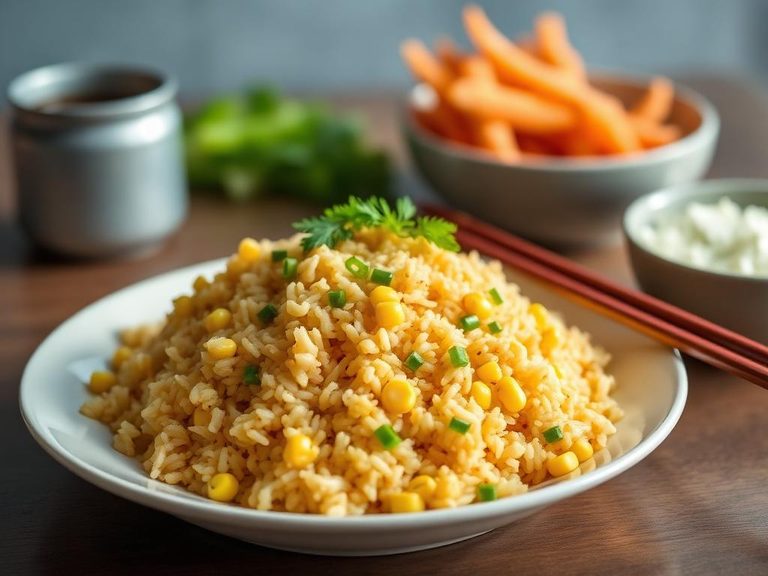
Rice, brown, with corn, NS as to fat
Common food

Photo: Wikipedia
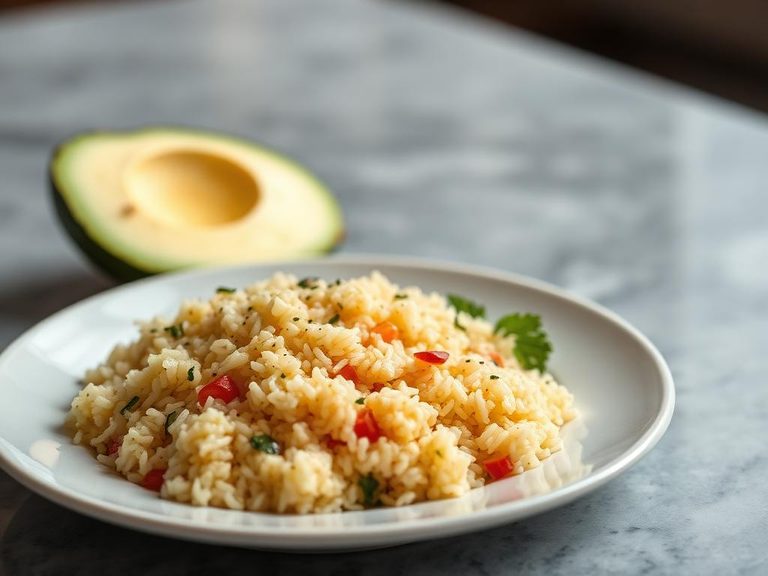
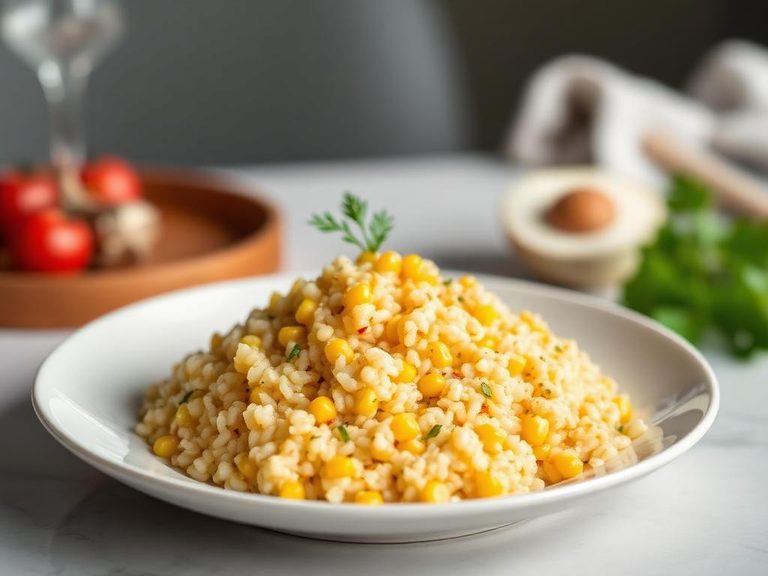
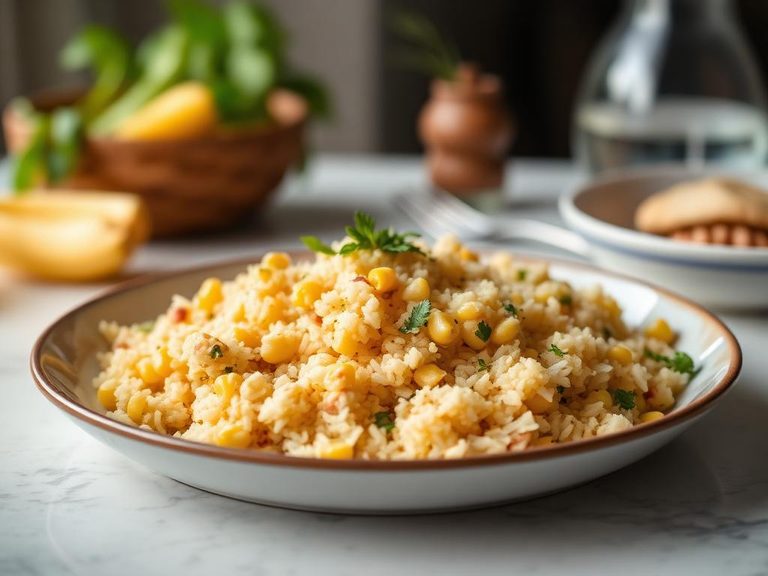
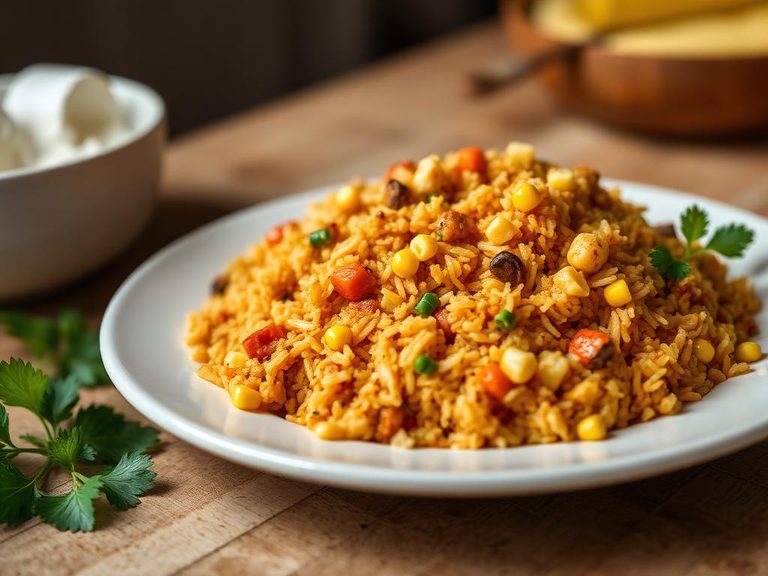
This is a hearty, nutty blend of whole-grain brown rice and sweet corn kernels, offering a satisfyingly chewy texture with pops of sweetness. It's a wholesome, fiber-rich side dish that provides a gentle energy boost without being overly heavy. The combination creates a simple yet flavorful base that complements a wide variety of main courses.
Calorie split: 8% protein · 73% carbs · 19% fat
↓ Full nutrition💚 Why it's loved
People love it for its comforting, earthy flavor and the delightful textural contrast between the chewy rice and the sweet, juicy corn. It's incredibly versatile, serving as a perfect canvas for spices, herbs, or a simple pat of butter, making it a staple in many home kitchens.
⚠️ Watch-outs & how to enjoy it better
The combination of starchy rice and sweet corn can cause a moderate blood-sugar spike for some individuals, especially if eaten in large portions alone. To counteract this, pair it with a source of protein (like beans, chicken, or tofu) and healthy fat (like avocado or olive oil) to slow digestion and stabilize blood sugar levels.
Key benefits
- Good source of dietary fiber for digestive health
- Provides complex carbohydrates for sustained energy
- Low in sugar and fat, supporting balanced nutrition
- Contains essential minerals like magnesium and phosphorus from brown rice
- Naturally gluten-free and suitable for many dietary needs
🍽️ Popular dishes
🌍 Where it's eaten
💡 Did you know?
Corn is technically a fruit, specifically a berry, and when paired with brown rice, it creates a complete protein profile containing all nine essential amino acids.
Full nutrition (USDA data · scales with serving)
| Water | 70.2 g |
| Energy | 128 kcal |
| Protein | 2.6 g |
| Total lipid (fat) | 2.7 g |
| Carbohydrate, by difference | 23.7 g |
| Fiber, total dietary | 1.7 g |
| Total Sugars | 0.84 g |
| Calcium, Ca | 3.0 mg |
| Iron, Fe | 0.53 mg |
| Magnesium, Mg | 36.0 mg |
| Phosphorus, P | 96.0 mg |
| Potassium, K | 116 mg |
| Sodium, Na | 155 mg |
| Zinc, Zn | 0.68 mg |
| Copper, Cu | 0.09 mg |
| Selenium, Se | 4.6 ug |
| Vitamin C, total ascorbic acid | 0.80 mg |
| Thiamin | 0.14 mg |
| Riboflavin | 0.07 mg |
| Niacin | 2.2 mg |
| Vitamin B-6 | 0.12 mg |
| Folate, total | 14.0 ug |
| Folic acid | 0.00 ug |
| Folate, food | 14.0 ug |
| Folate, DFE | 14.0 ug |
| Choline, total | 11.8 mg |
| Vitamin B-12 | 0.00 ug |
| Vitamin B-12, added | 0.00 ug |
| Vitamin A, RAE | 2.0 ug |
| Retinol | 0.00 ug |
| Carotene, beta | 11.0 ug |
| Carotene, alpha | 4.0 ug |
| Cryptoxanthin, beta | 26.0 ug |
| Lycopene | 0.00 ug |
| Lutein + zeaxanthin | 147 ug |
| Vitamin E (alpha-tocopherol) | 0.49 mg |
| Vitamin E, added | 0.00 mg |
| Vitamin D (D2 + D3) | 0.00 ug |
| Vitamin K (phylloquinone) | 2.1 ug |
| Alcohol, ethyl | 0.00 g |
| Caffeine | 0.00 mg |
| Theobromine | 0.00 mg |
Fat & fatty acid profile (per 100g)
| Fatty acids, total saturated | 0.46 g |
| SFA 4:0 | 0.00 g |
| SFA 6:0 | 0.00 g |
| SFA 8:0 | 0.00 g |
| SFA 10:0 | 0.01 g |
| SFA 12:0 | 0.00 g |
| SFA 14:0 | 0.01 g |
| SFA 16:0 | 0.35 g |
| SFA 18:0 | 0.07 g |
| Fatty acids, total monounsaturated | 1.1 g |
| MUFA 16:1 | 0.01 g |
| MUFA 18:1 | 1.1 g |
| MUFA 20:1 | 0.01 g |
| MUFA 22:1 | 0.00 g |
| Fatty acids, total polyunsaturated | 1.0 g |
| PUFA 18:2 | 0.96 g |
| PUFA 18:3 | 0.09 g |
| PUFA 18:4 | 0.00 g |
| PUFA 20:4 | 0.00 g |
| PUFA 20:5 n-3 (EPA) | 0.00 g |
| PUFA 22:5 n-3 (DPA) | 0.00 g |
| PUFA 22:6 n-3 (DHA) | 0.00 g |
| Cholesterol | 0.00 mg |
Amino acid profile (per 100g)
Estimated from Snacks, rice cakes, brown rice, sesame seed — USDA does not publish this profile for Rice.
| Tryptophan | 0.10 g |
| Threonine | 0.28 g |
| Isoleucine | 0.32 g |
| Leucine | 0.63 g |
| Lysine | 0.29 g |
| Methionine | 0.17 g |
| Cystine | 0.09 g |
| Phenylalanine | 0.39 g |
| Tyrosine | 0.29 g |
| Valine | 0.44 g |
| Arginine | 0.59 g |
| Histidine | 0.19 g |
| Alanine | 0.44 g |
| Aspartic acid | 0.71 g |
| Glutamic acid | 1.6 g |
| Glycine | 0.38 g |
| Proline | 0.35 g |
| Serine | 0.39 g |
FAQ
Is brown rice with corn a good source of protein?
While it contains some protein (about 2.6g per 100g), it's not a high-protein food on its own. However, the combination of rice and corn provides a more complete amino acid profile than either grain alone, especially when paired with legumes or other plant-based proteins.
Can I eat this if I'm gluten-free?
Yes, both brown rice and corn are naturally gluten-free, making this dish safe for those with celiac disease or gluten sensitivity. Always check for cross-contamination if buying pre-packaged mixes.
How does this affect blood sugar levels?
The carbohydrates in both rice and corn can raise blood sugar, but the fiber in brown rice helps moderate this effect. To minimize spikes, eat it in moderate portions and pair it with protein, healthy fats, or non-starchy vegetables.
Nutrient density (calculated · NRF9.3)
Nutrient Rich Foods index: beneficial nutrients (protein, fiber, vitamins, minerals) minus saturated fat, added sugar & sodium, per 100 kcal.
NRF9.3 index — Fulgoni, Keast & Drewnowski, 2009. Computed from USDA nutrients.
Weight-loss friendliness (composite index)
Energy density 1.28 kcal/g · 8% calories from protein · 1.7 g fiber · 0.8 g sugar per 100 g.
Composite of energy density (Rolls et al., 1999), protein & fiber satiety, minus sugar. A calculated heuristic — ranks satiety-per-calorie, not a clinical measure.
Dietary load (calculated from USDA values)
Potential renal acid load. Positive = acid-forming, negative = alkaline-forming.
Sodium-to-potassium ratio: 1.34 (lower is better — aim for ≤ 1)
Sodium:potassium per WHO potassium guidance. Computed from USDA nutrients.