

Rice, brown, with corn, fat added
Common food

Photo: Wikipedia
This is a hearty, savory side dish of nutty brown rice tossed with sweet corn kernels and enriched with a small amount of fat for a richer mouthfeel. It offers a satisfying chew from the whole grain rice, punctuated by the pop of corn, with a subtle, comforting flavor. Nutritionally, it provides a good balance of complex carbohydrates and fiber for sustained energy, with a modest protein content.
Calorie split: 8% protein · 73% carbs · 19% fat
↓ Full nutrition💚 Why it's loved
People love it for its comforting, home-cooked appeal and the sweet-savory balance between the corn and nutty rice. It's a versatile base that pairs well with many proteins and vegetables, making it a staple in diverse cuisines.
⚠️ Watch-outs & how to enjoy it better
The added fat, while enhancing flavor, increases calorie density, which may be a concern for strict calorie control. To mitigate, use minimal added fat (e.g., a light drizzle of oil) and pair with high-fiber vegetables or lean protein to slow digestion and manage blood sugar response.
Key benefits
- Provides sustained energy from complex carbs and fiber
- Supports digestive health with 1.7g of fiber per 100g
- Contains whole-grain brown rice for added nutrients
- Moderate fat content enhances flavor and satiety
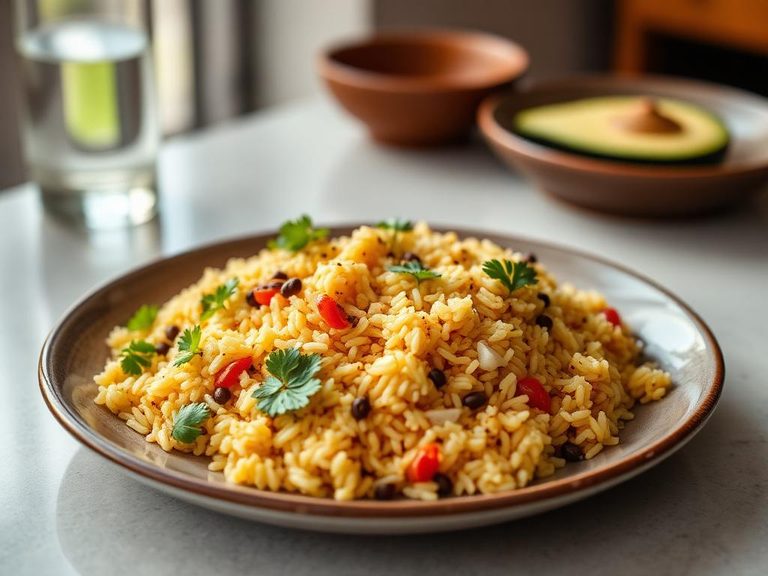
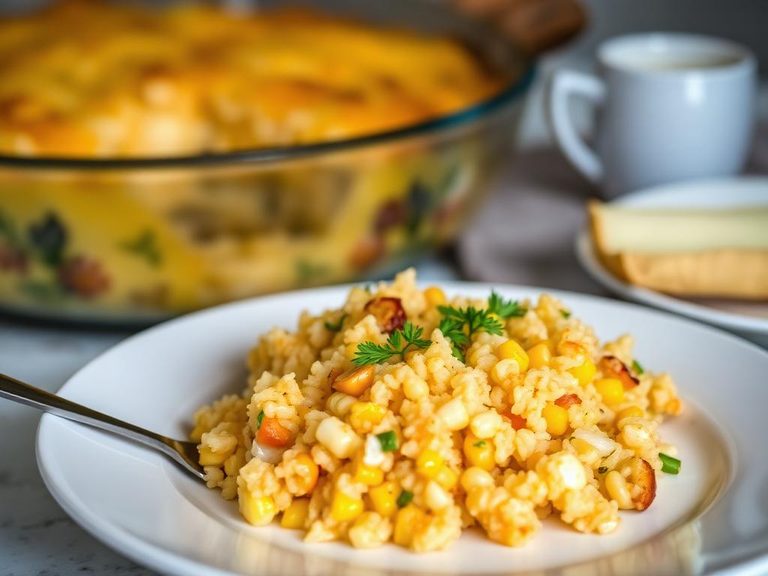
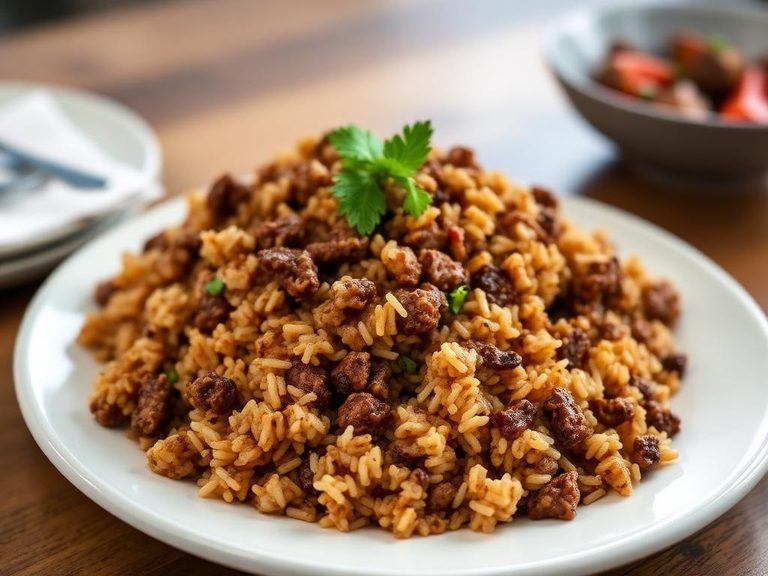
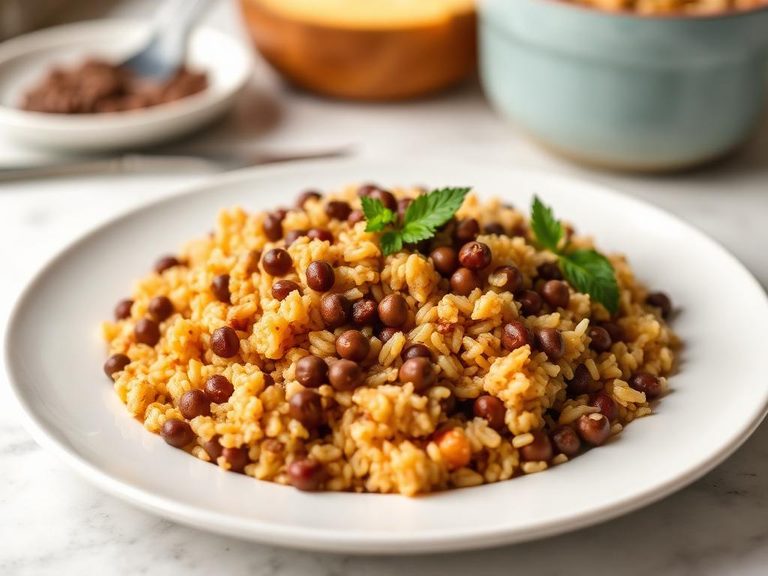
🍽️ Popular dishes
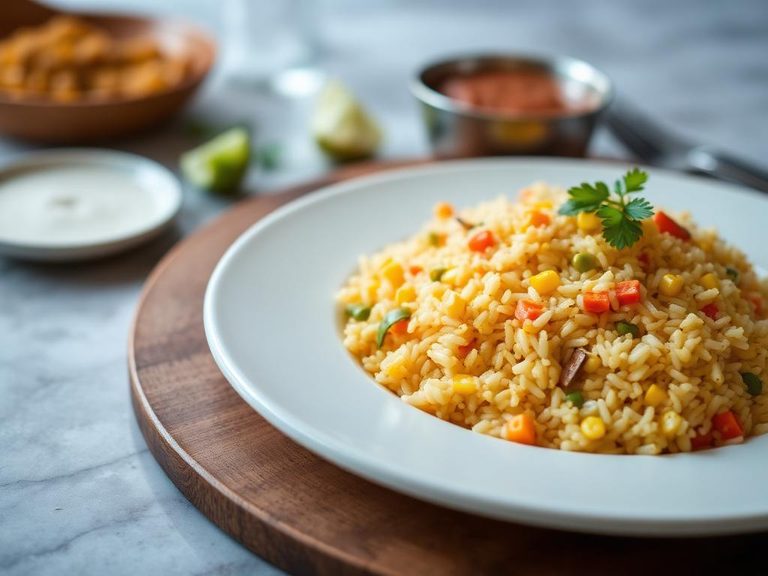
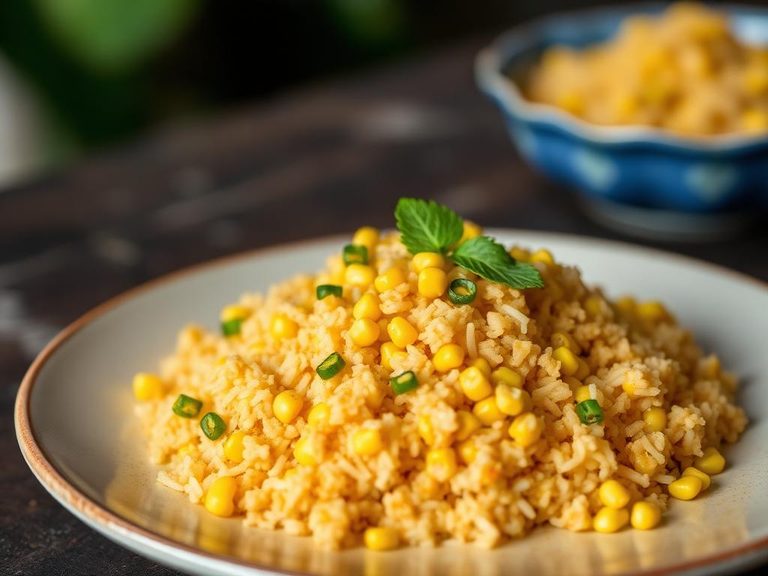
🌍 Where it's eaten
💡 Did you know?
Brown rice retains its bran and germ layers, which are removed in white rice, giving it a nuttier flavor and higher fiber content, but also a longer cooking time.
Full nutrition (USDA data · scales with serving)
| Water | 70.2 g |
| Energy | 128 kcal |
| Protein | 2.6 g |
| Total lipid (fat) | 2.7 g |
| Carbohydrate, by difference | 23.7 g |
| Fiber, total dietary | 1.7 g |
| Total Sugars | 0.84 g |
| Calcium, Ca | 3.0 mg |
| Iron, Fe | 0.53 mg |
| Magnesium, Mg | 36.0 mg |
| Phosphorus, P | 96.0 mg |
| Potassium, K | 116 mg |
| Sodium, Na | 155 mg |
| Zinc, Zn | 0.68 mg |
| Copper, Cu | 0.09 mg |
| Selenium, Se | 4.6 ug |
| Vitamin C, total ascorbic acid | 0.80 mg |
| Thiamin | 0.14 mg |
| Riboflavin | 0.07 mg |
| Niacin | 2.2 mg |
| Vitamin B-6 | 0.12 mg |
| Folate, total | 14.0 ug |
| Folic acid | 0.00 ug |
| Folate, food | 14.0 ug |
| Folate, DFE | 14.0 ug |
| Choline, total | 11.8 mg |
| Vitamin B-12 | 0.00 ug |
| Vitamin B-12, added | 0.00 ug |
| Vitamin A, RAE | 2.0 ug |
| Retinol | 0.00 ug |
| Carotene, beta | 11.0 ug |
| Carotene, alpha | 4.0 ug |
| Cryptoxanthin, beta | 26.0 ug |
| Lycopene | 0.00 ug |
| Lutein + zeaxanthin | 147 ug |
| Vitamin E (alpha-tocopherol) | 0.49 mg |
| Vitamin E, added | 0.00 mg |
| Vitamin D (D2 + D3) | 0.00 ug |
| Vitamin K (phylloquinone) | 2.1 ug |
| Alcohol, ethyl | 0.00 g |
| Caffeine | 0.00 mg |
| Theobromine | 0.00 mg |
Fat & fatty acid profile (per 100g)
| Fatty acids, total saturated | 0.46 g |
| SFA 4:0 | 0.00 g |
| SFA 6:0 | 0.00 g |
| SFA 8:0 | 0.00 g |
| SFA 10:0 | 0.01 g |
| SFA 12:0 | 0.00 g |
| SFA 14:0 | 0.01 g |
| SFA 16:0 | 0.35 g |
| SFA 18:0 | 0.07 g |
| Fatty acids, total monounsaturated | 1.1 g |
| MUFA 16:1 | 0.01 g |
| MUFA 18:1 | 1.1 g |
| MUFA 20:1 | 0.01 g |
| MUFA 22:1 | 0.00 g |
| Fatty acids, total polyunsaturated | 1.0 g |
| PUFA 18:2 | 0.96 g |
| PUFA 18:3 | 0.09 g |
| PUFA 18:4 | 0.00 g |
| PUFA 20:4 | 0.00 g |
| PUFA 20:5 n-3 (EPA) | 0.00 g |
| PUFA 22:5 n-3 (DPA) | 0.00 g |
| PUFA 22:6 n-3 (DHA) | 0.00 g |
| Cholesterol | 0.00 mg |
Amino acid profile (per 100g)
Estimated from Snacks, rice cakes, brown rice, sesame seed — USDA does not publish this profile for Rice.
| Tryptophan | 0.10 g |
| Threonine | 0.28 g |
| Isoleucine | 0.32 g |
| Leucine | 0.63 g |
| Lysine | 0.29 g |
| Methionine | 0.17 g |
| Cystine | 0.09 g |
| Phenylalanine | 0.39 g |
| Tyrosine | 0.29 g |
| Valine | 0.44 g |
| Arginine | 0.59 g |
| Histidine | 0.19 g |
| Alanine | 0.44 g |
| Aspartic acid | 0.71 g |
| Glutamic acid | 1.6 g |
| Glycine | 0.38 g |
| Proline | 0.35 g |
| Serine | 0.39 g |
FAQ
Is this dish gluten-free?
Yes, brown rice and corn are naturally gluten-free, making this a safe option for those with celiac disease or gluten sensitivity, provided no cross-contamination occurs.
Can I reduce the fat content?
Absolutely. You can use a non-stick pan with a minimal amount of oil or broth instead of added fat, or use a spray oil to cut calories while maintaining flavor.
How does this compare nutritionally to white rice with corn?
Brown rice has more fiber, vitamins, and minerals than white rice, leading to a lower glycemic index and better blood sugar management. The added fat in this version slightly increases calorie count compared to plain white rice.
Nutrient density (calculated · NRF9.3)
Nutrient Rich Foods index: beneficial nutrients (protein, fiber, vitamins, minerals) minus saturated fat, added sugar & sodium, per 100 kcal.
NRF9.3 index — Fulgoni, Keast & Drewnowski, 2009. Computed from USDA nutrients.
Weight-loss friendliness (composite index)
Energy density 1.28 kcal/g · 8% calories from protein · 1.7 g fiber · 0.8 g sugar per 100 g.
Composite of energy density (Rolls et al., 1999), protein & fiber satiety, minus sugar. A calculated heuristic — ranks satiety-per-calorie, not a clinical measure.
Dietary load (calculated from USDA values)
Potential renal acid load. Positive = acid-forming, negative = alkaline-forming.
Sodium-to-potassium ratio: 1.34 (lower is better — aim for ≤ 1)
Sodium:potassium per WHO potassium guidance. Computed from USDA nutrients.