

Rice, brown, with corn, no added fat
Common food

Photo: Wikipedia
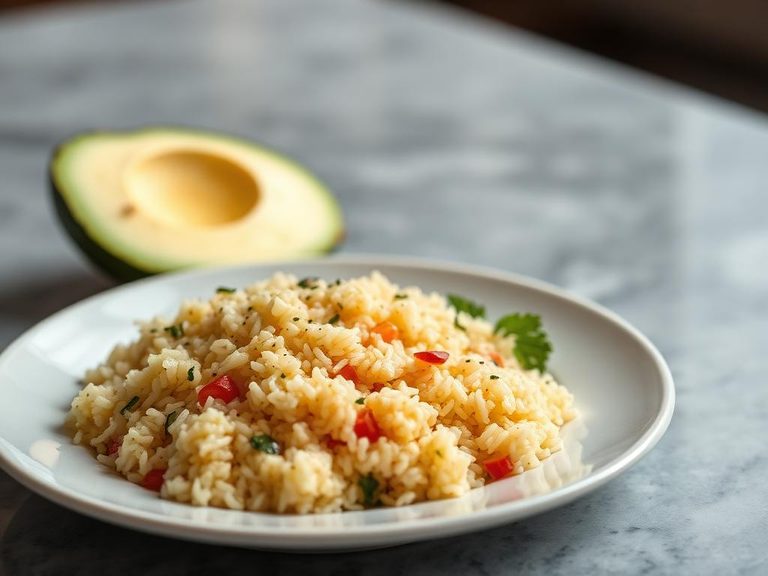
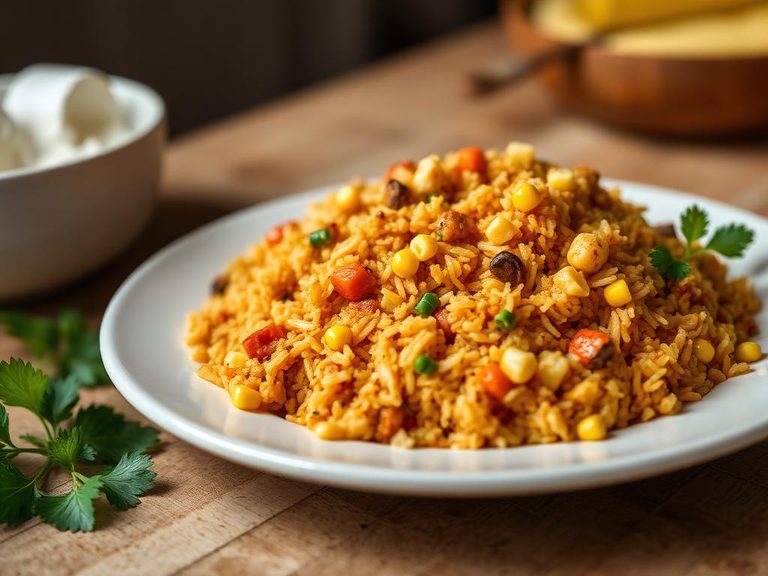
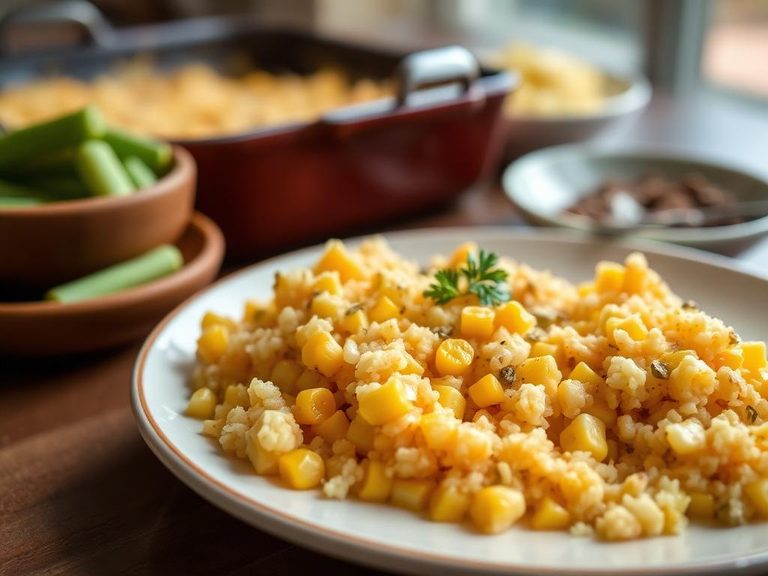
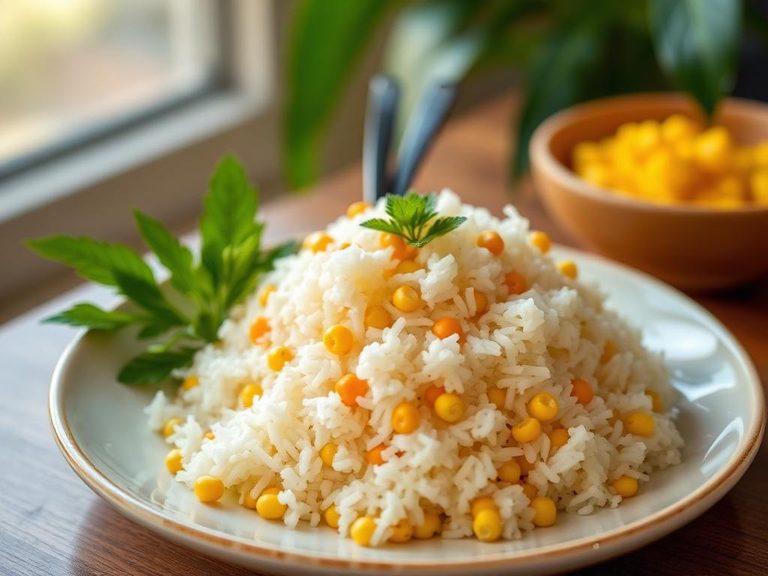
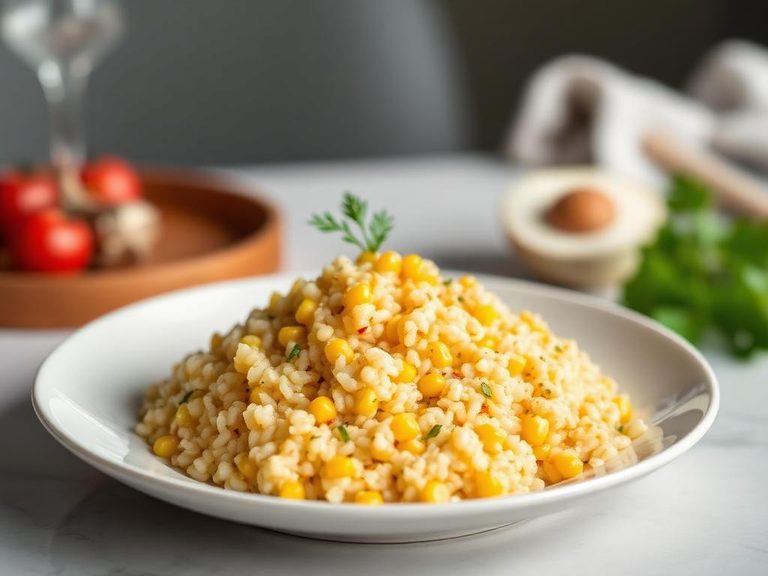
A wholesome, nutty blend of whole-grain brown rice and sweet, golden corn kernels, offering a pleasantly chewy texture with pops of sweetness. It delivers a solid 113 calories per 100g, with a notable 2.69g of protein and 1.8g of fiber, making it a more nutritious alternative to plain white rice. The combination is naturally low in fat and sugar, providing sustained energy without heaviness.
Calorie split: 9% protein · 84% carbs · 7% fat
↓ Full nutrition💚 Why it's loved
People love this combination for its simple, comforting flavor profile—the earthy, nutty taste of brown rice perfectly complements the bright, sweet pop of corn. It's a beloved staple in many cultures, often served as a hearty side dish or a base for stews, cherished for its satisfying texture and ability to absorb savory sauces.
⚠️ Watch-outs & how to enjoy it better
The main downside is the potential for blood sugar spikes due to the carbohydrate content, especially for those managing diabetes or insulin resistance. To counteract this, pair it with a source of protein (like beans or chicken) or healthy fat (like avocado or olive oil) to slow digestion, and practice portion control by sticking to a 1-cup serving.
Key benefits
- High in fiber for digestive health and satiety
- Good source of plant-based protein for muscle maintenance
- Low in fat, making it heart-healthy
- Complex carbohydrates for sustained energy release
- Naturally gluten-free and versatile
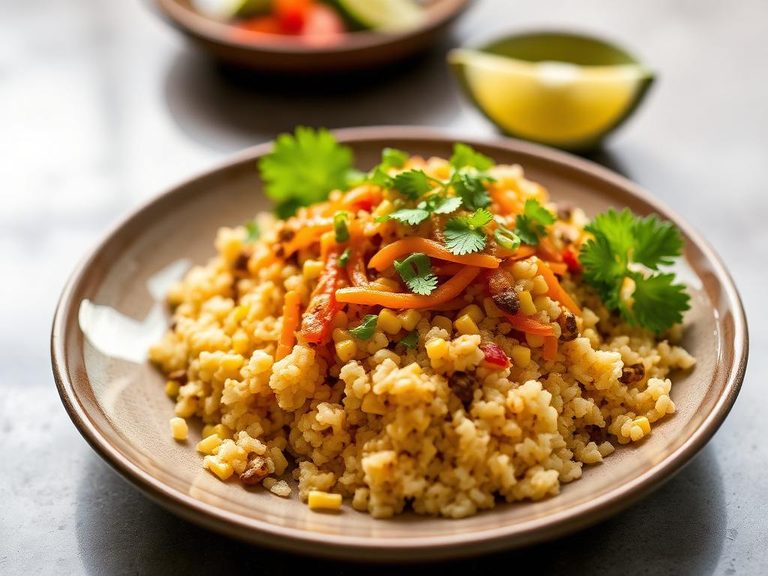
🍽️ Popular dishes
🌍 Where it's eaten
💡 Did you know?
Brown rice and corn are both ancient grains that were domesticated in the Americas thousands of years ago, and their combination in dishes like Arroz con Maíz dates back to pre-Columbian times, making this pairing a true culinary heirloom.
Full nutrition (USDA data · scales with serving)
| Water | 71.5 g |
| Energy | 113 kcal |
| Protein | 2.7 g |
| Total lipid (fat) | 0.90 g |
| Carbohydrate, by difference | 24.1 g |
| Fiber, total dietary | 1.8 g |
| Total Sugars | 0.86 g |
| Calcium, Ca | 3.0 mg |
| Iron, Fe | 0.54 mg |
| Magnesium, Mg | 36.0 mg |
| Phosphorus, P | 97.0 mg |
| Potassium, K | 118 mg |
| Sodium, Na | 158 mg |
| Zinc, Zn | 0.69 mg |
| Copper, Cu | 0.09 mg |
| Selenium, Se | 4.7 ug |
| Vitamin C, total ascorbic acid | 0.80 mg |
| Thiamin | 0.14 mg |
| Riboflavin | 0.07 mg |
| Niacin | 2.3 mg |
| Vitamin B-6 | 0.12 mg |
| Folate, total | 15.0 ug |
| Folic acid | 0.00 ug |
| Folate, food | 15.0 ug |
| Folate, DFE | 15.0 ug |
| Choline, total | 12.0 mg |
| Vitamin B-12 | 0.00 ug |
| Vitamin B-12, added | 0.00 ug |
| Vitamin A, RAE | 2.0 ug |
| Retinol | 0.00 ug |
| Carotene, beta | 11.0 ug |
| Carotene, alpha | 4.0 ug |
| Cryptoxanthin, beta | 27.0 ug |
| Lycopene | 0.00 ug |
| Lutein + zeaxanthin | 150 ug |
| Vitamin E (alpha-tocopherol) | 0.15 mg |
| Vitamin E, added | 0.00 mg |
| Vitamin D (D2 + D3) | 0.00 ug |
| Vitamin K (phylloquinone) | 0.20 ug |
| Alcohol, ethyl | 0.00 g |
| Caffeine | 0.00 mg |
| Theobromine | 0.00 mg |
Fat & fatty acid profile (per 100g)
| Fatty acids, total saturated | 0.23 g |
| SFA 4:0 | 0.00 g |
| SFA 6:0 | 0.00 g |
| SFA 8:0 | 0.00 g |
| SFA 10:0 | 0.01 g |
| SFA 12:0 | 0.00 g |
| SFA 14:0 | 0.01 g |
| SFA 16:0 | 0.17 g |
| SFA 18:0 | 0.02 g |
| Fatty acids, total monounsaturated | 0.33 g |
| MUFA 16:1 | 0.00 g |
| MUFA 18:1 | 0.33 g |
| MUFA 20:1 | 0.00 g |
| MUFA 22:1 | 0.00 g |
| Fatty acids, total polyunsaturated | 0.35 g |
| PUFA 18:2 | 0.34 g |
| PUFA 18:3 | 0.01 g |
| PUFA 18:4 | 0.00 g |
| PUFA 20:4 | 0.00 g |
| PUFA 20:5 n-3 (EPA) | 0.00 g |
| PUFA 22:5 n-3 (DPA) | 0.00 g |
| PUFA 22:6 n-3 (DHA) | 0.00 g |
| Cholesterol | 0.00 mg |
Amino acid profile (per 100g)
Estimated from Snacks, rice cakes, brown rice, sesame seed — USDA does not publish this profile for Rice.
| Tryptophan | 0.10 g |
| Threonine | 0.28 g |
| Isoleucine | 0.32 g |
| Leucine | 0.63 g |
| Lysine | 0.29 g |
| Methionine | 0.17 g |
| Cystine | 0.09 g |
| Phenylalanine | 0.39 g |
| Tyrosine | 0.29 g |
| Valine | 0.44 g |
| Arginine | 0.59 g |
| Histidine | 0.19 g |
| Alanine | 0.44 g |
| Aspartic acid | 0.71 g |
| Glutamic acid | 1.6 g |
| Glycine | 0.38 g |
| Proline | 0.35 g |
| Serine | 0.39 g |
FAQ
Is brown rice with corn gluten-free?
Yes, both brown rice and corn are naturally gluten-free, making this dish safe for those with celiac disease or gluten sensitivity.
How does brown rice compare nutritionally to white rice?
Brown rice retains its bran and germ layers, providing more fiber, protein, and nutrients like magnesium and B vitamins compared to refined white rice, which has been stripped of these layers.
Can I add this to a meal prep plan?
Absolutely! It stores well in the refrigerator for up to 4 days and can be reheated easily, making it a convenient base for quick lunches or dinners.
Nutrient density (calculated · NRF9.3)
Nutrient Rich Foods index: beneficial nutrients (protein, fiber, vitamins, minerals) minus saturated fat, added sugar & sodium, per 100 kcal.
NRF9.3 index — Fulgoni, Keast & Drewnowski, 2009. Computed from USDA nutrients.
Weight-loss friendliness (composite index)
Energy density 1.13 kcal/g · 10% calories from protein · 1.8 g fiber · 0.9 g sugar per 100 g.
Composite of energy density (Rolls et al., 1999), protein & fiber satiety, minus sugar. A calculated heuristic — ranks satiety-per-calorie, not a clinical measure.
Dietary load (calculated from USDA values)
Potential renal acid load. Positive = acid-forming, negative = alkaline-forming.
Sodium-to-potassium ratio: 1.34 (lower is better — aim for ≤ 1)
Sodium:potassium per WHO potassium guidance. Computed from USDA nutrients.