

Radicchio, raw
Whole food · Vegetables and Vegetable Products

Photo: Wikipedia
Radicchio is a vibrant, crimson-red chicory with stark white veins, prized for its distinctively bitter and peppery flavor. Its crisp, slightly rubbery texture holds up well to grilling or raw preparations. Nutritionally, it's a low-calorie powerhouse, offering notable amounts of vitamin K and antioxidants like anthocyanins, which give it its striking color.
Calorie split: 22% protein · 69% carbs · 9% fat
↓ Full nutrition💚 Why it's loved
People love radicchio for its bold, sophisticated bitterness that adds complexity to salads and cooked dishes. It's a staple in Italian cuisine, valued for its ability to cut through rich flavors and its beautiful color contrast on the plate.
⚠️ Watch-outs & how to enjoy it better
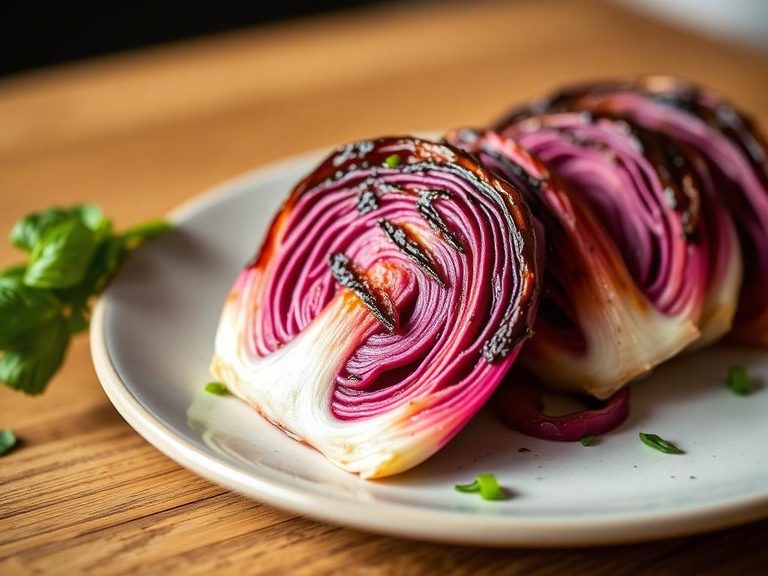
Its intense bitterness can be off-putting to some palates, especially those sensitive to bitter compounds. To mellow it, try grilling or roasting, which caramelizes the sugars and reduces bitterness; pairing it with a creamy dressing, cheese, or a sweet element like fruit can also balance the flavor. Those with IBS or sensitive digestion may want to limit portions due to its inulin content.
Key benefits
- Very low in calories, supporting weight management.
- Rich in vitamin K, essential for bone health and blood clotting.
- Contains antioxidants like anthocyanins and flavonoids.
- Good source of fiber, aiding digestion.
- Provides minerals like manganese and copper.
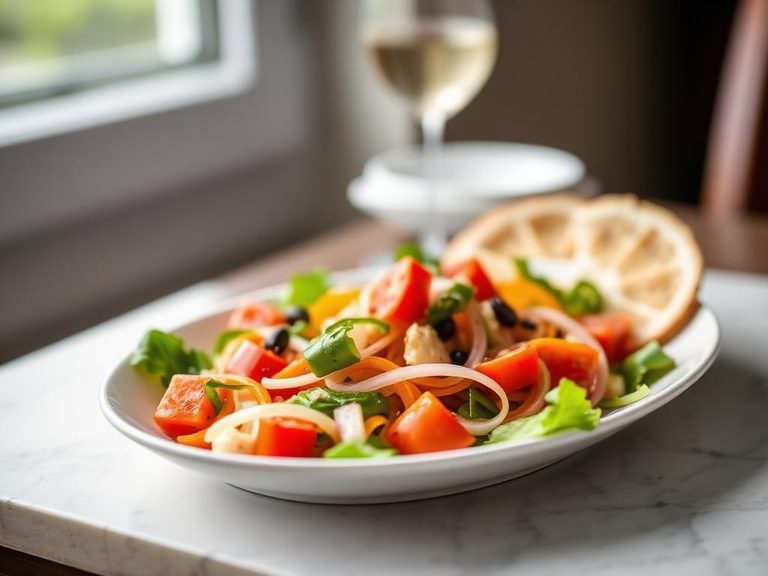
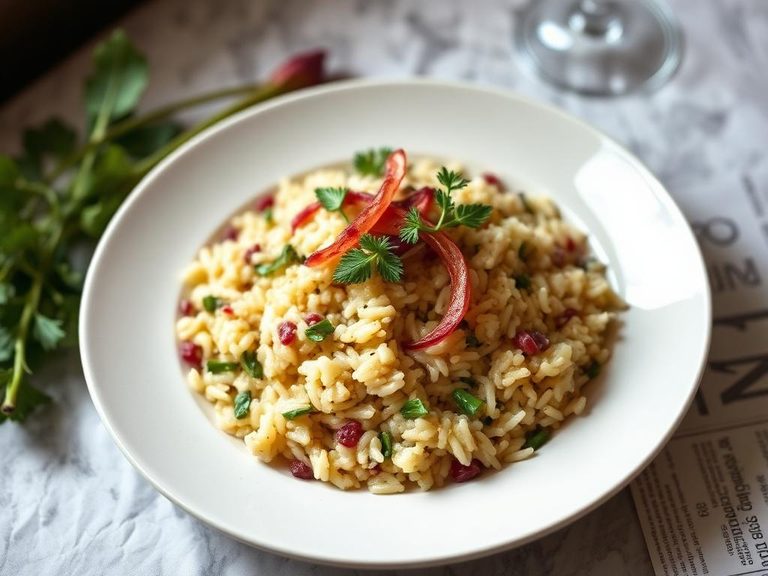
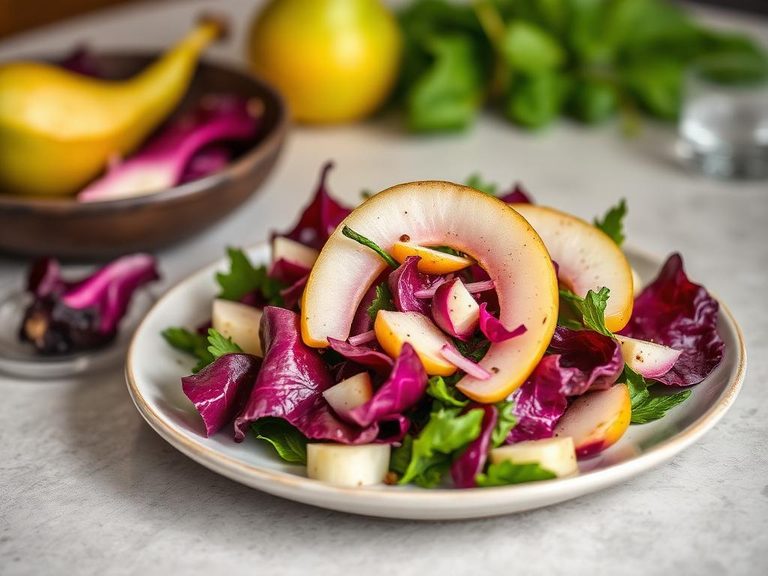
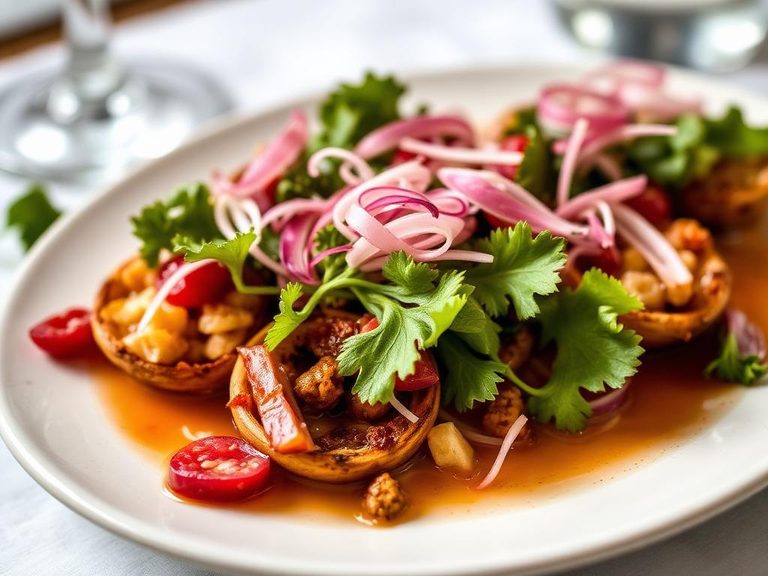
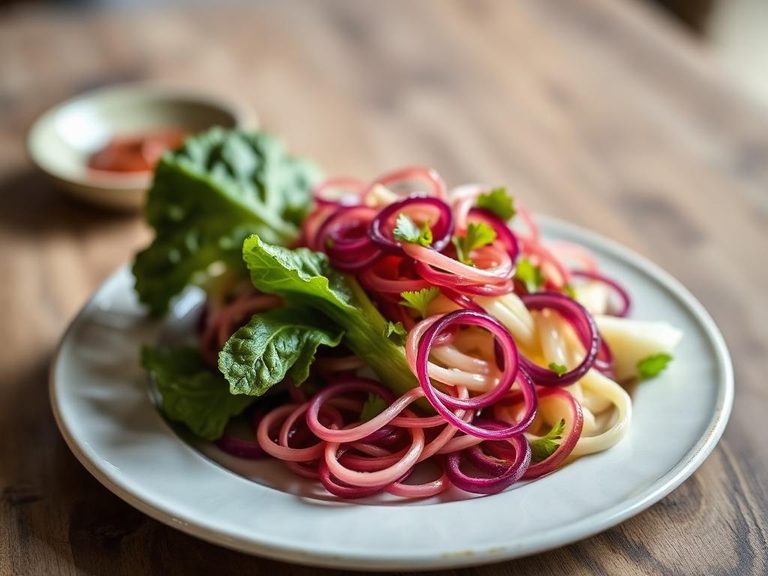
🍽️ Popular dishes
🌍 Where it's eaten
💡 Did you know?
Radicchio's bitterness comes from a compound called lactucopicrin, which is also found in lettuce and dandelion greens and has been studied for potential anti-inflammatory properties.
Full nutrition (USDA data · scales with serving)
| Water | 93.1 g |
| Energy | 23.0 kcal |
| Energy | 96.0 kj |
| Protein | 1.4 g |
| Total lipid (fat) | 0.25 g |
| Ash | 0.70 g |
| Carbohydrate, by difference | 4.5 g |
| Fiber, total dietary | 0.90 g |
| Total Sugars | 0.60 g |
| Calcium, Ca | 19.0 mg |
| Iron, Fe | 0.57 mg |
| Magnesium, Mg | 13.0 mg |
| Phosphorus, P | 40.0 mg |
| Potassium, K | 302 mg |
| Sodium, Na | 22.0 mg |
| Zinc, Zn | 0.62 mg |
| Copper, Cu | 0.34 mg |
| Manganese, Mn | 0.14 mg |
| Selenium, Se | 0.90 ug |
| Vitamin C, total ascorbic acid | 8.0 mg |
| Thiamin | 0.02 mg |
| Riboflavin | 0.03 mg |
| Niacin | 0.26 mg |
| Pantothenic acid | 0.27 mg |
| Vitamin B-6 | 0.06 mg |
| Folate, total | 60.0 ug |
| Folic acid | 0.00 ug |
| Folate, food | 60.0 ug |
| Folate, DFE | 60.0 ug |
| Choline, total | 10.9 mg |
| Vitamin B-12 | 0.00 ug |
| Vitamin B-12, added | 0.00 ug |
| Vitamin A, RAE | 1.0 ug |
| Retinol | 0.00 ug |
| Carotene, beta | 16.0 ug |
| Carotene, alpha | 0.00 ug |
| Cryptoxanthin, beta | 0.00 ug |
| Vitamin A, IU | 27.0 iu |
| Lycopene | 0.00 ug |
| Lutein + zeaxanthin | 8832 ug |
| Vitamin E (alpha-tocopherol) | 2.3 mg |
| Vitamin E, added | 0.00 mg |
| Vitamin D (D2 + D3), International Units | 0.00 iu |
| Vitamin D (D2 + D3) | 0.00 ug |
| Vitamin K (phylloquinone) | 255 ug |
| Alcohol, ethyl | 0.00 g |
| Caffeine | 0.00 mg |
| Theobromine | 0.00 mg |
Fat & fatty acid profile (per 100g)
| Fatty acids, total saturated | 0.06 g |
| SFA 4:0 | 0.00 g |
| SFA 6:0 | 0.00 g |
| SFA 8:0 | 0.00 g |
| SFA 10:0 | 0.00 g |
| SFA 12:0 | 0.00 g |
| SFA 14:0 | 0.00 g |
| SFA 16:0 | 0.05 g |
| SFA 18:0 | 0.00 g |
| Fatty acids, total monounsaturated | 0.01 g |
| MUFA 16:1 | 0.00 g |
| MUFA 18:1 | 0.01 g |
| MUFA 20:1 | 0.00 g |
| MUFA 22:1 | 0.00 g |
| Fatty acids, total polyunsaturated | 0.11 g |
| PUFA 18:2 | 0.09 g |
| PUFA 18:3 | 0.02 g |
| PUFA 18:4 | 0.00 g |
| PUFA 20:4 | 0.00 g |
| PUFA 20:5 n-3 (EPA) | 0.00 g |
| PUFA 22:5 n-3 (DPA) | 0.00 g |
| PUFA 22:6 n-3 (DHA) | 0.00 g |
| Fatty acids, total trans | 0.00 g |
| Cholesterol | 0.00 mg |
Amino acid profile (per 100g)
| Tryptophan | 0.03 g |
| Threonine | 0.04 g |
| Isoleucine | 0.09 g |
| Leucine | 0.06 g |
| Lysine | 0.06 g |
| Methionine | 0.01 g |
| Phenylalanine | 0.03 g |
| Valine | 0.07 g |
| Arginine | 0.10 g |
| Histidine | 0.02 g |
FAQ
Is raw radicchio healthy?
Yes, raw radicchio is very healthy, low in calories, and rich in vitamins K, antioxidants, and fiber. Its bitterness is a sign of beneficial plant compounds.
How do I reduce radicchio's bitterness?
You can reduce bitterness by grilling, roasting, or sautéing it, which caramelizes its natural sugars. Soaking it in cold water for 30 minutes also helps. Pairing with sweet or creamy ingredients like fruit, cheese, or a vinaigrette balances the flavor.
What does radicchio taste like?
Radicchio has a distinctive bitter and peppery flavor, with a crisp, slightly chewy texture. When cooked, it becomes milder and sweeter.
Nutrient density (calculated · NRF9.3)
Nutrient Rich Foods index: beneficial nutrients (protein, fiber, vitamins, minerals) minus saturated fat, added sugar & sodium, per 100 kcal.
NRF9.3 index — Fulgoni, Keast & Drewnowski, 2009. Computed from USDA nutrients.
Weight-loss friendliness (composite index)
Energy density 0.23 kcal/g · 25% calories from protein · 0.9 g fiber · 0.6 g sugar per 100 g.
Composite of energy density (Rolls et al., 1999), protein & fiber satiety, minus sugar. A calculated heuristic — ranks satiety-per-calorie, not a clinical measure.
Dietary load (calculated from USDA values)
Potential renal acid load. Positive = acid-forming, negative = alkaline-forming.
Sodium-to-potassium ratio: 0.07 (lower is better — aim for ≤ 1)
Sodium:potassium per WHO potassium guidance. Computed from USDA nutrients.