

Quail egg, canned
Common food

Photo: Wikipedia
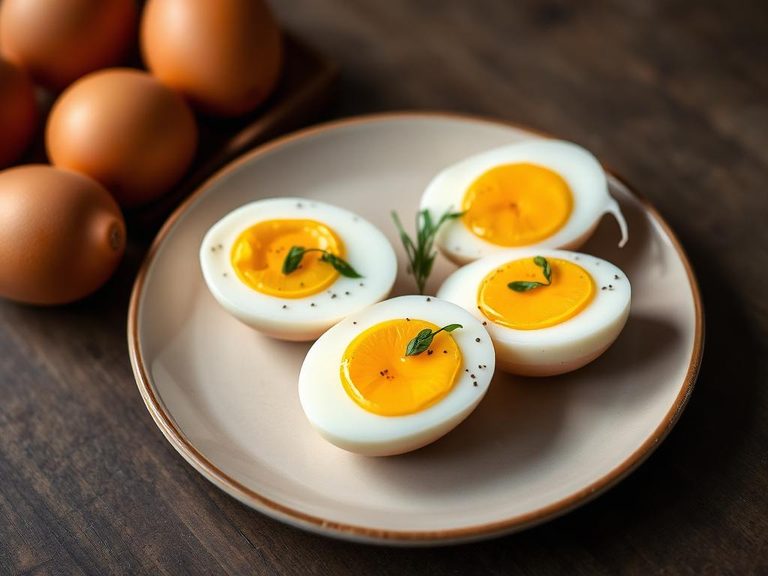
Canned quail eggs are pre-cooked, shelf-stable delicacies, typically preserved in a light brine or their own broth. They offer a distinct, rich yolk flavor and a tender, slightly springy texture that's more concentrated than chicken eggs. Nutritionally, they are a powerhouse of protein and healthy fats with virtually no carbohydrates.
Calorie split: 34% protein · 1% carbs · 65% fat
↓ Full nutrition💚 Why it's loved
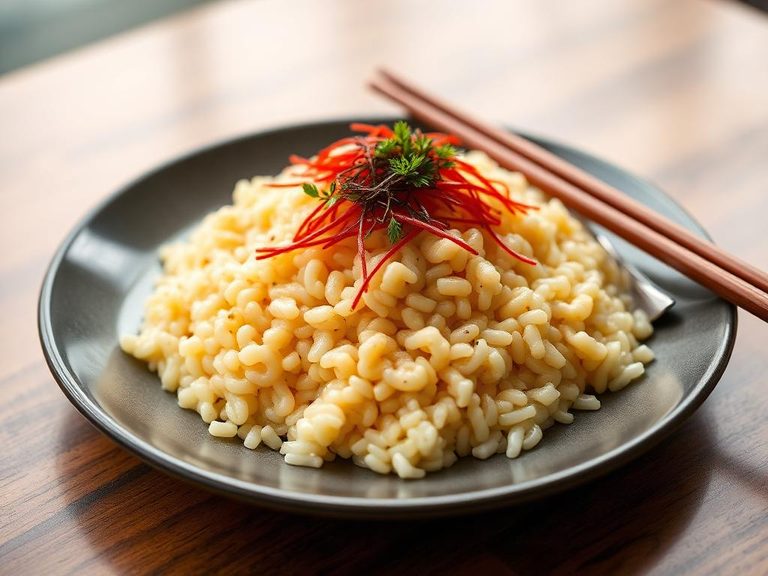
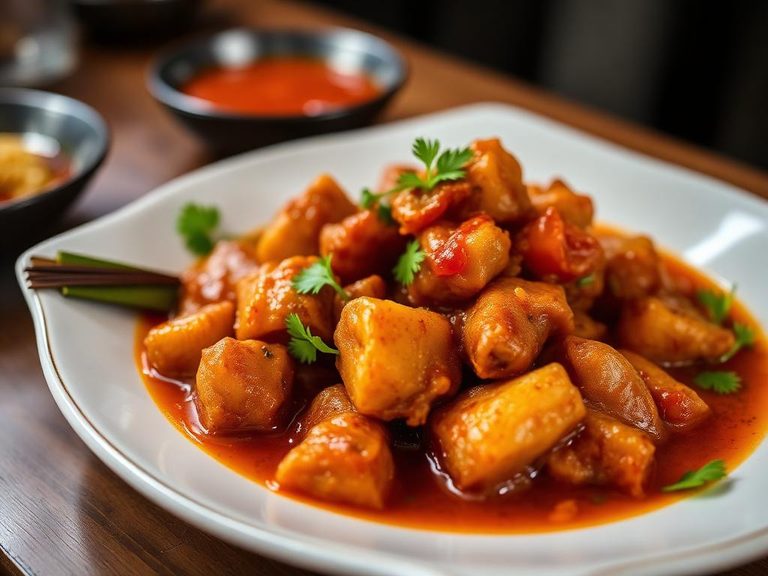
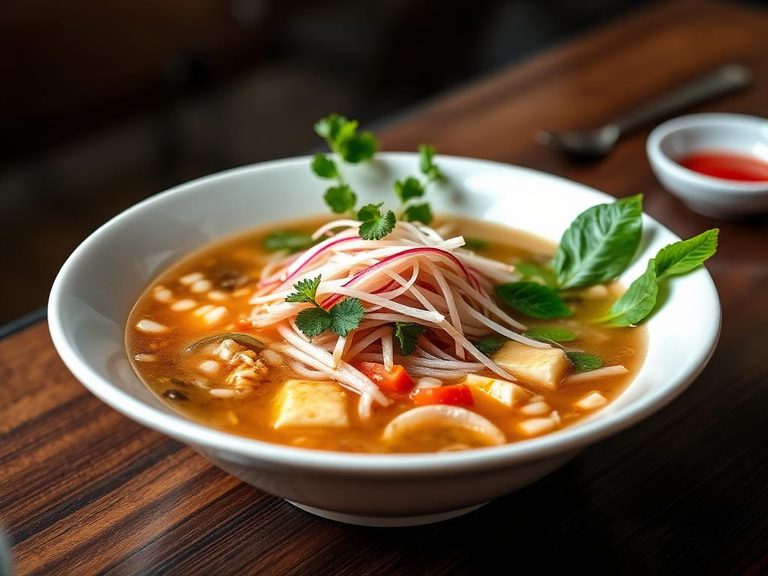
People love them for their unique, savory flavor and the satisfying pop of their small, tender whites. Their versatility makes them a prized ingredient in everything from elegant appetizers to hearty stews.
⚠️ Watch-outs & how to enjoy it better
The primary concern is their high cholesterol content, so those managing blood lipids should practice portion control. They are also a common allergen (egg), and the canning brine can be high in sodium. To counteract sodium, rinse them briefly under water before use and pair them with potassium-rich vegetables.
Key benefits
- Excellent source of complete, high-quality protein.
- Rich in healthy fats, including omega-3s.
- Very low in carbohydrates and sugar.
- Contains essential vitamins like B12 and riboflavin.
- Provides minerals such as selenium and phosphorus.
🍽️ Popular dishes
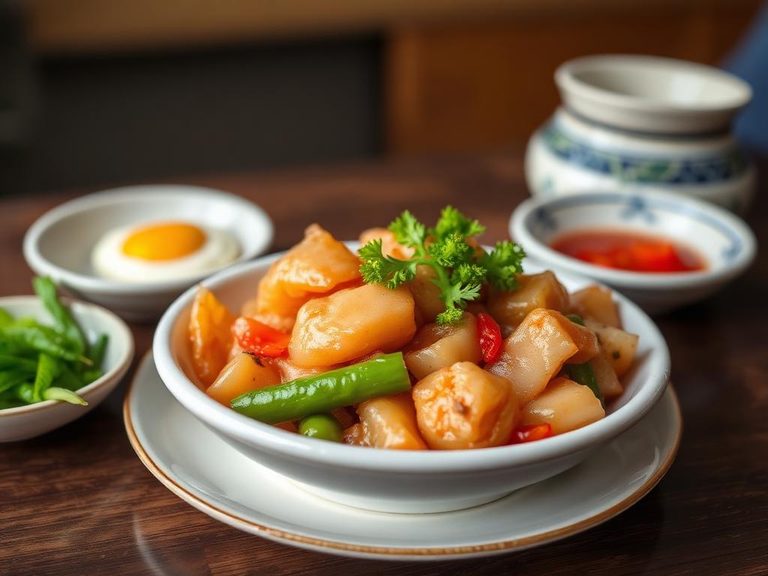

🌍 Where it's eaten
💡 Did you know?
A single quail egg contains about 5% of its weight in yolk, compared to roughly 31% for a chicken egg, making them exceptionally rich and creamy for their size.
Full nutrition (USDA data · scales with serving)
| Water | 74.1 g |
| Energy | 158 kcal |
| Protein | 13.0 g |
| Total lipid (fat) | 11.1 g |
| Carbohydrate, by difference | 0.41 g |
| Fiber, total dietary | 0.00 g |
| Total Sugars | 0.40 g |
| Calcium, Ca | 64.0 mg |
| Iron, Fe | 3.6 mg |
| Magnesium, Mg | 13.0 mg |
| Phosphorus, P | 225 mg |
| Potassium, K | 132 mg |
| Sodium, Na | 256 mg |
| Zinc, Zn | 1.5 mg |
| Copper, Cu | 0.06 mg |
| Selenium, Se | 31.9 ug |
| Vitamin C, total ascorbic acid | 0.00 mg |
| Thiamin | 0.10 mg |
| Riboflavin | 0.75 mg |
| Niacin | 0.14 mg |
| Vitamin B-6 | 0.14 mg |
| Folate, total | 49.0 ug |
| Folic acid | 0.00 ug |
| Folate, food | 49.0 ug |
| Folate, DFE | 49.0 ug |
| Choline, total | 210 mg |
| Vitamin B-12 | 1.3 ug |
| Vitamin B-12, added | 0.00 ug |
| Vitamin A, RAE | 156 ug |
| Retinol | 155 ug |
| Carotene, beta | 11.0 ug |
| Carotene, alpha | 0.00 ug |
| Cryptoxanthin, beta | 10.0 ug |
| Lycopene | 0.00 ug |
| Lutein + zeaxanthin | 368 ug |
| Vitamin E (alpha-tocopherol) | 1.1 mg |
| Vitamin E, added | 0.00 mg |
| Vitamin D (D2 + D3) | 1.4 ug |
| Vitamin K (phylloquinone) | 0.30 ug |
| Alcohol, ethyl | 0.00 g |
| Caffeine | 0.00 mg |
| Theobromine | 0.00 mg |
Fat & fatty acid profile (per 100g)
| Fatty acids, total saturated | 3.5 g |
| SFA 4:0 | 0.00 g |
| SFA 6:0 | 0.00 g |
| SFA 8:0 | 0.00 g |
| SFA 10:0 | 0.00 g |
| SFA 12:0 | 0.00 g |
| SFA 14:0 | 0.05 g |
| SFA 16:0 | 2.7 g |
| SFA 18:0 | 0.83 g |
| Fatty acids, total monounsaturated | 4.3 g |
| MUFA 16:1 | 0.47 g |
| MUFA 18:1 | 3.8 g |
| MUFA 20:1 | 0.00 g |
| MUFA 22:1 | 0.00 g |
| Fatty acids, total polyunsaturated | 1.3 g |
| PUFA 18:2 | 0.94 g |
| PUFA 18:3 | 0.04 g |
| PUFA 18:4 | 0.00 g |
| PUFA 20:4 | 0.12 g |
| PUFA 20:5 n-3 (EPA) | 0.00 g |
| PUFA 22:5 n-3 (DPA) | 0.00 g |
| PUFA 22:6 n-3 (DHA) | 0.00 g |
| Cholesterol | 841 mg |
Amino acid profile (per 100g)
Estimated from Egg, quail, whole, fresh, raw — USDA does not publish this profile for Quail egg.
| Tryptophan | 0.21 g |
| Threonine | 0.64 g |
| Isoleucine | 0.82 g |
| Leucine | 1.1 g |
| Lysine | 0.88 g |
| Methionine | 0.42 g |
| Cystine | 0.31 g |
| Phenylalanine | 0.74 g |
| Tyrosine | 0.54 g |
| Valine | 0.94 g |
| Arginine | 0.83 g |
| Histidine | 0.32 g |
| Alanine | 0.76 g |
| Aspartic acid | 1.3 g |
| Glutamic acid | 1.7 g |
| Glycine | 0.43 g |
| Proline | 0.52 g |
| Serine | 0.99 g |
FAQ
Are canned quail eggs already cooked?
Yes, they are fully cooked during the canning process and are safe to eat straight from the can, though rinsing is recommended.
How do they compare nutritionally to chicken eggs?
Per gram, quail eggs have more fat and protein but similar cholesterol. They are also richer in certain vitamins like B12 and riboflavin.
What's the best way to store opened cans?
Transfer any unused eggs and their liquid to a sealed container and refrigerate. Use within 2-3 days for best quality.
Nutrient density (calculated · NRF9.3)
Nutrient Rich Foods index: beneficial nutrients (protein, fiber, vitamins, minerals) minus saturated fat, added sugar & sodium, per 100 kcal.
NRF9.3 index — Fulgoni, Keast & Drewnowski, 2009. Computed from USDA nutrients.
Weight-loss friendliness (composite index)
Energy density 1.58 kcal/g · 33% calories from protein · 0.0 g fiber · 0.4 g sugar per 100 g.
Composite of energy density (Rolls et al., 1999), protein & fiber satiety, minus sugar. A calculated heuristic — ranks satiety-per-calorie, not a clinical measure.
Dietary load (calculated from USDA values)
Potential renal acid load. Positive = acid-forming, negative = alkaline-forming.
Sodium-to-potassium ratio: 1.94 (lower is better — aim for ≤ 1)
Sodium:potassium per WHO potassium guidance. Computed from USDA nutrients.