

Pretzels, hard, NFS
Common food
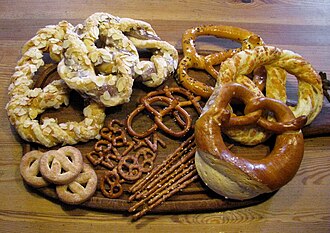
Photo: Wikipedia
Hard pretzels are dense, crunchy, and deeply browned baked snacks with a distinctive salty, malty flavor and a satisfying snap. Their low fat content and high carbohydrate density make them a classic, energy-dense pantry staple, often enjoyed plain or with dips.
Calorie split: 10% protein · 83% carbs · 7% fat
↓ Full nutrition💚 Why it's loved
People love hard pretzels for their satisfying, audible crunch and the perfect balance of salt and toasted grain flavor. Their versatility as a standalone snack, a soup garnish, or a base for spreads makes them a timeless comfort food.
⚠️ Watch-outs & how to enjoy it better
The high carbohydrate load can cause rapid blood-sugar spikes, especially when eaten alone. They are also typically high in sodium and contain gluten (wheat), a common allergen. To counteract, pair them with protein or fat like cheese, hummus, or nut butter, and practice portion control by limiting yourself to a single handful.
Key benefits
- Low in fat (under 3g per 100g)
- Good source of quick energy from complex carbs
- Provides a small amount of plant-based protein
- Simple, shelf-stable snack with minimal ingredients
🍽️ Popular dishes
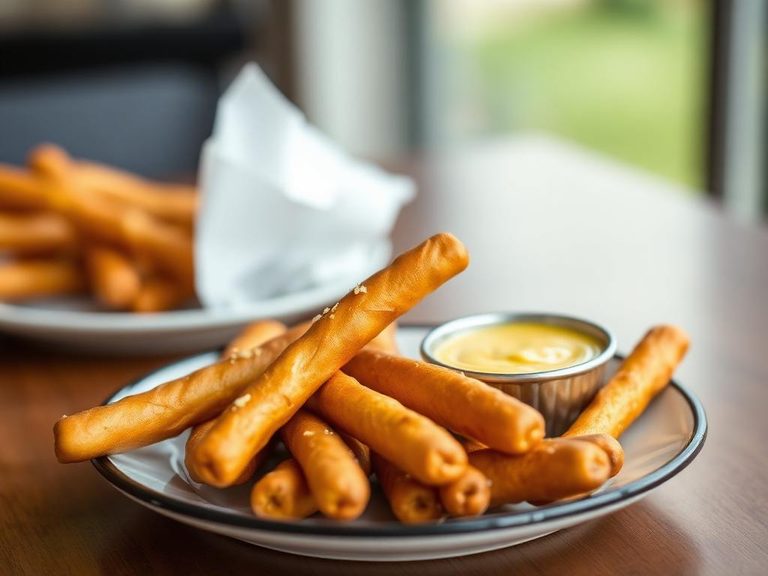

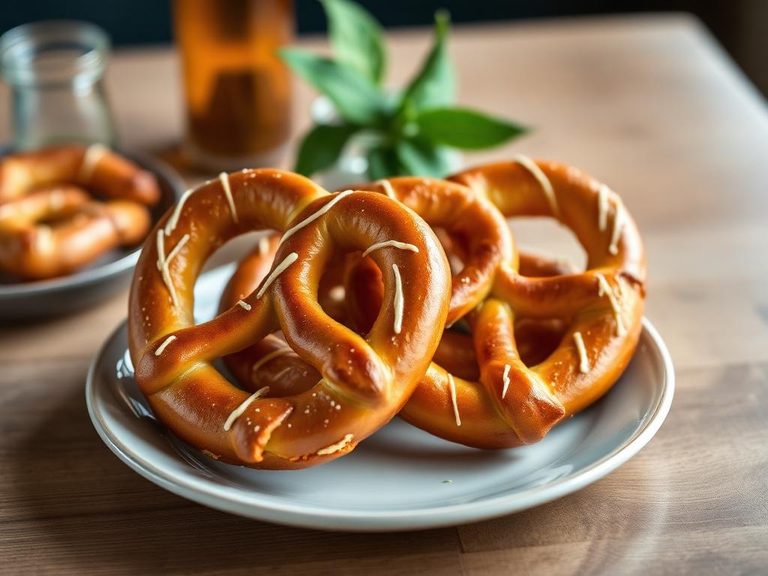

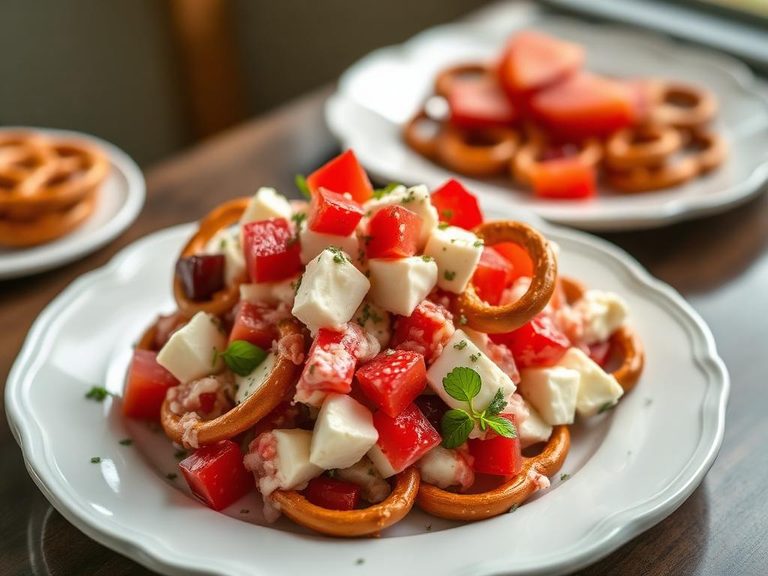
🌍 Where it's eaten
💡 Did you know?
The traditional pretzel shape is said to represent a child's arms folded in prayer, and the word 'pretzel' may derive from the Latin 'bracellae' or 'pretiola,' meaning 'little reward.'
Full nutrition (USDA data · scales with serving)
| Water | 3.1 g |
| Energy | 384 kcal |
| Protein | 10.0 g |
| Total lipid (fat) | 2.9 g |
| Carbohydrate, by difference | 80.4 g |
| Fiber, total dietary | 3.4 g |
| Total Sugars | 2.2 g |
| Calcium, Ca | 27.0 mg |
| Iron, Fe | 4.6 mg |
| Magnesium, Mg | 29.0 mg |
| Phosphorus, P | 128 mg |
| Potassium, K | 223 mg |
| Sodium, Na | 1120 mg |
| Zinc, Zn | 1.0 mg |
| Copper, Cu | 0.16 mg |
| Selenium, Se | 4.4 ug |
| Vitamin C, total ascorbic acid | 2.1 mg |
| Thiamin | 0.42 mg |
| Riboflavin | 0.33 mg |
| Niacin | 5.3 mg |
| Vitamin B-6 | 0.07 mg |
| Folate, total | 171 ug |
| Folic acid | 88.0 ug |
| Folate, food | 83.0 ug |
| Folate, DFE | 233 ug |
| Choline, total | 29.5 mg |
| Vitamin B-12 | 0.00 ug |
| Vitamin B-12, added | 0.00 ug |
| Vitamin A, RAE | 0.00 ug |
| Retinol | 0.00 ug |
| Carotene, beta | 0.00 ug |
| Carotene, alpha | 0.00 ug |
| Cryptoxanthin, beta | 0.00 ug |
| Lycopene | 0.00 ug |
| Lutein + zeaxanthin | 9.0 ug |
| Vitamin E (alpha-tocopherol) | 0.47 mg |
| Vitamin E, added | 0.00 mg |
| Vitamin D (D2 + D3) | 0.00 ug |
| Vitamin K (phylloquinone) | 2.8 ug |
| Alcohol, ethyl | 0.00 g |
| Caffeine | 0.00 mg |
| Theobromine | 0.00 mg |
Fat & fatty acid profile (per 100g)
| Fatty acids, total saturated | 0.39 g |
| SFA 4:0 | 0.00 g |
| SFA 6:0 | 0.00 g |
| SFA 8:0 | 0.00 g |
| SFA 10:0 | 0.00 g |
| SFA 12:0 | 0.00 g |
| SFA 14:0 | 0.00 g |
| SFA 16:0 | 0.32 g |
| SFA 18:0 | 0.05 g |
| Fatty acids, total monounsaturated | 0.73 g |
| MUFA 16:1 | 0.00 g |
| MUFA 18:1 | 0.71 g |
| MUFA 20:1 | 0.02 g |
| MUFA 22:1 | 0.00 g |
| Fatty acids, total polyunsaturated | 1.3 g |
| PUFA 18:2 | 1.2 g |
| PUFA 18:3 | 0.06 g |
| PUFA 18:4 | 0.00 g |
| PUFA 20:4 | 0.00 g |
| PUFA 20:5 n-3 (EPA) | 0.00 g |
| PUFA 22:5 n-3 (DPA) | 0.00 g |
| PUFA 22:6 n-3 (DHA) | 0.00 g |
| Cholesterol | 0.00 mg |
Amino acid profile (per 100g)
Estimated from Snacks, pretzels, hard, confectioner's coating, chocolate-flavor — USDA does not publish this profile for Pretzels.
| Tryptophan | 0.10 g |
| Threonine | 0.25 g |
| Isoleucine | 0.29 g |
| Leucine | 0.53 g |
| Lysine | 0.25 g |
| Methionine | 0.13 g |
| Cystine | 0.15 g |
| Phenylalanine | 0.36 g |
| Tyrosine | 0.23 g |
| Valine | 0.33 g |
| Arginine | 0.31 g |
| Histidine | 0.16 g |
| Alanine | 0.27 g |
| Aspartic acid | 0.42 g |
| Glutamic acid | 2.2 g |
| Glycine | 0.27 g |
| Proline | 0.74 g |
| Serine | 0.36 g |
FAQ
Are hard pretzels a healthy snack?
They are low in fat and provide quick energy, but their high carbohydrate and sodium content means they should be enjoyed in moderation. Pairing with protein or fiber can make them a more balanced snack.
Why are hard pretzels so salty?
The salt crystals on the surface are applied before baking and adhere during the lye or baking soda bath, which also creates their characteristic brown crust and flavor.
What is the difference between hard and soft pretzels?
Hard pretzels are baked longer until completely dry and crunchy, making them shelf-stable. Soft pretzels are underbaked to retain a chewy interior and are best eaten fresh.
Nutrient density (calculated · NRF9.3)
Nutrient Rich Foods index: beneficial nutrients (protein, fiber, vitamins, minerals) minus saturated fat, added sugar & sodium, per 100 kcal.
NRF9.3 index — Fulgoni, Keast & Drewnowski, 2009. Computed from USDA nutrients.
Weight-loss friendliness (composite index)
Energy density 3.84 kcal/g · 10% calories from protein · 3.4 g fiber · 2.2 g sugar per 100 g.
Composite of energy density (Rolls et al., 1999), protein & fiber satiety, minus sugar. A calculated heuristic — ranks satiety-per-calorie, not a clinical measure.
Dietary load (calculated from USDA values)
Potential renal acid load. Positive = acid-forming, negative = alkaline-forming.
Sodium-to-potassium ratio: 5.02 (lower is better — aim for ≤ 1)
Sodium:potassium per WHO potassium guidance. Computed from USDA nutrients.