Bavarian pretzels
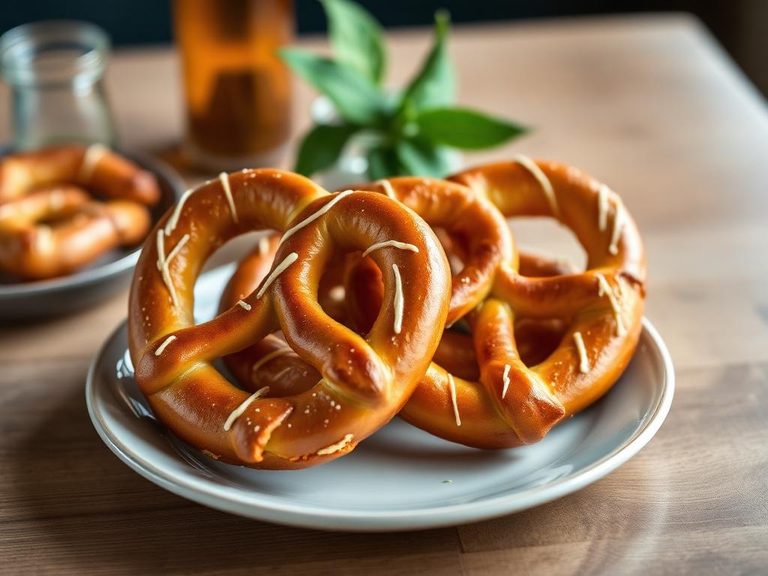
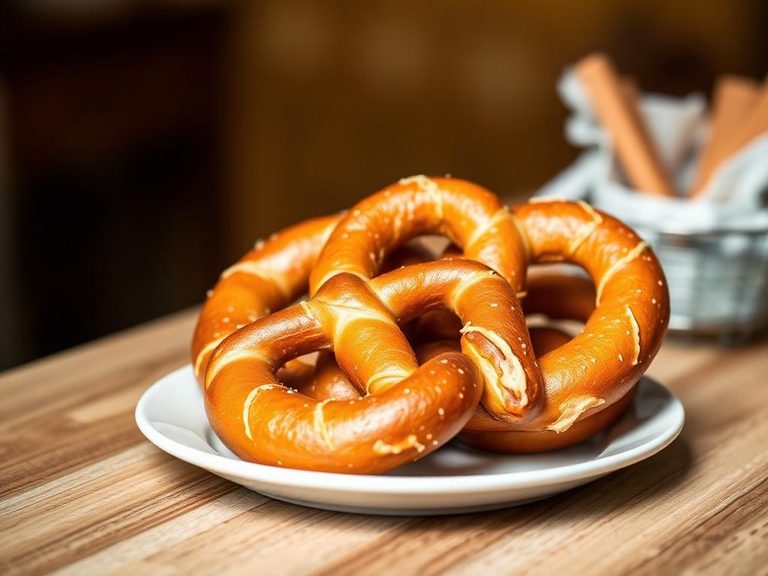
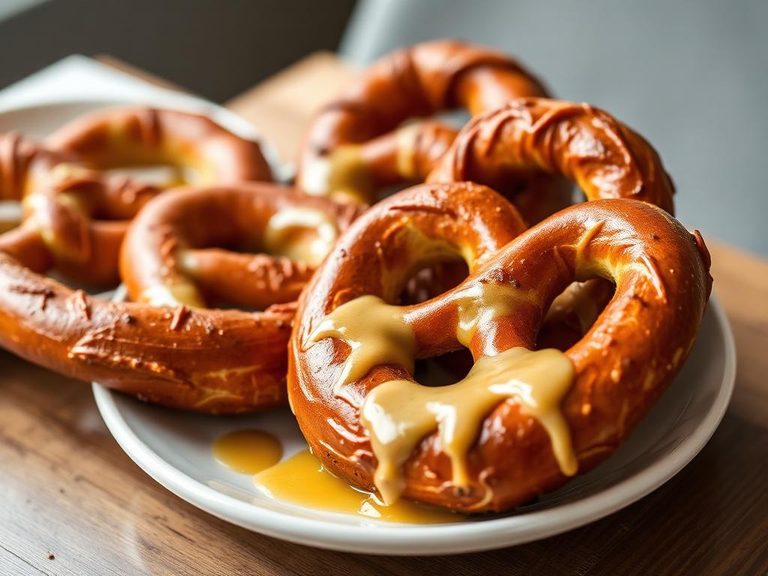
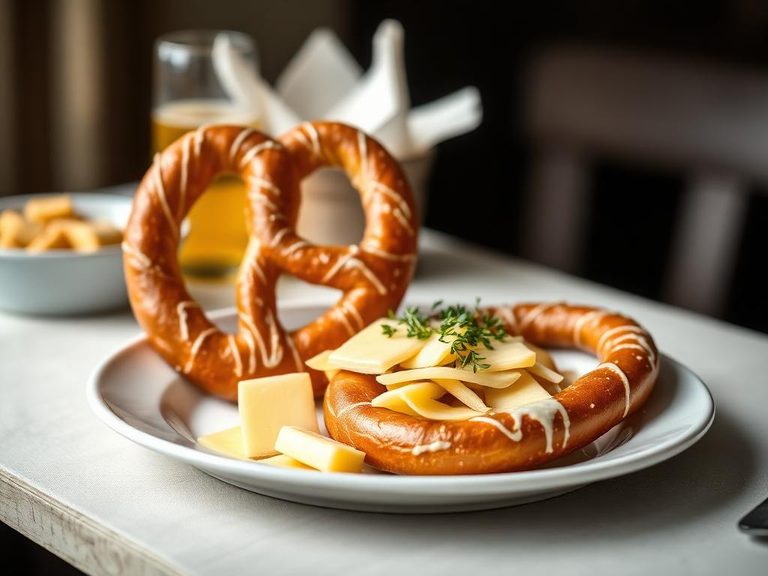
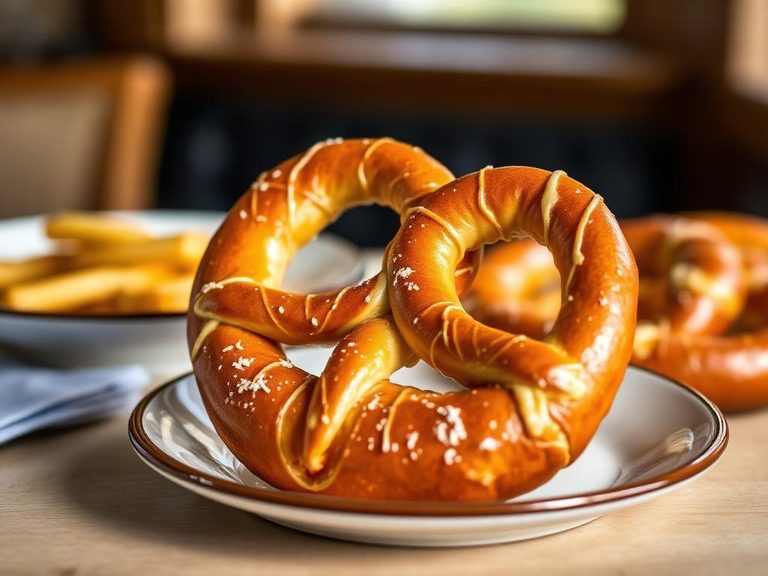
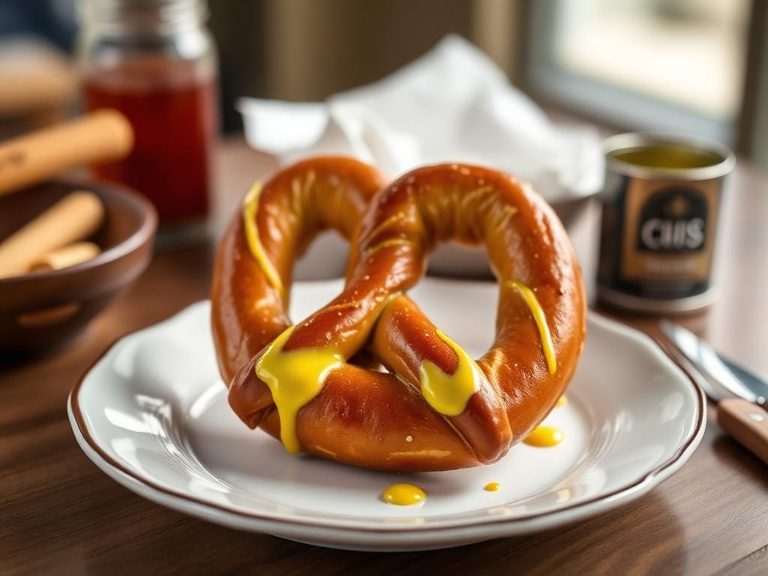
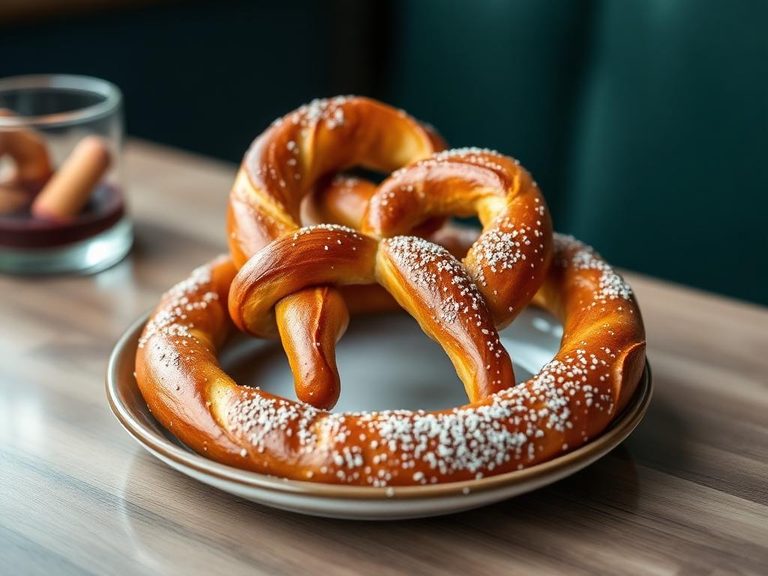
Bavarian pretzels, or Laugenbrezel, are iconic German pastries characterized by their distinctive dark brown, shiny crust and soft, chewy interior. They are made from a simple yeast dough that is briefly dipped in a lye solution before baking, which creates their signature color and flavor. Originating in Bavaria, they are a staple of German bakeries and beer gardens.
🍽️ Nutrition at a glance
A typical large pretzel is high in carbohydrates, providing a quick source of energy, with a moderate amount of protein from the wheat flour and minimal fat. It offers key nutrients like B vitamins and iron, and a standard serving contains roughly 250-350 calories.
Nutrition breakdown
| Calories | 310 kcal |
| Protein | 10 g |
| Carbs | 62 g |
| Fat | 3 g |
| Fiber | 2 g |
| Sugar | 4 g |
| Sodium | 1100 mg |
| Iron | 4.5 mg |
| Thiamin (B1) | 0.5 mg |
| Niacin (B3) | 5.0 mg |
| Folate | 120 mcg |
| Magnesium | 25 mg |
| Phosphorus | 100 mg |
| Selenium | 20 mcg |
| Manganese | 0.6 mg |
Per 1 pretzel (113 g) · estimated, varies by recipe
💡 What's interesting
The unique lye bath is a traditional food-safe alkaline process that triggers the Maillard reaction, giving the pretzel its characteristic color and a subtly sweet, malty flavor that distinguishes it from ordinary bread. Culturally, they are deeply woven into Bavarian identity, often enjoyed as a hearty snack with butter or as an accompaniment to beer.