Bavarian soft pretzels
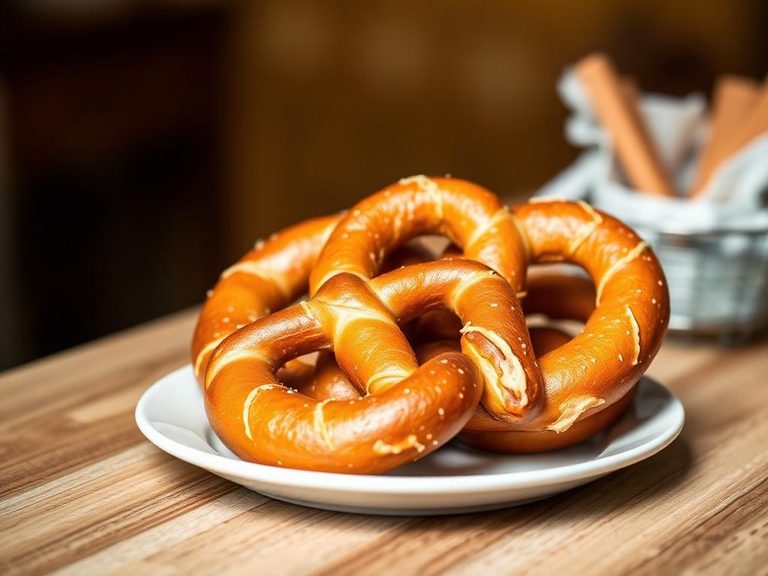
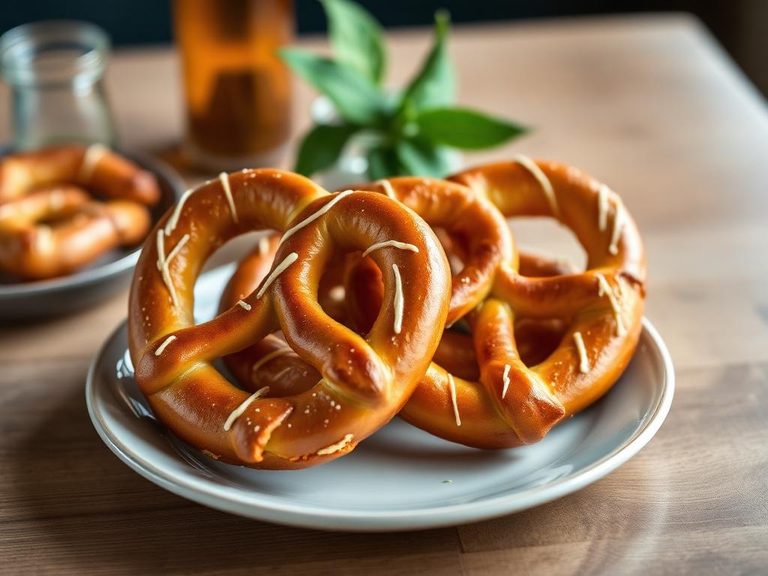
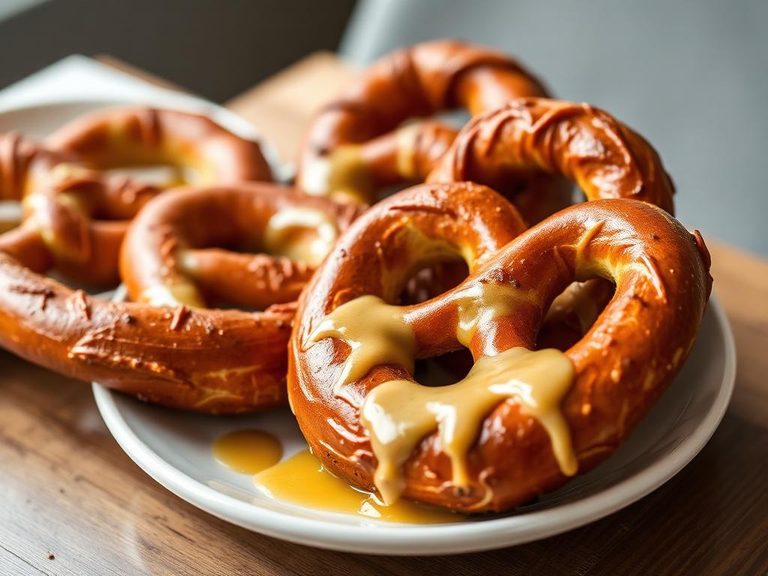
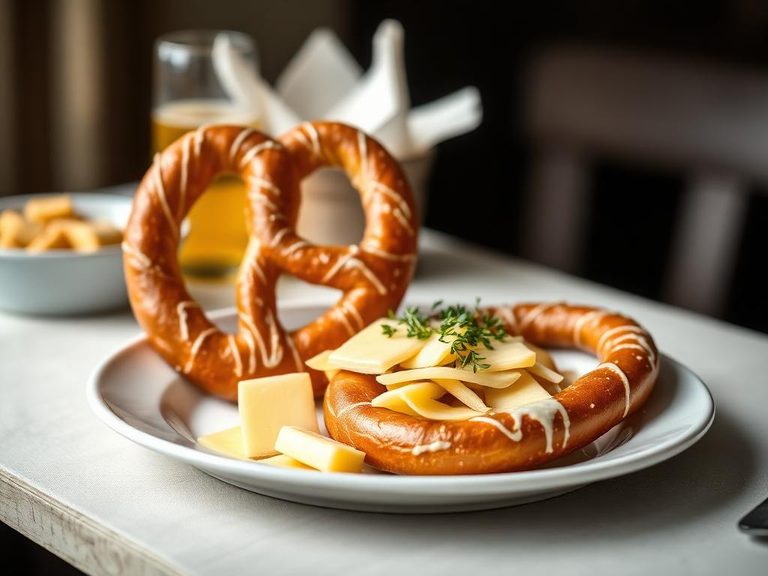
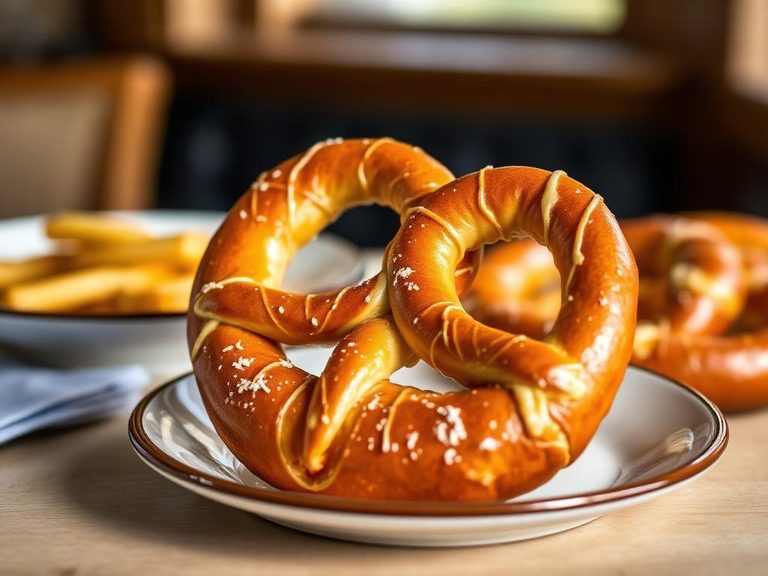
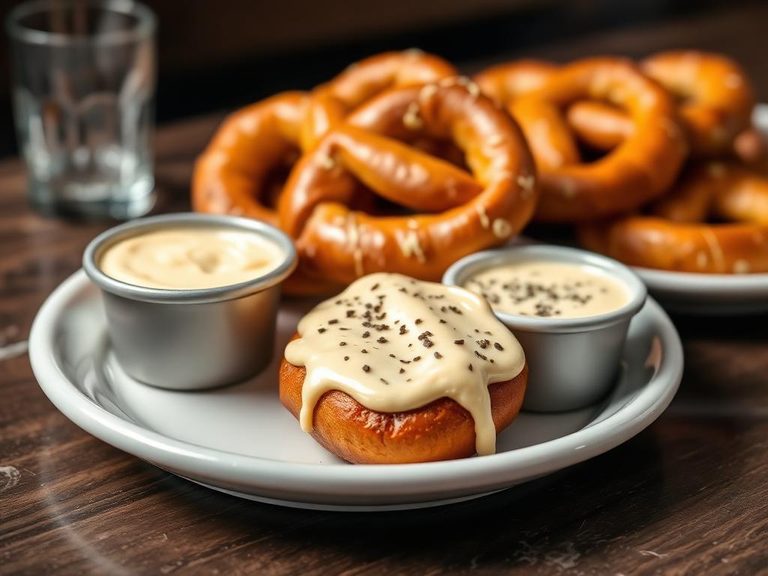
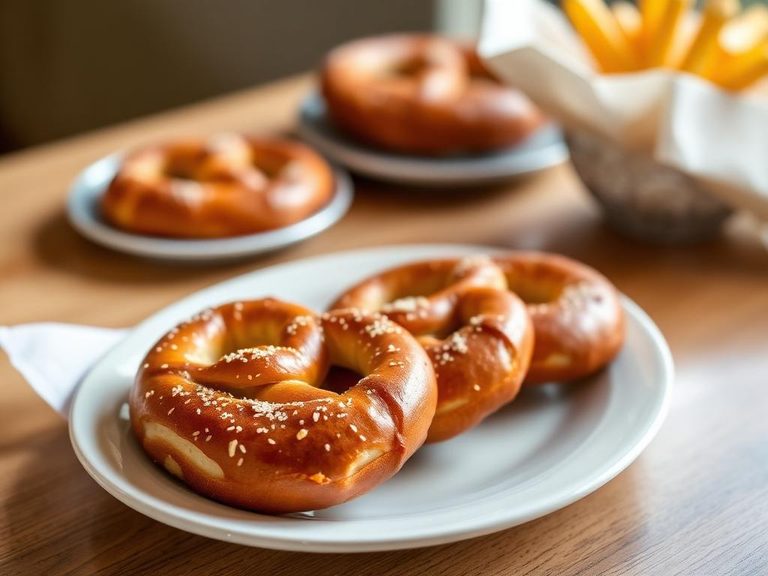
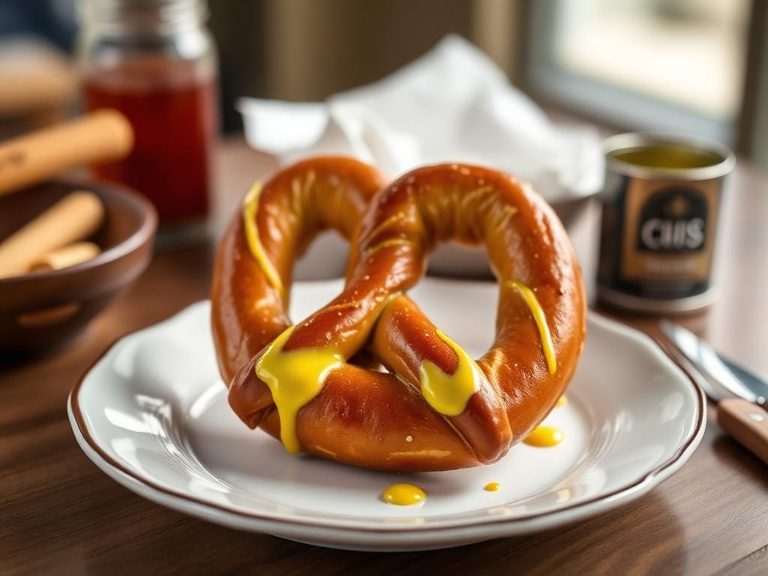
Bavarian soft pretzels, or Laugenbrezel, are a beloved German pastry with a distinctive dark brown, glossy crust and a soft, chewy interior. They are traditionally made from a simple dough of flour, water, yeast, and salt, which is briefly dipped in a lye solution before baking to achieve their signature color and flavor. Originating in the Bavarian region of Germany, they are a staple in bakeries, beer gardens, and festivals throughout the country.
🍽️ Nutrition at a glance
A typical Bavarian pretzel is primarily a source of carbohydrates from its wheat flour base, with a moderate amount of protein and relatively low fat. It provides key nutrients like B vitamins from the yeast and some iron, and a standard-sized pretzel contains roughly 250-350 calories.
Nutrition breakdown
| Calories | 320 kcal |
| Protein | 9 g |
| Carbs | 65 g |
| Fat | 3.5 g |
| Fiber | 2.5 g |
| Sugar | 3 g |
| Sodium | 1100 mg |
| Iron | 4.5 mg |
| Thiamin (B1) | 0.6 mg |
| Niacin (B3) | 5.5 mg |
| Folate | 120 mcg |
| Potassium | 150 mg |
| Magnesium | 30 mg |
| Phosphorus | 110 mg |
| Selenium | 25 mcg |
Per 1 pretzel (115 g) · estimated, varies by recipe
💡 What's interesting
The unique, deep brown crust is created by a brief alkaline bath (traditionally lye, now often a food-grade baking soda solution) before baking, which also gives the pretzel its characteristic slightly bitter, malty flavor that perfectly contrasts the sweet dough. Nutritionally, this alkaline treatment can make the minerals in the flour more bioavailable and may slightly reduce the glycemic impact compared to a standard white bread roll.