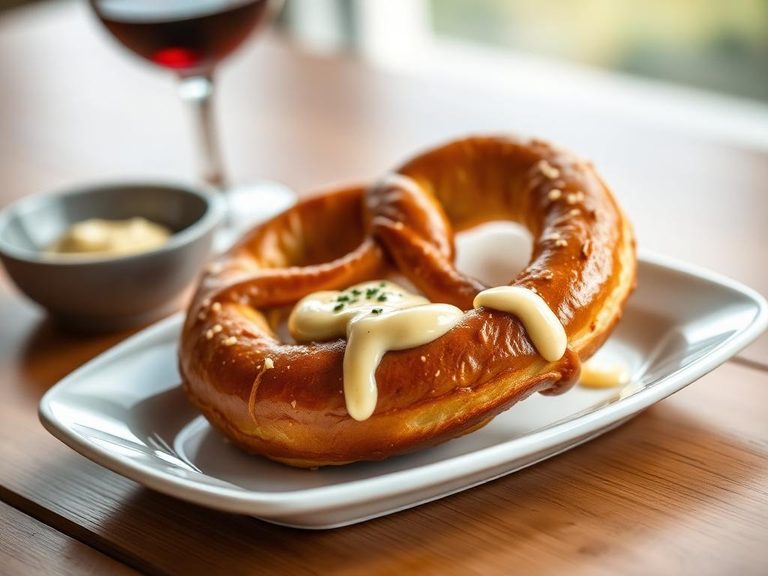
Bavarian Pretzel (Brezel)
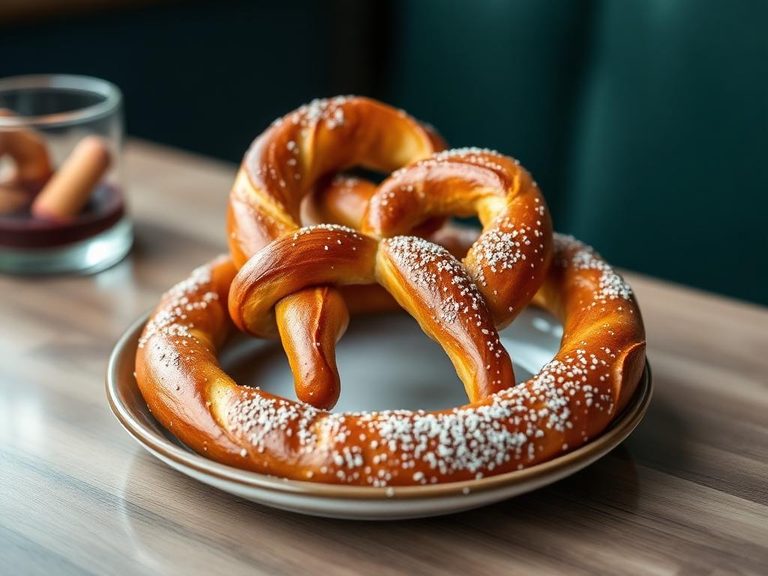
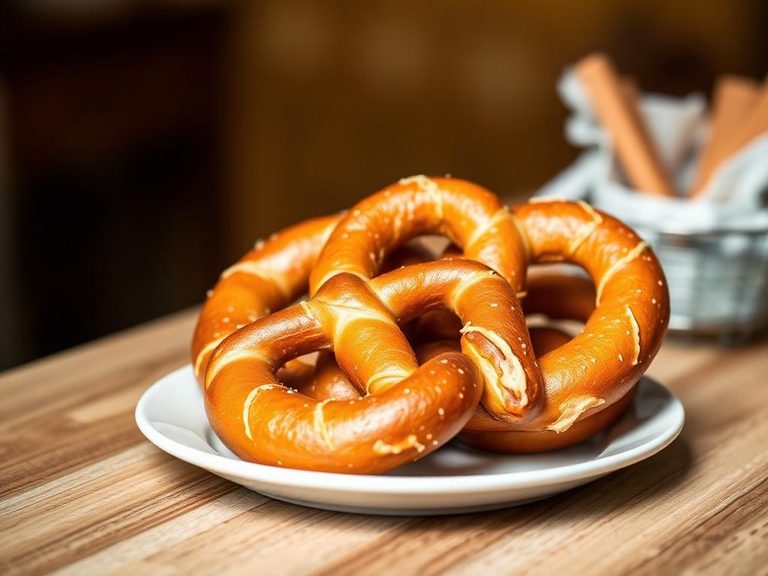
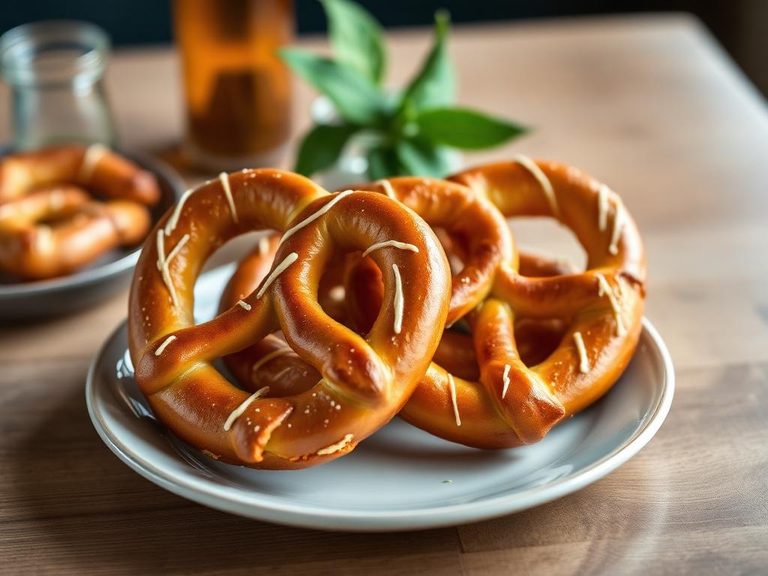
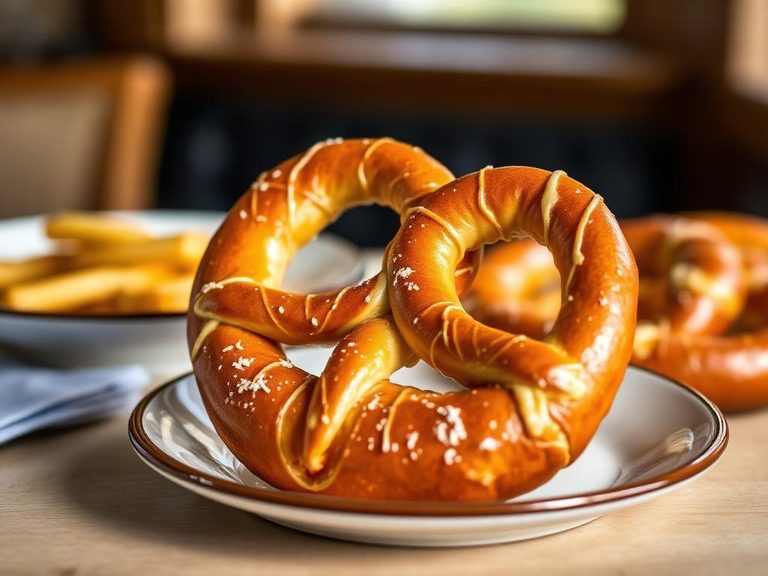
The Bavarian Pretzel, or Brezel, is a traditional German baked good known for its distinctive knotted shape, shiny brown crust, and soft, chewy interior. It is typically made from a simple dough of flour, water, yeast, salt, and a small amount of fat, with the crust often treated with a lye solution before baking. Originating in the region of Bavaria in southern Germany, it is a staple of German bakeries and beer gardens.
🍽️ Nutrition at a glance
A standard Bavarian pretzel is high in carbohydrates, providing a good source of energy, with a moderate amount of protein from the wheat flour and relatively low fat. A typical serving (around 100-150g) contains roughly 250-350 calories, along with some iron and B vitamins.
Nutrition breakdown
| Calories | 310 kcal |
| Protein | 9 g |
| Carbs | 62 g |
| Fat | 3 g |
| Fiber | 2 g |
| Sugar | 4 g |
| Sodium | 1020 mg |
| Iron | 4.5 mg |
| Thiamin (B1) | 0.6 mg |
| Niacin (B3) | 7 mg |
| Folate | 150 mcg |
| Magnesium | 35 mg |
| Phosphorus | 120 mg |
| Selenium | 30 mcg |
| Manganese | 0.8 mg |
Per 1 pretzel (approx. 113 g) · estimated, varies by recipe
💡 What's interesting
The unique, glossy crust is achieved by dipping the shaped dough in a food-grade lye (sodium hydroxide) solution before baking, which gives it its characteristic color and flavor through a Maillard reaction. Culturally, it is deeply embedded in Bavarian traditions, often served with sweet mustard or as part of a hearty meal, and its twisted shape is said to symbolize arms crossed in prayer.