

Pretzels, hard, filled, NFS
Common food

Photo: Wikipedia
These are crunchy, savory pretzel sticks or knots with a surprise creamy or cheesy center, offering a satisfying snap followed by a smooth, rich filling. Their high carbohydrate and fat content makes them a dense, energy-packed snack, though the sugar and refined carbs can cause a quick energy spike.
Calorie split: 9% protein · 58% carbs · 33% fat
↓ Full nutrition💚 Why it's loved
People love them for the satisfying textural contrast between the hard, salty pretzel shell and the soft, flavorful filling. They are a popular, nostalgic snack that pairs well with drinks and is often enjoyed at gatherings or as a movie-time treat.
⚠️ Watch-outs & how to enjoy it better
The refined carbohydrates and added sugars can lead to blood-sugar spikes, and they are often high in sodium. Those watching their blood sugar, sodium intake, or gluten should be cautious. To counteract, pair with a source of protein or healthy fat (like a handful of nuts or cheese) and practice strict portion control.
Key benefits
- Provides a quick source of energy from carbohydrates
- Contains some protein from wheat and dairy-based fillings
- Offers dietary fiber, though in modest amounts
- Convenient, shelf-stable snack for on-the-go consumption
- The fat content can enhance satiety in the short term
🍽️ Popular dishes
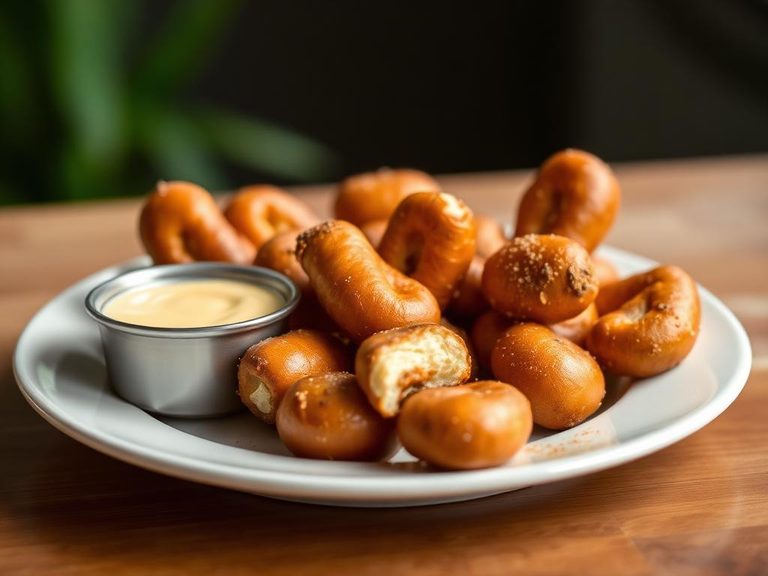
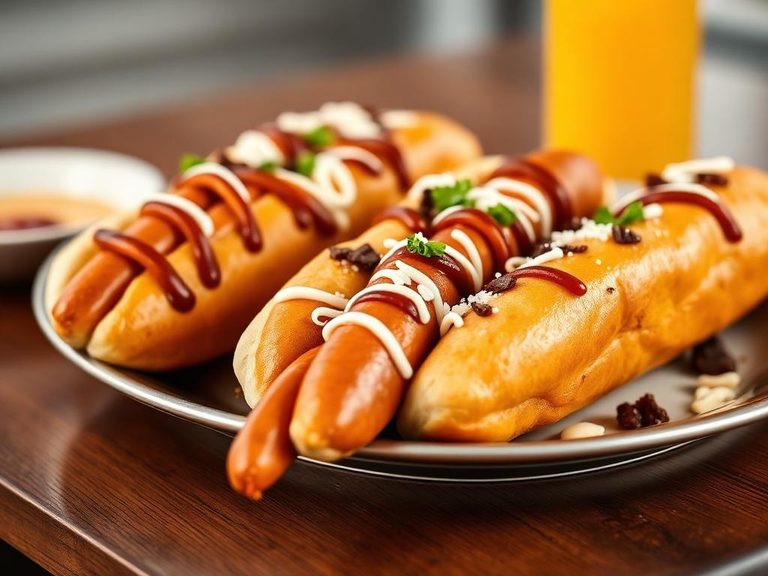

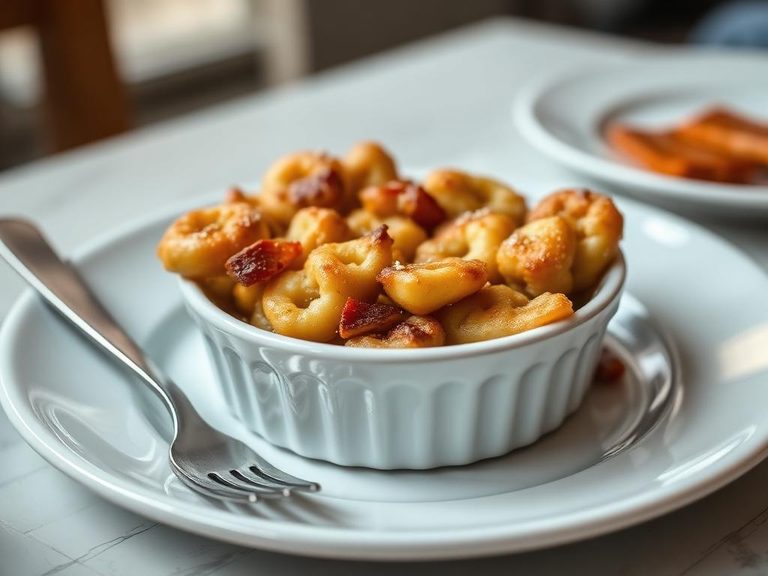
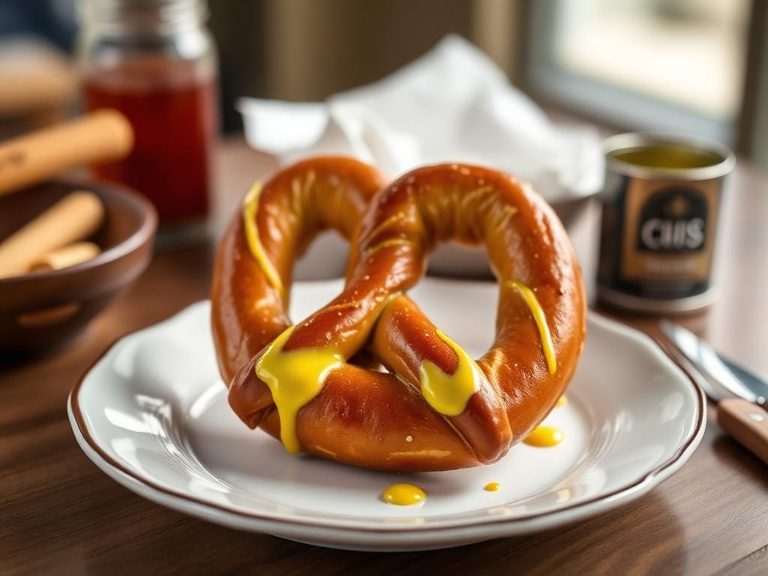
🌍 Where it's eaten
💡 Did you know?
The distinctive pretzel shape is said to represent arms crossed in prayer, and the word 'pretzel' may derive from the Latin 'pretiola,' meaning 'little reward.'
Full nutrition (USDA data · scales with serving)
| Water | 1.7 g |
| Energy | 463 kcal |
| Protein | 9.8 g |
| Total lipid (fat) | 16.9 g |
| Carbohydrate, by difference | 66.5 g |
| Fiber, total dietary | 3.6 g |
| Total Sugars | 17.6 g |
| Calcium, Ca | 197 mg |
| Iron, Fe | 0.92 mg |
| Magnesium, Mg | 22.0 mg |
| Phosphorus, P | 143 mg |
| Potassium, K | 130 mg |
| Sodium, Na | 1117 mg |
| Zinc, Zn | 0.73 mg |
| Copper, Cu | 0.12 mg |
| Selenium, Se | 5.7 ug |
| Vitamin C, total ascorbic acid | 0.00 mg |
| Thiamin | 0.30 mg |
| Riboflavin | 0.56 mg |
| Niacin | 3.2 mg |
| Vitamin B-6 | 0.05 mg |
| Folate, total | 8.0 ug |
| Folic acid | 0.00 ug |
| Folate, food | 8.0 ug |
| Folate, DFE | 8.0 ug |
| Choline, total | 21.0 mg |
| Vitamin B-12 | 0.12 ug |
| Vitamin B-12, added | 0.00 ug |
| Vitamin A, RAE | 56.0 ug |
| Retinol | 55.0 ug |
| Carotene, beta | 18.0 ug |
| Carotene, alpha | 0.00 ug |
| Cryptoxanthin, beta | 0.00 ug |
| Lycopene | 0.00 ug |
| Lutein + zeaxanthin | 5.0 ug |
| Vitamin E (alpha-tocopherol) | 0.67 mg |
| Vitamin E, added | 0.00 mg |
| Vitamin D (D2 + D3) | 0.10 ug |
| Vitamin K (phylloquinone) | 3.3 ug |
| Alcohol, ethyl | 0.00 g |
| Caffeine | 0.00 mg |
| Theobromine | 0.00 mg |
Fat & fatty acid profile (per 100g)
| Fatty acids, total saturated | 9.7 g |
| SFA 4:0 | 0.23 g |
| SFA 6:0 | 0.13 g |
| SFA 8:0 | 0.25 g |
| SFA 10:0 | 0.27 g |
| SFA 12:0 | 1.8 g |
| SFA 14:0 | 1.2 g |
| SFA 16:0 | 4.4 g |
| SFA 18:0 | 1.3 g |
| Fatty acids, total monounsaturated | 3.8 g |
| MUFA 16:1 | 0.22 g |
| MUFA 18:1 | 3.6 g |
| MUFA 20:1 | 0.01 g |
| MUFA 22:1 | 0.00 g |
| Fatty acids, total polyunsaturated | 1.4 g |
| PUFA 18:2 | 1.2 g |
| PUFA 18:3 | 0.11 g |
| PUFA 18:4 | 0.00 g |
| PUFA 20:4 | 0.00 g |
| PUFA 20:5 n-3 (EPA) | 0.00 g |
| PUFA 22:5 n-3 (DPA) | 0.00 g |
| PUFA 22:6 n-3 (DHA) | 0.00 g |
| Cholesterol | 5.0 mg |
Amino acid profile (per 100g)
Estimated from Snacks, pretzels, hard, confectioner's coating, chocolate-flavor — USDA does not publish this profile for Pretzels.
| Tryptophan | 0.10 g |
| Threonine | 0.25 g |
| Isoleucine | 0.29 g |
| Leucine | 0.53 g |
| Lysine | 0.25 g |
| Methionine | 0.13 g |
| Cystine | 0.15 g |
| Phenylalanine | 0.36 g |
| Tyrosine | 0.23 g |
| Valine | 0.33 g |
| Arginine | 0.31 g |
| Histidine | 0.16 g |
| Alanine | 0.27 g |
| Aspartic acid | 0.42 g |
| Glutamic acid | 2.2 g |
| Glycine | 0.27 g |
| Proline | 0.74 g |
| Serine | 0.36 g |
FAQ
What is the filling typically made of?
Common fillings include cheese (like cheddar or cream cheese), peanut butter, or a sweet paste. The exact composition varies by brand and style.
Are these a good post-workout snack?
They can replenish glycogen stores quickly due to the high carbs, but the high fat and sodium content make them less ideal than a balanced recovery snack with lean protein and electrolytes.
How do they differ from soft pretzels?
Hard pretzels are baked longer for a crisp, dry texture, while soft pretzels are boiled briefly before baking to achieve a chewy interior and glossy crust. Hard pretzels are also denser and higher in calories per gram.
Nutrient density (calculated · NRF9.3)
Nutrient Rich Foods index: beneficial nutrients (protein, fiber, vitamins, minerals) minus saturated fat, added sugar & sodium, per 100 kcal.
NRF9.3 index — Fulgoni, Keast & Drewnowski, 2009. Computed from USDA nutrients.
Weight-loss friendliness (composite index)
Energy density 4.63 kcal/g · 9% calories from protein · 3.6 g fiber · 17.6 g sugar per 100 g.
Composite of energy density (Rolls et al., 1999), protein & fiber satiety, minus sugar. A calculated heuristic — ranks satiety-per-calorie, not a clinical measure.
Dietary load (calculated from USDA values)
Potential renal acid load. Positive = acid-forming, negative = alkaline-forming.
Sodium-to-potassium ratio: 8.59 (lower is better — aim for ≤ 1)
Sodium:potassium per WHO potassium guidance. Computed from USDA nutrients.