

Pretzels, hard, coated, NFS
Common food
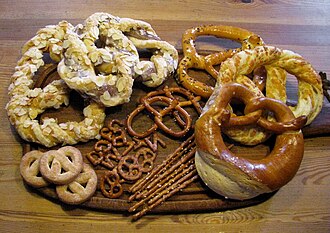
Photo: Wikipedia
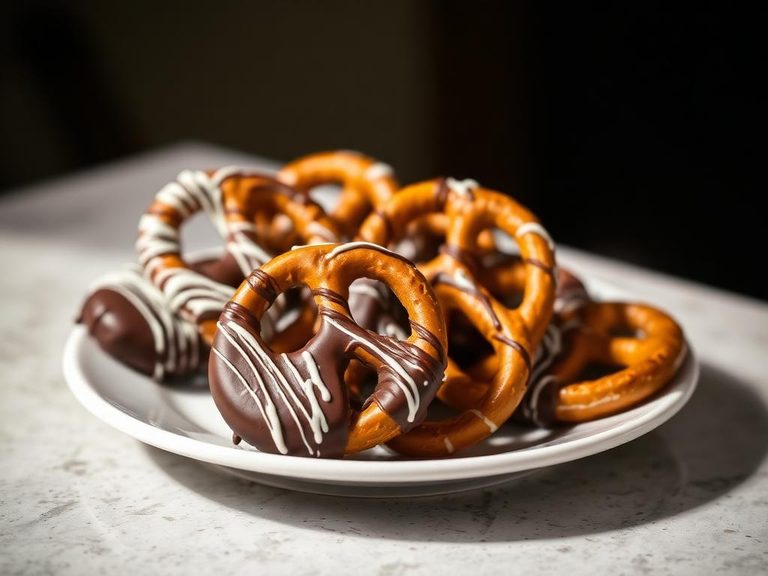
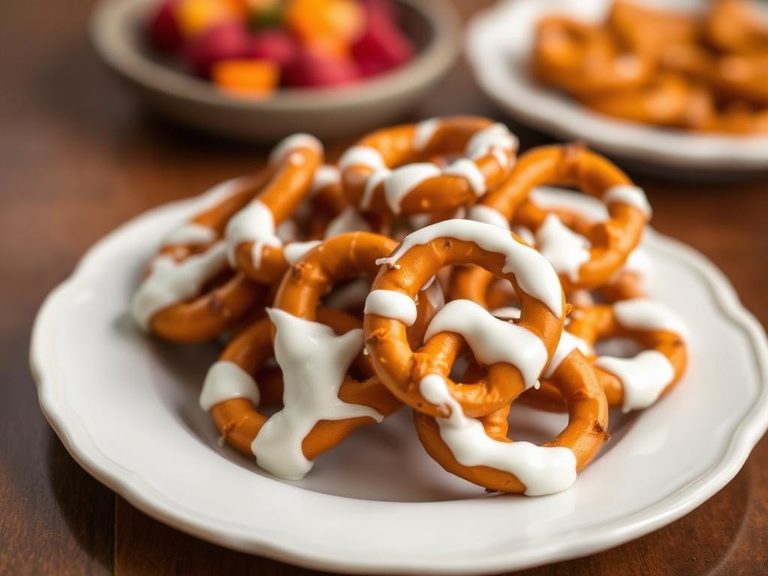
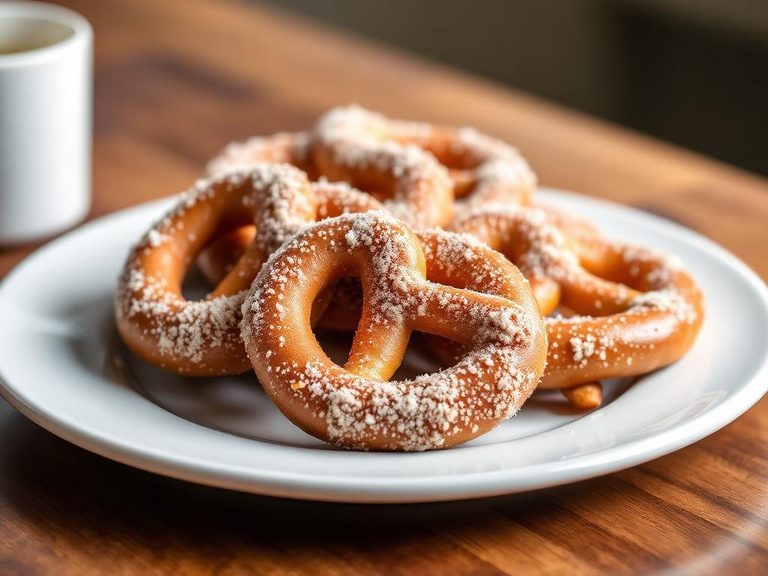
These are hard pretzels with a flavorful, often sweet or savory, outer coating like chocolate, yogurt, or cinnamon sugar. The texture is a satisfying, dense crunch that gives way to a slightly chewy interior. Nutritionally, they are a high-carbohydrate energy source with significant added sugar and fat from the coating.
Calorie split: 6% protein · 60% carbs · 34% fat
↓ Full nutrition💚 Why it's loved
People love them for the addictive combination of a salty, crunchy pretzel base with a sweet or savory coating, making them a versatile snack. They are a popular comfort food and a staple at parties, movie nights, and as a quick treat.
⚠️ Watch-outs & how to enjoy it better
The high sugar and refined carbohydrate content can lead to blood-sugar spikes, and the coating often adds significant fat and calories. Those monitoring blood sugar, sodium intake, or gluten should be cautious. To counteract, pair a small portion with a protein or fat source like cheese or nuts to slow digestion, and choose varieties with lower sugar coatings when possible.
Key benefits
- Provides a quick energy boost from carbohydrates
- Offers a crunchy, satisfying snack texture
- Convenient and shelf-stable for on-the-go eating
- Can be a source of some dietary fiber
🍽️ Popular dishes
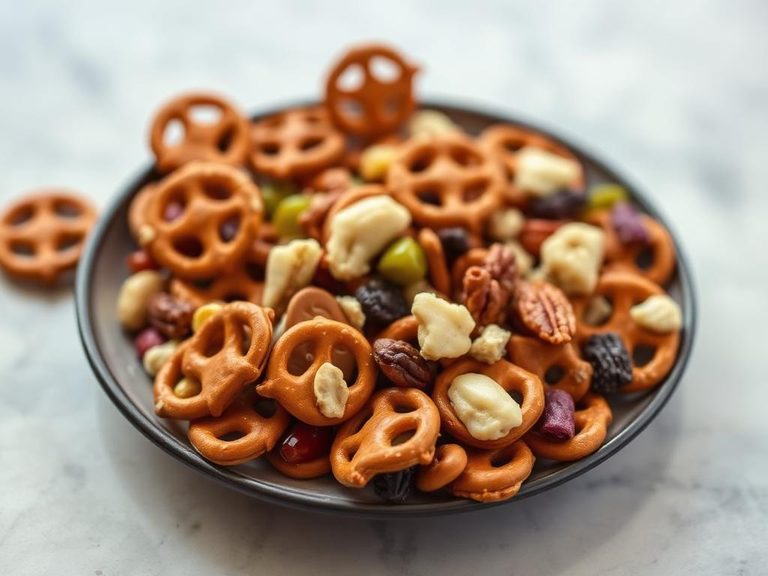
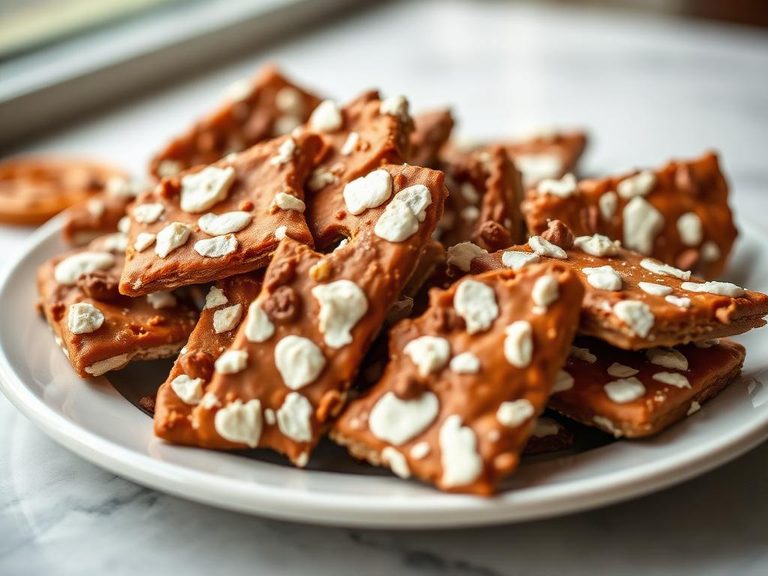
🌍 Where it's eaten
💡 Did you know?
The traditional pretzel shape is said to represent arms crossed in prayer, and the word 'pretzel' may derive from the Latin word 'bracellae,' meaning 'little arms.'
Full nutrition (USDA data · scales with serving)
| Water | 3.1 g |
| Energy | 467 kcal |
| Protein | 7.0 g |
| Total lipid (fat) | 17.6 g |
| Carbohydrate, by difference | 70.1 g |
| Fiber, total dietary | 3.5 g |
| Total Sugars | 38.8 g |
| Calcium, Ca | 141 mg |
| Iron, Fe | 2.5 mg |
| Magnesium, Mg | 35.0 mg |
| Phosphorus, P | 128 mg |
| Potassium, K | 199 mg |
| Sodium, Na | 494 mg |
| Zinc, Zn | 1.3 mg |
| Copper, Cu | 0.26 mg |
| Selenium, Se | 14.5 ug |
| Vitamin C, total ascorbic acid | 0.00 mg |
| Thiamin | 0.36 mg |
| Riboflavin | 0.32 mg |
| Niacin | 2.4 mg |
| Vitamin B-6 | 0.03 mg |
| Folate, total | 74.0 ug |
| Folic acid | 58.0 ug |
| Folate, food | 16.0 ug |
| Folate, DFE | 114 ug |
| Choline, total | 39.7 mg |
| Vitamin B-12 | 0.32 ug |
| Vitamin B-12, added | 0.00 ug |
| Vitamin A, RAE | 25.0 ug |
| Retinol | 25.0 ug |
| Carotene, beta | 0.00 ug |
| Carotene, alpha | 0.00 ug |
| Cryptoxanthin, beta | 0.00 ug |
| Lycopene | 0.00 ug |
| Lutein + zeaxanthin | 9.0 ug |
| Vitamin E (alpha-tocopherol) | 0.62 mg |
| Vitamin E, added | 0.00 mg |
| Vitamin D (D2 + D3) | 0.00 ug |
| Vitamin K (phylloquinone) | 11.1 ug |
| Alcohol, ethyl | 0.00 g |
| Caffeine | 8.0 mg |
| Theobromine | 87.0 mg |
Fat & fatty acid profile (per 100g)
| Fatty acids, total saturated | 8.6 g |
| SFA 4:0 | 0.15 g |
| SFA 6:0 | 0.04 g |
| SFA 8:0 | 0.05 g |
| SFA 10:0 | 0.10 g |
| SFA 12:0 | 0.11 g |
| SFA 14:0 | 0.51 g |
| SFA 16:0 | 4.1 g |
| SFA 18:0 | 3.5 g |
| Fatty acids, total monounsaturated | 3.3 g |
| MUFA 16:1 | 0.19 g |
| MUFA 18:1 | 3.1 g |
| MUFA 20:1 | 0.00 g |
| MUFA 22:1 | 0.00 g |
| Fatty acids, total polyunsaturated | 2.8 g |
| PUFA 18:2 | 2.5 g |
| PUFA 18:3 | 0.30 g |
| PUFA 18:4 | 0.00 g |
| PUFA 20:4 | 0.00 g |
| PUFA 20:5 n-3 (EPA) | 0.00 g |
| PUFA 22:5 n-3 (DPA) | 0.00 g |
| PUFA 22:6 n-3 (DHA) | 0.00 g |
| Cholesterol | 0.00 mg |
Amino acid profile (per 100g)
Estimated from Snacks, pretzels, hard, confectioner's coating, chocolate-flavor — USDA does not publish this profile for Pretzels.
| Tryptophan | 0.10 g |
| Threonine | 0.25 g |
| Isoleucine | 0.29 g |
| Leucine | 0.53 g |
| Lysine | 0.25 g |
| Methionine | 0.13 g |
| Cystine | 0.15 g |
| Phenylalanine | 0.36 g |
| Tyrosine | 0.23 g |
| Valine | 0.33 g |
| Arginine | 0.31 g |
| Histidine | 0.16 g |
| Alanine | 0.27 g |
| Aspartic acid | 0.42 g |
| Glutamic acid | 2.2 g |
| Glycine | 0.27 g |
| Proline | 0.74 g |
| Serine | 0.36 g |
FAQ
Are coated hard pretzels gluten-free?
No, traditional hard pretzels are made from wheat flour and contain gluten. Look for specifically labeled gluten-free versions made with alternative flours.
How does the coating affect the nutrition?
The coating significantly increases the sugar, fat, and calorie content compared to plain hard pretzels, transforming them from a simple carbohydrate snack into a more indulgent treat.
What is the best way to store them?
Store them in an airtight container at room temperature to maintain their crunch and prevent them from becoming stale or soft.
Nutrient density (calculated · NRF9.3)
Nutrient Rich Foods index: beneficial nutrients (protein, fiber, vitamins, minerals) minus saturated fat, added sugar & sodium, per 100 kcal.
NRF9.3 index — Fulgoni, Keast & Drewnowski, 2009. Computed from USDA nutrients.
Weight-loss friendliness (composite index)
Energy density 4.67 kcal/g · 6% calories from protein · 3.5 g fiber · 38.8 g sugar per 100 g.
Composite of energy density (Rolls et al., 1999), protein & fiber satiety, minus sugar. A calculated heuristic — ranks satiety-per-calorie, not a clinical measure.
Dietary load (calculated from USDA values)
Potential renal acid load. Positive = acid-forming, negative = alkaline-forming.
Sodium-to-potassium ratio: 2.48 (lower is better — aim for ≤ 1)
Sodium:potassium per WHO potassium guidance. Computed from USDA nutrients.