

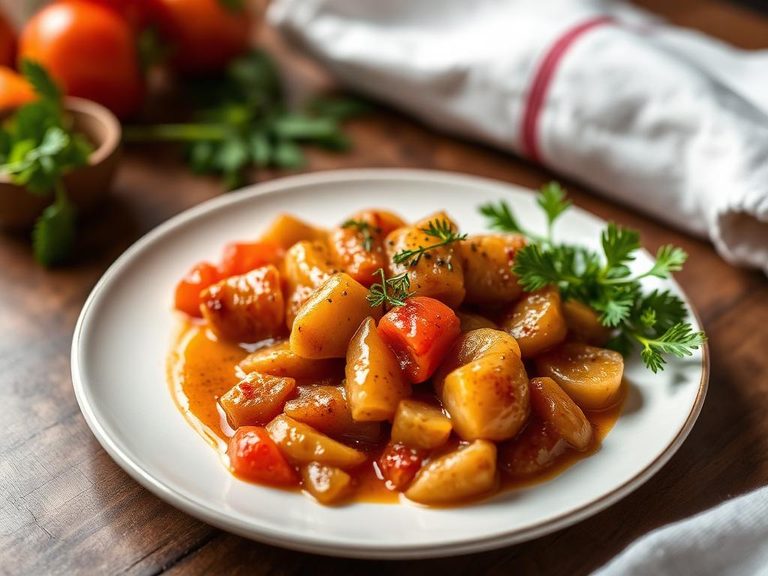
Potato salad, made with any type of fat free dressing
Common food

Photo: Wikipedia
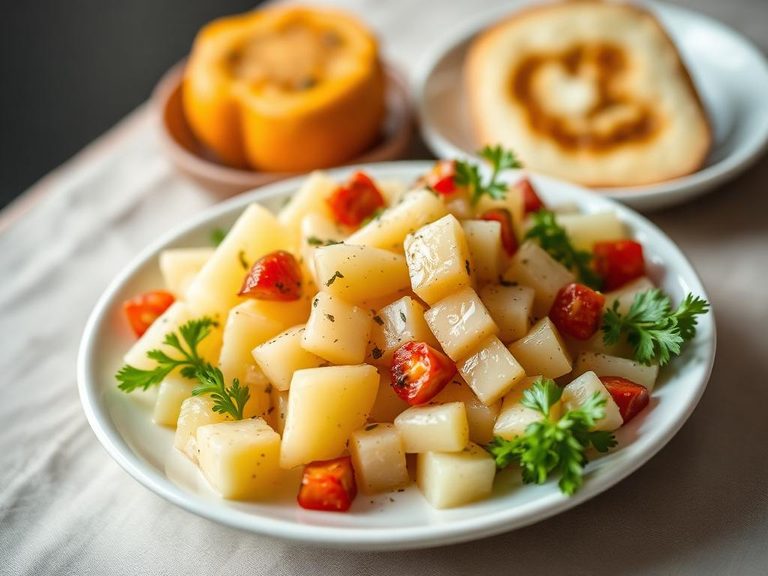
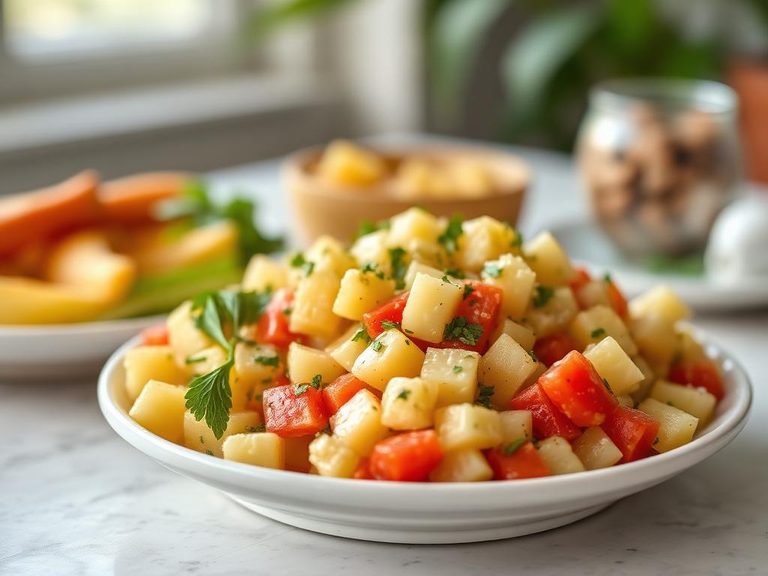
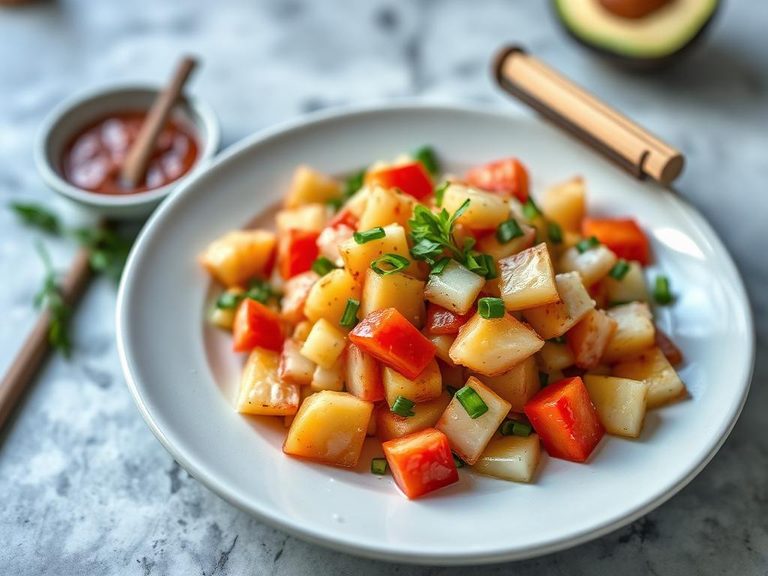
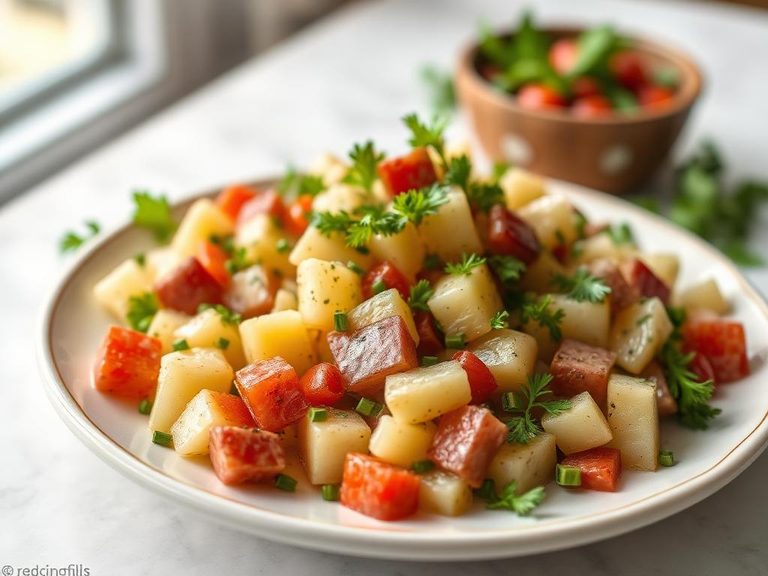
A classic, creamy side dish of tender, diced potatoes tossed in a light, fat-free dressing. It offers a satisfying, soft texture with a tangy, often herby flavor profile, and is notably low in fat and calories for a potato-based dish.
Calorie split: 7% protein · 87% carbs · 6% fat
↓ Full nutrition💚 Why it's loved
People love it for its comforting, familiar taste and incredible versatility—it's a staple at picnics, barbecues, and family dinners, easily customized with herbs, onions, or pickles.
⚠️ Watch-outs & how to enjoy it better
The fat-free dressing can make it less satisfying and may lead to higher sodium intake; the high carbohydrate content can cause blood-sugar spikes. Counteract this by pairing it with a protein like grilled chicken or hard-boiled eggs, and opt for a homemade dressing to control salt.
Key benefits
- Very low in fat and calories
- Good source of dietary fiber
- Contains natural, complex carbohydrates
- Provides some plant-based protein
- Naturally cholesterol-free
🍽️ Popular dishes
🌍 Where it's eaten
💡 Did you know?
The classic American potato salad with mayonnaise is a relatively modern invention; early potato salads were dressed with vinegar, oil, and mustard, much like the German versions.
Full nutrition (USDA data · scales with serving)
| Water | 78.7 g |
| Energy | 81.0 kcal |
| Protein | 1.4 g |
| Total lipid (fat) | 0.58 g |
| Carbohydrate, by difference | 17.9 g |
| Fiber, total dietary | 1.8 g |
| Total Sugars | 2.9 g |
| Calcium, Ca | 10.0 mg |
| Iron, Fe | 0.28 mg |
| Magnesium, Mg | 16.0 mg |
| Phosphorus, P | 33.0 mg |
| Potassium, K | 261 mg |
| Sodium, Na | 215 mg |
| Zinc, Zn | 0.22 mg |
| Copper, Cu | 0.13 mg |
| Selenium, Se | 0.80 ug |
| Vitamin C, total ascorbic acid | 5.6 mg |
| Thiamin | 0.07 mg |
| Riboflavin | 0.02 mg |
| Niacin | 0.98 mg |
| Vitamin B-6 | 0.20 mg |
| Folate, total | 8.0 ug |
| Folic acid | 0.00 ug |
| Folate, food | 8.0 ug |
| Folate, DFE | 8.0 ug |
| Choline, total | 10.4 mg |
| Vitamin B-12 | 0.00 ug |
| Vitamin B-12, added | 0.00 ug |
| Vitamin A, RAE | 2.0 ug |
| Retinol | 0.00 ug |
| Carotene, beta | 17.0 ug |
| Carotene, alpha | 2.0 ug |
| Cryptoxanthin, beta | 4.0 ug |
| Lycopene | 0.00 ug |
| Lutein + zeaxanthin | 22.0 ug |
| Vitamin E (alpha-tocopherol) | 0.04 mg |
| Vitamin E, added | 0.00 mg |
| Vitamin D (D2 + D3) | 0.00 ug |
| Vitamin K (phylloquinone) | 7.9 ug |
| Alcohol, ethyl | 0.00 g |
| Caffeine | 0.00 mg |
| Theobromine | 0.00 mg |
Fat & fatty acid profile (per 100g)
| Fatty acids, total saturated | 0.13 g |
| SFA 4:0 | 0.00 g |
| SFA 6:0 | 0.00 g |
| SFA 8:0 | 0.00 g |
| SFA 10:0 | 0.01 g |
| SFA 12:0 | 0.04 g |
| SFA 14:0 | 0.02 g |
| SFA 16:0 | 0.03 g |
| SFA 18:0 | 0.02 g |
| Fatty acids, total monounsaturated | 0.36 g |
| MUFA 16:1 | 0.00 g |
| MUFA 18:1 | 0.33 g |
| MUFA 20:1 | 0.01 g |
| MUFA 22:1 | 0.02 g |
| Fatty acids, total polyunsaturated | 0.06 g |
| PUFA 18:2 | 0.04 g |
| PUFA 18:3 | 0.02 g |
| PUFA 18:4 | 0.00 g |
| PUFA 20:4 | 0.00 g |
| PUFA 20:5 n-3 (EPA) | 0.00 g |
| PUFA 22:5 n-3 (DPA) | 0.00 g |
| PUFA 22:6 n-3 (DHA) | 0.00 g |
| Cholesterol | 2.0 mg |
Amino acid profile (per 100g)
Estimated from Potato salad, home-prepared — USDA does not publish this profile for Potato salad.
| Tryptophan | 0.04 g |
| Threonine | 0.12 g |
| Isoleucine | 0.14 g |
| Leucine | 0.20 g |
| Lysine | 0.17 g |
| Methionine | 0.07 g |
| Cystine | 0.05 g |
| Phenylalanine | 0.14 g |
| Tyrosine | 0.10 g |
| Valine | 0.17 g |
| Arginine | 0.15 g |
| Histidine | 0.06 g |
| Alanine | 0.12 g |
| Aspartic acid | 0.42 g |
| Glutamic acid | 0.39 g |
| Glycine | 0.09 g |
| Proline | 0.10 g |
| Serine | 0.16 g |
FAQ
Why is my potato salad watery?
This often happens if the potatoes are overcooked or if the dressing is added while the potatoes are still warm. Use waxy potatoes, cook them until just tender, and let them cool completely before mixing.
Can I make this ahead of time?
Yes, it often tastes better after the flavors meld. Store it covered in the refrigerator for up to 3 days. The texture may soften slightly.
What kind of potatoes work best?
Waxy or all-purpose potatoes like Red, Yukon Gold, or New potatoes hold their shape best. Starchy potatoes like Russets can become mushy.
Nutrient density (calculated · NRF9.3)
Nutrient Rich Foods index: beneficial nutrients (protein, fiber, vitamins, minerals) minus saturated fat, added sugar & sodium, per 100 kcal.
NRF9.3 index — Fulgoni, Keast & Drewnowski, 2009. Computed from USDA nutrients.
Weight-loss friendliness (composite index)
Energy density 0.81 kcal/g · 7% calories from protein · 1.8 g fiber · 2.9 g sugar per 100 g.
Composite of energy density (Rolls et al., 1999), protein & fiber satiety, minus sugar. A calculated heuristic — ranks satiety-per-calorie, not a clinical measure.
Dietary load (calculated from USDA values)
Potential renal acid load. Positive = acid-forming, negative = alkaline-forming.
Sodium-to-potassium ratio: 0.82 (lower is better — aim for ≤ 1)
Sodium:potassium per WHO potassium guidance. Computed from USDA nutrients.