

Potato, roasted, from fresh, peel not eaten, NS as to fat
Common food
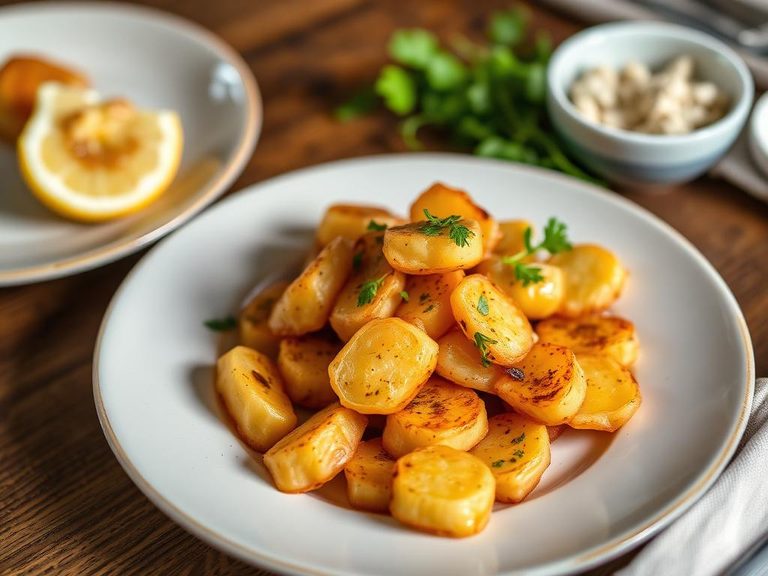
A roasted potato, peeled and cooked without added fat, offers a fluffy, tender interior with a subtly sweet, earthy flavor and a light, crisp exterior. It's a simple, wholesome staple, delivering a solid balance of energy-rich carbs and a modest amount of protein. Its nutritional profile is clean, with minimal fat and a good dose of dietary fiber to support digestion.
Calorie split: 6% protein · 64% carbs · 30% fat
↓ Full nutrition💚 Why it's loved
People love roasted potatoes for their comforting, savory taste and the delightful contrast between the fluffy inside and the slightly crisp edges. They are incredibly versatile, serving as a perfect side for everything from a Sunday roast to a simple weeknight meal.
⚠️ Watch-outs & how to enjoy it better
As a high-carb, starchy vegetable, it can cause a rapid rise in blood sugar levels, which is a consideration for those managing diabetes. To mitigate this, pair it with a source of protein (like chicken or beans) or healthy fat (like avocado) to slow digestion. Using smaller portions and ensuring it's part of a balanced meal can also help.
Key benefits
- Excellent source of energy-dense complex carbohydrates
- Provides a moderate amount of plant-based protein
- Contains dietary fiber for digestive health
- Naturally low in fat when roasted without added oils
- Offers essential vitamins like B6 and potassium
🍽️ Popular dishes
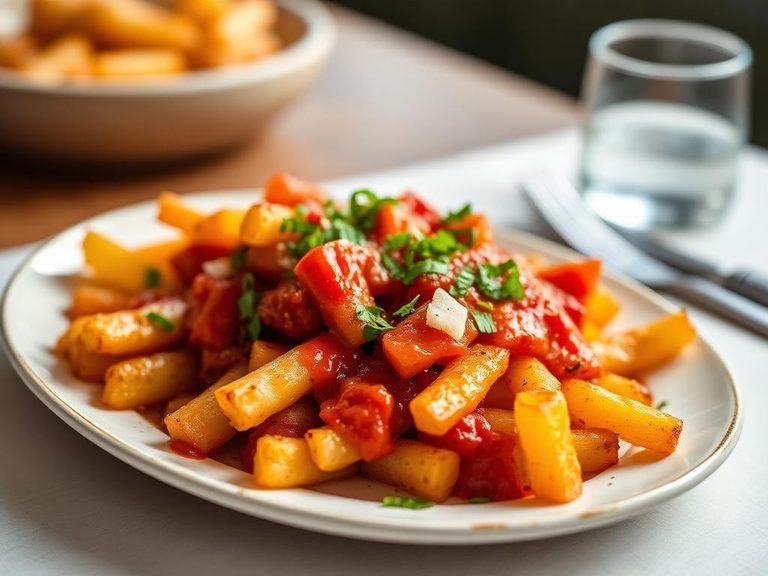
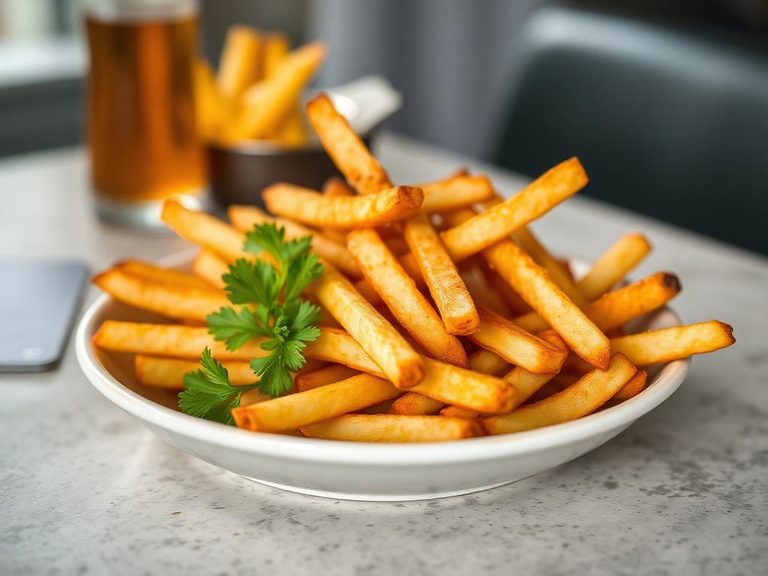
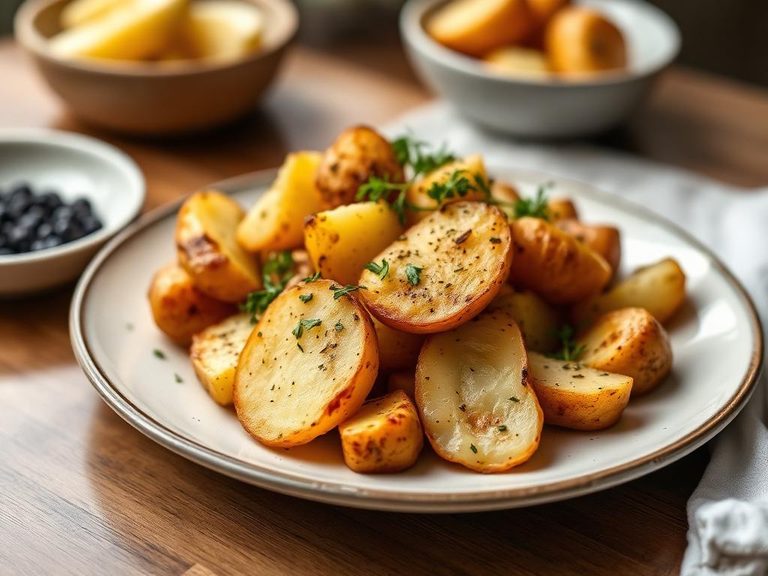
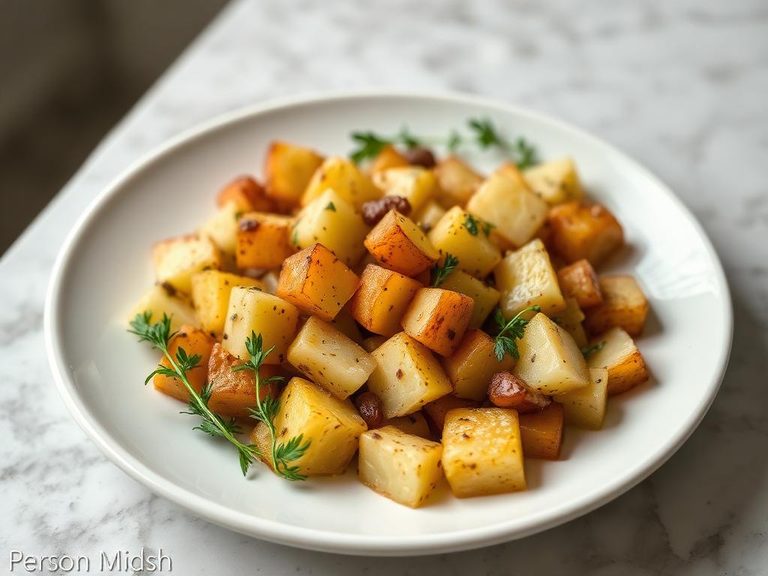
🌍 Where it's eaten
💡 Did you know?
The potato was the first food ever to be grown in space, aboard the Columbia space shuttle in 1995.
Full nutrition (USDA data · scales with serving)
| Water | 72.1 g |
| Energy | 126 kcal |
| Protein | 1.9 g |
| Total lipid (fat) | 4.3 g |
| Carbohydrate, by difference | 20.4 g |
| Fiber, total dietary | 1.4 g |
| Total Sugars | 1.6 g |
| Calcium, Ca | 5.0 mg |
| Iron, Fe | 0.34 mg |
| Magnesium, Mg | 24.0 mg |
| Phosphorus, P | 48.0 mg |
| Potassium, K | 372 mg |
| Sodium, Na | 166 mg |
| Zinc, Zn | 0.28 mg |
| Copper, Cu | 0.20 mg |
| Selenium, Se | 0.30 ug |
| Vitamin C, total ascorbic acid | 12.1 mg |
| Thiamin | 0.10 mg |
| Riboflavin | 0.02 mg |
| Niacin | 1.3 mg |
| Vitamin B-6 | 0.31 mg |
| Folate, total | 9.0 ug |
| Folic acid | 0.00 ug |
| Folate, food | 9.0 ug |
| Folate, DFE | 9.0 ug |
| Choline, total | 14.1 mg |
| Vitamin B-12 | 0.00 ug |
| Vitamin B-12, added | 0.00 ug |
| Vitamin A, RAE | 19.0 ug |
| Retinol | 18.0 ug |
| Carotene, beta | 8.0 ug |
| Carotene, alpha | 0.00 ug |
| Cryptoxanthin, beta | 0.00 ug |
| Lycopene | 0.00 ug |
| Lutein + zeaxanthin | 0.00 ug |
| Vitamin E (alpha-tocopherol) | 0.66 mg |
| Vitamin E, added | 0.00 mg |
| Vitamin D (D2 + D3) | 0.00 ug |
| Vitamin K (phylloquinone) | 3.7 ug |
| Alcohol, ethyl | 0.00 g |
| Caffeine | 0.00 mg |
| Theobromine | 0.00 mg |
Fat & fatty acid profile (per 100g)
| Fatty acids, total saturated | 1.1 g |
| SFA 4:0 | 0.03 g |
| SFA 6:0 | 0.02 g |
| SFA 8:0 | 0.01 g |
| SFA 10:0 | 0.03 g |
| SFA 12:0 | 0.04 g |
| SFA 14:0 | 0.10 g |
| SFA 16:0 | 0.61 g |
| SFA 18:0 | 0.23 g |
| Fatty acids, total monounsaturated | 1.5 g |
| MUFA 16:1 | 0.02 g |
| MUFA 18:1 | 1.4 g |
| MUFA 20:1 | 0.02 g |
| MUFA 22:1 | 0.00 g |
| Fatty acids, total polyunsaturated | 1.2 g |
| PUFA 18:2 | 1.1 g |
| PUFA 18:3 | 0.14 g |
| PUFA 18:4 | 0.00 g |
| PUFA 20:4 | 0.00 g |
| PUFA 20:5 n-3 (EPA) | 0.00 g |
| PUFA 22:5 n-3 (DPA) | 0.00 g |
| PUFA 22:6 n-3 (DHA) | 0.00 g |
| Cholesterol | 3.0 mg |
Amino acid profile (per 100g)
Estimated from Snacks, potato chips, made from dried potatoes, reduced fat — USDA does not publish this profile for Potato.
| Tryptophan | 0.04 g |
| Threonine | 0.24 g |
| Isoleucine | 0.25 g |
| Leucine | 0.37 g |
| Lysine | 0.35 g |
| Methionine | 0.07 g |
| Cystine | 0.07 g |
| Phenylalanine | 0.26 g |
| Tyrosine | 0.22 g |
| Valine | 0.33 g |
| Arginine | 0.27 g |
| Histidine | 0.13 g |
| Alanine | 0.20 g |
| Aspartic acid | 1.1 g |
| Glutamic acid | 0.94 g |
| Glycine | 0.19 g |
| Proline | 0.20 g |
| Serine | 0.23 g |
FAQ
Is a roasted potato healthier than a boiled one?
Nutritionally, they are very similar. Roasting without added fat can create a more flavorful, textured result without extra calories. However, boiling can cause more water-soluble vitamins (like vitamin C and some B vitamins) to leach into the cooking water.
Why does the nutritional data say 'NS as to fat'?
This stands for 'Not Specified as to Fat,' meaning the data represents the potato itself, roasted without a standard amount of added fat like oil or butter. The fat content listed (4.25g) is the natural fat found in the potato.
Can I eat the skin for more fiber?
Absolutely! Potato skins are packed with fiber, vitamins, and minerals. Leaving the skin on (after a good scrub) significantly boosts the nutritional value of your roasted potato.
Nutrient density (calculated · NRF9.3)
Nutrient Rich Foods index: beneficial nutrients (protein, fiber, vitamins, minerals) minus saturated fat, added sugar & sodium, per 100 kcal.
NRF9.3 index — Fulgoni, Keast & Drewnowski, 2009. Computed from USDA nutrients.
Weight-loss friendliness (composite index)
Energy density 1.26 kcal/g · 6% calories from protein · 1.4 g fiber · 1.6 g sugar per 100 g.
Composite of energy density (Rolls et al., 1999), protein & fiber satiety, minus sugar. A calculated heuristic — ranks satiety-per-calorie, not a clinical measure.
Dietary load (calculated from USDA values)
Potential renal acid load. Positive = acid-forming, negative = alkaline-forming.
Sodium-to-potassium ratio: 0.45 (lower is better — aim for ≤ 1)
Sodium:potassium per WHO potassium guidance. Computed from USDA nutrients.