

Pork, ham hocks
Common food

Photo: Wikipedia
Pork ham hocks are the meaty, collagen-rich joints from a pig's ankle, prized for their deep, savory flavor and gelatinous texture when slow-cooked. Nutritionally, they are a high-fat, high-protein cut with minimal carbs, making them a substantial, satisfying component of hearty dishes.
Calorie split: 22% protein · 2% carbs · 77% fat
↓ Full nutrition💚 Why it's loved
People love ham hocks for their unrivaled ability to infuse soups, stews, and beans with a smoky, porky richness that forms the backbone of many comfort foods. Their versatility allows them to be the star of a dish or a powerful flavor enhancer.
⚠️ Watch-outs & how to enjoy it better
Due to their high fat and sodium content (especially when cured or smoked), they should be consumed in moderation by those monitoring heart health or blood pressure. To counteract this, use them primarily as a flavoring agent, skim excess fat from cooking liquids, and pair with plenty of fiber-rich vegetables or legumes.
Key benefits
- Excellent source of protein for muscle maintenance
- Rich in collagen, which supports joint and skin health
- Provides essential minerals like iron and zinc
- High in B vitamins, particularly thiamine and B12
- Adds deep umami flavor to dishes without added sugars
🍽️ Popular dishes
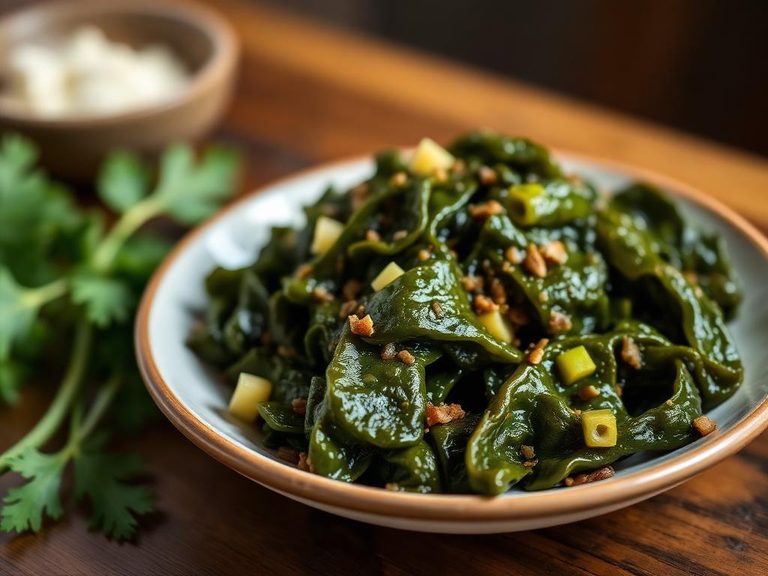
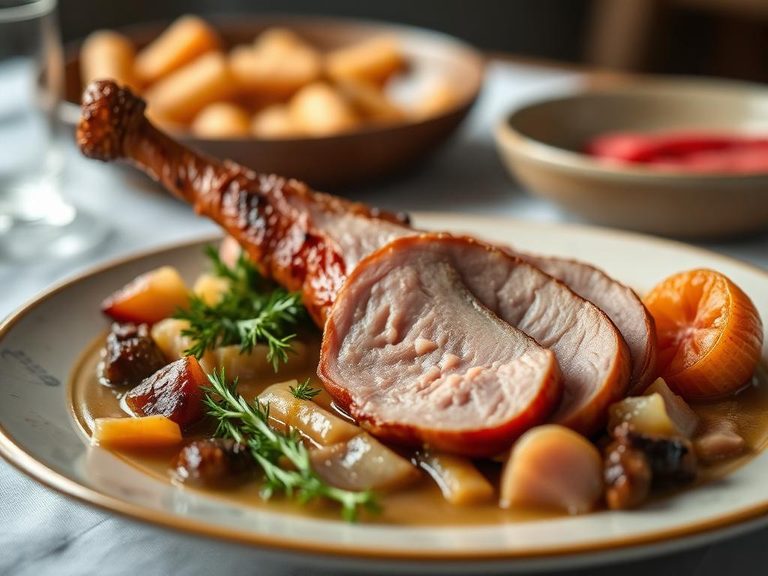
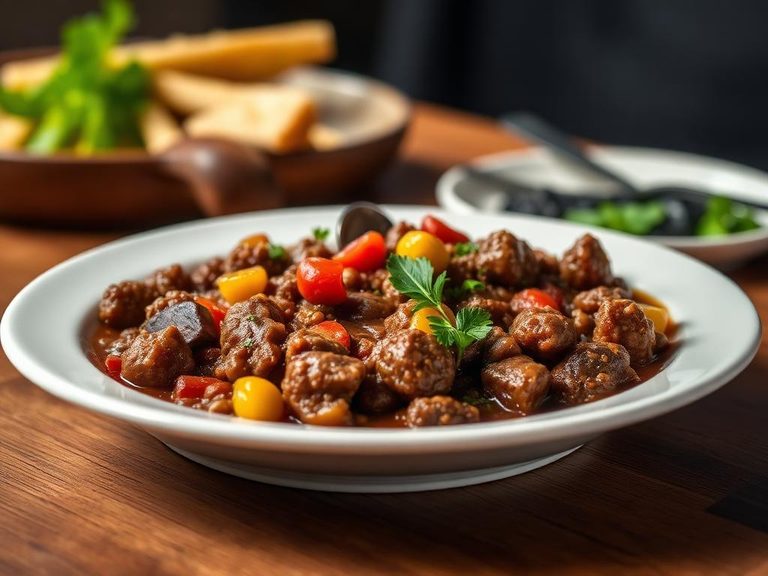
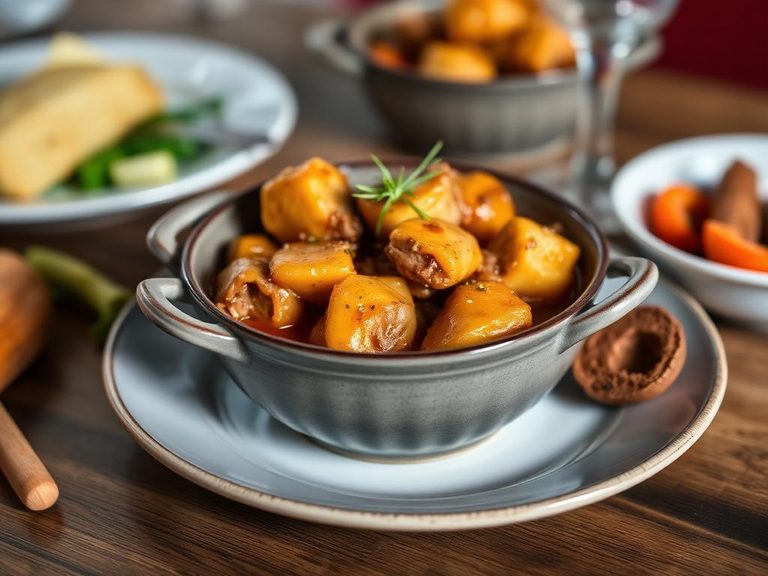
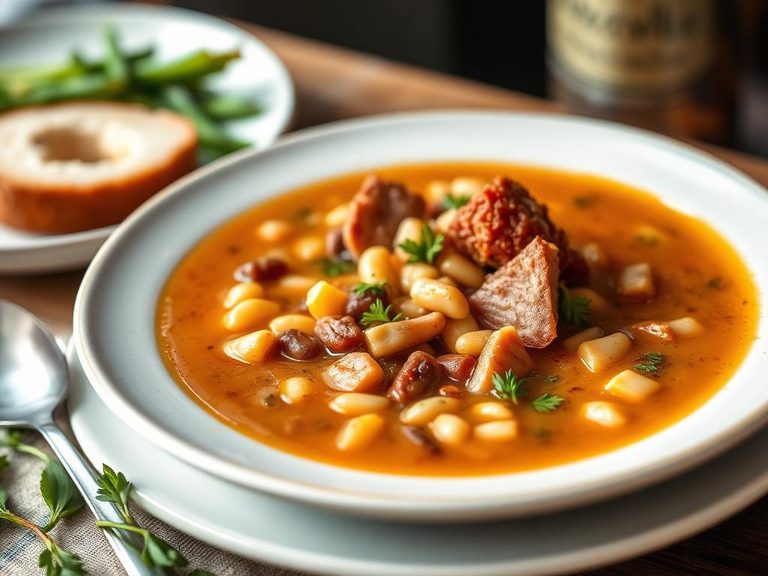
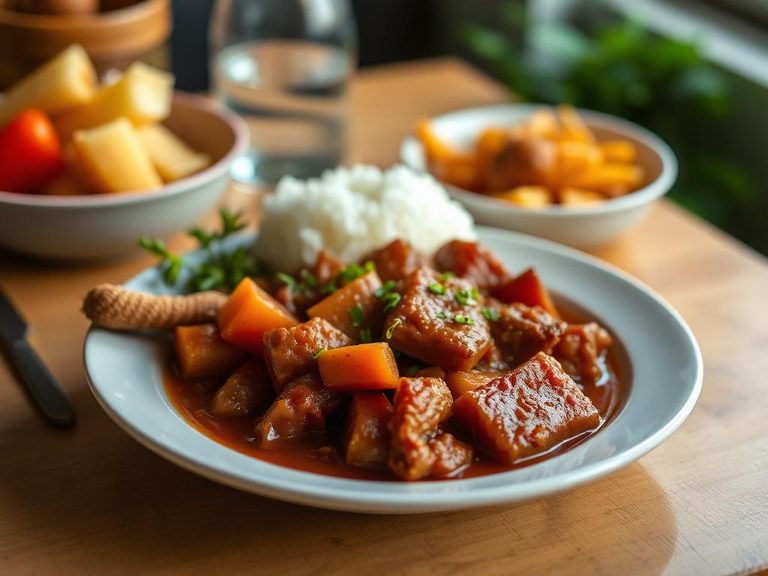
🌍 Where it's eaten
💡 Did you know?
The high collagen content in ham hocks is what naturally thickens soups and stews into a rich, silky consistency without the need for flour or cornstarch.
Full nutrition (USDA data · scales with serving)
| Water | 58.4 g |
| Energy | 268 kcal |
| Protein | 14.6 g |
| Total lipid (fat) | 22.8 g |
| Carbohydrate, by difference | 1.1 g |
| Fiber, total dietary | 0.00 g |
| Total Sugars | 1.1 g |
| Calcium, Ca | 13.0 mg |
| Iron, Fe | 0.71 mg |
| Magnesium, Mg | 16.0 mg |
| Phosphorus, P | 221 mg |
| Potassium, K | 257 mg |
| Sodium, Na | 1040 mg |
| Zinc, Zn | 1.5 mg |
| Copper, Cu | 0.09 mg |
| Selenium, Se | 27.3 ug |
| Vitamin C, total ascorbic acid | 0.00 mg |
| Thiamin | 0.32 mg |
| Riboflavin | 0.19 mg |
| Niacin | 5.0 mg |
| Vitamin B-6 | 0.33 mg |
| Folate, total | 1.0 ug |
| Folic acid | 0.00 ug |
| Folate, food | 1.0 ug |
| Folate, DFE | 1.0 ug |
| Choline, total | 61.5 mg |
| Vitamin B-12 | 0.44 ug |
| Vitamin B-12, added | 0.00 ug |
| Vitamin A, RAE | 16.0 ug |
| Retinol | 16.0 ug |
| Carotene, beta | 0.00 ug |
| Carotene, alpha | 0.00 ug |
| Cryptoxanthin, beta | 0.00 ug |
| Lycopene | 0.00 ug |
| Lutein + zeaxanthin | 0.00 ug |
| Vitamin E (alpha-tocopherol) | 0.14 mg |
| Vitamin E, added | 0.00 mg |
| Vitamin D (D2 + D3) | 1.0 ug |
| Vitamin K (phylloquinone) | 0.00 ug |
| Alcohol, ethyl | 0.00 g |
| Caffeine | 0.00 mg |
| Theobromine | 0.00 mg |
Fat & fatty acid profile (per 100g)
| Fatty acids, total saturated | 8.1 g |
| SFA 4:0 | 0.00 g |
| SFA 6:0 | 0.00 g |
| SFA 8:0 | 0.00 g |
| SFA 10:0 | 0.02 g |
| SFA 12:0 | 0.02 g |
| SFA 14:0 | 0.30 g |
| SFA 16:0 | 5.1 g |
| SFA 18:0 | 2.6 g |
| Fatty acids, total monounsaturated | 10.0 g |
| MUFA 16:1 | 0.50 g |
| MUFA 18:1 | 9.4 g |
| MUFA 20:1 | 0.17 g |
| MUFA 22:1 | 0.00 g |
| Fatty acids, total polyunsaturated | 3.8 g |
| PUFA 18:2 | 3.4 g |
| PUFA 18:3 | 0.14 g |
| PUFA 18:4 | 0.00 g |
| PUFA 20:4 | 0.09 g |
| PUFA 20:5 n-3 (EPA) | 0.00 g |
| PUFA 22:5 n-3 (DPA) | 0.01 g |
| PUFA 22:6 n-3 (DHA) | 0.01 g |
| Cholesterol | 60.0 mg |
Amino acid profile (per 100g)
Estimated from Pork, cured, salt pork, raw — USDA does not publish this profile for Pork.
| Tryptophan | 0.02 g |
| Threonine | 0.17 g |
| Isoleucine | 0.13 g |
| Leucine | 0.35 g |
| Lysine | 0.42 g |
| Methionine | 0.07 g |
| Cystine | 0.04 g |
| Phenylalanine | 0.19 g |
| Tyrosine | 0.08 g |
| Valine | 0.24 g |
| Arginine | 0.52 g |
| Histidine | 0.06 g |
| Alanine | 0.28 g |
| Aspartic acid | 0.42 g |
| Glutamic acid | 0.69 g |
| Glycine | 0.36 g |
| Proline | 0.27 g |
| Serine | 0.19 g |
FAQ
What's the difference between a fresh and a smoked ham hock?
A fresh ham hock is unprocessed and has a mild pork flavor, while a smoked ham hock is cured and smoked, imparting a distinct, salty, smoky taste that is a key flavoring agent in many dishes.
How do I prepare a ham hock for cooking?
For smoked hocks, a quick rinse is usually sufficient. For fresh hocks, you may want to blanch them in boiling water for a few minutes to remove impurities before adding them to your recipe for long, slow simmering.
Can I eat the skin and fat?
Yes, the skin becomes tender and gelatinous when cooked, and the fat renders to flavor the dish. Many people enjoy eating it, but you can easily remove the skin and skim excess fat from the cooking liquid before serving if preferred.
Nutrient density (calculated · NRF9.3)
Nutrient Rich Foods index: beneficial nutrients (protein, fiber, vitamins, minerals) minus saturated fat, added sugar & sodium, per 100 kcal.
NRF9.3 index — Fulgoni, Keast & Drewnowski, 2009. Computed from USDA nutrients.
Weight-loss friendliness (composite index)
Energy density 2.68 kcal/g · 22% calories from protein · 0.0 g fiber · 1.1 g sugar per 100 g.
Composite of energy density (Rolls et al., 1999), protein & fiber satiety, minus sugar. A calculated heuristic — ranks satiety-per-calorie, not a clinical measure.
Dietary load (calculated from USDA values)
Potential renal acid load. Positive = acid-forming, negative = alkaline-forming.
Sodium-to-potassium ratio: 4.05 (lower is better — aim for ≤ 1)
Sodium:potassium per WHO potassium guidance. Computed from USDA nutrients.