

Pork, cured, ham, regular (approximately 13% fat), canned, roasted
Whole food · Pork Products
This is a lean, savory cut of pork that has been cured, canned, and roasted, resulting in a tender, slightly smoky meat with a firm yet juicy texture. With over 20 grams of protein and virtually no carbohydrates per 100g, it is a highly efficient, low-carb protein source. The curing process imparts a distinct salty, umami-rich flavor that stands out in both hot and cold preparations.
Calorie split: 37% protein · 1% carbs · 62% fat
↓ Full nutrition💚 Why it's loved
People love this ham for its deep, salty savoriness and its incredible versatility in the kitchen, from simple sandwiches to hearty breakfasts. It carries a nostalgic, comforting quality that makes it a staple in many households, especially for quick, high-protein meals.
⚠️ Watch-outs & how to enjoy it better
The primary concern is its high sodium content from the curing process, which can contribute to water retention and elevated blood pressure in sensitive individuals. To counteract this, pair it with potassium-rich foods like leafy greens or avocado, and practice portion control to manage overall salt intake.
Key benefits
- High in complete protein for muscle maintenance
- Extremely low in carbohydrates and sugar
- Convenient, shelf-stable, and ready-to-eat
- Provides essential B vitamins like B12 and thiamine
- Contains minerals like zinc and selenium
🍽️ Popular dishes



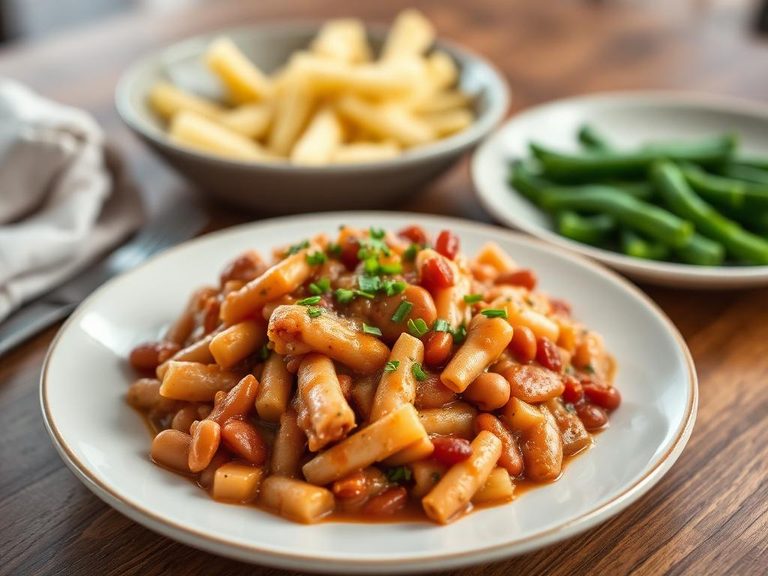


🌍 Where it's eaten
💡 Did you know?
Canned ham became a staple in American households during the Great Depression and World War II due to its long shelf life and affordability, and it remains a popular choice for emergency food supplies today.
Full nutrition (USDA data · scales with serving)
| Water | 60.9 g |
| Energy | 226 kcal |
| Energy | 946 kj |
| Protein | 20.5 g |
| Total lipid (fat) | 15.2 g |
| Ash | 2.9 g |
| Carbohydrate, by difference | 0.42 g |
| Fiber, total dietary | 0.00 g |
| Calcium, Ca | 8.0 mg |
| Iron, Fe | 1.4 mg |
| Magnesium, Mg | 17.0 mg |
| Phosphorus, P | 243 mg |
| Potassium, K | 357 mg |
| Sodium, Na | 941 mg |
| Zinc, Zn | 2.5 mg |
| Copper, Cu | 0.13 mg |
| Manganese, Mn | 0.03 mg |
| Selenium, Se | 35.9 ug |
| Vitamin C, total ascorbic acid | 14.0 mg |
| Thiamin | 0.82 mg |
| Riboflavin | 0.26 mg |
| Niacin | 5.3 mg |
| Pantothenic acid | 0.73 mg |
| Vitamin B-6 | 0.30 mg |
| Folate, total | 5.0 ug |
| Folic acid | 0.00 ug |
| Folate, food | 5.0 ug |
| Folate, DFE | 5.0 ug |
| Vitamin B-12 | 1.1 ug |
| Vitamin A, RAE | 0.00 ug |
| Retinol | 0.00 ug |
| Vitamin A, IU | 0.00 iu |
Fat & fatty acid profile (per 100g)
| Fatty acids, total saturated | 5.0 g |
| SFA 4:0 | 0.00 g |
| SFA 6:0 | 0.00 g |
| SFA 8:0 | 0.00 g |
| SFA 10:0 | 0.03 g |
| SFA 12:0 | 0.02 g |
| SFA 14:0 | 0.16 g |
| SFA 16:0 | 3.2 g |
| SFA 18:0 | 1.6 g |
| Fatty acids, total monounsaturated | 7.1 g |
| MUFA 16:1 | 0.47 g |
| MUFA 18:1 | 6.6 g |
| MUFA 20:1 | 0.00 g |
| MUFA 22:1 | 0.00 g |
| Fatty acids, total polyunsaturated | 1.8 g |
| PUFA 18:2 | 1.6 g |
| PUFA 18:3 | 0.16 g |
| PUFA 18:4 | 0.00 g |
| PUFA 20:4 | 0.00 g |
| PUFA 20:5 n-3 (EPA) | 0.00 g |
| PUFA 22:5 n-3 (DPA) | 0.00 g |
| PUFA 22:6 n-3 (DHA) | 0.00 g |
| Cholesterol | 62.0 mg |
| Phytosterols | 0.00 mg |
Amino acid profile (per 100g)
| Tryptophan | 0.23 g |
| Threonine | 0.92 g |
| Isoleucine | 0.88 g |
| Leucine | 1.6 g |
| Lysine | 1.8 g |
| Methionine | 0.54 g |
| Cystine | 0.24 g |
| Phenylalanine | 0.79 g |
| Tyrosine | 0.67 g |
| Valine | 0.92 g |
| Arginine | 1.3 g |
| Histidine | 0.81 g |
| Alanine | 1.2 g |
| Aspartic acid | 1.9 g |
| Glutamic acid | 3.0 g |
| Glycine | 1.0 g |
| Proline | 0.87 g |
| Serine | 0.80 g |
FAQ
Is canned ham the same as fresh ham?
No, canned ham is pre-cooked, cured, and sealed in a can, while fresh ham is raw and requires cooking. Canned ham has a longer shelf life and a distinct salty flavor from the curing process.
Can I eat canned ham straight from the can?
Yes, canned ham is fully cooked and safe to eat cold. However, many people prefer to heat it for better flavor and texture.
How should I store leftover canned ham?
Once opened, transfer the ham to an airtight container and refrigerate it for up to 3-5 days. For longer storage, you can freeze it for up to 1-2 months.
Nutrient density (calculated · NRF9.3)
Nutrient Rich Foods index: beneficial nutrients (protein, fiber, vitamins, minerals) minus saturated fat, added sugar & sodium, per 100 kcal.
NRF9.3 index — Fulgoni, Keast & Drewnowski, 2009. Computed from USDA nutrients.
Weight-loss friendliness (composite index)
Energy density 2.26 kcal/g · 36% calories from protein · 0.0 g fiber · 0.0 g sugar per 100 g.
Composite of energy density (Rolls et al., 1999), protein & fiber satiety, minus sugar. A calculated heuristic — ranks satiety-per-calorie, not a clinical measure.
Dietary load (calculated from USDA values)
Potential renal acid load. Positive = acid-forming, negative = alkaline-forming.
Sodium-to-potassium ratio: 2.64 (lower is better — aim for ≤ 1)
Sodium:potassium per WHO potassium guidance. Computed from USDA nutrients.