

Pork, belly
Common food

Photo: Wikipedia
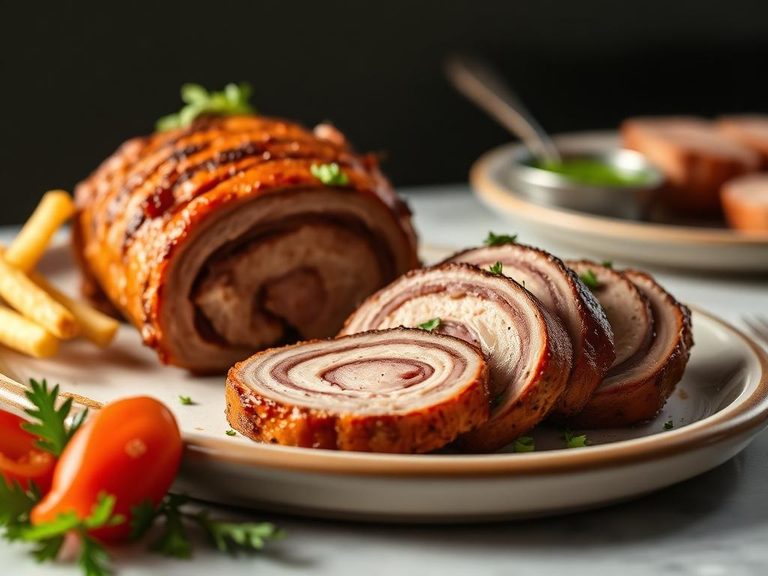
Pork belly is a rich, fatty cut from the underside of the pig, prized for its luxurious layers of meat and fat. When cooked properly, it offers a melt-in-your-mouth texture with a crisp, crackling skin and deeply savory, umami-rich flavor. Nutritionally, it is a dense source of calories and fat, providing substantial energy and protein with zero carbohydrates.
Calorie split: 27% protein · 0% carbs · 73% fat
↓ Full nutrition💚 Why it's loved
People adore pork belly for its unparalleled richness and the textural contrast between crispy skin and tender, fatty meat. It is a versatile star in global cuisines, from Chinese braises to Korean BBQ, celebrated for its ability to absorb complex flavors and deliver deep satisfaction.
⚠️ Watch-outs & how to enjoy it better
Its very high fat content (over 32g per 100g) makes it calorie-dense, which can be a concern for those monitoring calorie or saturated fat intake. To enjoy it mindfully, practice strict portion control, pair it with fiber-rich vegetables (like steamed greens or a vinegar-based slaw) to balance the meal, and consider slower cooking methods like braising that allow some fat to render out.
Key benefits
- Excellent source of high-quality protein for muscle maintenance.
- Rich in B vitamins, especially thiamine (B1) and niacin (B3).
- Provides essential minerals like selenium and phosphorus.
- Contains collagen and gelatin, which support skin and joint health.
- A satiating food that can promote fullness due to its high fat and protein content.
🍽️ Popular dishes
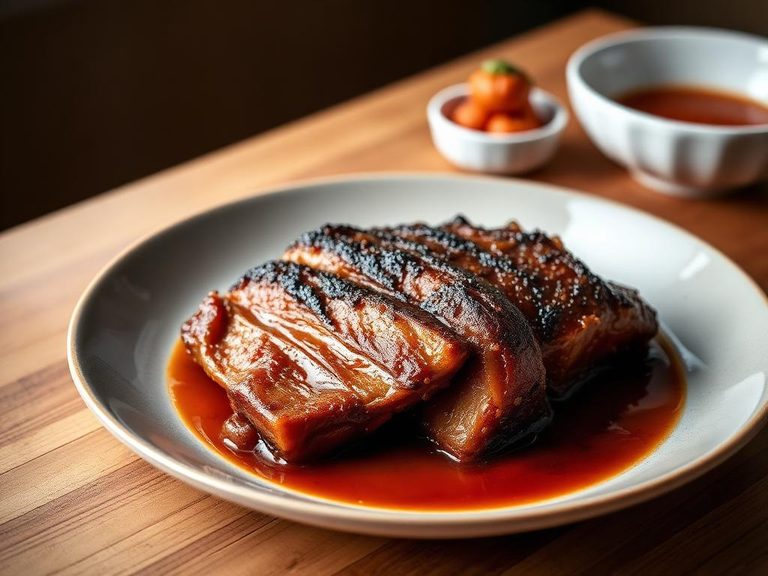
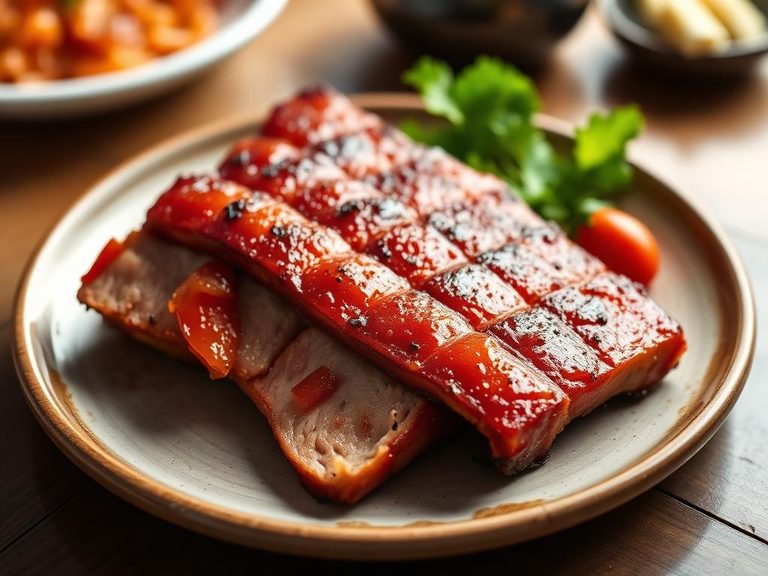
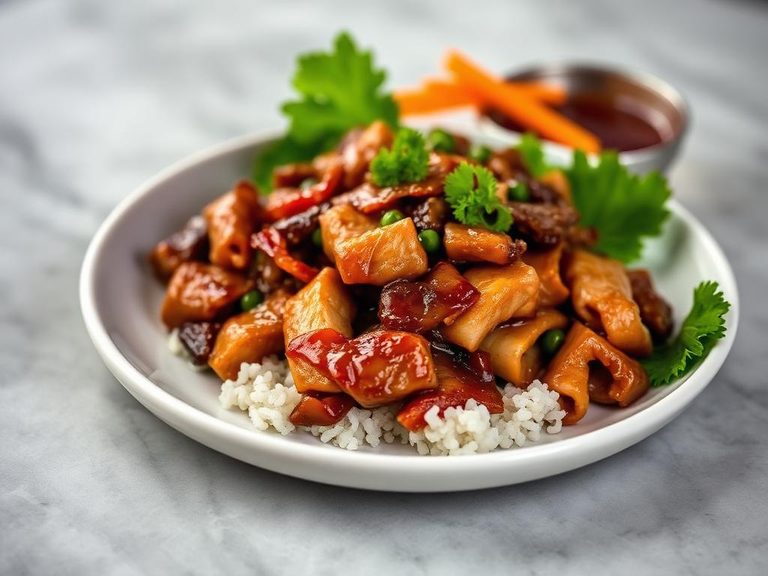
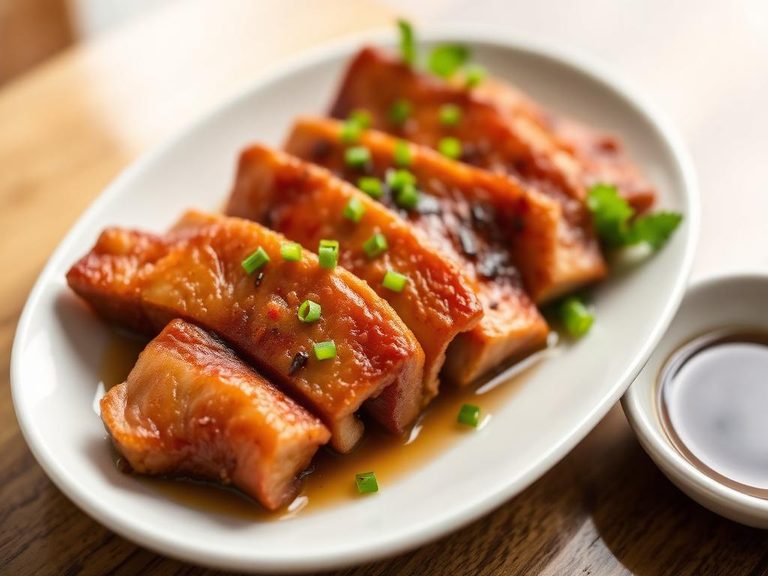

🌍 Where it's eaten
💡 Did you know?
The prized crispy skin on dishes like Chinese Siu Yuk is achieved by meticulously scoring the skin, drying it thoroughly, and often applying vinegar or baking soda to break down proteins, creating an ultra-crispy, bubbly texture when roasted.
Full nutrition (USDA data · scales with serving)
| Water | 39.5 g |
| Energy | 404 kcal |
| Protein | 26.6 g |
| Total lipid (fat) | 32.2 g |
| Carbohydrate, by difference | 0.00 g |
| Fiber, total dietary | 0.00 g |
| Total Sugars | 0.00 g |
| Calcium, Ca | 55.0 mg |
| Iron, Fe | 1.1 mg |
| Magnesium, Mg | 20.0 mg |
| Phosphorus, P | 198 mg |
| Potassium, K | 284 mg |
| Sodium, Na | 448 mg |
| Zinc, Zn | 3.5 mg |
| Copper, Cu | 0.13 mg |
| Selenium, Se | 37.4 ug |
| Vitamin C, total ascorbic acid | 0.00 mg |
| Thiamin | 0.54 mg |
| Riboflavin | 0.40 mg |
| Niacin | 8.9 mg |
| Vitamin B-6 | 0.48 mg |
| Folate, total | 0.00 ug |
| Folic acid | 0.00 ug |
| Folate, food | 0.00 ug |
| Folate, DFE | 0.00 ug |
| Choline, total | 91.9 mg |
| Vitamin B-12 | 0.89 ug |
| Vitamin B-12, added | 0.00 ug |
| Vitamin A, RAE | 10.0 ug |
| Retinol | 10.0 ug |
| Carotene, beta | 0.00 ug |
| Carotene, alpha | 0.00 ug |
| Cryptoxanthin, beta | 0.00 ug |
| Lycopene | 0.00 ug |
| Lutein + zeaxanthin | 0.00 ug |
| Vitamin E (alpha-tocopherol) | 0.28 mg |
| Vitamin E, added | 0.00 mg |
| Vitamin D (D2 + D3) | 1.6 ug |
| Vitamin K (phylloquinone) | 0.00 ug |
| Alcohol, ethyl | 0.00 g |
| Caffeine | 0.00 mg |
| Theobromine | 0.00 mg |
Fat & fatty acid profile (per 100g)
| Fatty acids, total saturated | 11.7 g |
| SFA 4:0 | 0.00 g |
| SFA 6:0 | 0.00 g |
| SFA 8:0 | 0.00 g |
| SFA 10:0 | 0.03 g |
| SFA 12:0 | 0.03 g |
| SFA 14:0 | 0.42 g |
| SFA 16:0 | 7.2 g |
| SFA 18:0 | 3.8 g |
| Fatty acids, total monounsaturated | 14.0 g |
| MUFA 16:1 | 0.67 g |
| MUFA 18:1 | 13.1 g |
| MUFA 20:1 | 0.23 g |
| MUFA 22:1 | 0.00 g |
| Fatty acids, total polyunsaturated | 5.4 g |
| PUFA 18:2 | 4.8 g |
| PUFA 18:3 | 0.22 g |
| PUFA 18:4 | 0.00 g |
| PUFA 20:4 | 0.12 g |
| PUFA 20:5 n-3 (EPA) | 0.00 g |
| PUFA 22:5 n-3 (DPA) | 0.02 g |
| PUFA 22:6 n-3 (DHA) | 0.00 g |
| Cholesterol | 104 mg |
Amino acid profile (per 100g)
Estimated from Pork, cured, salt pork, raw — USDA does not publish this profile for Pork.
| Tryptophan | 0.02 g |
| Threonine | 0.17 g |
| Isoleucine | 0.13 g |
| Leucine | 0.35 g |
| Lysine | 0.42 g |
| Methionine | 0.07 g |
| Cystine | 0.04 g |
| Phenylalanine | 0.19 g |
| Tyrosine | 0.08 g |
| Valine | 0.24 g |
| Arginine | 0.52 g |
| Histidine | 0.06 g |
| Alanine | 0.28 g |
| Aspartic acid | 0.42 g |
| Glutamic acid | 0.69 g |
| Glycine | 0.36 g |
| Proline | 0.27 g |
| Serine | 0.19 g |
FAQ
Is pork belly the same as bacon?
No. Bacon is typically made from pork belly that has been cured with salt, sugar, and often smoked. Pork belly is the fresh, uncured cut.
How can I make pork belly less fatty?
You can't change its inherent composition, but you can reduce the fat in your serving by choosing a leaner piece, scoring and rendering out fat during cooking, or chilling the cooked dish and skimming off solidified fat before reheating.
What's the best way to get crispy skin?
The key is a dry surface. Pat the skin thoroughly dry, score it without cutting into the meat, and use high heat (roasting or air-frying). Some recipes use a salt crust or vinegar rub to draw out moisture.
Nutrient density (calculated · NRF9.3)
Nutrient Rich Foods index: beneficial nutrients (protein, fiber, vitamins, minerals) minus saturated fat, added sugar & sodium, per 100 kcal.
NRF9.3 index — Fulgoni, Keast & Drewnowski, 2009. Computed from USDA nutrients.
Weight-loss friendliness (composite index)
Energy density 4.04 kcal/g · 26% calories from protein · 0.0 g fiber · 0.0 g sugar per 100 g.
Composite of energy density (Rolls et al., 1999), protein & fiber satiety, minus sugar. A calculated heuristic — ranks satiety-per-calorie, not a clinical measure.
Dietary load (calculated from USDA values)
Potential renal acid load. Positive = acid-forming, negative = alkaline-forming.
Sodium-to-potassium ratio: 1.58 (lower is better — aim for ≤ 1)
Sodium:potassium per WHO potassium guidance. Computed from USDA nutrients.